

HCPCS code E0198: Water pressure pad billing guide
HCPCS code E0198 is a water pad for a standard mattress HCPCS code E0198 is the ...

Last Updated: Oct 13, 2026
A4614 is the HCPCS Level II code for peak expiratory flow rate meter, hand held.
Most denials for this code don't come from picking the wrong code. They come from missing paperwork: a physician order sitting unsigned in a shared drive, a diagnosis code that doesn't match the LCD's covered list, or a KX modifier applied without a completed Certificate of Medical Necessity.
Let Pabau's smart automation suggest the right codes, reduce claim denials, and keep your practice compliant—effortlessly.
Automate repetitive tasks and focus on what matters most—your patients.
Reduce coding errors and ensure compliance with the latest regulations.
Clean claims, fewer denials, and faster reimbursements.
Powerful insights and reporting to help your practice thrive.
HIPAA compliant SOC 2 certified GDPR-compliant Trusted by 4,000+ clinics worldwide

HCPCS Code A4614 describes a peak expiratory flow rate meter, hand held, used to bill DME supplies under Medicare Part B.
Medicare requires a physician order and documentation of medical necessity before A4614 claims will be approved.
The KX modifier confirms medical necessity is on file; GA signals an advance beneficiary notice has been obtained – both carry legal implications and must be sourced from the applicable DME MAC LCD.
Practice management software like Pabau centralizes claims tracking and billing documentation, so DME suppliers spend less time hunting for paperwork before a claim goes out.
A4614 sits in the HCPCS Level II A-code series, which covers medical and surgical supplies. The code is maintained by the Centers for Medicare and Medicaid Services, known as CMS, which publishes annual updates to HCPCS Level II codes and their fee schedule data.
A peak flow meter measures the maximum speed at which a patient can exhale air, expressed in liters per minute. Clinicians use the reading to assess airflow obstruction, track disease progression, and guide treatment adjustments for conditions including asthma and chronic obstructive pulmonary disease (COPD).
The hand-held form factor is specifically designated by A4614, distinguishing it from stationary or electronic spirometry devices billed under separate codes.
CMS publishes the DMEPOS fee schedule annually, setting the national limitation amount (NLA) for each supply code. The A4614 2026 fee schedule rate reflects the allowed amount Medicare will reimburse for a hand-held peak flow meter.
DME MAC jurisdiction can affect the payment amount at the regional level, so billers should verify the current figure using the CMS fee schedule lookup before submitting claims. The table below reflects the general fee schedule structure for A4614 as published by CMS. Always confirm against the current FY DMEPOS file for your jurisdiction.
The specific dollar amount for A4614 Medicare reimbursement is published in the CMS DMEPOS fee schedule files, available at cms.gov. Citing a third-party figure without verifying the current CMS source is a common compliance error. Confirm the NLA directly before submitting.
Bookmark the CMS DMEPOS fee schedule download page and pull the current file at the start of each calendar year. Regional contractors may also publish jurisdiction-specific rates. Cross-reference both before updating your billing system’s fee schedule.
Medicare Part B covers hand-held peak flow meters under its DME benefit when specific coverage requirements are met. Coverage isn’t automatic. The claim must demonstrate medical necessity, and the documentation supporting that necessity must be on file before the item is supplied.
Coverage criteria are governed by Local Coverage Determinations (LCDs) issued by the applicable DME MAC for the beneficiary’s jurisdiction, so precise requirements vary by region.
The general conditions that support A4614 Medicare coverage include:
Because LCD criteria differ between DME MACs (CGS and Noridian), review your jurisdiction’s active LCD before submitting a claim. What qualifies in one region may require additional documentation in another.
Incomplete documentation is the leading reason A4614 claims are denied or recouped. Every submission should be backed by a complete documentation package. The core requirements for medical necessity documentation typically include:
Retain all documentation for a minimum of seven years. DME MAC audits regularly request the full documentation set for supply codes like A4614, and missing a single element can trigger a recoupment demand. Storing records in a structured patient record system keeps the full audit trail accessible without manual searching.

An inventory management tool flags when supply usage and supply billing drift apart.
A4614 is billed by Medicare-enrolled DME suppliers and respiratory therapy providers. The claim goes to Medicare Part B, with the DME MAC as the processing contractor. Several billing details determine whether the claim pays at the first submission or returns for rework.
Billing staff should also confirm PDAC (Pricing, Data Analysis and Coding) contractor guidance for A4614. The CGS coding verification process outlines how PDAC coding verification applies to HCPCS DME supply codes, including documentation needed to support product eligibility.
Always reference the AAPC HCPCS code lookup and your DME MAC’s LCD when setting up a new billing workflow for this code.
Modifiers affect payment and compliance. Using the wrong modifier, or omitting one when required, leads to denials or, more seriously, a false claims risk. For A4614, the modifiers most commonly referenced in DME MAC guidance include the following. Confirm applicability against your specific jurisdiction’s LCD before use:
The KX and GZ modifiers carry specific legal implications under Medicare’s coverage and billing rules. Use them only after reviewing your DME MAC’s current LCD and applicable compliance requirements. When in doubt, consult a qualified HCPCS billing specialist or your MAC’s provider relations team.

Pabau centralizes patient records, documentation, and claims tracking in one system, so billing teams spend less time chasing paperwork and more time getting claims out the door.

Several HCPCS codes sit close to A4614 in the respiratory DME supply category. Selecting the wrong code is a common billing error, particularly when differentiating between peak flow meters and spirometers, or between Medicare-covered and Medicaid/commercial-only codes. The table below covers the codes most frequently referenced alongside A4614.
The most consequential distinction for billing teams is between A4614 and S8096. S-series codes are maintained outside the core HCPCS Level II structure and are generally not accepted by Medicare Part B as billable codes. Submitting S8096 to Medicare for a hand-held peak flow meter will result in a denial.
Use A4614 for Medicare Part B claims. Use S8096 only when the payer is a commercial insurer or Medicaid plan that explicitly accepts S-codes for this device. Verify payer-specific code acceptance with your contracting team before billing S8096 to any plan, as acceptance varies significantly.
You can cross-reference code details using the PGM Billing lookup tool to confirm current code status before billing.
Knowing which patients clinically need a hand-held peak flow meter helps billing teams catch documentation problems before a claim goes out, not just after a denial comes back.
Hand-held peak flow meters are prescribed in two main situations: initial assessment of airflow limitation and ongoing home monitoring for disease management. The device gives the patient a daily measurement they can track against a personal best score, enabling earlier detection of exacerbations before symptoms become severe.
Billing staff reviewing a claim for A4614 should confirm the ordering diagnosis aligns with one of these clinical scenarios and that the ICD-10-CM code on the claim, such as J45.xx for asthma, is listed on the applicable DME MAC LCD’s covered diagnosis list.
Claims with a diagnosis of J44.xx (COPD) may require additional documentation depending on the jurisdiction. Review the LCD criteria for your region before submitting.
Run a pre-submission audit on every A4614 claim: confirm the ICD-10-CM code is on your DME MAC’s covered diagnosis list, the physician order is signed and dated, and the correct modifier is appended. A five-minute checklist review prevents denials that take 20 minutes to appeal.
DME billing for codes like A4614 involves more moving parts than most professional claims. The documentation requirement, the modifier logic, the LCD jurisdiction check, and the proof-of-delivery record all need to align for a clean submission.
Practice management and billing platforms help by centralizing these steps, whether the order originates from a primary care practice or a physical therapy and rehab practice handling post-exacerbation follow-up, rather than leaving them spread across fax logs, shared drives, and handwritten tracking sheets.
Practice management software like Pabau keeps patient records, forms, and claims documentation in one system, so a physician order, diagnosis note, or delivery confirmation doesn’t end up filed separately from the claim it supports. Pabau’s claims management software gives billing teams a structured way to track claims and follow their status through to payment.
For respiratory care providers managing A4614 alongside related codes such as A4615, A4616. Matching the correct modifier to the LCD, or confirming a diagnosis code against the covered list, still comes down to trained billing staff rather than the software.
Practices evaluating practice management software features for DME workflows typically look for three things: documentation capture at the point of care, automated checks against billing rules before submission, and an audit trail that holds up when a MAC requests records.
Those three capabilities matter most for A4614 billing, where the difference between a covered claim and a recoupment demand often comes down to whether the documentation was complete when the item left the building.
Tighter connectivity between the clinical record and the billing workflow. A4614 claims that fail audit are often caused by a signed physician order that never made it from the clinical chart to the billing file.
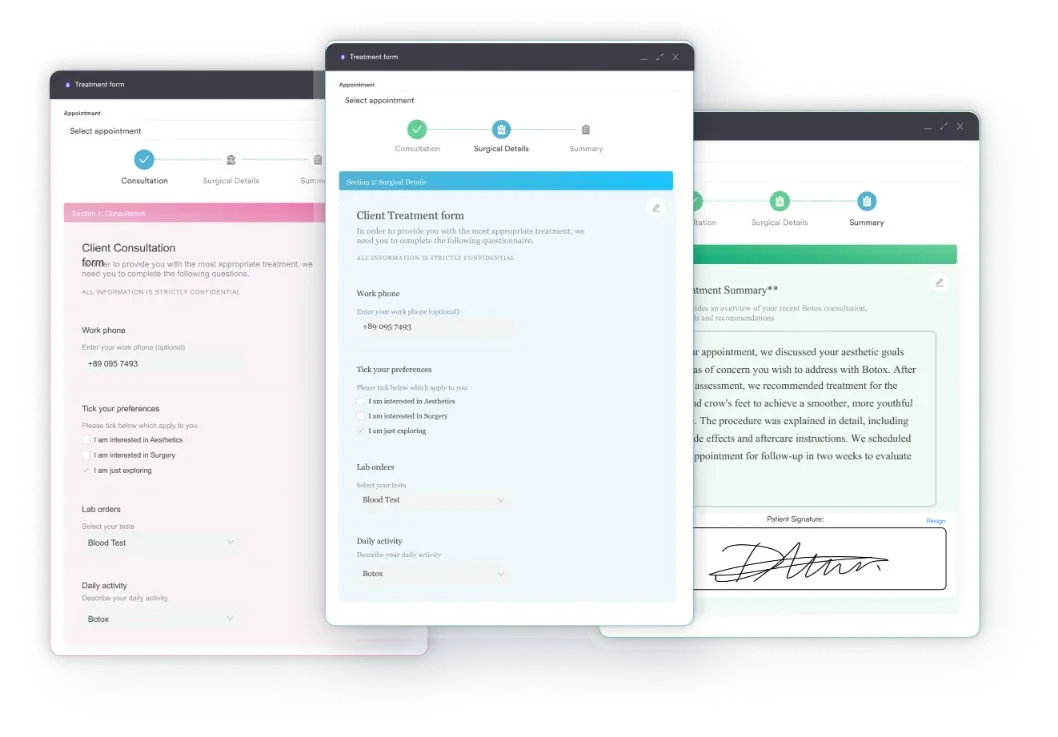
Teams using digital intake forms can also capture proof-of-delivery signatures electronically, satisfying one of the most commonly audited documentation requirements for DME supply codes.
Practices that handle paperless workflows under HIPAA-compliant systems are also better positioned for DME audits, because records are centrally stored, version-controlled, and retrievable without searching through physical files. For A4614 billers receiving post-payment audits from DME MACs, that retrieval speed matters.
Understanding the broader context of HIPAA compliance for providers helps billing teams make sure their documentation storage meets the standards DME MAC auditors expect to see.
HCPCS Code A4614 is a narrow, well-defined supply code, but the billing requirements around it leave significant room for error. A missing physician order, an incorrect modifier, or an ICD-10-CM code that falls outside the LCD’s covered list can turn a straightforward DME claim into a denial or a recoupment. Getting those elements right before submission is the job. Compliance risk rises where one person codes, bills and reconciles without a second review. The CARC denial code list is short enough to learn, and most rework traces to a handful of entries.
Practice management software like Pabau gives billing teams a structured place to track claims, store supporting documentation, and follow a claim’s status from submission through payment. To see how Pabau keeps your practice’s records and claims organized, book a demo with the team.

Billing another DME supply code? E0250 covers billing and documentation rules for a fixed height hospital bed, another frequently audited DME benefit.
Coding a testosterone injection claim next? Testosterone Cypionate injection guide explains unit billing and CMS documentation rules for hypogonadism treatment.
Want to see how another supply code plays out? A4467 breaks down billing rules for belts, straps, and garments, another DME code with strict documentation requirements.
HCPCS Code A4614 is used to bill for a peak expiratory flow rate (PEFR) meter, hand held, supplied to a Medicare Part B beneficiary as a durable medical equipment supply. It is used primarily for home monitoring of asthma and COPD, where a physician has ordered the device as part of a patient’s respiratory disease management plan.
Yes, Medicare Part B may cover A4614 when a physician order is on file, medical necessity is documented, and the beneficiary’s diagnosis aligns with the covered conditions listed in the applicable DME MAC Local Coverage Determination. Coverage criteria vary by jurisdiction, so check your region’s active LCD before submitting.
The 2026 national limitation amount for A4614 is published in the CMS DMEPOS fee schedule file, available at cms.gov. Because regional DME MAC rates can differ from the national figure, verify the current allowed amount directly from the CMS fee schedule download or the AAPC HCPCS code lookup before billing.
A4614 claims require a signed, dated physician order; a covered ICD-10-CM diagnosis code on the claim (typically J45.xx for asthma or J44.xx for COPD); chart notes supporting medical necessity; proof of delivery; and, where applicable, a Certificate of Medical Necessity. Retain all records for a minimum of seven years to support potential MAC audits.
A4614 is the Medicare Part B-billable HCPCS code for a hand-held peak flow meter. S8096 is an S-series code for a portable peak expiratory flow meter used by commercial insurers and some Medicaid plans, but it is not accepted by Medicare Part B. Submitting S8096 to Medicare will result in a denial; always use A4614 for Medicare claims.
The KX modifier is appended when medical necessity documentation on file meets the LCD criteria. GA is used when an Advance Beneficiary Notice has been signed by the beneficiary and the claim may not be covered. GZ applies when the item does not meet coverage criteria and no ABN is on file. Verify modifier requirements with your DME MAC before use, as incorrect modifier application can create compliance liability.
Medicare-enrolled DME suppliers and respiratory therapy providers with active DME billing privileges can bill A4614 under Medicare Part B. The supplier must be enrolled in Medicare, and the claim is processed by the DME MAC for the beneficiary’s state of residence.
Covered diagnoses for A4614 are defined by the applicable DME MAC LCD and typically include asthma (ICD-10-CM J45.xx) and COPD (J44.xx), along with other obstructive respiratory conditions specified in the LCD. The ICD-10-CM code on the claim must appear on the LCD’s covered diagnosis list; codes outside that list will not support medical necessity and will result in denial.



