



HCPCS code E0198: Water pressure pad billing guide
HCPCS code E0198 is a water pad for a standard mattress HCPCS code E0198 is the ...

Last Updated: Oct 13, 2026

CPT code 21433 covers open treatment of a Le Fort III craniofacial separation that is complicated and needs multiple surgical approaches.
The code belongs to the 21431-21436 Le Fort III family and carries a 090 global period.
CPT has no panfacial fracture code, so mandible, zygoma, and frontal bone injuries are reported separately.
Medicare lists 21433 as inpatient-only, so the repair is not payable in an ASC or hospital outpatient department.
Denials cluster on notes that fail to prove comminution, cranial nerve foramina involvement, or multiple surgical approaches.
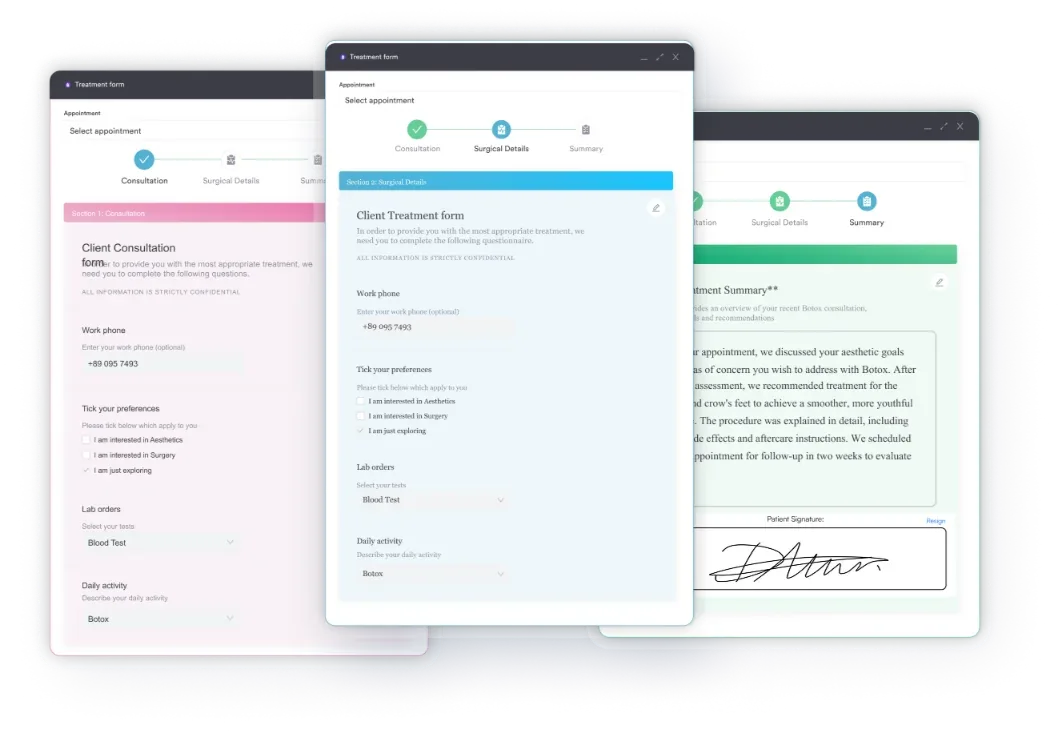
Practice management software like Pabau keeps the operative note, consents, and images on one patient record for claim support.
CPT code 21433 covers open treatment of a Le Fort III craniofacial separation that is complicated and repaired through multiple surgical approaches. The fracture line separates the midfacial skeleton from the cranial base.
Denials at this level trace back to a thin operative note or a missing modifier. They also follow the wrong pick from the Le Fort III family of five.
This reference covers the official descriptor, RVU structure, accepted modifiers, and paired ICD-10 diagnosis codes. It also covers the global period, documentation requirements, the rest of the Le Fort III family, and the denial patterns that recur.
CPT code 21433 is a surgical procedure code maintained by the American Medical Association (AMA) under the Current Procedural Terminology (CPT) code set. Its official descriptor reads: Open treatment of craniofacial separation (LeFort III type); complicated (eg, comminuted or involving cranial nerve foramina), multiple surgical approaches.
The 90-day global period bundles all routine follow-up care into the procedure fee. Billing post-operative visits inside that window triggers NCCI bundling edits unless a modifier justifies the separate reporting. Because 21433 sits on Medicare’s inpatient-only list, the same repair performed in an ASC is not payable under the outpatient rules. Patients who claim reimbursement themselves need an itemized receipt, which is what a superbill template sets out.
CPT code 21433 describes the open repair of a Le Fort III craniofacial separation that is complicated and needs multiple surgical approaches. A Le Fort III fracture line runs through the nasal bridge, the medial and lateral orbital walls, and the zygomatic arches.
That fracture line detaches the whole midface from the skull base. CPT calls it a craniofacial separation, not a maxillary or midface fracture.
Two elements separate 21433 from 21432, the base open-treatment code. The fracture must be complicated, meaning comminuted or involving the cranial nerve foramina. The repair must also use multiple surgical approaches, such as coronal, transconjunctival, and intraoral exposures in the same session.
The descriptor says nothing about panfacial injury patterns or facial thirds. Coders sometimes reach for 21433 on any multi-region facial trauma case, and that instinct is wrong. Mandible, zygoma, and frontal bone fractures each carry their own codes, and NCCI edits govern whether they can be reported alongside 21433.
Oral and maxillofacial surgeons and plastic surgeons are the primary reporters and often work in tandem. When two surgeons of different specialties each perform a distinct part of the same Le Fort III repair, modifier -62 applies.
Clinical criteria that must be met before CPT 21433 applies:
Without documented complication and multiple approaches, payers move the claim down to 21432. Without open access, they move it down to 21431.
Medicare reimbursement for CPT code 21433 is calculated from the Medicare Physician Fee Schedule (MPFS), which CMS updates annually. The table below explains the RVU structure.
Verify current dollar amounts with the CMS fee schedule tool for the applicable payment year. Rates move each January with the conversion factor.
Use the FastRVU lookup tool to retrieve current work, practice expense, and malpractice RVU values for CPT 21433 by year. Always cite the payment year when you report rates to your billing team or a payer.
CPT 21433 appears on the Medicare inpatient-only procedure list, so the physician claim is paid at the facility rate. There is no non-facility scenario to model. Scheduling the repair in an ASC or a hospital outpatient department leaves the facility side of the claim unpayable.
Clinics managing post-surgical rehab often chart it in an EMR built for physical therapy.
CPT 21433 carries a 090 global period, so Medicare bundles 90 days of routine post-operative care into the surgical fee. The global surgical package also covers the day before surgery and the day of surgery.
Modifier applicability for CPT code 21433 is payer-specific. The table below lists modifiers that commonly apply to craniofacial surgical billing. Always confirm against the payer’s current NCCI edits and policy bulletins before you append one.
Modifier -50 (bilateral procedure) does not apply to CPT 21433. A Le Fort III separation crosses the midline and is treated as one craniofacial unit. There is no left or right version of the procedure to report.
Every claim for CPT code 21433 needs a supporting ICD-10 diagnosis that establishes medical necessity. The paired diagnosis must match the clinical documentation and the payer’s coverage policy.
S02.413- is the code for a Le Fort III fracture and is the anchor diagnosis here. Companion S-chapter codes such as S06.309A and S02.32XB often travel on the same trauma claim.
Verify each code against the ICD-10-CM web tool for the applicable fiscal year. ICD-10-CM updates every October 1.
The 7th character describes the fracture, not the surgery. A marks an initial encounter for a closed fracture, and B marks an open one. An open surgical repair of a closed fracture still takes the A extension.
D covers subsequent encounters and S covers sequelae. A code like S02.651K shows how that character shifts once the fracture reaches nonunion.
Thin documentation is the single largest contributor to denials on CPT code 21433 claims. The operative report has to support every element of the descriptor.
Practices that standardize their operative note templates reduce the variance that triggers medical necessity review. Structured records and digital intake forms both do that job.
The operative report must contain the following elements to withstand a payer audit:
CPT code 21433 sits in a family of five Le Fort III codes. Picking the wrong one is the most common upcoding or downcoding error in craniofacial billing. Neighboring facial fracture codes turn on the same logic.
Two documented facts move a claim from 21432 up to 21433. The fracture has to be complicated, and the repair has to use multiple surgical approaches. Neither is inferred from the injury name alone.
CPT 21435 covers the complicated repair when fixation techniques such as a head cap, halo device, or intermaxillary fixation are used. CPT 21436 covers the complicated multi-approach repair when bone graft is harvested and placed. Reporting either one for a straightforward internal fixation case is an upcoding risk that draws OIG attention.
NCCI edits control which additional facial fracture codes can travel on the same claim as 21433. Check the current quarterly edit files before you add a second surgical code.
Hand trauma is coded the same way. CPT 26615 bills one unit for every metacarpal treated open, and modifier -51 goes on each additional unit.
CPT code 21433 denials cluster around predictable patterns, and most are preventable with a pre-submission checklist. The billing workflows behind low denial rates build these checks in before claims leave the office.
CPT has no single panfacial fracture code, and 21433 is not a stand-in for one. It describes a Le Fort III craniofacial separation only. Reporting it because the patient had fractures across several facial regions is a denial waiting to happen. Without a documented Le Fort III pattern, the claim will not hold up on review.
The descriptor requires multiple surgical approaches. A note describing a single coronal exposure supports 21432, not 21433. Payers that review the operative report will downcode the claim, and the difference in payment is significant.
Reporting 21435 or 21436 when the case was a straightforward internal fixation repair is a standing OIG target. The note has to name the external fixation device for 21435, or the graft harvest site and placement for 21436. Without that language, the higher code fails on review.
Payers check whether the note names the fracture pattern, each surgical approach, and each fixation construct. A note that says the craniofacial separation was repaired with plates and screws does not clear that bar. It typically returns as a medical necessity denial or a request for additional records.
When two surgeons each bill CPT code 21433 with modifier -62, both reports must describe that surgeon’s distinct contribution. A single shared note, or two identical notes, will be denied. Each report should read as a standalone account of that surgeon’s work.
The 090 global period bundles all routine post-operative visits. Billing an evaluation and management service inside that window needs modifier -24 for an unrelated visit, or modifier -79 for an unrelated procedure. Either one has to be supported by documentation proving the encounter addressed something other than the fracture repair.
Submitting CPT code 21433 with a Le Fort I or Le Fort II diagnosis contradicts the procedure reported. The anchor diagnosis has to be S02.413- for a Le Fort III fracture. If the record supports only a Le Fort I pattern, the correct procedure code sits in the 21421 to 21423 range instead.
A Le Fort III repair generates paperwork in several places at once. The operative narrative sits in one system, the consent and trauma history in another, and the claim in a third. Details get retyped, and retyping is where the approach list and the fixation detail go missing.
Pabau is an all-in-one practice management system, so the clinical record and the billing side share one patient file. Treatment notes, digital consent forms, and before-and-after images attach to the patient rather than to a folder on someone’s desktop.
Claims management then pulls what is already on that record into a pre-filled claim. You submit and track it without leaving the system. Eligibility checks and remittance posting sit in the same place as the note.
Your coders still choose the code and own the descriptor. What changes is that they stop hunting across systems for the documentation that supports it. A 21433 claim then leaves the practice with its evidence intact.

Pabau keeps operative notes, consents, and images on one patient record. It then pulls that record into a pre-filled claim you submit and track without leaving the system.

Choosing 21433 is the easy half of the claim. The operative note carries the rest, because it has to prove comminution or foramina involvement and name every approach used. Site of service settles the other half, since the repair is inpatient-only.
Get those facts on the page, pair the claim with S02.413-, and respect the 090 global period. Practice management software like Pabau keeps the operative note, the consents, and the images on one patient record. The evidence for a 21433 claim then sits in one place. To see how Pabau supports craniofacial billing teams, book a demo.

Is the injury a Le Fort II pattern instead? CPT code 21348 covers open treatment of a nasomaxillary complex fracture with bone grafting, including RVUs, modifiers, and documentation.
Repairing a frontal sinus fracture in the same patient? CPT code 21344 walks through the complicated open repair, the documentation it needs, and the codes it should not travel with.
Nasal septum involved in the injury pattern? CPT code 21336 sets out when open treatment of a nasal septal fracture is billable and how to word the operative note.
Coding the mandible side of a panfacial case? ICD-10 code S02.600D explains the mandible body fracture descriptor and how the 7th character tracks routine healing.
Planning a later corrective osteotomy? CPT code 21196 covers mandibular osteotomy billing, from the RVU structure to the documentation payers ask for.
CPT code 21433 is a Category I surgical code for open treatment of a Le Fort III craniofacial separation. It applies when that separation is complicated and repaired through multiple surgical approaches. Oral and maxillofacial surgeons and plastic surgeons report it. Complicated means the fracture is comminuted or involves the cranial nerve foramina.
No. CPT code 21433 describes a Le Fort III craniofacial separation, not a panfacial injury pattern, and CPT has no single panfacial fracture code. Mandible, zygoma, and frontal bone fractures each carry their own codes, subject to NCCI edits.
The operative report must name the Le Fort III craniofacial separation, describe the comminution or cranial nerve foramina involvement, and list every surgical approach used. It must also specify each fixation construct by type, size, and location. The anesthesia record has to match the documented operative time.
CPT 21433 carries a 090 global period, so 90 days of routine post-operative care is bundled into the surgical fee. An unrelated visit inside that window needs modifier -24, and an unrelated procedure needs modifier -79. A return to the operating room for a complication uses modifier -78.



