

ICD-10 Code S42.444P: Medial epicondyle fracture, right humerus
ICD-10 Code S42.444P: full descriptor and code validity ICD-10 Code S42.444P car...

Last Updated: Oct 13, 2026
Billable Code Specific Code
S06.6X1D is the billable ICD-10-CM code for traumatic subarachnoid hemorrhage with loss of consciousness of 30 minutes or less, subsequent encounter.
Two details decide whether the claim clears. The 7th character has to match the care phase, and the loss-of-consciousness bracket has to match what the note actually documents. Injury ICD-10 codes are stricter about both than most of the code set.
Let Pabau's smart automation suggest the right codes, reduce claim denials, and keep your practice compliant—effortlessly.
Automate repetitive tasks and focus on what matters most—your patients.
Reduce coding errors and ensure compliance with the latest regulations.
Clean claims, fewer denials, and faster reimbursements.
Powerful insights and reporting to help your practice thrive.
HIPAA compliant SOC 2 certified GDPR-compliant Trusted by 4,000+ clinics worldwide

ICD-10 Code S06.6X1D covers traumatic subarachnoid hemorrhage with loss of consciousness of 30 minutes or less, subsequent encounter.
The code is billable and POA exempt, and it took effect on October 1, 2025 with the 2026 ICD-10-CM edition.
The 7th character D confirms the patient is in the healing or recovery phase, not receiving active initial treatment.
Using the initial encounter code S06.6X1A for follow-up visits misrepresents the encounter type and raises RAC audit exposure.
The 7th characters D and S do not apply to the S06.6X7 and S06.6X8 death codes, which exist only as initial encounters.
Practice management software like Pabau helps neurology teams capture encounter type and loss-of-consciousness duration before the claim goes out.
ICD-10 Code S06.6X1D is a billable, specific ICD-10-CM diagnosis code valid for reimbursement in HIPAA-covered electronic transactions. It became effective October 1, 2025, as part of the 2026 ICD-10-CM edition published by CMS. The full official description reads: Traumatic subarachnoid hemorrhage with loss of consciousness of 30 minutes or less, subsequent encounter.
The ICD-10 code for subarachnoid hemorrhage splits first by cause. A non-traumatic bleed, usually from a ruptured aneurysm, belongs in I60.x. The ICD-10 code for traumatic subarachnoid hemorrhage sits in the S06.6X subcategory instead, and the choice narrows from there.
Three qualifiers make S06.6X1D precise. The hemorrhage is traumatic in origin. The documented loss of consciousness (LOC) lasted 30 minutes or less. And the encounter is a subsequent one, meaning the patient is healing rather than presenting acutely. All three have to appear in the record to support the code.
The 7th character is how ICD-10-CM conveys where a patient sits in their care episode. For injury codes in the S00-T88 chapter, three values apply: A for initial encounter, D for subsequent encounter, and S for sequela. The choice changes both the clinical picture and the payment.
Per the ICD-10-CM Official Guidelines for Coding and Reporting, the subsequent encounter designation covers any visit after the active treatment phase. That includes routine follow-up, monitoring, and ongoing management during healing. It does not require the injury to be fully resolved, which is the part that catches coders out.
Take a neurology practice seeing a patient four weeks after discharge for traumatic SAH, with a brief LOC. That follow-up visit codes as ICD-10 Code S06.6X1D. The patient is past the acute treatment phase. The 7th character A would apply only while active surgical or medical intervention for the injury is still under way.
One exception is worth committing to memory. The tabular instruction under category S06 removes D and S from codes whose 6th character is 7 or 8. Those describe death before the patient regained consciousness. Those codes carry the 7th character A only. Appending D produces an invalid code. The claim rejects on submission rather than denying later.
Knowing where S06.6X1D sits in the classification tree confirms you are at the right specificity level. It also gives you the parent codes to use when you query a provider or pull reporting.
S06 covers every intracranial injury, which makes it one of the densest sections in Chapter 19. The same A/D/S logic governs every S-code in this range, so coders who learn it once carry it across the whole injury chapter. It also applies to the intracranial hemorrhage codes and to the encounter-type conventions used elsewhere in ICD-10 codes for injury.
Mapping those hierarchical relationships into note templates cuts per-claim review time. Claims management software can carry the encounter-type value from the note through to the claim, so nobody retypes it.
Traumatic subarachnoid hemorrhage happens when blunt or penetrating head trauma ruptures small vessels crossing the subarachnoid space. Blood then collects in the cerebrospinal fluid layer around the brain. That mechanism is what separates it from non-traumatic SAH caused by aneurysm rupture, which is coded I60.x.
Search ICD-10 for subarachnoid hemorrhage and you land on two separate families. The mechanism recorded in the note decides which one applies, so the traumatic origin has to be explicit for S06.6X1D to be defensible on audit.
A search for traumatic SAH ICD-10 codes ends in the S06.6X subcategory, where loss of consciousness is the axis of specificity. The 30-minutes-or-less bracket reflects the brief LOC seen in mild-to-moderate head injuries, and longer durations move you to a sibling code. Approximate synonyms in the ICD-10-CM alphabetic index include:
Clinicians should record the mechanism of injury (fall, motor vehicle collision, assault), the LOC duration in minutes, and the GCS score on presentation. Neurology practices that manage complex neurological documentation workflows build these three elements into structured intake forms so the coder is not chasing them afterwards.
S06.6X1D belongs to a grid, not a list. One axis is the documented duration of loss of consciousness, set by the 6th character. The other is encounter type, set by the 7th. Picking the wrong cell is the most common specificity error in traumatic SAH coding.
Most code lookup pages show only the row you searched for. Seeing all 11 loss-of-consciousness values side by side makes the two adjacent brackets obvious. Those are the ones a vague note pushes you toward by mistake.
When the record documents LOC imprecisely, such as “brief loss of consciousness” with no timed value, you have a specificity problem. S06.6X9D covers unspecified duration, but a provider query for a documented timeframe is always the better move.
Pabau’s digital clinical forms let neurology teams put an LOC-duration field into the injury assessment template. The number gets captured while the patient is still in the room.
For inpatient hospital billing, ICD-10 Code S06.6X1D maps to MS-DRG assignments under MDC 01, Diseases and Disorders of the Nervous System. The specific DRG depends on whether a complication or comorbidity (CC) or major complication or comorbidity (MCC) appears on the claim. CMS publishes the groupings in its ICD-10 code lists and MS-DRG Definitions Manual.
MS-DRG payment weights and base rates change every year with the CMS rule update, so work from the current publication rather than last year’s figures. Version increments can also shift assignments, which is why hospital coders should check DRG numbers against the current Definitions Manual.
On outpatient claims, S06.6X1D is reported in the standard professional claim format and is not subject to DRG grouping at all.
Document all active comorbidities at each subsequent encounter visit. Conditions like post-concussive cognitive impairment or medication-related complications can lift the DRG tier from without-CC to with-CC. That materially changes inpatient reimbursement on traumatic SAH claims.
S06.6X1D is POA exempt, so hospitals do not report a present-on-admission indicator when this code appears on an inpatient claim. The CMS POA exempt code list excludes injury codes carrying a subsequent encounter or sequela 7th character. The exemption applies as a class, not code by code.
POA status matters because it drives hospital-acquired condition (HAC) payment adjustments. A POA exempt condition cannot be classified as hospital-acquired, whenever it manifests. For a subsequent encounter code the logic follows: the injury predates any admission this code documents, so the question does not arise.
The practical consequence is an internal audit one. Billing staff need to know the POA field does not apply here, or these claims get flagged as incomplete during routine review. HIPAA-compliant documentation practices cover handling the POA field correctly across payer types.
Denials on traumatic SAH subsequent encounter codes cluster around two failure points. One is an encounter type mismatch. The other is loss-of-consciousness documentation too vague to support the bracket. The checklist below is what the record has to contain to support ICD-10 Code S06.6X1D.
Practices that build these five elements into the follow-up note template catch the omissions before submission instead of after denial. Pabau’s clinical record system supports that kind of structured note-building for neurology workflows. The required fields sit in front of the clinician instead of in a coder’s query queue.
The S06.6 subcategory carries instructional notes that govern when and how S06.6X1D is applied alongside other codes.
Excludes1 (cannot code together): non-traumatic subarachnoid hemorrhage (I60.x) is excluded, because the two represent separate etiologies. A patient with a history of aneurysmal SAH who then sustains a traumatic SAH has each episode coded separately. They cannot appear on the same claim as if they were interchangeable.
Use additional code guidance: the ICD-10-CM tabular list instructs coders to report associated mental health or cognitive conditions with additional codes. Common companions include:
The “use additional code” instruction is a convention payers expect you to follow, not a suggestion. Train coders to query the provider whenever a companion condition shows up in the clinical note but not in the code set.
Practices handling complex multi-code documentation benefit from software that surfaces these instructional notes inside the coding workflow rather than in a separate manual.
ICD-10-CM Chapter 20 provides external cause codes covering the mechanism, place of occurrence, and patient activity at the time of injury. Many payers require them alongside ICD-10 Code S06.6X1D, and several state Medicaid programs mandate them. Requirements vary by payer and jurisdiction, so check your contracts and the current ICD-10-CM coding guidance from AAPC.
Common external cause code categories for traumatic SAH at subsequent encounter:
The 7th character D carries across to external cause codes at subsequent encounter visits too. Report the mechanism code with the D suffix so it matches the principal diagnosis encounter type. Failing to carry D across every injury-related code on a claim is a routine audit finding.
Structured medical documentation workflows can pre-populate recurring external cause codes from a patient’s injury history.
The same five error patterns recur across neurology and trauma coding teams working with ICD-10 Code S06.6X1D. Catching them before submission is what keeps denials and audit exposure down.
Using S06.6X1A for follow-up visits. This is the single most common error. Once the patient leaves acute care for an outpatient neurology practice, the encounter type shifts from A to D at that visit. Months of S06.6X1A claims misrepresent the care phase. That creates audit risk under RAC and OIG review criteria.
Confusing traumatic SAH with concussion codes. Concussion (S09.90x) and traumatic SAH are distinct diagnoses. A patient can sustain both at once, in which case both codes are reported. Using a concussion code when the record documents SAH is a specificity failure. Coders working across adjacent neurological code families sometimes default to the more familiar set.
Selecting the wrong LOC duration code. If the record documents LOC of 45 minutes, S06.6X1D is wrong because it covers 30 minutes or less. The right code is S06.6X2D, covering 31 to 59 minutes. Query the provider when LOC documentation is ambiguous rather than defaulting to the shortest bracket.
Omitting external cause codes. Mechanism and place-of-occurrence codes often disappear from follow-up claims, either from habit or because the EHR stops prompting after the initial visit. Several state Medicaid programs and many commercial payers want complete external cause coding on every injury claim, subsequent encounters included. Practices running billing compliance programs track external cause completeness as a standing audit metric. A Medicare claim is adjudicated against local coverage policy, which varies by contractor. Practices treating medical billing as a back-office task find errors at the front desk instead.
Skipping companion codes for associated conditions. Post-traumatic cognitive impairment that sits in the clinical note but never reaches the code set costs revenue and understates clinical complexity for DRG purposes. The “use additional code” instruction exists to prompt exactly that query.
Run a quarterly audit on all S06.6X claims. Check three things. Did the 7th character move from A to D after the first outpatient follow-up? Does the LOC duration match the coded bracket? Do the external cause codes carry the same D suffix? Five minutes per chart prevents months of recovery audit exposure.
Accurate coding for traumatic SAH subsequent encounters depends on the note capturing the right details at the right moment. When it does not, coders fall back on less specific codes or drop companion codes entirely, and both outcomes cost the practice money.
Practice management software like Pabau attacks that at the template. Its automated clinical workflows let neurology and primary care practices build follow-up note templates. Each one carries an encounter-type identifier, a timed LOC-duration field, and prompts for associated conditions. The coder then reads a note that already contains every element the claim needs.
Pabau Scribe, our AI scribe, drafts and structures the consult note as the visit happens. A clinician running a full follow-up list is not writing up five charts at 7pm. Practices on specialty-specific EMR workflows see fewer documentation omissions when the note structure mirrors the coding requirements from the start.
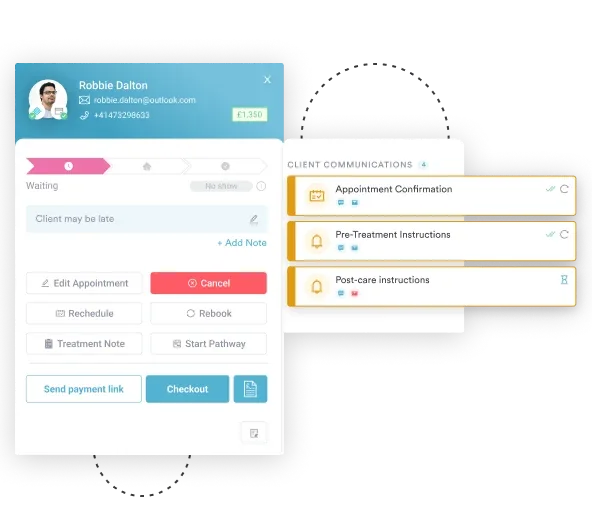
For multi-location neurology groups, Pabau’s multi-location tools centralize coding policy. The A-to-D shift is then applied the same way at every site, not left to individual interpretation. The compliance management feature keeps injury code categories audit-ready, including the external cause completeness checks payers ask for.

Pabau’s structured note templates capture encounter type and loss-of-consciousness duration at the visit, then carry them through to the claim. Neurology and trauma practices spend less time on provider queries and see fewer injury-coding denials.

S06.6X1D is an easy code to understand and an easy one to misapply. Two failure points account for most traumatic SAH denials: using A instead of D on follow-up visits, and documenting LOC duration without a timed value.
Both are fixed at the note, not at the claim. Put an encounter-type field and a minutes-based LOC field in your follow-up template and the coder stops guessing. The trade-off is a slightly longer form for the clinician, traded against a query queue and a denial log that shrink.
Pabau’s clinical documentation and claims management tools give neurology and trauma practices the templates, workflows, and audit features to hold that standard on every chart. Book a demo to see how Pabau handles injury coding from first note to submitted claim.

Billing anesthesia for an eye exam? Ophthalmoscopy anesthesia billing guide covers when sedation or general anesthesia is billed for an eye exam under anesthesia.
Looking for structured record tools for neurology follow-up? Pabau’s clinical record system supports structured note templates for injury and neurological documentation.
Billing anesthesia for sinus procedures? Nose and sinus anesthesia billing guide covers the modifier and time unit mistakes that get this frequently used code denied.
ICD-10 Code S06.6X1D is a billable ICD-10-CM diagnosis code for traumatic subarachnoid hemorrhage with loss of consciousness of 30 minutes or less, subsequent encounter. It applies when a patient returns for follow-up or routine care after the acute phase of a traumatic SAH. The documented loss of consciousness must have lasted no longer than 30 minutes.
Traumatic subarachnoid hemorrhage is coded in the S06.6X subcategory, while a non-traumatic or aneurysmal bleed is coded in I60.x. Within S06.6X, the exact code is set by the documented duration of loss of consciousness and the encounter type. S06.6X1D is the one to use for loss of consciousness of 30 minutes or less at a follow-up visit.
The 7th character D denotes a subsequent encounter, meaning the patient is being seen during the healing or recovery phase rather than active initial treatment. For injury codes in Chapter 19 (S00-T88), the three options are A for initial encounter, D for subsequent encounter, and S for sequela. D applies to every follow-up visit once the acute treatment phase has ended.
S06.6X1A covers the initial encounter, when the patient is receiving active treatment for traumatic subarachnoid hemorrhage in an emergency department or acute admission. S06.6X1D covers the follow-up phase, once the patient is healing. Using S06.6X1A on an outpatient follow-up claim misrepresents the encounter type and raises RAC audit risk.
Yes. S06.6X1D is POA exempt, so hospitals do not report a present-on-admission indicator when this code appears on an inpatient claim. CMS excludes injury codes carrying a subsequent encounter or sequela 7th character from POA reporting as a class. The reason is that the injury predates any admission the subsequent encounter code documents.
Report associated mental health or cognitive conditions with additional codes. Common companions are F06.8x for cognitive impairment after brain injury, F07.81 for postconcussional syndrome, and R41.3 for post-traumatic amnesia. External cause codes from Chapter 20 covering mechanism, place of occurrence, and activity should also be reported. Apply the D 7th character consistently across every injury-related code on the claim.
S06.6X1D maps to MS-DRG assignments under MDC 01, Diseases and Disorders of the Nervous System, on inpatient hospital claims. The specific tier (with MCC, with CC, or without CC/MCC) depends on the comorbidities documented. DRG numbers and payment weights change annually with CMS rule updates, so verify against the current MS-DRG Definitions Manual.
Start in the ICD-10-CM alphabetic index under the condition, then confirm the entry in the tabular list before you use it. The tabular list is where the instructional notes live: Excludes1 rules, use-additional-code prompts, and 7th character requirements. For S06.6X1D you would index hemorrhage, subarachnoid, traumatic. Then check the S06.6X entry for the loss-of-consciousness value before adding the 7th character. CMS publishes the current files free each year, and AAPC hosts a searchable version.




