



HCPCS code E0198: Water pressure pad billing guide
HCPCS code E0198 is a water pad for a standard mattress HCPCS code E0198 is the ...

Last Updated: Oct 13, 2026

CPT code 21255 covers reconstruction of the zygomatic arch and glenoid fossa with bone and cartilage. Autograft harvest is part of the descriptor.
Billing a separate harvest code alongside 21255 triggers NCCI edits. It is the most common denial driver on this code.
The code carries a 90-day global period. Routine post-operative care inside that window is bundled into the surgical fee.
Both the zygomatic arch and the glenoid fossa must be reconstructed. One structure alone usually calls for a different code.
Practice management software like Pabau ties operative documentation to claim submission, so coding errors surface before the payer sees them.
CPT code 21255 covers reconstruction of the zygomatic arch and glenoid fossa with bone and cartilage, and the descriptor includes obtaining autografts. The American Medical Association’s CPT code set places it in the repair, revision, and reconstruction section for the skull, facial bones, and temporomandibular joint. That section sits in the 20000-21999 musculoskeletal range. Co-claiming restrictions in the Australian schedule decide which items can appear on the same day. Two practices can bill the same encounter at a different visit level, and the note settles which was right.
The code applies when a surgeon reconstructs two distinct structures. Those are the zygomatic arch, which is the cheekbone prominence, and the glenoid fossa, which is the socket of the temporomandibular joint. Both must be addressed for 21255 to apply.
Glenoid fossa work alone, or zygomatic arch repair without graft reconstruction, usually calls for different coding. A bone graft to the malar area alone, with no arch and fossa reconstruction, belongs to CPT code 21210. Mandibular procedures such as 21199 sit outside this descriptor entirely. Oral and maxillofacial surgeons bill 21255 most often.
Relative value units (RVUs) form the basis of Medicare reimbursement for CPT code 21255. The Centers for Medicare and Medicaid Services (CMS) updates RVU values annually through the Medicare Physician Fee Schedule. Verify figures against the current year’s MPFS data file before submitting claims, because values change each January.
Three components make up a code’s total RVU. Those are the work RVU, the practice expense RVU, and the malpractice RVU. Facility and non-facility settings carry different practice expense values, because overhead differs between an inpatient hospital and a physician’s office.
The Medicare national average payment is then calculated by multiplying total RVUs by the annual conversion factor, which CMS sets each year. The table below shows the RVU structure for CPT 21255. Pull the exact figures from the CMS MPFS data file before billing.
CPT 21255 is a complex reconstructive procedure, so its work RVU reflects substantial physician effort. Practices that handle claims management for oral surgery caseloads should cross-check RVU values quarterly, which catches any mid-year MPFS correction.
Medicare calculates its national average payment for CPT code 21255 by multiplying the geographic-adjusted total RVUs by the annual conversion factor. The payment a practice actually receives varies by locality, through the geographic practice cost indices. Commercial payer rates are negotiated separately, outside the Medicare fee schedule.
The physician billing CPT code 21255 receives the professional fee regardless of setting. When the procedure happens in a hospital or ASC, the facility submits its own claim for facility costs. In a non-facility setting, the higher non-facility practice expense RVU compensates the practice for the overhead it absorbs.
Always pull reimbursement figures directly from the current CMS Physician Fee Schedule lookup tool before quoting expected payment to a patient or payer. Medicare rates reset each January 1, and mid-year corrections can shift values. Relying on prior-year figures is a common cause of underbilling on complex reconstructive codes.
Modifiers adjust how CPT code 21255 is reported to reflect specific clinical circumstances. Using the wrong modifier, or omitting a required one, leads to denials or post-payment audits.
Modifier -22 is the most frequently misused modifier on this code. Payers want clear operative documentation explaining why the procedure exceeded typical complexity. A single sentence stating “complex anatomy” is not enough. The note has to quantify the extra work, such as added operative time, anatomical obstacles, or additional grafts.
Several Jane App competitors handle these procedure codes with billing built in, so nothing gets rekeyed.
Every claim for CPT code 21255 needs a supporting ICD-10-CM diagnosis code that establishes medical necessity. Payers cross-reference the diagnosis against the procedure to confirm clinical appropriateness. A mismatch between the diagnosis and the reconstruction is a leading cause of medical necessity denials on this code.
Check each pairing against your payer’s local coverage determination before submitting. The AAPC Codify CPT lookup carries ICD-10 crosswalk data that confirms commonly accepted diagnosis pairings for this procedure.
CPT 21255 carries a 90-day global period, according to CMS MPFS data reported across coding references. Confirm the current indicator for the code before billing. All routine post-operative care within 90 days of the procedure date is bundled into the surgical fee.
Services that stay separately billable during the global period need a specific exception. Practices using surgical practice software that tracks global period windows can flag those cases automatically, instead of calculating dates by hand.
The most common billing error on CPT code 21255 is billing an autograft harvest code alongside it. The descriptor states “includes obtaining autografts,” so the harvest is already paid for inside 21255. Adding a bone or cartilage harvest code triggers a National Correct Coding Initiative (NCCI) edit, and the extra code is denied.
Our procedure codes library covers the wider CPT ranges that surgical practices bill alongside this one. A medical coding cheat sheet is a useful desk reference for the modifier and place-of-service basics.
Place of service affects both the RVU calculation and whether a separate facility fee applies. The operating surgeon reports CPT 21255 with the same procedure code in every setting. What changes is the practice expense component and who bills the facility costs.
ASC eligibility for CPT 21255 depends on the CMS-approved ASC procedure list for the current year. CMS updates that list annually. Confirm the ASC payment indicator for 21255 in the current CMS Physician Fee Schedule data file before you schedule the procedure in an ASC.
Documentation is where CPT code 21255 claims succeed or fail at audit. This is a complex reconstruction with an included autograft harvest, so the operative report has to show both the necessity and the scope of work. Missing one element is enough for a payer to reclassify or deny the claim.
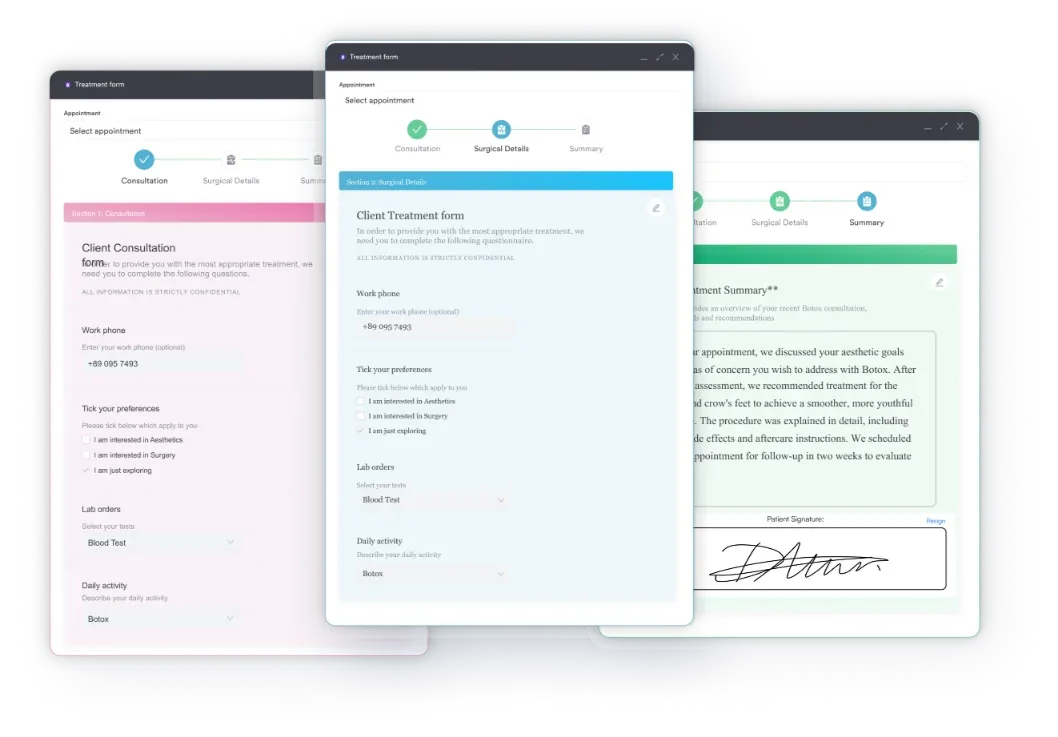
Practices that have moved to digital intake forms can build these checkpoints straight into their surgical note templates. The same clinical documentation requirements apply across procedure types, so one structured template usually covers several codes.
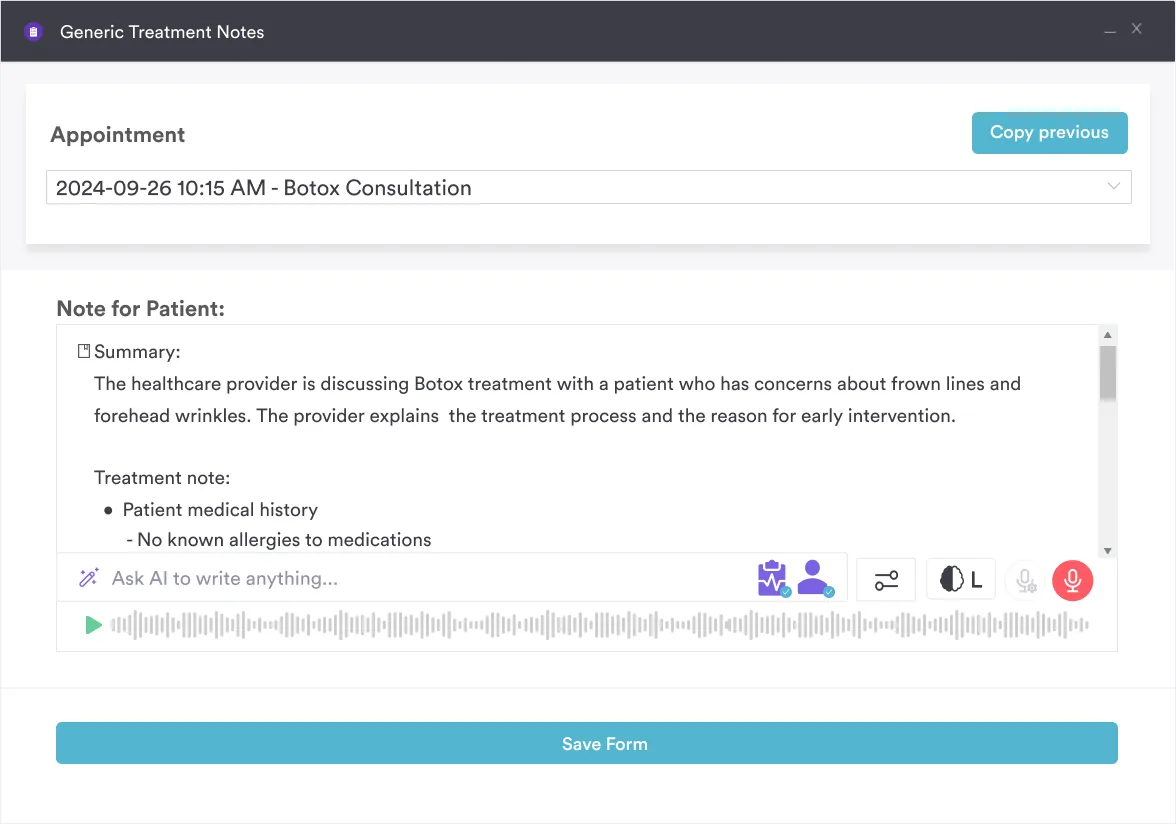
Audit your 21255 claims quarterly for documentation completeness. Practice management software like Pabau takes some of that burden off the surgeon. Pabau Scribe, our AI scribe, captures consultation and operative dictation automatically, so the note is drafted while the detail is fresh.
Most oral surgery practices run coding and claims in two places. The operative note lives in the clinical record, and the claim gets rebuilt by hand in a separate billing system. Every rekeyed modifier and diagnosis code is another chance to lose the claim.
Pabau keeps both sides in one workflow. The operative documentation, the CPT and ICD-10 pairing, and the claim all sit against the same patient record. Your coder works from the note itself rather than a summary of it, and global period dates run from the procedure date automatically.
That matters most on a code like 21255, where denials usually trace back to something the operative note should have settled. The same workflow serves dermatology practices and other surgical specialties working under the same global period and modifier rules.

Pabau brings CPT coding into the surgical practice workflow. Your team moves from operative documentation to claim submission without switching between systems.

Two habits keep 21255 claims clean. Bill the reconstruction as a single code, and let the operative note carry the evidence for every modifier you attach.
The second habit pays off more than it looks. A note that names both anatomical structures, the graft source, and the laterality answers most audit questions before anyone asks them.
The trade-off worth remembering is time. Documenting to that standard costs you minutes at dictation and saves hours at appeal. Book a demo to see how Pabau keeps surgical coding, documentation, and claim submission in one place.

Also coding facial fracture repairs? CPT code 21330 sets out the open treatment rules that sit alongside zygomatic reconstruction.
Billing grafts on the face? CPT code 15260 covers full thickness grafting of the nose, ears, eyelids, and lips.
Using skin substitute grafts as well? CPT code 15274 explains how the add-on units are counted and reported.
Coding elevated liver enzymes without a diagnosis? ICD-10 code R74.01 explains when elevated ALT results support a billable diagnosis before hepatitis is confirmed.
CPT code 21255 is the procedure code for reconstruction of the zygomatic arch and glenoid fossa with bone and cartilage, including obtaining autografts. Oral and maxillofacial surgeons and plastic surgeons use it for complex facial and temporomandibular joint reconstruction.
No. The CPT descriptor states “includes obtaining autografts,” so the harvest is already paid for inside the 21255 fee. Billing a separate autograft harvest code alongside 21255 triggers NCCI bundling edits, and the additional code is denied.
CPT 21255 carries a 90-day global period, according to CMS MPFS data. All routine post-operative care within 90 days of the surgery date is bundled into the surgical fee. Separately billable exceptions include a return to the operating room for complications, staged procedures, and unrelated visits for new problems.
Modifier -50 applies when the zygomatic arch and glenoid fossa reconstruction is performed bilaterally in the same operative session. Medicare generally reimburses bilateral procedures at 150% of the single-procedure rate, though payer policies vary. The operative report has to document that both sides were reconstructed.
CPT 21255 may be eligible for ASC billing, depending on the current CMS ASC-approved procedure list. CMS reviews and updates ASC eligibility annually. Verify the ASC payment indicator for this code in the CMS Physician Fee Schedule data file before scheduling the procedure in an ASC.
Common ICD-10-CM pairings include M26.69, S02.40XA, Q75.0, and C41.0. Use a billable laterality code such as M26.629 rather than the parent code M26.62 for TMJ arthralgia. The diagnosis must establish medical necessity and align with payer local coverage determinations.



