ICD-10 Code Y76.0: Diagnostic obstetric and gynecological devices
ICD-10 Code Y76.0: Definition and billable status ICD-10 Code Y76.0 is a valid, ...

Last Updated: Oct 23, 2026
Billable Code Specific Code
S02.32XB is the billable ICD-10-CM code for fracture of orbital floor, left side, initial encounter for open fracture.
Two details in the chart decide whether it fits. One is the side. The other is whether the note actually calls the fracture open. Miss either and the claim either loses specificity or comes back for more information.
One more trap sits next door. The orbital floor is S02.3-, while the orbital roof is S02.12-, under fracture of base of skull. They are different bones, so they never share a code.
Let Pabau's smart automation suggest the right codes, reduce claim denials, and keep your practice compliant—effortlessly.
Automate repetitive tasks and focus on what matters most—your patients.
Reduce coding errors and ensure compliance with the latest regulations.
Clean claims, fewer denials, and faster reimbursements.
Powerful insights and reporting to help your practice thrive.
HIPAA compliant SOC 2 certified GDPR-compliant Trusted by 4,000+ clinics worldwide

ICD-10 code S02.32XB describes a fracture of the orbital floor, left side, initial encounter for open fracture, under ICD-10-CM Chapter 19
The billable code runs to seven characters. S02.32 covers the left orbital floor, X fills the sixth position as a placeholder, and B marks the initial open fracture encounter
Orbital floor fractures sit under S02.3, not S02.1. The Tabular List carries an Excludes2 note between the floor and the orbital roof (S02.12-), so the two are never interchangeable
Under category S02 the 7th character B means an open fracture with no Gustilo subdivision. Only the forearm, femur, and lower leg categories split open fractures by Gustilo type
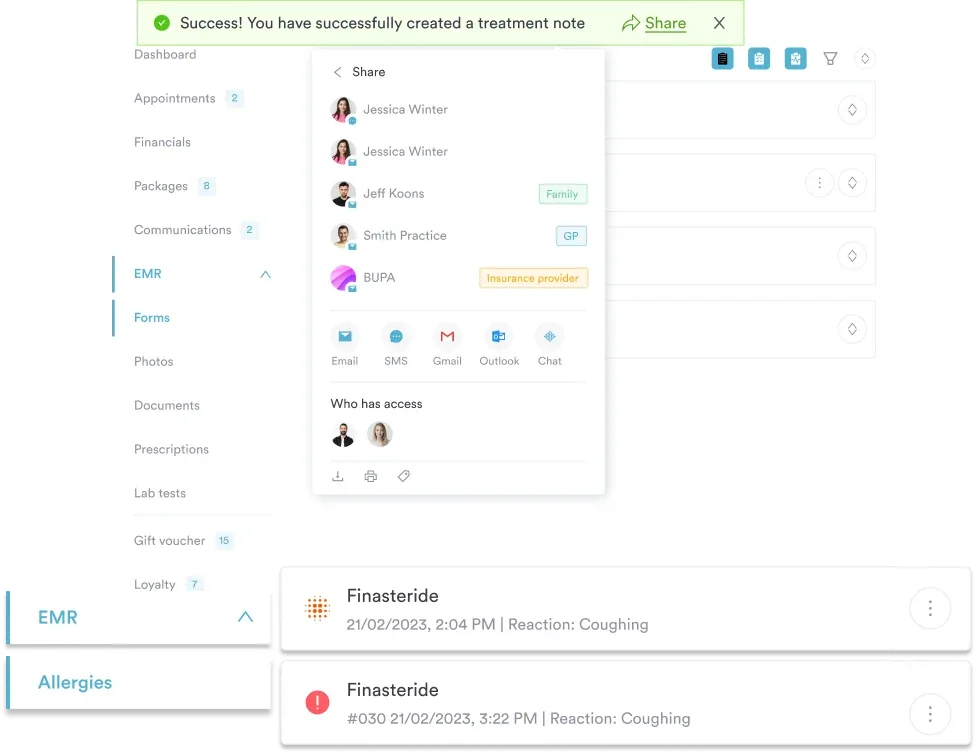
Practice management software like Pabau keeps laterality and open status on the patient record from the first encounter. The coder is then not guessing weeks later
The code lives in category S02, fractures of skull and facial bones, inside ICD-10-CM Chapter 19. That chapter covers injury, poisoning, and certain other consequences of external causes (S00-T88). Its parent subcategory is S02.3, fracture of orbital floor.
The table below pulls the attributes together for quick reference during coding and billing.
The orbital floor is the thin bony shelf under the eye. It separates the orbit from the maxillary sinus below, and the ICD-10-CM Tabular List also calls it the inferior orbital wall.
Most of that shelf is maxilla, with contributions from the zygomatic and palatine bones. It is thin, so blunt force breaks it before the sturdier walls give way. The orbital roof is part of the base of the skull, which is why the two sit in different subcategories.
Cases like this land with maxillofacial surgeons. Wherever they land, the coding starts with the mechanism and the side.
That left designation comes from the 5th character, and it is required whenever the record names a side. Falling back to S02.30X- when the imaging says left costs you specificity, and it is a common audit trigger.
A blowout fracture happens when force lands on the eye or the area around it and pressure inside the orbit spikes. The floor is the weakest wall, so it gives way downward into the maxillary sinus. The eyeball itself usually stays intact.
A ball or an elbow to the eye is the classic mechanism. Practices on sports medicine software often write the first note on one of these injuries. That note matters more than anything the coder does later.
Clinicians should state the mechanism, the side, and open versus closed status in the note itself. Vague documentation is the main reason these claims come back for more information. A facial trauma consultation form that captures all three at the first visit removes the guesswork.
S02.32 is only five characters long, so it cannot be billed on its own. It takes the placeholder X in the sixth position, then a 7th character. That last character tells the payer the encounter type and the fracture status.
Both cover an initial encounter, so the fracture status is the tiebreaker. S02.32XA is the closed fracture, with no wound reaching the fracture site. S02.32XB is the open one, with a wound down to the bone or bone showing.
Category S02 does not split open fractures by Gustilo type. Only the forearm (S52), the femur (S72), and the lower leg (S82) work that way.
In those three categories, B means a type I or II open fracture and C covers types IIIA to IIIC. For an orbital floor fracture, B covers any open fracture the record documents. There is no separate character for a worse one.
Category S02 also carries a standing instruction. A fracture not described as open or closed is coded to closed, so silence in the note pushes the claim to S02.32XA.
Do not carry B into a follow-up visit either. Once the patient returns for healing checks, move to D, G, or K instead. Using B at a return visit is one of the errors payers pick up in audits.
Reading the hierarchy from the top is the quickest way to find the right sibling code when documentation is thin. The WHO ICD-10 browser holds the international framework that ICD-10-CM builds on.
Every injury code follows the same path. You move from category, to subcategory, to the specific code with its extensions. Never submit S02.3 or S02.32 on their own, because neither is billable without the placeholder and the 7th character.
The Tabular List draws hard lines around the orbital floor. Most of them are Excludes2 notes, and one is an Excludes1. That difference changes what you can report on the same claim.
Excludes2 means the excluded condition is not part of S02.3-, so a patient can carry both codes when both injuries are documented. Excludes1 is stricter. S02.85 and S02.32XB never appear on the same claim for the same orbit.
The ICD-10-CM Official Guidelines for Coding and Reporting, Section I.C.19, govern how Chapter 19 injury codes are applied. For S02.32XB, three documentation elements are non-negotiable.
Section I.C.20 then asks for external cause codes alongside the injury, describing the mechanism and where it happened. Common pairings are W19.XXXA for an unspecified fall and Y04.0XXA for an assault in an unarmed fight. Payers increasingly expect them on trauma claims.
Thorough clinical documentation keeps these claims from bouncing. A form that prompts for mechanism, side, and open or closed status at every trauma visit takes the guesswork out of coding.
Run a quarterly audit of your S02.3x claims and check which 7th character the initial encounter claims carry. Category S02 defaults an undocumented fracture to closed. A trauma caseload weighted heavily toward A with almost no B codes usually points to thin documentation rather than a coding error. That is a training opportunity, not a coding fix.
Blunt force strong enough to break the floor usually damages something else as well, and a complete claim codes every confirmed diagnosis. Incomplete co-coding is a common reason trauma claims pay less than the case warranted.
The S02.4 row above covers one pattern worth checking by name. A LeFort II break is pyramidal, and its fracture line crosses the orbital floors. An open LeFort II at the initial encounter codes to S02.412B.
Sequencing matters. S02.32XB is usually the principal diagnosis when the left orbital floor fracture is what the patient came in for. If an intracranial injury from the S06 range drove the admission, that goes first instead.
The rules land better against a case. A patient trips on a curb, lands face first, and arrives with a swollen left eye and a lid laceration down to bone.
Change one detail and the claim changes with it. If the note never says the wound reached the fracture, the code drops to S02.32XA. If the patient comes back weeks later for a healing check, the 7th character moves to D.
The episode of care does not end with S02.32XB. Every later visit for the same orbital floor fracture takes a different 7th character, reflecting where the patient sits in the healing arc.
On a sequela visit, code the nature of the sequela first and S02.32XS second. Persistent diplopia from a healed left orbital floor fracture is coded H53.2, then S02.32XS.
That order comes from the CMS ICD-10 coding guidelines, and it holds across the S02 family. Applying it consistently across the whole episode protects you at audit.
Open and closed fractures do not always land in the same payment bracket, so the 7th character carries financial weight too. Where S02.32XB groups depends on the principal diagnosis and on any procedures performed during the stay. Confirm the grouping in the current CMS release rather than in a coding reference. Australian MBS billing changes descriptors and fees periodically, so last year printout is not a safe reference. Front-desk data entry and back-office coding both feed cash collection, so errors compound downstream.
Most denials on these claims trace back to four things:
The diagnosis code only explains why the patient was treated. Surgical repair is billed from the facial fracture CPT range, where each approach carries its own code.
DRG and APC grouping weights are updated annually by CMS, so any reimbursement figure in a coding reference goes stale within a fiscal year. Check the current CMS fee schedule, then confirm the code itself in the AAPC ICD-10-CM code lookup and your payer’s policy.
HIPAA also requires every ICD-10-CM code in an electronic transaction to be valid and current. Confirm S02.32XB is unrevised in the active CMS release before each claim cycle.
Build a short pre-submission checklist for orbital fracture claims. Is the laterality captured? Is the encounter type right? Is at least one Chapter 20 external cause code present? Are co-existing injuries coded separately? Four checkboxes prevent the most common denial reasons for S02.32XB claims.
Most of what goes wrong with S02.32XB happens before anyone opens the coding software. The note does not name the side, or it never states that the fracture was open, and the coder is left guessing weeks later.
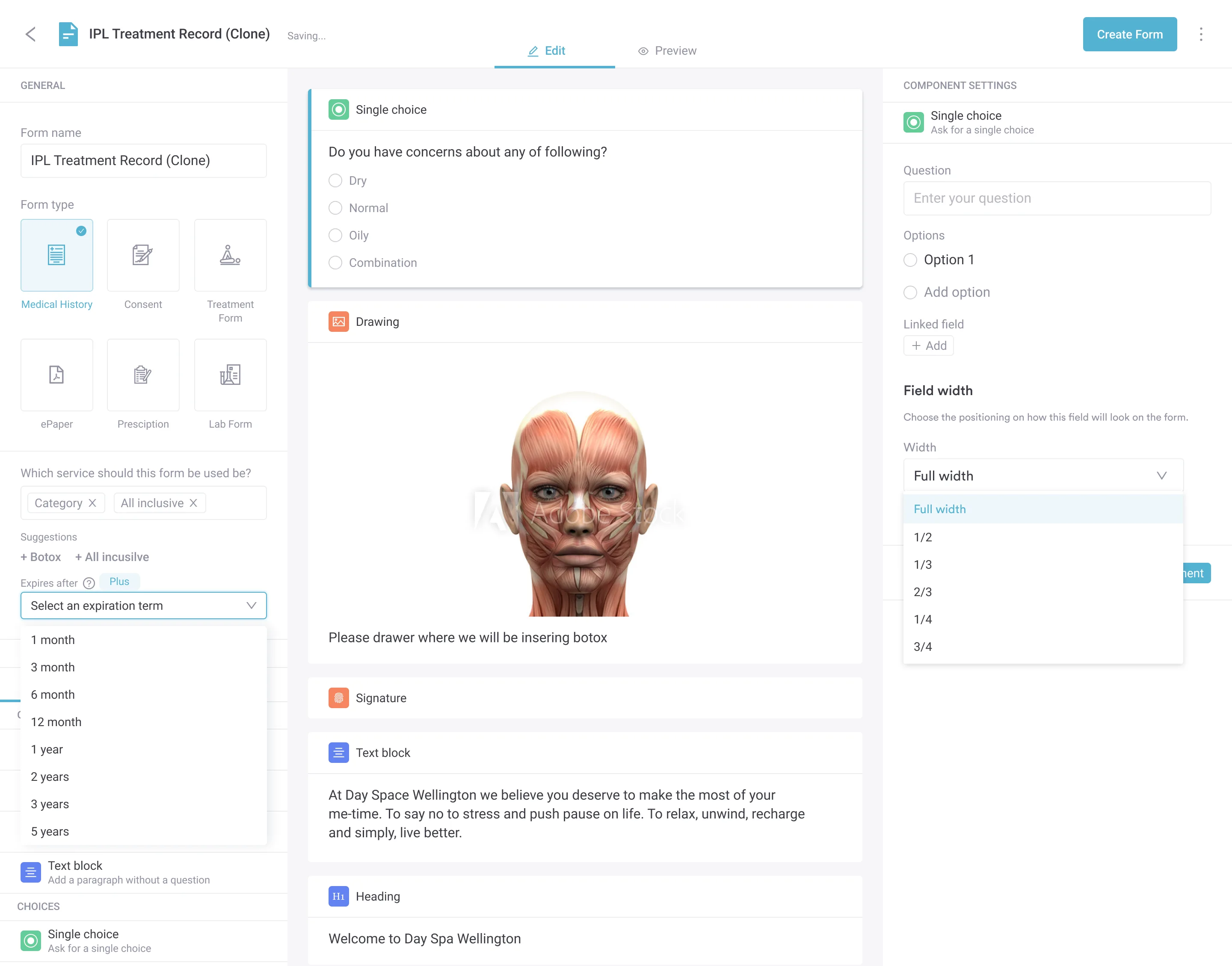
Pabau is an all-in-one practice management system for medical and aesthetic practices. Its digital forms let you build a trauma template that will not submit until laterality and open or closed status are filled in.
Treatment notes, imaging summaries, and before-and-after photos stay on the same patient record, so the documentation supporting the code sits in one place. Every subscription includes the full platform, so none of this sits behind a higher tier.
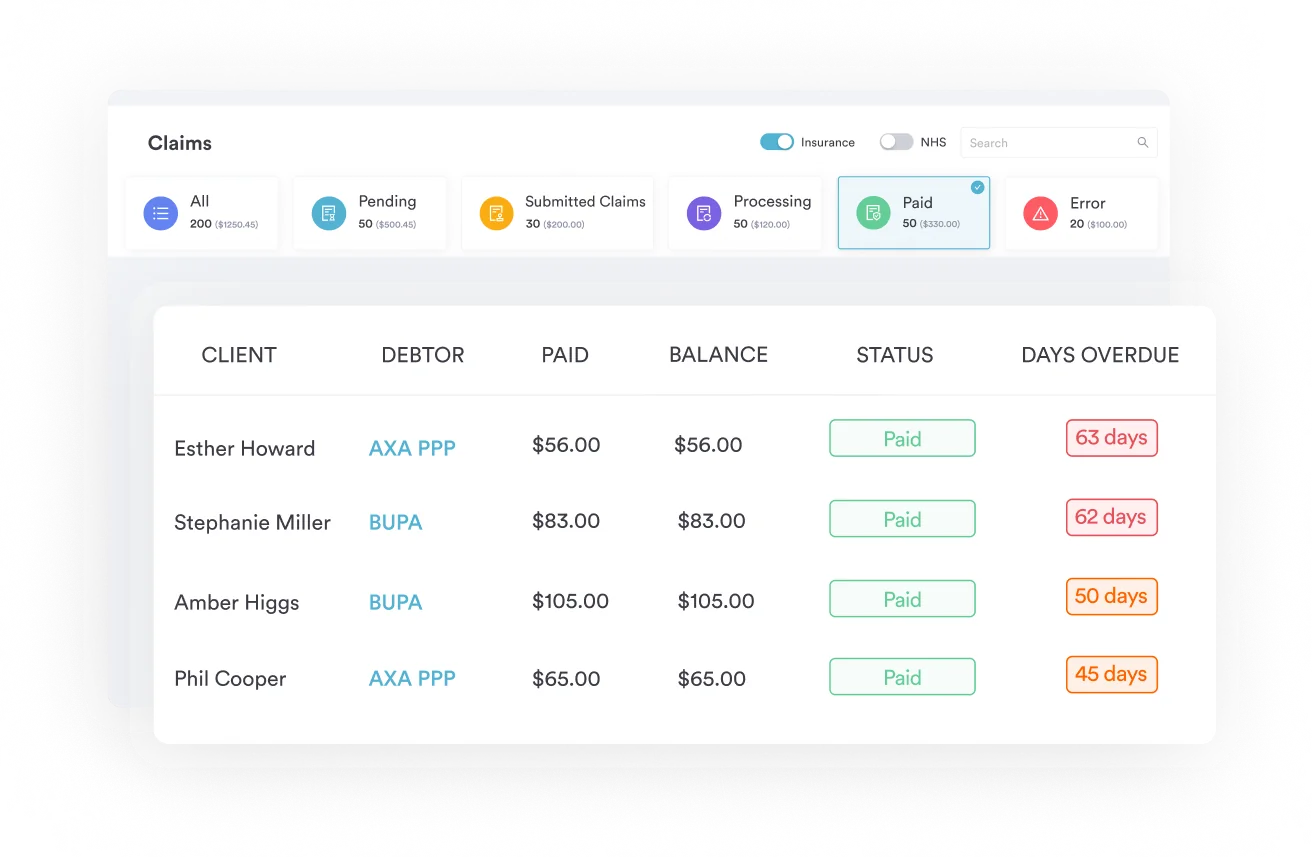
On the billing side, Pabau’s claims management checks that a claim carries the fields an insurer needs before it can be sent. A status dashboard then shows where every submitted claim stands. Custom reports on your own trauma and documentation fields show you where notes are still coming up short.

Pabau gives plastic surgery, ophthalmology, and emergency practices required-field trauma forms and one record per patient. It then checks each claim for missing submission details before it goes out.

Orbital floor fractures are among the most documentation-sensitive injuries in Chapter 19. Get the subcategory, the laterality, the placeholder, and the 7th character right at first contact, and the claim usually pays the first time.
The one distinction worth committing to memory is the floor against the roof. The floor is S02.3-, the roof is S02.12-, and an Excludes2 note keeps them apart.
If your notes keep arriving without the side or the open status, the fix belongs in the form rather than in the coding queue.
Book a demo to see how Pabau captures both at the first encounter, then follows the claim through to payment.

Coding a facial fracture that is healing slowly? S02.81XG works through the G character on a right-side skull and facial bone fracture.
Reporting a late effect instead of a fresh injury? S02.11CS shows how sequela coding works on a base of skull fracture.
Billing the surgical repair as well as the diagnosis? CPT 21348 covers open treatment of a facial fracture, with the documentation payers look for.
Treating a facial fracture without surgery? CPT 21320 explains how closed treatment with stabilization is billed.
Billing an IV infusion as sole procedure? IV infusion billing guide explains when intravenous infusion counts as the sole procedure in a clinical session.
No. S02.121B is an open fracture of the orbital roof, right side, at the initial encounter. The roof belongs to S02.12, under fracture of base of skull. An Excludes2 note keeps roof and floor apart, so the two codes are not interchangeable.
Until active treatment for the fracture ends. The 7th characters A and B cover that whole active treatment phase, including surgery and assessment by a new physician. D, G, and K start once the patient moves into routine healing or aftercare.
No. ICD-10-CM offers right (S02.31X-), left (S02.32X-), and unspecified (S02.30X-) only. When both floors are fractured, report the right and left codes together, each carrying the 7th character that matches the encounter.
Usually yes. The ICD-10-CM guidelines allow laterality to be taken from documentation by clinicians other than the treating provider. If the radiologist says left and the operative note says right, query the provider before you code.
The two codes do different jobs. S02.32XB says what is wrong with the patient, while the repair, the imaging, and the visit are each billed with their own CPT code. Payers compare the pair to test medical necessity.