CPT code 93503: Swan-Ganz catheter billing and modifiers
CPT code 93503: Official descriptor and procedure overview In the AMA CPT code s...

Last Updated: Oct 23, 2026

CPT 21348 covers open treatment of a nasomaxillary complex fracture, the LeFort II pattern, with bone grafting. In addition, the code includes obtaining the graft.
The LeFort II family runs 21345, 21346, 21347 and 21348. Its own descriptor defines each code, and only 21348 involves a bone graft.
The 2026 Medicare national average is about $948, the same in facility and non-facility settings. Before billing, verify the rate for your locality with the CMS fee schedule lookup tool.
CPT 21348 carries a 90-day global surgery period. The bundle covers most related post-operative E/M visits inside that window unless a modifier supports billing them.
Practice management software like Pabau keeps CPT codes on the treatment record and submits claims from the same system, so no one has to re-key anything.
CPT code 21348 covers open treatment of a nasomaxillary complex fracture, the LeFort II pattern, with bone grafting. The descriptor includes obtaining the graft, so you do not bill the harvest on top. It is one of four LeFort II codes, and its own descriptor defines each one.
This reference covers the 2026 RVU values, Medicare fee schedule, ICD-10 crosswalk and applicable modifiers. It also covers global period rules, bundling edits and the documentation that decides whether a claim pays.
The American Medical Association (AMA) owns and maintains the CPT code set. CPT code 21348 sits in the Fracture and/or Dislocation Procedures on the Head section of the Musculoskeletal System chapter. In practice, knowing what the code covers, which ICD-10 diagnoses pair with it, and when each modifier applies keeps the claim clean.
CPT code 21348 describes open treatment of a nasomaxillary complex fracture, the LeFort II pattern, with bone grafting. It covers surgical exposure, reduction and stabilization of the nasomaxillary complex. That is the bony framework connecting the nasal bones to the maxilla. The code also covers harvesting the graft and placing it to restore structural integrity at the fracture site. First-pass rate measures how often a claim is paid without anyone touching it again. Billing compliance asks a narrower question than coding accuracy: can the practice defend this claim on review.
A LeFort II fracture runs in a pyramidal pattern through the nasal bridge, the orbital floors and the maxilla. Four CPT codes describe its treatment, distinguished by how the surgeon treated the fracture. Specifically, only 21348 involves a bone graft, and the descriptor states that the code includes obtaining the graft.
Report CPT 21348 when the surgeon treats a LeFort II fracture through an open approach and places a bone graft in the same session. The graft is what separates this code from the other three in the family. Surgeons usually need it when the fracture leaves a defect that fixation alone cannot bridge.
LeFort II fractures come from high-energy trauma such as motor vehicle collisions, assaults and falls from height. Midface injuries from contact sport often reach sports medicine practices first, which then refer the patient on for open repair.
If the surgeon reduces the fracture and holds it with wires or plates without placing a graft, 21348 is the wrong code. Report 21346 for open treatment with wiring or local fixation, and 21347 when the reduction required multiple open approaches. A nasal bone fracture treated closed sits in a different family under CPT code 21320.
Relative Value Units (RVUs) determine the Medicare payment for this procedure under the Resource-Based Relative Value Scale (RBRVS). The figures below come from the 2026 CMS relative value files. Check them against the CMS fee schedule lookup before you submit, since an addendum can revise a value mid-year.
CMS lists no non-facility practice expense RVU for 21348 and marks that field NA in the relative value file. CMS treats the code as facility-only, so the payment does not move when the setting changes. At 28.38 total RVUs it sits among the higher-weighted codes in facial fracture surgery.
CMS also publishes two conversion factors for 2026. CMS pays practices that qualify as participants in an advanced alternative payment model at $33.5675 per RVU. By contrast, it pays everyone else at $33.4009, the figure the table above uses.
A chiropractic platform links every spinal or joint procedure to its treatment schedule and the outcome you record.
The calculated payment above is a national average before Geographic Practice Cost Indices (GPCI) adjustments. Because those adjustments vary by area, the practice’s location changes the final Medicare payment for 21348.
CMS applies separate GPCI multipliers to the work, practice expense, and malpractice RVU components for each Medicare locality. Urban areas with high overhead costs (e.g. Manhattan, San Francisco) typically receive upward adjustments, while rural localities receive lower multipliers. The formula is:
Adjusted payment = [(wRVU x work GPCI) + (PE RVU x PE GPCI) + (MP RVU x MP GPCI)] x conversion factor
Medicare pays a practice billing 21348 in a high-cost urban locality above the national average. In fact, the practice expense GPCI drives most of that difference. Run a locality-specific lookup through the CMS tool before you quote a patient or negotiate against a Medicare benchmark.
Private payer rates for this procedure vary by contract. For example, many commercial plans set reimbursement as a percentage of Medicare, usually well above 100% for surgical work. Alternatively, others negotiate a flat rate that ignores the fee schedule entirely.
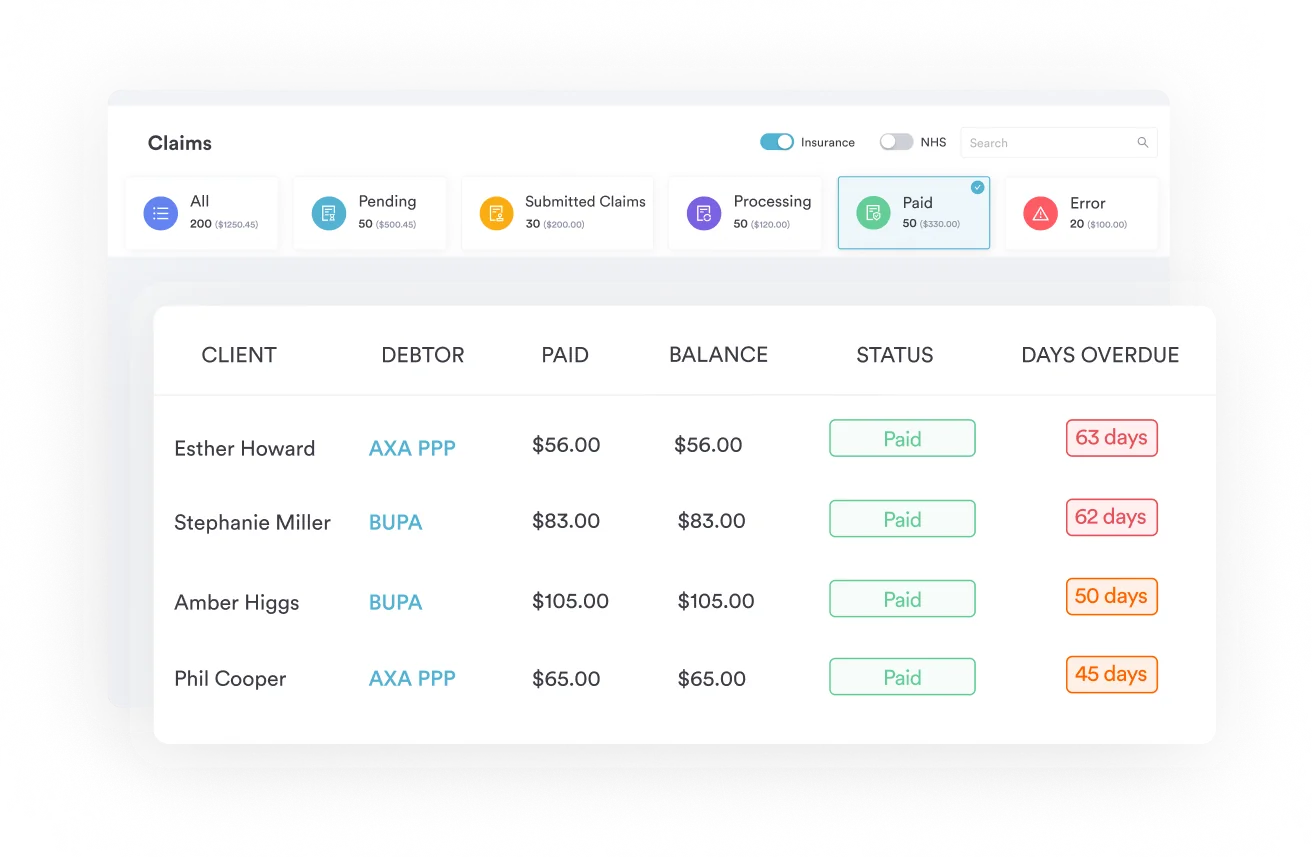
Practice management software like Pabau tracks claims and reimbursements by payer, so underpayments against a contracted rate surface without a spreadsheet.
Payers establish medical necessity from the ICD-10-CM diagnosis on the claim. In particular, the diagnosis for CPT code 21348 should name the LeFort II fracture itself, which is S02.412. In addition, the seventh character records the encounter and whether the fracture is open or closed.
Use the seventh character that matches the encounter, which is normally A or B on the operative claim. For further verification, the AAPC CPT-to-ICD-10 crosswalk lists additional paired diagnosis codes.
Not every payer accepts every pairing. Some commercial plans require pre-authorization that links a named diagnosis to this procedure, so confirm the pairing with each payer first.
Modifier selection for CPT code 21348 depends on the surgical team composition, whether the surgeon performed multiple procedures, and the clinical complexity involved. As a result, applying the wrong modifier, or omitting a required one, is a leading cause of claim denial for this code.
Check the MPFS co-surgery indicator before you bill modifier -62 on 21348. Not all payers follow the CMS defaults, so confirm modifier acceptance with each commercial payer.
CPT code 21348 carries a 90-day global surgery period under the Medicare Physician Fee Schedule. In fact, this is standard for major surgical procedures. The global period begins the day after surgery and runs for 90 calendar days.
Specifically, Medicare and most commercial payers that follow CMS global surgery rules will not pay separately for services the 90-day global package includes:
Document the clinical reason in the medical record any time you bill outside the global bundle. In particular, global period audits look for E/M claims filed inside the 90-day window without a supporting modifier.
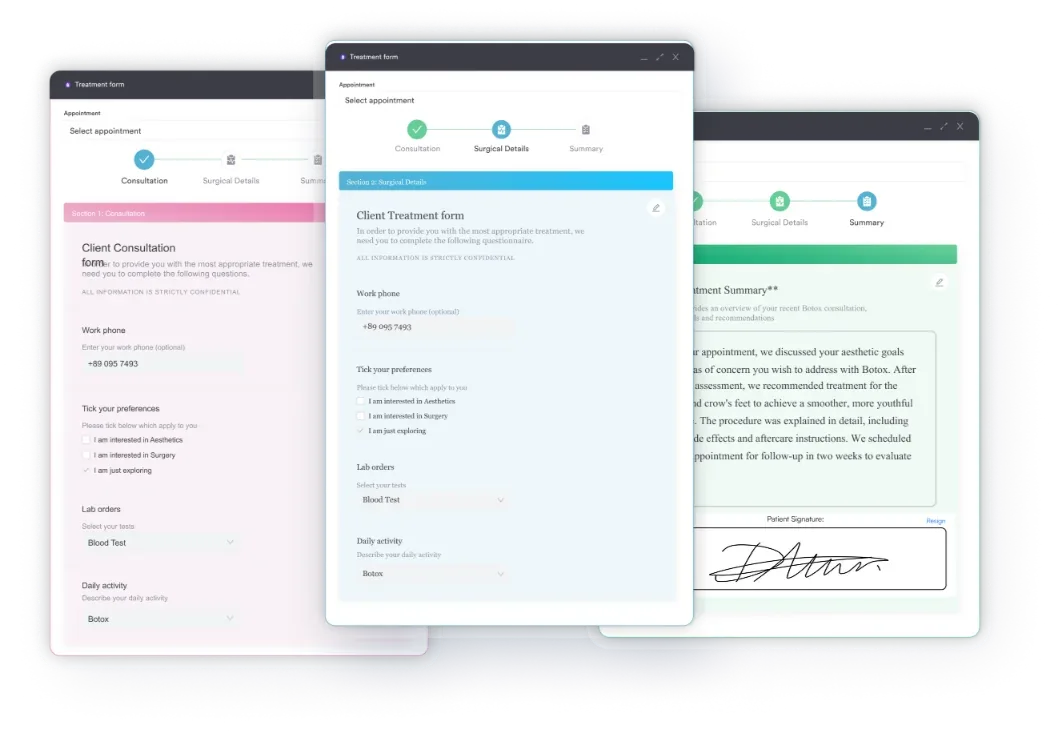
Structured digital forms and records keep that audit trail together, so the note behind a modifier is easy to produce.
Audit your post-operative E/M billing every quarter. Filter claims billed within 90 days of a CPT 21348 service. Confirm that modifier -24, -25, -78 or -58 appears on any separately billed service. Missing modifiers are the most common global period billing error for major facial surgery codes.
The four nasomaxillary complex codes share one CPT parent, each distinguished by one feature: only 21348 involves a bone graft, and only 21347 requires multiple open approaches. In other words, reading the pair as graft versus no graft misses 21346.
When both descriptors fit, report only 21348, since it captures the graft. For neighboring fracture patterns.
The bone graft is part of CPT 21348, so harvesting it is not separately payable. The descriptor says as much in its own parenthetical, which includes obtaining the graft. As a result, billing a standalone graft code alongside 21348 runs straight into National Correct Coding Initiative edits.
You can still bill genuinely distinct procedures alongside 21348. For example, repair of a concurrent orbital floor fracture through its own approach qualifies. Check the payer bundling policy first, and make sure the operative note describes each procedure separately.
In fact, most denials and downcodes on this code start in the operative note. Getting the code right at billing means nothing if the note cannot support it under audit. The graft is the one entry that separates 21348 from the other three codes in the family, so it needs its own explicit description.
Medicare generally does not require prior authorization for 21348 in a hospital setting. However, commercial payers vary. For example, Aetna, Cigna and UnitedHealthcare typically require authorization for major facial surgery.
Obtain authorization before the procedure, using the ICD-10 diagnosis codes that will appear on the claim. A mismatch between the authorized diagnosis and the billed diagnosis triggers a denial. Meanwhile.
These are the denial patterns that billers in oral and maxillofacial surgery practices meet most often on this code. Most of them come from selecting a code by comparison instead of by descriptor.
It also keeps the billed CPT code matched to the procedure in the note, so the coder never has to interpret an ambiguous entry.
Pull twelve months of LeFort II claims and sort them by code. If nearly all of them are 21348, the operative notes are probably being read for the graft alone. Check that 21346 and 21347 are used where the note supports them.
In most oral and maxillofacial surgery practices the operative note lives in one system and the biller builds the claim in another. A biller reads the note, decides between 21346, 21347 and 21348, then retypes the code into a billing screen. As a result, every hop is a chance for the billed code to drift from the documentation behind it.
Pabau keeps both in one record. First the surgeon writes the note, then your team attaches the CPT code to that treatment, and the claim goes out referencing the same entry. When a payer asks what supported 21348, the graft description sits one click from the claim.
Pabau tracks reimbursement by payer in the same place. A shortfall against a contracted rate shows up on a report, rather than in an audit months later. As a result, your billers spend their time on the denials that need a person, not on re-keying codes between systems.

Pabau lets your team attach CPT codes to treatment records, track reimbursements by payer, and submit claims from one platform. No re-keying between a reference site and your billing system.

The habit that protects this family is coding from the operative note rather than from the code you billed last time. If the note names the graft, the donor site and the reason the case needed grafting, 21348 holds up under audit. If it does not, 21346 or 21347 is the honest answer.
In short, that habit costs a line or two of dictation and saves an appeal. The 90-day global window is the other place these claims leak, so check that every post-operative visit you bill carries the modifier that justifies it.
Pabau’s medical practice management platform keeps CPT code assignment connected to clinical documentation, so billers work from the same record the surgeon created. Book a demo to see how that removes a re-keying step from your billing.

Coding a bone graft harvest on its own claim? CPT code 20902 covers when a major graft harvest is separately reportable and when it is bundled.
Documenting a structural allograft instead of autograft? CPT code 20931 sets out the product and lot detail payers expect in the operative note.
Repairing facial lacerations alongside the fracture? CPT code 12032 explains how intermediate wound repair is measured and billed with other work.
Coding an adjacent facial fracture? ICD-10 code S02.600D walks through mandible fracture follow-up and the seventh character it needs.
Choosing a seventh character for delayed healing? ICD-10 code S02.81XG shows how a facial fracture that heals slowly is reported after the first encounter.
CPT code 21348 is the code for open treatment of a nasomaxillary complex fracture, the LeFort II pattern, with bone grafting. It also covers exposure of the fracture site, reduction of the nasomaxillary complex, and placement of a bone graft. The code includes obtaining the graft, so it is not separately billable.
The 2026 national average Medicare payment for CPT 21348 is about $948, before geographic adjustments. CMS marks the non-facility practice expense RVU as NA, so the payment does not differ by setting. Therefore, use the CMS fee schedule lookup tool for the exact rate in your locality.
The specific diagnosis is S02.412, LeFort II fracture, with a seventh character for the encounter. Use S02.412A for an initial encounter with a closed fracture and S02.412B for an open fracture. In addition, coders can add a nasal bone fracture code such as S02.2XXA as a secondary diagnosis where the documentation supports one.
Yes. CPT 21348 bundles in the graft, and the descriptor states that the code includes obtaining the graft. As a result, billing a standalone graft code such as 20900 or 20902 alongside 21348 runs into NCCI edits. If the surgeon placed no graft, the code is 21346 or 21347 depending on the approach.
Report 21346 when the surgeon treats the fracture open and holds it with wiring or local fixation. Report 21347 when the reduction required multiple open approaches. Report 21345 when the treatment was closed, using interdental wire fixation or a denture or splint.