CPT code 93503: Swan-Ganz catheter billing and modifiers
CPT code 93503: Official descriptor and procedure overview In the AMA CPT code s...

Last Updated: Oct 23, 2026
D1520 is the CCSD code for suction clearance of the middle ear when it is the only procedure performed. It sits in the ear, nose and throat chapter of the CCSD schedule, under section 5.2.0 Middle ear and mastoid. Bupa's February 2026 schedule places it in the MINOR 2 band at £123.
The words "as sole procedure" decide most D1520 claims. If the surgeon also inserts a tube, cuts the drum or cleans the ear canal, a different code applies. Twelve codes, including D1510 and D0702, can never share a claim with D1520. A clean claim starts with a note showing that suction was the only work done.
Let Pabau's smart automation suggest the right codes, reduce claim denials, and keep your practice compliant—effortlessly.
Automate repetitive tasks and focus on what matters most—your patients.
Reduce coding errors and ensure compliance with the latest regulations.
Clean claims, fewer denials, and faster reimbursements.
Powerful insights and reporting to help your practice thrive.
HIPAA compliant SOC 2 certified GDPR-compliant Trusted by 4,000+ clinics worldwide

CCSD code D1520 covers suction clearance of the middle ear, billed only when it is the sole procedure in the session.
The CCSD schedule bars D1520 from a claim with 12 codes, including D1510, D1530 and D0702 aural toilet.
If a grommet goes in or the drum is cut, bill the code for that work instead of D1520.
The ENT note should record the indication, the access route, the side and that no other procedure was done.
Fees differ widely, with Bupa paying £123 and Freedom Health Insurance £50, so check each schedule first.
CCSD code D1520 is the UK private billing code for suction clearance of the middle ear. It sits in the ear, nose and throat chapter, under section 5.2.0 Middle ear and mastoid. The full descriptor reads “Suction clearance of middle ear (as sole procedure)”.
Those last three words carry the rule. D1520 fits a session where suction of the middle ear is the only procedure. Once the surgeon does more, such as inserting a tube, the claim needs a different code.
A longer operation works the same way. Suction done during a simple mastoidectomy is not a sole procedure, so the claim carries that operation’s code, D1040.
The suction reaches the middle ear through an opening that already exists, like a perforation or a tube. If the surgeon has to cut the drum first, that cut is a myringotomy. Myringotomy has its own codes, and neither can share a claim with D1520.
The four questions below sort a session into the right code. Work down them in order and stop at the first yes.
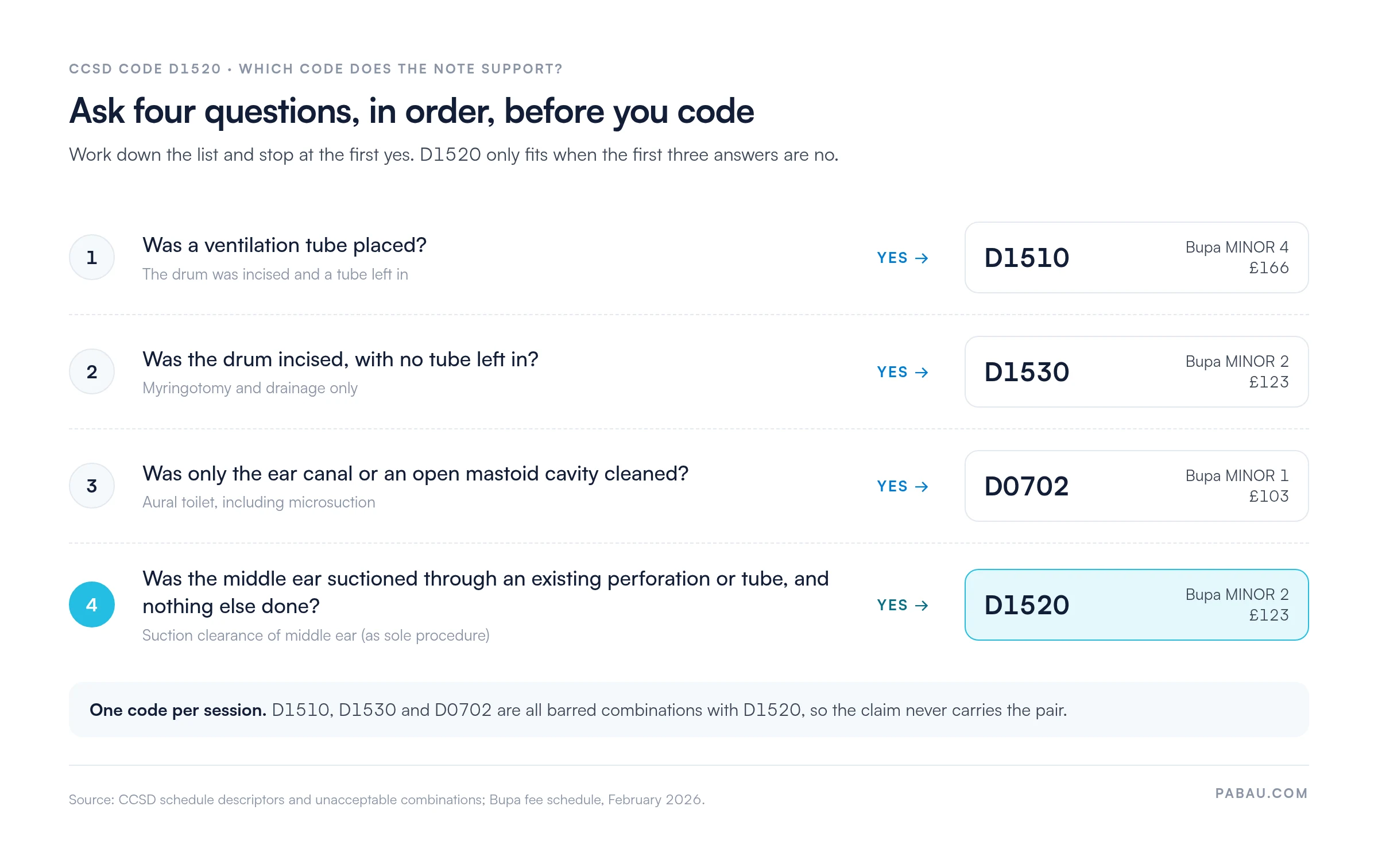
The CCSD schedule lists these codes as unacceptable combinations with D1520. Each one either works on the same ear structures or already includes clearing the ear.
Polyp removal shows how that works on a claim. If the surgeon takes out a middle ear polyp, bill CCSD code D1910 and leave D1520 off the claim.
The CCSD Group describes its coding principles as guidance, not an exhaustive rulebook. Each insurer decides which combinations it adopts. So read the insurer’s own rules before you bill D1520 next to any other ear code.
Three neighboring codes cause most of the confusion. The descriptor, not the code number, tells you which one the note supports.
Bupa figures come from our Bupa fee schedule reference, February 2026 edition. Notice that D1520 pays more than D0702 at Bupa. That makes the boundary an audit target, so the note has to show the suction went beyond the ear canal.
Insurers query D1520 when the note leaves room for a second procedure. Before the claim goes out, check that the record covers each point below.
The sole procedure line matters most. Without it, an auditor can read the canal cleaning or the tube check as separate work.
Here is a case billing teams meet often. An adult with a long-standing perforation is booked for D1520 under the microscope. During the session, the surgeon decides the ear needs ventilation and places a tube.
The session is no longer suction as a sole procedure. Bill the procedure performed, which here is D1510, and drop D1520 from the claim. The two codes are a barred pair, so billing both invites a rejection.
Then tell the insurer the code changed and ask it to update the authorization. The note should explain the finding that changed the plan. That way, the note, the authorization and the claim all describe the same work.
When a suction session might turn into a tube insertion, ask the insurer at authorization how it handles a code change. You avoid chasing a fresh reference after the procedure.
Once the note is right, the claim follows a predictable path. Each step has its own way of tripping up a middle ear claim.
The CCSD Group maintains the CCSD codes specialists bill, but it does not set fees. Each insurer decides its own fee, band and authorization rules for D1520.
The spread can be wide. Bupa places D1520 in MINOR 2 at £123. Freedom Health Insurance lists it as Minor complexity, with a £50 specialist fee and a £129 anesthetist fee.
Check the current schedule for the patient’s policy before the procedure.
Rejected D1520 claims tend to trace back to one of the five errors below. Each one has a direct fix.
A two-minute check catches most of the problems above. Run it on every middle ear suction invoice.
In many ENT practices, the clinical note lives in one system and the invoice in another. A biller then copies the code, the side and the authorization number across by hand.
Pabau, the practice management and billing platform we build, keeps the ENT note and the invoice on the same patient record. The biller works from the note the surgeon wrote instead of a copy of it.
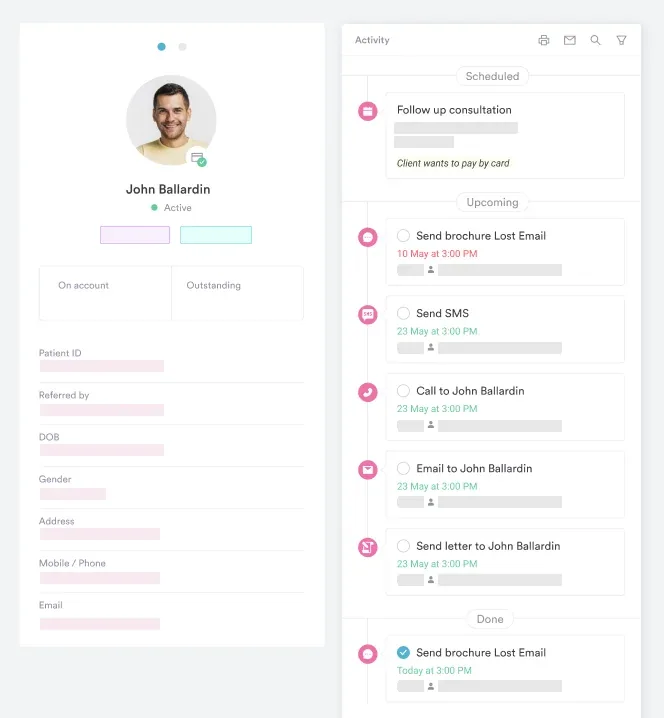
With claims management, the CCSD code, membership number and authorization reference carry into the claim. Pabau checks the required fields, then sends the invoice to Healthcode.
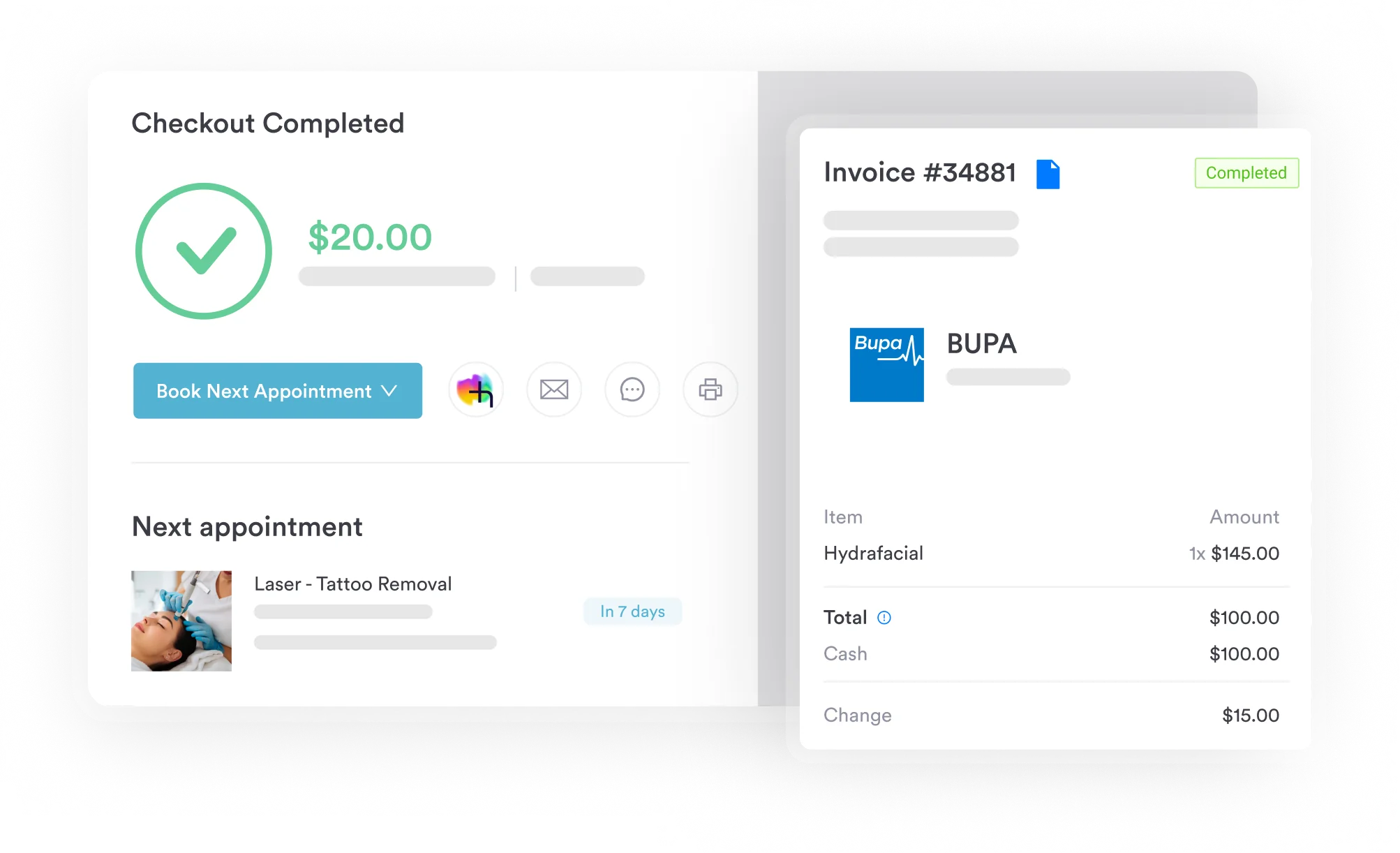
You then follow each claim’s status and payment in one place. Your team stops re-keying, and a missing authorization number gets caught before the insurer sees it.

Pabau builds CCSD claims like D1520 from the patient record and checks required fields before submission. Then you can track each claim’s status in one place.

D1520 rewards one habit. Before you code, ask whether suction of the middle ear was the only procedure. If the answer is yes, the code fits. If the surgeon did more, the code for that work takes the claim.
Get the note to say that plainly on the day. When it names the access route, the side and the sole procedure, the insurer has little left to query.
Book a demo to see how Pabau carries a D1520 claim from the ENT note to Healthcode without retyping.

Billing a myringotomy instead? CCSD code D1530 covers an eardrum incision with no tube left in.
Did a grommet go in? CCSD code D1510 explains myringotomy with tube insertion.
Taking a grommet out? CCSD code D2030 covers removal of grommets.
Coding other ENT surgery? CCSD code E4100 explains voice prosthesis insertion from the same chapter.
Want every Bupa code in one place? Bupa CCSD codes sets out the schedule and how its codes are organized.
The D1520 descriptor does not carry the “(and bilateral)” wording that D1510 and D1530 have. Ask the insurer how it wants a two-ear session invoiced before you bill it.
The CCSD schedule records D1520 as added on 20 January 2010. It has kept the same descriptor and the sole procedure condition.
No. The US dental code set (CDT) has used D1520 for a space maintainer, which has nothing to do with ENT. CCSD D1520 is a UK ear procedure code, so check which schedule a source is quoting.
Follow the insurer’s own rules. The CCSD Group publishes its principles as guidance, and each insurer chooses which combinations it applies. Keep a note of the insurer’s confirmation with the claim.
Each insurer sets its own pre-authorization rules for D1520, often by policy. Ask before the session, and put the reference on the invoice if the insurer issues one.