ICD-10 Code Y76.0: Diagnostic obstetric and gynecological devices
ICD-10 Code Y76.0: Definition and billable status ICD-10 Code Y76.0 is a valid, ...

Last Updated: Oct 23, 2026
Billable Code Specific Code
S02.600D is the billable ICD-10-CM code for fracture of unspecified part of body of mandible, unspecified side, subsequent encounter for fracture with routine healing.
The full descriptor is narrower than the nickname suggests. It ties the fracture to the body of the mandible, the horizontal part of the lower jaw. Only the side stays undocumented. A chart that says nothing more than "mandible fracture" will not support this code.
Oral and maxillofacial surgeons, emergency physicians, and their billing teams meet S02.600D at every healing check. Two details in the chart settle it. One is the fracture site, and the other is the phase of care at the visit. Practices with steady facial trauma volume lean on EMR software to cut the manual lookups behind these errors. Coding compliance rests on the note supporting the code, every time, not on the code being plausible.
Let Pabau's smart automation suggest the right codes, reduce claim denials, and keep your practice compliant—effortlessly.
Automate repetitive tasks and focus on what matters most—your patients.
Reduce coding errors and ensure compliance with the latest regulations.
Clean claims, fewer denials, and faster reimbursements.
Powerful insights and reporting to help your practice thrive.
HIPAA compliant SOC 2 certified GDPR-compliant Trusted by 4,000+ clinics worldwide

ICD-10 code S02.600D covers a fracture of the body of the mandible, unspecified side, at a subsequent encounter with routine healing.
If the record names no mandible site at all, the correct code is S02.609D rather than S02.600D.
The 7th character D marks the phase of care, not the visit number, so it starts once active treatment ends.
There is no S02.60XD code, and S02.61XD and S02.62XD were deleted in 2016, so laterality digits apply instead.
Practice management software like Pabau keeps the fracture record and the claim in one place, so missing detail surfaces before you submit.
S02.600D is valid, billable, and written for the follow-up visit rather than the repair. Its full descriptor is fracture of unspecified part of body of mandible, unspecified side, subsequent encounter for fracture with routine healing. You can confirm it in the CDC/NCHS ICD-10-CM web tool.
Two phrases in that descriptor carry the weight. “Body of mandible” fixes the anatomy and rules out the condyle, the ramus, and the angle. “Unspecified side” says the chart never recorded left or right. The site group is settled, so only laterality stays open.
Splitting the code into its characters makes selection faster, and it cuts transcription slips at a busy billing desk.
That last row is worth a second look. When ICD-10-CM launched, S02.600 read “fracture of unspecified part of body of mandible” with no side attached. CMS added “unspecified side” effective October 1, 2016, once laterality digits arrived.
The anatomy never moved. S02.600 has meant the body of the mandible in every fiscal year since 2015. So if the record names a different mandible site, a different code applies. If it names no site at all, the code is S02.609D. That single distinction is where most S02.600D errors begin.
S02 covers every fracture of the skull and facial bones under CMS coding guidelines. It sits in Chapter 19, which governs injury and poisoning codes.
Inside S02, the .6 subcategory belongs to the mandible. It splits into nine site groups, and each one takes its own 5th character. Facial trauma practices.
S02.60 is where the confusion starts. Its heading reads “fracture of mandible, unspecified,” which makes every code below it look generic on a quick scan. Only one of them is. S02.609 carries the generic meaning, while S02.600, S02.601, and S02.602 all sit in the body of the mandible.
The other eight groups behave the same way. Add a side digit and a 7th character and you have a full code, as S02.642A does for the angle of the mandible.
Facial trauma also rarely arrives alone. A tackle or a fall that breaks a jaw often injures a shoulder too. Practices that treat contact-sport injuries all week run sports medicine software to keep both problems on one chart.
The midface often breaks in the same event. A high-energy blow can drive a pyramidal LeFort II fracture through the maxilla, coded S02.412B when it is open at the initial encounter. Code that site beside the mandible rather than in place of it.
The 7th character records where the patient sits in the course of treatment. Per ICD-10-CM Official Guidelines Section I.C.19, it reflects the phase of care rather than the number of visits. S02.600 offers six.
Notice what is absent. Skull and facial fracture codes carry no malunion character, unlike many long bone fractures. Radius codes such as S52.131Q add characters for malunion and for open fracture type. For S02.600, the list runs A, B, D, G, K, S and stops there.
A worked example makes the switch to D concrete. A patient has open reduction and internal fixation of a mandible body fracture on March 3. Code that operative encounter S02.600A, because active treatment is under way.
The March 17 wire check is still active management, so it stays on the A character. On April 14 the surgeon documents union progressing normally, with no further intervention planned. That April visit is the first one that takes S02.600D.
“Subsequent” therefore has nothing to do with second. A third post-op visit can still be A. A first post-discharge visit can already be D. Treatment phase decides, every time.
S02.600S works differently again. It covers a new condition caused by the old fracture, such as temporomandibular joint arthritis found long after healing. Reach for it when you are treating the consequence rather than the fracture.
Injury recovery often runs through occupational therapy, and occupational therapy software tracks function from assessment to discharge.
The 6th character in S02.60, S02.61, and S02.62 is always a digit. A 0 means unspecified side, 1 means right, and 2 means left. S02.60 adds a 9, which drops the site reference altogether.
That gives a tidy set of subsequent-encounter codes across the three most-used mandible sites. Every descriptor below ends with “subsequent encounter for fracture with routine healing.”
The remaining mandible sites follow the same pattern. S02.63 to S02.65 and S02.67 all use 0, 1, and 2 for unspecified side, right, and left.
When later imaging pins down the site or the side, move to the more specific code. Carrying S02.600D forward after the chart improves leaves specificity on the table, and specificity is what defends a claim under review. A note that names the left side moves the claim to S02.602D, which carries the same routine healing character.
Each of those codes takes a different 7th character as the phase of care changes. An open subcondylar fracture at the initial encounter is coded S02.620B rather than the D-character version.
Before you accept S02.600D, read the operative report and the imaging from the initial encounter. A condylar or subcondylar fracture confirmed in the record makes S02.610D, S02.620D, or one of their laterality siblings the correct choice. If the surgeon documented left or right anywhere in the chart, S02.601D or S02.602D beats the unspecified-side code.
Some S02.6 codes really do use an X in the 6th position, and that is where a lot of bad guidance comes from. Only two subcategories qualify. Neither of them is S02.60, S02.61, or S02.62.
Everything else in S02.6 takes a laterality digit. Three code strings that still turn up in old cheat sheets and stale crosswalk tables are therefore dead ends.
A claim built on any of those three rejects as an invalid code. If your billing software still offers them, its code set needs updating.
Auditors read the note, not the code. For S02.600D, five things need to be visible at the follow-up encounter.
Practices using digital clinical forms can build these five checkpoints into the follow-up template. The clinician then captures them while the patient is still in the room, which beats chart review the day before submission. It also leaves the audit trail that HIPAA compliance expects across the full episode.
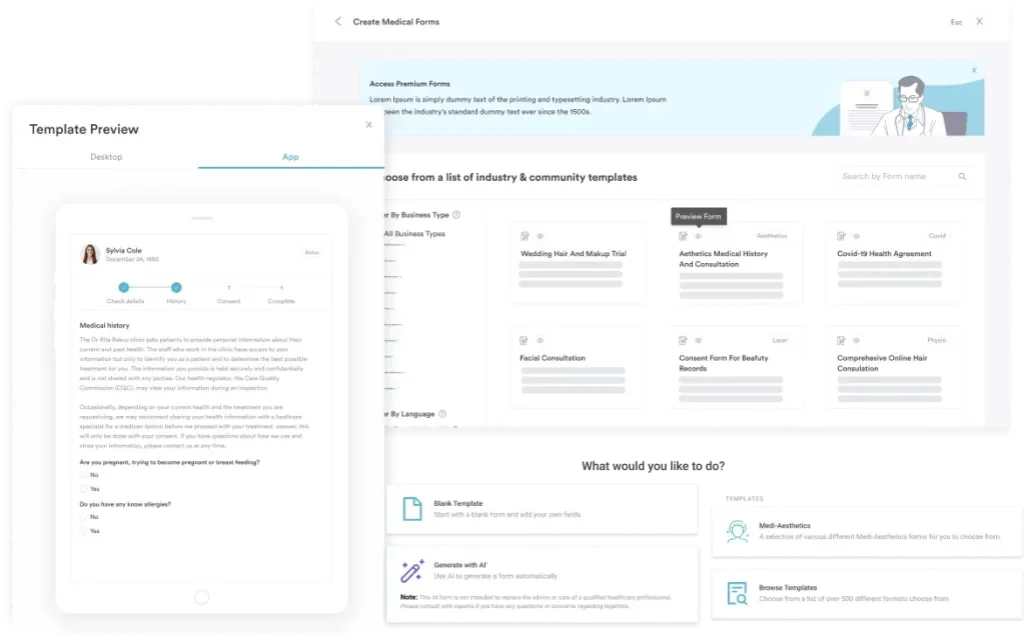
Several providers often document the same episode.
The diagnosis code explains why the visit happened, and the CPT code explains what was done. Reimbursement follows the second one, so S02.600D on its own moves nothing.
Here is how a healing check usually reaches the payer. At the visit, the clinician documents the healing findings. The coder then picks an office or outpatient evaluation and management code from the 992xx series and links S02.600D to it. Billing scrubs the claim and sends it electronically.
The AAPC ICD-10-CM code lookup is a quick way to confirm the diagnosis code before it goes out. A few other things trip these claims up, so run through them before you submit.
That same split holds in every specialty. A diagnosis justifies medical necessity, and the procedure describes the service.
Denials and audit flags on this code cluster around a short list. Working through it once usually clears most of the rework.
Sorting denials by diagnosis code shows whether S02.600D rejects more often than its neighbors. That pattern usually points at one of the six. The chart drives the code, and the code has to match the phase of care the chart describes.
Add a code-validity check to your quarterly billing review. Pull every S02.6 code your practice submitted and confirm each one exists in the current ICD-10-CM release. Deleted codes such as S02.61XD survive for years inside old superbills, spreadsheet cheat sheets, and imported crosswalk tables. Ten minutes of checking beats a batch rejection.
Most of the errors above start in the record rather than the claim. The fracture site sits in an imaging report nobody reopened. Meanwhile, the healing note lives in one system while the claim gets built in another.
Practice management software like Pabau puts the whole episode in one place. The operative note, the imaging, the follow-up forms, and the invoice all hang off the same patient record. A coder checking whether active treatment ended reads it straight off the timeline.
Custom clinical forms let you build a fracture follow-up template that asks for the site, the side, and the healing status every time. Pabau also checks the required fields before a claim can go out, and a status dashboard shows where each one stands.
None of that picks your 7th character. It does mean the note behind the code is one click away when a payer asks.
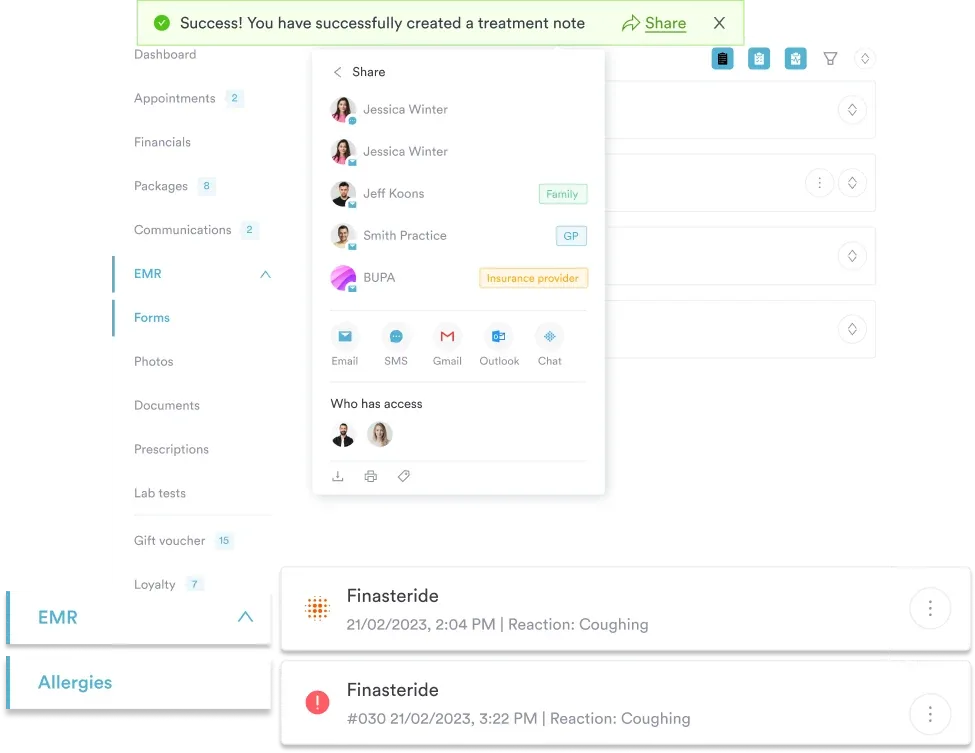

Pabau brings the operative note, imaging, follow-up forms, and the claim onto one patient record. Coders can confirm the site, the side, and the phase of care without leaving the chart.

S02.600D is a precise code wearing a vague label. Treat it as the body-of-mandible code it has always been and most of its denial risk goes away. Read the site out of the chart, then the phase of care, and pick the character last.
The trade-off worth remembering is specificity. An unspecified-side code is valid and it will pay, but it tells a payer the chart came up short. Whenever the record names a side, the more specific sibling makes the stronger claim.
If your team reconciles fracture notes in one system and builds claims in another, that split is where character errors breed. Book a demo to see how Pabau keeps the clinical record and the claim on one page for facial trauma follow-ups.

Need the delayed-healing version of this pattern? S42.90XG walks through the G character when a fracture stops progressing on schedule.
Want to see how open fracture characters work? S52.001E shows the extra open fracture detail that long bone codes carry and the mandible list leaves out.
Need the same logic for a dislocation? S43.139D applies the subsequent-encounter character to a joint injury rather than a fracture.
Billing a simple intramuscular injection? Intramuscular injection billing guide covers the billing mistakes, from X-ray control to bundling, that get this code denied.
Found debris at a healing check? M79.5 covers a residual foreign body in soft tissue, which can surface long after the original injury.
Yes. S02.600D is a valid, billable ICD-10-CM code with all seven characters in place. Its parent codes S02.6, S02.60, and S02.600 are not billable on their own, because each one has more specific codes beneath it.
ICD-10-CM sets no time limit. Keep using D for as long as the patient returns for care of the healing fracture and healing stays routine. Switch to G if healing slows, to K for nonunion, and to S once you are treating a late effect.
It does. The open and closed distinction only appears in the initial-encounter characters, A for closed and B for open. Subsequent-encounter characters drop it, so S02.600D fits a healing fracture that was open or closed at presentation.
It normally is. At a visit for the healing fracture, S02.600D is the first-listed diagnosis, because the fracture is the reason for the encounter. Add the external cause code from Chapter 20 after it.