



HCPCS code E0198: Water pressure pad billing guide
HCPCS code E0198 is a water pad for a standard mattress HCPCS code E0198 is the ...

Last Updated: Oct 13, 2026

CPT code 21685 bills hyoid myotomy and suspension, a surgical repositioning of the hyoid bone that widens the airway in obstructive sleep apnea (OSA).
The code sits in the neck (soft tissues) and thorax repair range, 21685-21750, not the facial bones range coders often assume.
CMS resets the work, practice expense, and malpractice RVUs each January, so pull current figures from the Medicare fee schedule.
Modifiers -22, -51, -52, -62, and -80 all apply to this code, and misuse of them is a common denial reason.
Practice management software like Pabau tracks modifiers, prior authorization status, and denial reasons, so surgical billing teams catch errors before submission.
CPT code 21685 is the billable code for hyoid myotomy and suspension. The surgeon detaches the hyoid bone from the suprahyoid muscles and fixes it forward, which enlarges the hypopharyngeal airway.
One detail trips up coders repeatedly. The code does not live in the facial bones range. The American Medical Association files 21685 under repair, revision, and reconstruction procedures on the neck (soft tissues) and thorax, code range 21685-21750.
The code carries a 90-day global period, and Medicare coverage is decided locally rather than nationally. Both facts shape how you document and when you bill.
Retrolingual collapse drives a large share of OSA cases, and this procedure targets it directly. Pulling the hyoid forward carries the base of tongue and epiglottis with it. That widens the posterior airway space at the level most often blocked during sleep.
Coders need the physical picture to judge whether the operative note supports the code. CPT code 21685 requires both the myotomy and the suspension. A note describing muscle release without confirmed fixation may not support the full descriptor.
CMS sets RVU values for CPT 21685 annually through the Medicare Physician Fee Schedule (MPFS). Work RVU, practice expense RVU, and malpractice RVU combine into a total RVU that drives the national payment rate. Verify current-year figures with the FastRVU 2026 lookup tool or the CMS fee schedule search, since values change each January.
Payment formula: Medicare reimbursement = total RVU x geographic GPCI adjustment x CMS conversion factor. The conversion factor changes with each annual physician payment rule, so a rate calculated in December will not hold in January. Every code in the 21000 series is valued through the same three components.
Payment for CPT code 21685 varies by setting and geography. Hyoid suspension is almost always performed in a hospital or ambulatory surgery center, so the facility rate is the relevant benchmark. Non-facility rates apply only in an office-based surgical suite, which is uncommon for a procedure of this complexity.
The place of service code on the claim decides which PE RVU table CMS applies. Facility settings use a lower PE RVU, because facility overhead is reimbursed separately through the facility fee. Non-facility settings carry a higher PE RVU, since the physician absorbs that overhead directly.
CMS adjusts each RVU component with its own Geographic Practice Cost Index (GPCI). High-cost localities such as San Francisco, New York City, and Boston carry GPCIs above 1.0, which lifts payment above the national average. Rural areas and low-cost states usually fall below it.
Adjusted payment is the sum of each component multiplied by its own GPCI, then multiplied by the conversion factor. Pull the specific GPCI for your locality from the CMS fee schedule file. National averages will mislead you at both ends of the cost range.
Practices treating athletic injuries manage these procedures inside sports medicine software, from initial assessment to return-to-play.
Modifier selection is the highest-risk part of sleep surgery billing. The wrong modifier, or a missing one that was clinically justified, leads to underpayment or a flat denial. Practices running head and neck codes through plastic surgery EMR workflows use structured modifier logic to cut that risk.
Audit claims where CPT 21685 is billed with modifier -51 alongside CPT 42145. Many payers apply an automatic multiple procedure payment reduction. Confirm the reduction logic in each payer contract before you project revenue for multi-level sleep surgery.
Medical necessity for hyoid suspension rests on linking CPT 21685 to the right ICD-10 diagnosis. G47.33 is the primary diagnosis in most cases. E66.01 is the comorbidity coders see most often.
Secondary codes for related conditions strengthen the necessity record, which matters for payers working from a Local Coverage Determination (LCD). Check your MAC’s current LCD before you submit, because coverage criteria vary by jurisdiction.
Hyoid suspension rarely stands alone. Most sleep surgeons work at several levels of the airway in one session, so CPT 21685 is often billed alongside the codes below. Knowing what each adjacent code covers helps you confirm code selection, avoid unbundling, and apply modifier -51 correctly.
Maxillary and palatal codes come up in the same multi-level cases.
The National Correct Coding Initiative (NCCI) sets the bundling edit pairs that apply to CPT 21685. Submit a bundled pair without an applicable modifier and the secondary code is denied automatically.
Verify current NCCI edit pairs in the CMS CPT/HCPCS code list and cross-reference your MAC’s policy before billing any combination. The AAPC Codify CPT lookup also flags known bundling conflicts.
Medicare has no National Coverage Determination (NCD) for hyoid myotomy and suspension. Coverage falls to individual Medicare Administrative Contractors (MACs) through Local Coverage Determinations, and requirements differ by jurisdiction. Always check the applicable MAC’s current LCD before billing.
Some Medicare Advantage plans add criteria beyond traditional Medicare. Verifying authorization requirements and necessity thresholds before you schedule surgery cuts the risk of a post-service denial. Those are far harder to overturn than a pre-service authorization denial.
Sleep surgery billing has to be right at several points at once. Modifier selection, diagnosis linkage, prior authorization tracking, and NCCI edit compliance all sit on the same claim. Manual processes introduce an error at each step.
Practices handling meaningful CPT 21685 volume do better with software that enforces the rules at claim entry, instead of catching errors after a denial. Practice management software like Pabau builds those controls in. Its claims management software applies them before the claim leaves the building.
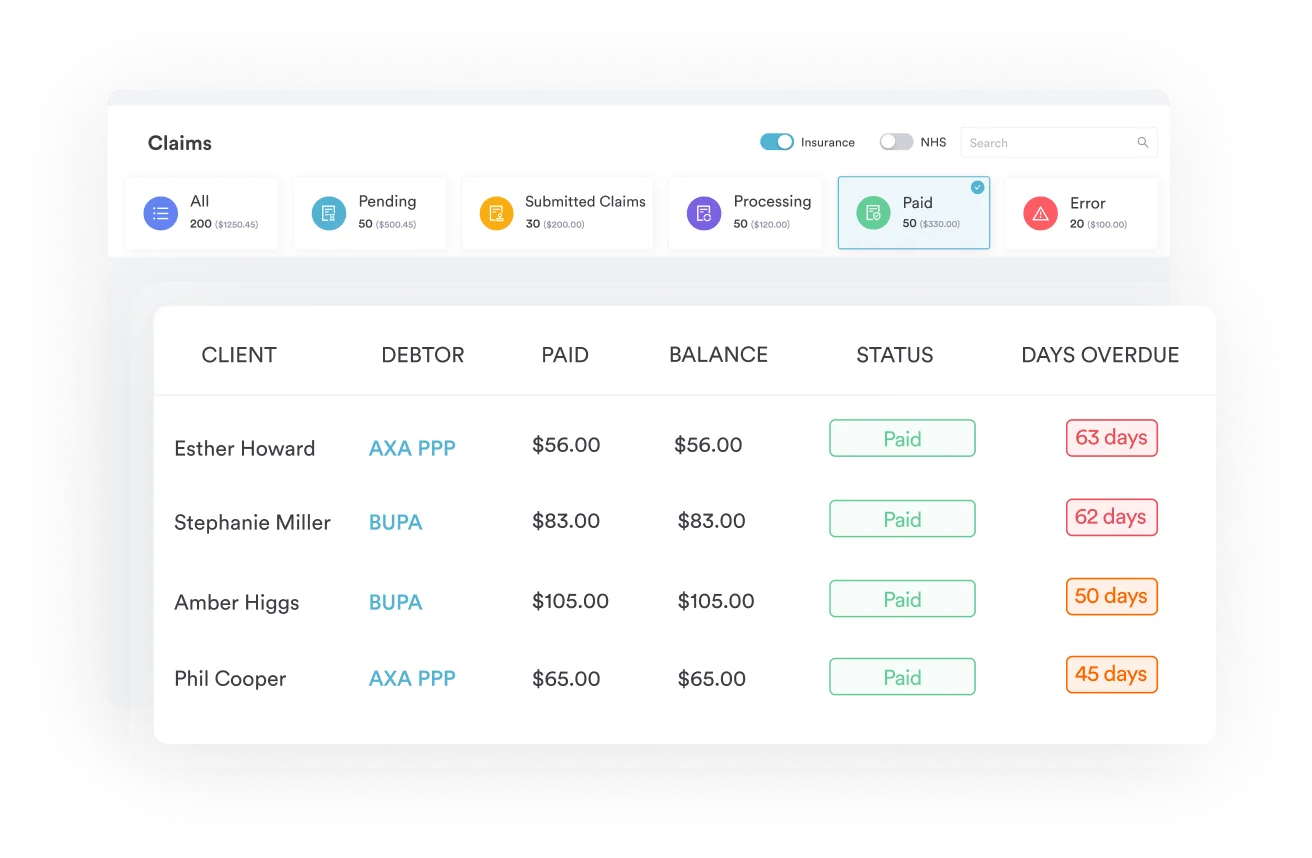
Surgical sleep medicine practices also lean on digital intake forms to collect CPAP failure documentation, polysomnography results, and surgical consent in one place. That makes prior authorization submissions faster and audit responses easier to assemble. The wider set of practice management software features shows how the pieces connect. Auditors read the note before the code, so the documentation level has to support what was submitted. Secondary payers often allow a shorter window than the primary, so the filing deadline differs by claim.

Run a quarterly denial analysis on CPT 21685 claims, filtered by denial reason code. Three patterns dominate across sleep surgery practices. They are missing prior authorization records, wrong place of service codes, and modifier -51 sequencing errors. Fixing the root cause of each type clears the resubmission backlog faster than correcting claims one at a time.

Pabau tracks modifiers, prior authorization status, and denial reasons on every surgical claim. Your billing team catches the error before the payer does.

The trade-off with this code is front-loaded work. Confirming the LCD, the place of service, and the operative note before submission costs an hour. Chasing the denial afterwards costs weeks, and the appeal often fails.
Start with the two corrections in this article. Bill 21685 out of the neck and thorax range. Report genioglossus advancement as 21199, and do not look for a combined code, because none exists.
If your practice bills surgical sleep medicine and wants fewer denials, book a demo to see how Pabau enforces these rules at claim creation.

Coding another procedure in the 21000 series? CPT code 21282 walks through the RVU and modifier structure for lateral canthopexy.
Reporting anesthesia separately from the surgical code? CPT code 00846 shows how anesthesia units and base values are reported on their own claim line.
Billing bariatric equipment for an OSA patient? HCPCS code E0304 covers the coverage criteria and documentation for a bariatric hospital bed.
Coding a pilon fracture that is healing slowly? Pilon fracture delayed healing code marks slower healing with the seventh character G, apart from routine recovery or nonunion.
CPT code 21685 bills hyoid myotomy and suspension. The surgeon repositions the hyoid bone forward to enlarge the hypopharyngeal airway in patients with obstructive sleep apnea. It is performed after conservative management such as CPAP therapy has failed.
CPT 21685 sits in the repair, revision, and reconstruction procedures on the neck (soft tissues) and thorax range, 21685-21750. It is often filed under facial bones by mistake, which can misdirect a coder to the wrong bundling and modifier rules.
RVU values for CPT 21685 include work RVU, practice expense RVU, and malpractice RVU components set annually by CMS. The Medicare payment is calculated by multiplying total RVUs by geographic GPCI adjustments and the annual conversion factor. Verify current figures using the CMS Physician Fee Schedule lookup tool, as values update each January.
Five modifiers come up most often. They are -22 for increased complexity, -51 for multiple procedures, -52 for reduced services, -62 for two surgeons, and -80 for an assistant surgeon. Apply -51 to the secondary procedure when 21685 is billed alongside 42145 or 21199 in a multi-level session.
Medicare coverage for CPT 21685 is determined at the local level through MAC-issued Local Coverage Determinations (LCDs) rather than a national policy. Coverage criteria typically require a confirmed OSA diagnosis, documented CPAP failure, and a diagnostic sleep study. Check your MAC’s current LCD for specific thresholds, as requirements vary by jurisdiction and change periodically.
Prior authorization requirements vary by payer and MAC jurisdiction, so there is no universal rule. Many Medicare Advantage plans and commercial payers require authorization before hyoid suspension surgery is scheduled. Confirm with each payer before the procedure to avoid a post-service denial.
The 2026 rates come from CMS-published RVU values, multiplied by the 2026 conversion factor and your geographic GPCI adjustments. Rates differ by locality, so a national average will not match what you are paid. Run your own payment locality through the CMS fee schedule lookup tool.



