



CCSD code G5100: Bypass of duodenum billing guide
CCSD code G5100 bills a bypass that leaves the duodenum in place CCSD code G5100...

Last Updated: Oct 16, 2026

CPT Code 15120 reports split-thickness autograft on the face, scalp, eyelids, mouth, neck, ears, orbits, genitalia, hands, feet, and/or multiple digits for the first 100 sq cm (or 1% body area in infants and children).
CPT 15121 is the paired add-on code for each additional 100 sq cm beyond the first; it cannot be billed without 15120 as the primary code.
Surface area must be measured and documented in the operative report; underdocumentation of graft size is the most common audit trigger for this code family.
Pabau’s claims management software lets plastic and reconstructive surgery practices attach modifiers, run NCCI edit checks, and generate billing reports by CPT code without re-entering data from the clinical note.
CPT Code 15120 describes a split-thickness autograft procedure performed on a specific set of body sites. Covered sites include the face, scalp, eyelids, mouth, neck, ears, orbits, genitalia, hands, feet, and multiple digits.
The code applies when the grafted area covers 100 sq cm or less in adults. In infants and children, the threshold is 1% or less of total body surface area.
According to the AMA’s CPT code set, this code belongs to the Autografts/Tissue Cultured Skin Substitutes section of the CPT book.
A split-thickness autograft (STSG) harvests donor skin from the patient’s own body, preserving the epidermis and a partial layer of dermis.
For practices working in plastic and reconstructive surgery, this code surfaces regularly alongside burn repair, post-excision defect coverage, and traumatic wound closure. Getting the body-site selection and surface area threshold right at the time of coding prevents denials and audit exposure.
CPT 15121 is the add-on code for each additional 100 sq cm of split-thickness autograft on the same face, hands, and feet sites. It applies beyond the first 100 sq cm already covered by CPT Code 15120.
It cannot be billed as a standalone code: 15121 always requires 15120 as the primary code on the same claim line.
Surface area is calculated for the recipient site (where the graft is placed), not the donor site. When a graft covers 250 sq cm of the dorsum of a hand, the correct reporting is 15120 for the first 100 sq cm.
Add two units of 15121 for the next 100 sq cm plus the remaining 50 sq cm. Partial additional increments round up to the next full 100 sq cm unit for reporting purposes.
Key distinction: Use 15120 when the recipient site falls within the face/scalp/eyelids/mouth/neck/ears/orbits/genitalia/hands/feet/digit group. Use 15100 for trunk and extremity grafts. Mixing these up is one of the most common coding errors in burn and reconstructive surgery billing.
Medical necessity for CPT Code 15120 is diagnosis-driven. Payers review the linked ICD-10 code to confirm the graft addresses an appropriate clinical indication. Coverage is not automatic, and most commercial payers require documentation that conservative wound care was considered or attempted before surgical grafting.
Each indication should be clearly stated in the operative note. Reference the wound’s etiology, duration, prior treatments, and the clinical rationale for choosing an autograft over alternative closure methods.
For a benign lesion excised ahead of grafting.
The following ICD-10-CM codes represent the most frequently linked diagnosis codes for 15120 claims. This list reflects common clinical pairings; it is not exhaustive. Payer Local Coverage Determinations (LCDs) govern which diagnosis codes are covered for this procedure in each Medicare Administrative Contractor (MAC) jurisdiction.
Burn claims often carry an additional extent-of-body-surface code alongside the primary diagnosis. For a burn covering roughly half the body.
Grafts that resurface a complication at a prior amputation site also carry ICD-10 code Y83.5 as a secondary external-cause code. Unlike Y92 and Y93, it is not present on admission exempt, so inpatient claims must report a POA indicator.
Medicare reimbursement for CPT Code 15120 varies by geographic locality and place of service. The rates below reflect national averages from the CMS Medicare Physician Fee Schedule for 2026.
Actual payment depends on the Geographic Practice Cost Index (GPCI) adjustment for the billing locality. Rates are updated annually; verify current figures through the CMS MPFS look-up tool before submitting claims.
Relative Value Units (RVUs) form the basis for Medicare reimbursement calculations. The total RVU is multiplied by the CMS conversion factor.
CMS finalized the CY2026 conversion factor at $33.4009 ($33.5675 for qualifying APM participants), replacing the prior year’s $32.35 rate. Geographic adjustments apply on top of the resulting national non-adjusted payment rate.
Facility vs. non-facility: When CPT Code 15120 is performed in a hospital outpatient department or ambulatory surgery center, the facility rate applies to the professional claim.
The non-facility rate applies when the procedure is performed in a physician office setting. The difference is significant, around $100 per case at national averages, so correct place-of-service coding matters.
Modifier selection depends on the clinical scenario and payer rules. Incorrect modifier use is a common denial trigger. The table below covers modifiers most frequently applied with CPT Code 15120.
Payer rules on modifier -51 exemption for add-on codes, and the choice between -59 and its XE/XS/XP/XU subset modifiers, vary. Check the payer’s specific LCD or billing policy before applying.
Wound bed preparation is often performed immediately before autografting. CPT 15004 covers surgical preparation of a burn or chronic wound on the same body sites as 15120, for the first 100 sq cm. CPT 15005 is the add-on code for each additional 100 sq cm of preparation on those same sites.
When a coder bills 15120 and 15004 together on the same date, an NCCI edit may bundle them. The edit logic treats preparation and grafting as components of the same operative session. The AAPC’s CPT code reference treats preparation as separately reportable when it happens in a distinct operative stage from grafting.
For example, preparation might happen on day one and grafting on a later date. When both occur in the same session, modifier -59 may override the bundle if documentation clearly supports separate procedural intent. Verify the current NCCI edit table before assuming unbundling is appropriate.
The medical billing compliance framework for CPT Code 15120 is governed primarily by CMS National Correct Coding Initiative (NCCI) edits. NCCI edits are updated quarterly, so any static reference list you maintain may become outdated mid-year. Build a quarterly edit review into your billing workflow.
Run a quarterly NCCI edit check on your most-billed code pairs. CMS publishes updated edit tables on the CMS NCCI page each quarter. Flag any new column II edits that affect your top 10 surgical codes and brief your billing staff before claims go out.
Underdocumented operative notes are the leading audit trigger for skin graft claims. The operative report must support every element of the code: body site, surface area, graft source, and medical necessity.
Practices that use digital clinical forms with procedure-specific templates reduce the risk of missing a required element. Solid patient records that connect the pre-operative wound assessment to the operative report strengthen the medical necessity trail.
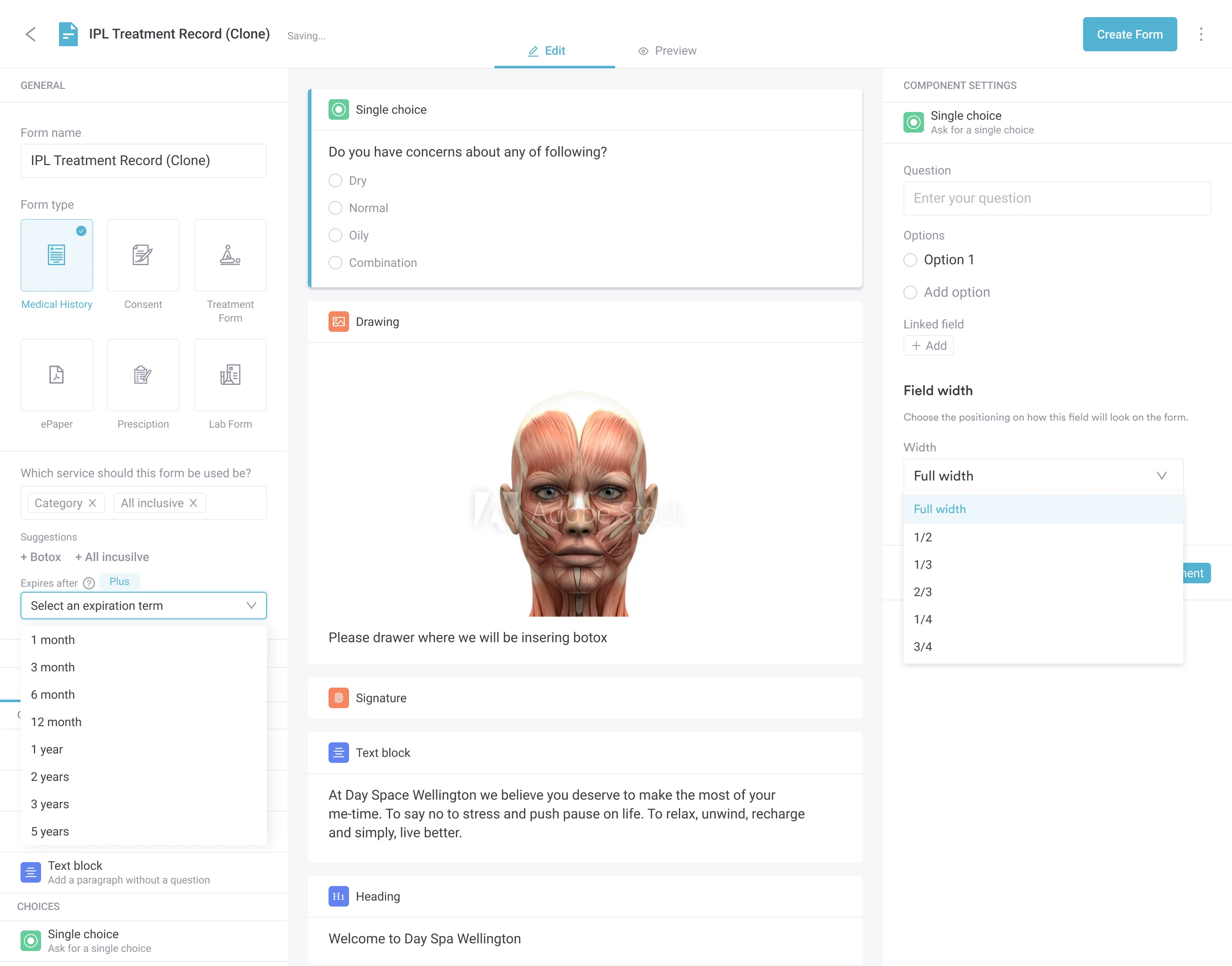
For practices managing HIPAA-compliant documentation software requirements, ensure that operative note templates are version-controlled and that any amendments are time-stamped with the amending clinician’s credentials.
Running a cosmetic or reconstructive surgery practice means documentation standards intersect with both billing compliance and the regulatory demands covered in opening a surgery practice.
Commercial payer rules for CPT Code 15120 vary more than Medicare’s national policy. Prior authorization requirements, LCD-equivalent medical necessity criteria, and bundling interpretations differ by carrier and region. The points below reflect general patterns across major commercial payers; always verify against the specific payer’s current policy.
CPT Code 15120 sits within a wider family of skin restoration and wound closure codes. Coders working on plastic surgery or burn unit claims will encounter these adjacent codes regularly.
For additional CPT billing guides across other procedure categories.
For graft procedures addressing facial nerve paralysis rather than a burn or traumatic wound.
Standalone coding lookup tools provide rate data and crosswalk tables. They do not enforce documentation standards or flag NCCI conflicts at the point of billing.
For plastic surgery practice management, the real efficiency gain comes from integrating coding guidance into the clinical workflow itself.
Pabau’s claims management software lets practices attach CPT Code 15120, add-on code 15121, and required modifiers to the patient encounter record. None of the data needs re-entering. Billing reports can be filtered by CPT code, so teams can track 15120 claim volumes, denial rates, and reimbursement trends over time.
For best plastic surgery software, this creates a direct feedback loop between operative documentation and claim performance.
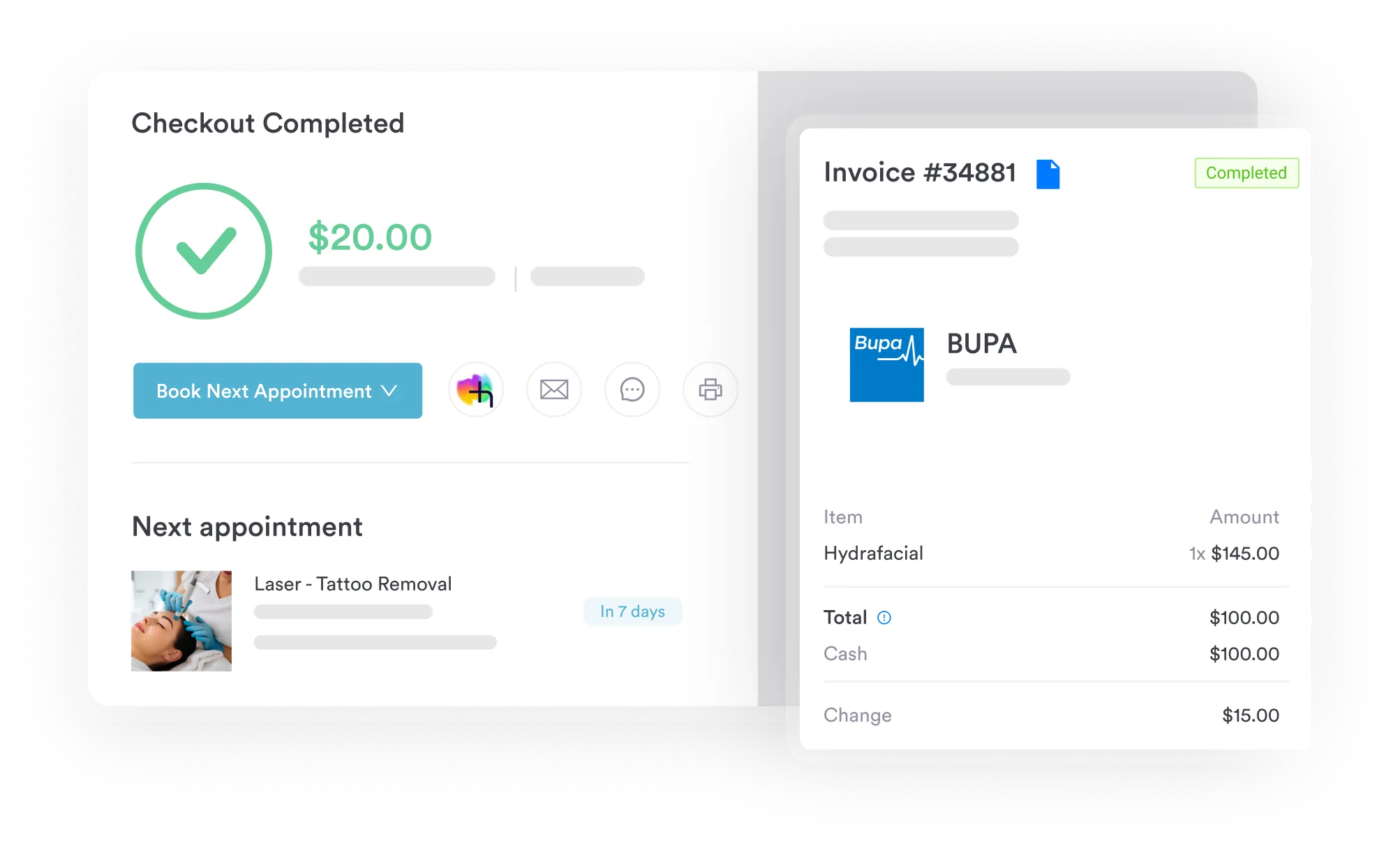
Operative note templates configured within practice management software can prompt for each required documentation element. That includes recipient site area, donor site, graft thickness, and the medical necessity statement.
This turns the documentation requirements list above from a passive checklist into an active workflow prompt. It reduces the risk of omission before the claim goes out.

Pabau’s claims management module lets plastic and reconstructive surgery practices attach CPT codes, add-on codes, and modifiers directly within the patient record. Run built-in claim checks before submission and track denial patterns by code across your whole practice.

Most CPT 15120 denials trace back to the same root cause. A documentation step lived in a coder’s head instead of the operative note template.
The parent-code mix-up with 15100, the missing surface area figure, and the NCCI conflict with wound prep are preventable at the point of charting. Practices that build these checks into the clinical workflow submit cleaner claims the first time.
Pabau’s claims management software gives plastic and reconstructive surgery practices a direct link between operative notes and claim submission. It adds modifier attachment and billing analytics by CPT code. To see how it works in a surgical billing workflow, book a demo.

Billing a hip lipectomy procedure? CPT 15834 breaks down the modifiers and reimbursement rules for excision of excessive skin at the hip.
Coding an eyelid procedure? CPT 15823 covers documentation and reimbursement for upper eyelid blepharoplasty.
Billing a facelift claim? CPT 15824 covers billing and modifiers for rhytidectomy of the forehead and brow.
CPT Code 15120 is a split-thickness autograft procedure. It applies on specific body sites: the face, scalp, eyelids, mouth, neck, ears, orbits, genitalia, hands, feet, and multiple digits. It covers the first 100 sq cm of grafted area in adults, or up to 1% of total body surface area in infants and children. The code belongs to the Autografts/Tissue Cultured Skin Substitutes section of the CPT code book.
CPT 15120 is the primary code for the first 100 sq cm of split-thickness autograft on face, hands, feet, and the other listed body sites. CPT 15121 is the add-on code for each additional 100 sq cm, or any fraction of it, of graft on those same sites. It applies beyond the first 100 sq cm. CPT 15121 cannot be billed without 15120; it is never a standalone code.
The 2026 Medicare national average reimbursement for CPT 15120 is approximately $544 for facility-based procedures. That figure is based on a total facility RVU of roughly 16.29 and the finalized CY2026 CMS conversion factor of $33.4009. Non-facility rates are higher due to a larger practice expense RVU component. Geographic GPCI adjustments apply in every locality; verify exact rates using the CMS Medicare Physician Fee Schedule look-up tool for your billing locality.
The most commonly applied modifiers with CPT 15120 are -51, -59, -RT/-LT, and -78. Modifier -51 marks multiple procedures when 15120 is billed alongside another surgical code on the same date. Modifier -59 signals a distinct procedural service, overriding an NCCI bundling edit when the procedures are genuinely separate. Modifier -RT or -LT marks the right or left side for a paired anatomical structure. Modifier -78 marks an unplanned return to the OR during a global period for a related procedure; a planned, staged return uses modifier -58 instead. Add-on code 15121 does not take modifier -51.
CPT 15120 and wound preparation code CPT 15004 have an NCCI column II relationship, meaning they are typically bundled when billed on the same date. Separate billing may be supported when preparation and grafting occur in distinct surgical stages on different dates. Append modifier -59 to the preparation code, with documentation that clearly supports separate procedural intent. Confirm the current edit status in the CMS NCCI tables before applying a modifier override.
The operative report must document the body site grafted, the recipient site surface area in square centimeters, and the graft thickness, confirmed as split-thickness. It must also record the donor site location and size, plus a medical necessity statement explaining why grafting was chosen. Link the wound etiology to the ICD-10 diagnosis code and note any prior conservative wound care that supports surgical necessity. Missing the surface area measurement is the most common documentation deficiency in skin graft audits.



