



CCSD code G5100: Bypass of duodenum billing guide
CCSD code G5100 bills a bypass that leaves the duodenum in place CCSD code G5100...

Last Updated: Oct 16, 2026

CPT code 15834 describes excision of excessive skin and subcutaneous tissue (lipectomy) of the hip, used for post-bariatric body contouring.
Medicare coverage requires documented functional impairment; cosmetic-only hip excisions are non-covered under CMS Article A57221.
Modifier 50 applies for bilateral hip lipectomy, and EmblemHealth excludes CPT 15834 from its prior authorization list, reviewing it instead under its cosmetic and reconstructive surgery policy.
Pabau’s claims management software helps plastic surgery practices track prior auth status, attach operative documentation, and reduce CPT 15834 denial rates.
CPT code 15834 is the AMA’s billing code for excision of excessive skin and subcutaneous tissue, including lipectomy, of the hip. It falls within the 15830-15839 integumentary lipectomy series and is billed most often after massive weight loss or bariatric surgery. For plastic surgery billing workflows, this code sits where reconstructive and cosmetic classifications intersect, which raises payer scrutiny.
The code is maintained by the AMA as part of that lipectomy series. This reference guide covers the official description, ICD-10 pairings, modifiers, and Medicare fee schedule data. It also covers medical necessity criteria, documentation requirements, and the denial reasons coders encounter most often with this code.
Most CPT 15834 denials do not come from incorrect coding. They come from missing documentation, skipped prior authorizations, and claims that fail to establish functional impairment before the claim reaches a reviewer.
Official AMA descriptor: Excision, excessive skin and subcutaneous tissue (includes lipectomy); hip.
CPT code 15834 sits within the integumentary system section of the AMA CPT codebook, specifically within the 15830-15839 lipectomy series. The procedure involves surgical removal of redundant skin and subcutaneous tissue from the hip, including the fat component when present. It is anatomically site-specific: the hip only. Procedures targeting adjacent areas (abdomen, thigh, buttock) each have their own code within the same family.
Clinically, CPT code 15834 is most commonly associated with a lower body lift or belt lipectomy performed following significant weight loss. Weight loss in this context is typically defined as a body mass index reduction of 10 or more points, or as post-bariatric surgery. The procedure corrects functional issues including skin fold dermatitis, hygiene difficulty, recurrent intertrigo, and restricted mobility or clothing fit caused by overhanging hip tissue. It also addresses aesthetic concerns.
Selecting the correct code from this family requires confirming the anatomical site documented in the operative note. Billing the wrong site code is one of the more straightforward denial triggers for integumentary lipectomy claims. The full series is shown below.
When multiple anatomical sites are addressed in a single operative session, each site gets its own code. NCCI edits govern bundling: Confirm current edit pairs through the Physician Fee Schedule lookup before billing multiple lipectomy codes on the same date of service. Practices billing multiple sites in the same session should also check documentation requirements for CPT 15839, the unlisted-site code in this series.
Pairing CPT code 15834 with the correct ICD-10-CM diagnosis is the single most important step for claims that need to survive medical necessity review. The diagnosis must support the documented functional impairment, not merely describe the anatomical finding. Payer acceptance of specific diagnoses varies. Verify against current payer coverage policies before submitting.
Use the AAPC CPT-to-ICD-10 crosswalk to verify payer-accepted diagnosis pairings for 15834. L98.7 is the most universally accepted primary diagnosis. Document the functional finding as a secondary code whenever it applies, such as intertrigo, mobility restriction, or hygiene difficulty. This strengthens the medical necessity case.
Incorrect modifier application is a top denial trigger for CPT code 15834 claims. The table below covers the most commonly used modifiers with guidance on when each applies.
The same modifier 50 versus LT/RT choice appears on CPT code 68761. Punctal plugs are billed per punctum, and Medicare prefers separate LT/RT lines over one bilateral line.
Never append modifier 59 to bypass a bundling edit without first confirming the edit is not a column 1/column 2 edit. Inappropriate use of modifier 59 to unbundle services that CMS considers integral to each other is a compliance risk. The compliance management tools integrated into practice management platforms can flag these risks before submission.

Medicare payment for CPT code 15834 follows the Medicare Physician Fee Schedule (MPFS), which CMS updates annually. Rates vary by geographic location through the Geographic Practice Cost Index (GPCI) and by setting (facility vs. non-facility). Verify current year rates before quoting patients or establishing collection benchmarks, since figures change annually.
The Relative Value Unit (RVU) framework drives Medicare payment calculation. The formula is: (Work RVU + Practice Expense RVU + Malpractice RVU) x Geographic GPCI x CMS Conversion Factor. Use the FastRVU lookup tool for current facility and non-facility RVU values for 15834.
Note: CPT code 15834 is a surgical procedure with a global period. The 90-day global surgical package includes pre-operative evaluation on the day of surgery, the procedure itself, and post-operative care during the global period. Separate billing of post-operative E&M visits during the global period requires modifier 24 or 79 depending on the clinical scenario.
This is where most CPT code 15834 claims succeed or fail. According to the Medicare Coverage Database (Article A57221), hip lipectomy may be covered when the patient has documented functional impairment attributable to redundant skin. That policy addresses billing and coding for the full 15830-15839 lipectomy series. Cosmetic improvement alone does not meet Medicare’s medical necessity threshold.
The following criteria are typically required by Medicare and many commercial payers. Coverage is not guaranteed. The criteria below reflect commonly applied standards, not a universal coverage rule.
The reconstructive/cosmetic distinction drives coverage decisions for hip lipectomy more than any other single factor. A procedure is considered reconstructive when it corrects a functional abnormality caused by disease, trauma, or a prior medical intervention. It is considered cosmetic when the primary purpose is improving appearance without correcting a functional deficit.
For CPT code 15834, clinical findings that support reconstructive classification include:
Payers may request clinical photographs, treatment records for skin conditions, and a letter of medical necessity from the treating physician. Practice management platforms that handle this documentation workflow often include templates for letters of medical necessity.
Insufficient documentation is the leading cause of post-payment audits and take-back demands for CPT code 15834. Billers should verify that every required element is in the record before the claim is submitted, not after a denial arrives.
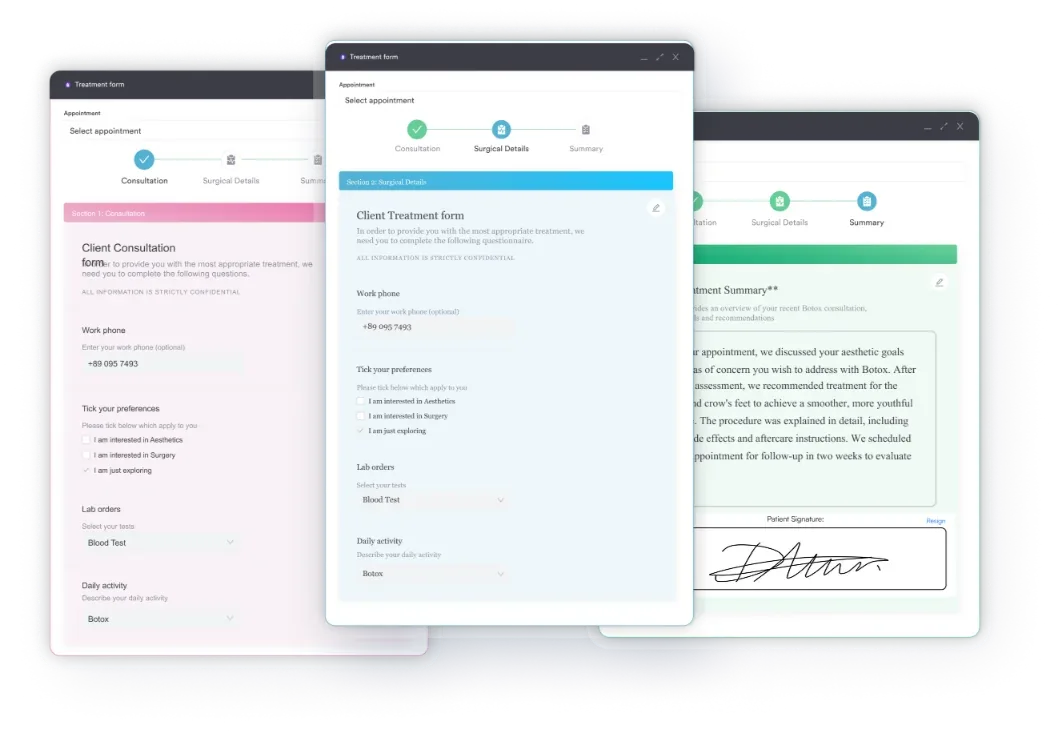
Practices using digital intake forms can standardize documentation collection at the consultation stage, capturing weight history, functional complaint, and conservative treatment fields before the patient reaches the operating table. This prevents the missing records that most often delay claims. The skin clinic software used by dermatology-adjacent practices often includes similar pre-procedure documentation workflows.
Prior authorization requirements for CPT code 15834 vary by payer. EmblemHealth, for example, does not include CPT 15834 (hip) on its preauthorization required list. The payer reviews it instead under its Cosmetic and Reconstructive Surgery Procedures medical policy. Practices should still confirm the preauthorization status of each site-specific code individually, since policies vary by payer and can change. Many other commercial payers and managed Medicaid plans still require pre-auth for elective surgical procedures involving skin excision, particularly those on the cosmetic/reconstructive borderline. Payer-specific verification remains essential before scheduling. Two practices can bill the same encounter at a different visit level, and the note settles which was right. Revenue cycle management reporting separates claims that were denied from claims nobody submitted.
What to submit for a successful prior authorization request:
Practices managing high volumes of body contouring cases benefit from workflows that reduce missed authorizations. These typically:
An expired or missing authorization is an avoidable denial.
Hip lipectomy rarely stands alone in post-bariatric body contouring cases. Patients presenting after massive weight loss often require skin excision at multiple anatomical sites. CPT code 15834 is commonly billed alongside 15830 (abdomen), 15832 (thigh), and 15835 (buttock) as part of a staged lower body lift. These sites may be addressed in a single surgical session or across staged procedures.
Staging is an important billing consideration. Some payers require staged procedures to be billed separately across different dates of service for coverage eligibility. Others permit same-session billing with appropriate modifiers. Confirm the payer’s staged procedure policy before scheduling. Practices opening a cosmetic practice or expanding into post-bariatric contouring should establish a pre-auth workflow for multi-site cases before taking on high-volume caseloads.
NCCI edits should be checked for any combination of lipectomy codes billed on the same date. The CMS National Correct Coding Initiative Policy Manual defines which code pairs are considered mutually exclusive. Some edits can be bypassed with modifier 59, but only when clinically appropriate and documented.
CPT code 15834 denials break into five recurring categories, based on common clinical and billing documentation issues.
Run a pre-submission documentation checklist for every CPT 15834 claim: confirm prior authorization number, verify ICD-10 diagnosis supports functional impairment, check that operative notes document anatomical site and weight of excised tissue, and review modifier logic against the payer’s bilateral procedure policy. Catching these before submission saves the average rework cycle of 3-4 business days per denial.
Managing CPT code 15834 claims involves more moving parts than a standard surgical code. Pre-auth tracking, functional documentation, ICD-10 pairing, modifier selection, and NCCI compliance all need to align before a clean claim leaves the practice. Claims management software built for surgical and aesthetic practices centralizes this process.
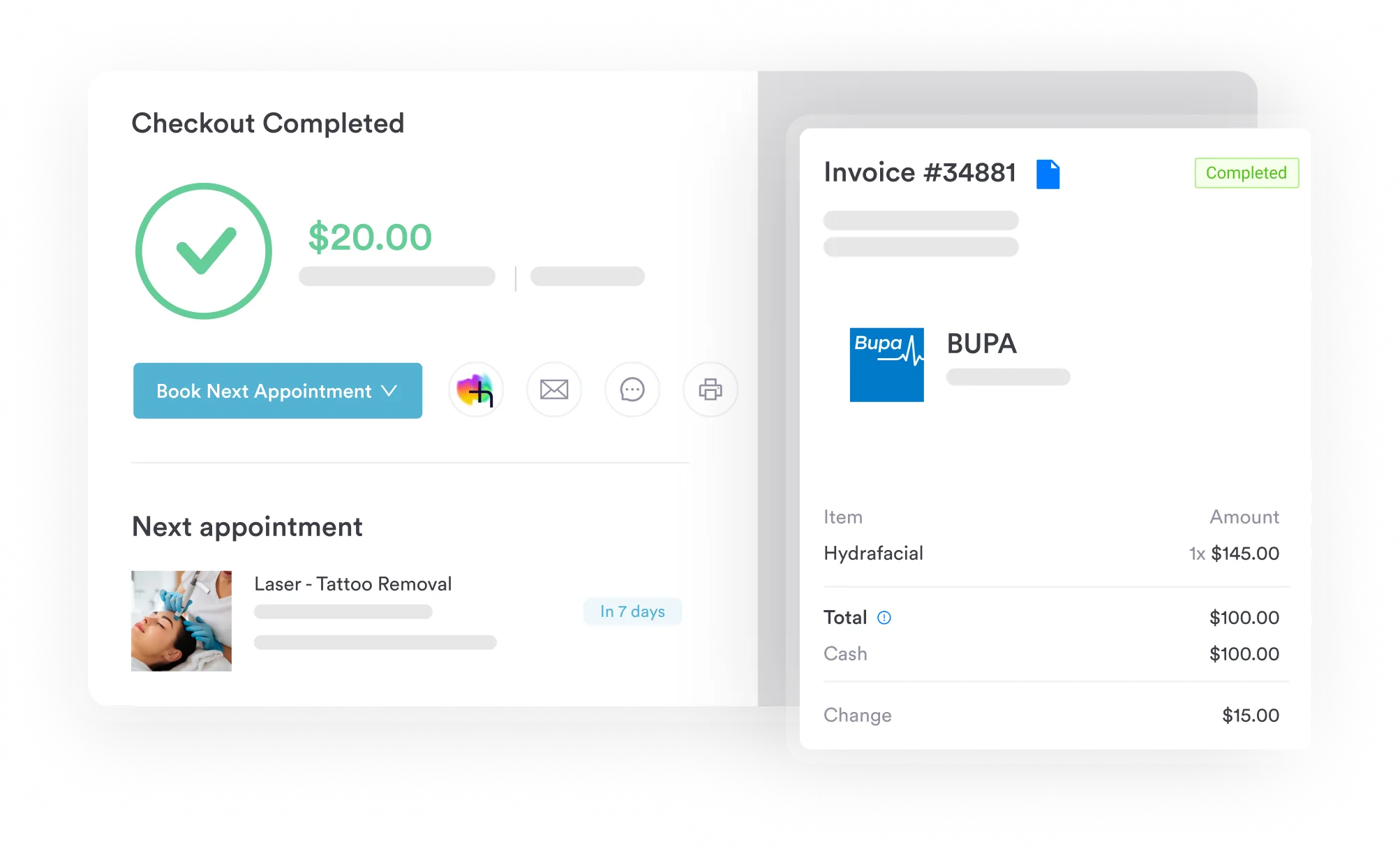
For plastic surgery practice management, specific capabilities reduce CPT 15834 denial rates:
Pabau’s claims management software supports these workflows for plastic surgery and body contouring practices managing post-bariatric caseloads.
Practices also benefit from plastic surgery practice software that integrates billing and clinical documentation in a single record. This keeps the clinical note and the billing submission consistent with each other. A disconnected workflow, where the surgeon documents in one system and billing codes in another, is where CPT 15834 denials most often originate.

Pabau helps plastic surgery and body contouring practices manage CPT documentation, track prior authorizations, and submit cleaner claims for procedures like CPT 15834.

CPT 15834 rewards practices that treat documentation as part of the surgical plan rather than paperwork completed after the fact. When the operative note ties the excision to a functional finding recorded at the first consultation, the claim reads as reconstructive rather than cosmetic. Reimbursement follows from that distinction.
The trade-off is time. Building that documentation trail before surgery adds administrative steps that a rushed intake process skips. Practices that accept this upfront cost see fewer denials and faster payment cycles than those that document after the fact.
Book a demo to see how Pabau keeps CPT 15834 documentation, prior authorization, and claims tracking connected from consultation to reimbursement.

Billing an upper eyelid procedure alongside a body contouring case? CPT code 15823: Upper eyelid blepharoplasty billing guide covers the modifiers and documentation Medicare expects for this procedure.
Coding a facial nerve graft in the same surgical plan? CPT code 15842: Graft for facial nerve paralysis breaks down the reimbursement rules for free muscle transplantation.
Handling a complex wound repair claim? CPT code 13131: Complex wound repair billing guide explains the modifiers and reimbursement specific to this code.
Repairing eyelids, nose, ears, or lips in the same session? CPT code 13151: Complex repair of eyelids, nose, ears, and lips covers the documentation payers expect for these sites.
Need the rules for a lower-complexity wound repair? CPT code 12055: Intermediate wound repair billing guide covers coding for less extensive repairs.
CPT code 15834 is the billing code for excision of excessive skin and subcutaneous tissue (lipectomy) of the hip. It covers surgical removal of redundant hip skin, including the fatty component, most commonly performed following significant weight loss or bariatric surgery. The code is specific to the hip anatomical site; adjacent body areas (thigh, buttock, abdomen) have their own codes in the 15830-15839 series.
Medicare payment for CPT 15834 is calculated using the Relative Value Unit (RVU) framework and varies by geographic location and care setting (facility vs. non-facility). Rates are updated annually by CMS. Use the CMS Physician Fee Schedule lookup tool or FastRVU to obtain current year-specific rates for your practice location, as national averages do not reflect local GPCI adjustments.
The most commonly used modifiers with CPT code 15834 are modifier 50 (bilateral procedure), LT/RT (left side/right side, preferred by some payers over modifier 50), modifier 22 (increased procedural complexity), modifier 51 (multiple procedures in the same session), and modifier 59 (distinct procedural service, to override a bundling edit when clinically justified). Confirm payer-specific modifier preferences before submitting.
Requirements vary by payer. EmblemHealth, for example, does not include CPT 15834 (hip) on its preauthorization required list. The payer reviews it instead under its Cosmetic and Reconstructive Surgery Procedures medical policy. Many other commercial payers and managed Medicaid plans still require prior authorization for CPT 15834, so verify the specific payer’s policy before scheduling. Where prior auth is required, submit the letter of medical necessity, clinical photographs, conservative treatment records, and weight history as part of the package to support approval.
Classification depends on clinical documentation. When the procedure corrects a functional impairment (recurrent intertrigo, skin breakdown, restricted mobility, hygiene complications) caused by redundant hip skin, most payers classify it as reconstructive and may cover it. When the primary purpose is aesthetic improvement without documented functional deficit, payers classify it as cosmetic and it is typically excluded from coverage.
The most common ICD-10-CM diagnosis codes paired with CPT 15834 are L98.7 (excessive and redundant skin and subcutaneous tissue), L30.4 (erythema intertrigo), and M79.89 (other specified soft tissue disorders). Secondary codes such as Z98.84 (bariatric surgery status) and E66.01 (morbid obesity) may be added to support medical necessity context, though payer-specific acceptance should be verified before submission.



