



CCSD code G5100: Bypass of duodenum billing guide
CCSD code G5100 bills a bypass that leaves the duodenum in place CCSD code G5100...

Last Updated: Oct 16, 2026

CPT Code 15824 describes a rhytidectomy of the forehead (brow lift), classified under the AMA’s Integumentary System section.
Medicare generally excludes cosmetic brow lifts from coverage; reconstructive billing requires documented brow ptosis impairing the visual field.
Missing prior authorization and insufficient documentation are the top denial triggers for CPT 15824 claims.
Pabau’s billing and documentation tools help aesthetic practices capture CPT code entry and supporting records for both cosmetic and reconstructive cases.
CPT Code 15824 is the AMA’s code for rhytidectomy of the forehead, more commonly known as a brow lift. In fact, billing complexity comes from the same surgery being either cosmetic or reconstructive, each with a different reimbursement pathway. Therefore, aligning plastic surgery EMR software and coding workflows before submission prevents the most common denial patterns for this code.
According to the American Medical Association (AMA), CPT Code 15824 is officially described as “Rhytidectomy; forehead.” Specifically, it belongs to the Repair (Closure) section of the Integumentary System in the CPT code set. The procedure involves surgical lifting and repositioning of forehead tissue to reduce wrinkles and address brow descent.
A forehead rhytidectomy addresses both aesthetic and functional concerns in the upper face. Specifically, the physician elevates the brow, repositions soft tissue, and excises or adjusts excess skin to reduce forehead wrinkles and raise a descended brow.
Surgical approaches vary. For example, endoscopic brow lifts involve small incisions behind the hairline with camera-guided dissection. By contrast, open coronal lifts use a single incision across the crown. Similarly, temporal lifts address the outer brow through shorter incisions at the temples. In every case, the CPT code captures the forehead rhytidectomy regardless of technique used.
Clinical indications fall into two categories, and the distinction matters for billing:
Practices treating both cosmetic and reconstructive patients benefit from workflows that separate these billing paths clearly. For example.
Medicare coverage for CPT Code 15824 depends entirely on whether the procedure is performed for cosmetic or reconstructive purposes. Specifically, cosmetic brow lifts are excluded from Medicare coverage under the cosmetic surgery exclusion (Social Security Act §1862(a)(10)). In contrast, reconstructive cases that meet medical necessity criteria may be covered, but payers apply this standard inconsistently.
For reconstructive-qualifying claims, approximate 2025/2026 Medicare reimbursement figures from the CMS Physician Fee Schedule are as follows. In addition, geographic adjustments apply, so actual rates vary by locality. Therefore, always verify current figures using the CMS MPFS lookup tool before submitting claims.
For exact RVU values and current reimbursement figures, use the FastRVU 2026 RVU lookup tool. Specifically, it pulls directly from CMS data and accounts for locality modifiers.
This distinction drives coverage, prior authorization requirements, and claim outcomes. Consequently, billers who treat it as a documentation checkbox rather than a clinical standard face the highest denial rates for this code.
Most payers apply a functional impairment threshold. Specifically, brow ptosis must demonstrably impair the superior visual field before the procedure qualifies as reconstructive. However, the specific threshold varies by payer Local Coverage Determination (LCD). Visual field testing showing loss in the upper visual field, commonly 12-30 degrees from fixation depending on the payer’s LCD, is the standard evidence. Therefore, review the applicable LCD before submitting any reconstructive claim.
Maintaining clear documentation that supports the medical necessity determination is critical. Therefore. Specifically, it should separate cosmetic self-pay workflows from insurance-billed reconstructive episodes within a single patient record.
Incorrect modifier use is one of the most frequently cited audit triggers for rhytidectomy claims. Indeed, each modifier must match a specific clinical scenario. Consequently, using a modifier without documented justification in the operative report creates compliance exposure.
Verify current National Correct Coding Initiative (NCCI) edits before billing multiple rhytidectomy codes on the same date of service. Indeed, bundling rules change annually. In addition, the AAPC Codify CPT lookup provides modifier and bundling guidance for each code pairing.
Flag every -59 modifier use for internal review before submission. Indeed, NCCI edits for rhytidectomy codes change each calendar year. For example, a modifier that was correct in 2024 may trigger a denial in 2025 or 2026 if the edit pairing was updated. Therefore, check the CMS NCCI policy manual at the start of each coding year.
The diagnosis code paired with CPT Code 15824 signals to payers whether the claim is cosmetic or reconstructive. In fact, selecting the wrong ICD-10 code is a denial trigger even when all other documentation is correct. Therefore, verify each code against the current CMS ICD-10-CM table and your payer’s LCD before submission.
These codes are commonly cited in coding reference sources but should be verified against the applicable payer LCD before claim submission. In addition, coders should check the AAPC CPT-to-ICD-10 crosswalk for current approved diagnosis code pairings.
Cosmetic claims for CPT Code 15824 require minimal documentation beyond the operative report and procedure consent. In contrast, reconstructive claims carry a heavier documentation burden, and missing any single element is sufficient grounds for denial or an audit finding. The preoperative consultation carries its own evaluation and management component, and documented complexity sets the level billed.
Maintaining a aesthetic practice compliance checklist for each case type prevents missing documentation from reaching the claims submission stage. In addition.
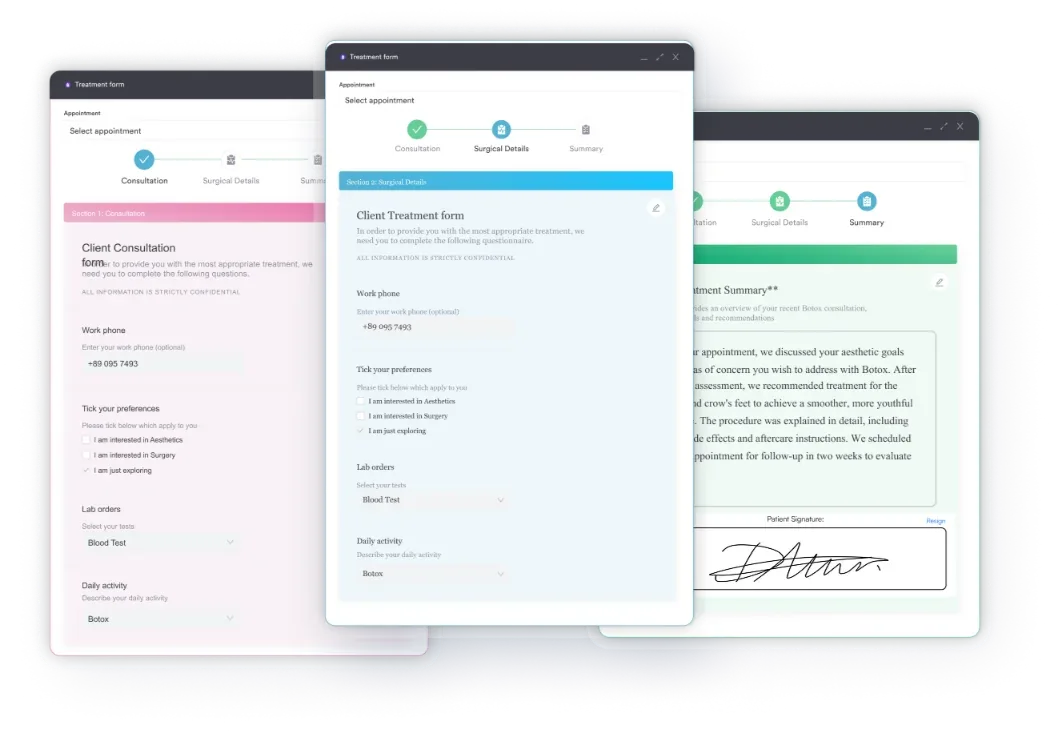
CPT Code 15824 sits within a broader AMA range officially titled “Other Repair (Closure) Procedures,” spanning codes 15820 through 15829. Specifically, codes 15820-15823 cover blepharoplasty of the eyelids, while 15824-15829 cover rhytidectomy of the forehead, neck, and face. Consequently, selecting the wrong code from this range is a common audit finding in plastic surgery billing.
Multiple rhytidectomy codes can be reported on the same date of service when distinct anatomical regions are operated on. For example, CPT Code 15824 (forehead) billed alongside 15825 (neck) or 15828 (cheek, chin, neck) is a common same-day combination. Therefore, the secondary procedures require modifier -51 (multiple procedures) or, where NCCI bundling edits apply, modifier -59 (distinct procedural service). In addition.
Verify NCCI edits before each combination. Specifically, the CMS NCCI policy manual lists current bundling pairs. Coders and billers at plastic surgery practices performing multiple rhytidectomy procedures in a single session should document each anatomical area distinctly. Therefore, do this in the operative report before billing.
Across aesthetic practices, four denial patterns account for the majority of CPT Code 15824 rejections. Consequently, understanding each prevents the most expensive rework.
Run a quarterly audit of CPT 15824 denial EOBs. Specifically, categorize each by denial reason code: cosmetic exclusion, no auth, missing documentation, or modifier error. A pattern in any one category signals a workflow problem, not a one-off coding mistake. Therefore, address the root cause in the workflow, not case by case.
Aesthetic practices billing CPT Code 15824 operate in a dual environment: cosmetic self-pay cases on one track and insurance-billed reconstructive cases on the other. Consequently, managing both within a single platform keeps documentation consistent and reduces the workflow mismatches that drive denials.
Pabau’s billing and documentation tools support CPT code entry directly within the clinical workflow. Specifically, coders and billers can log procedure codes at the point of care and attach supporting documentation without switching between tools. As a result, this keeps every claim-ready record organized before it goes to the payer. In addition, for reconstructive cases, pre-operative visual field results and consent documentation can be captured and stored alongside the patient record.
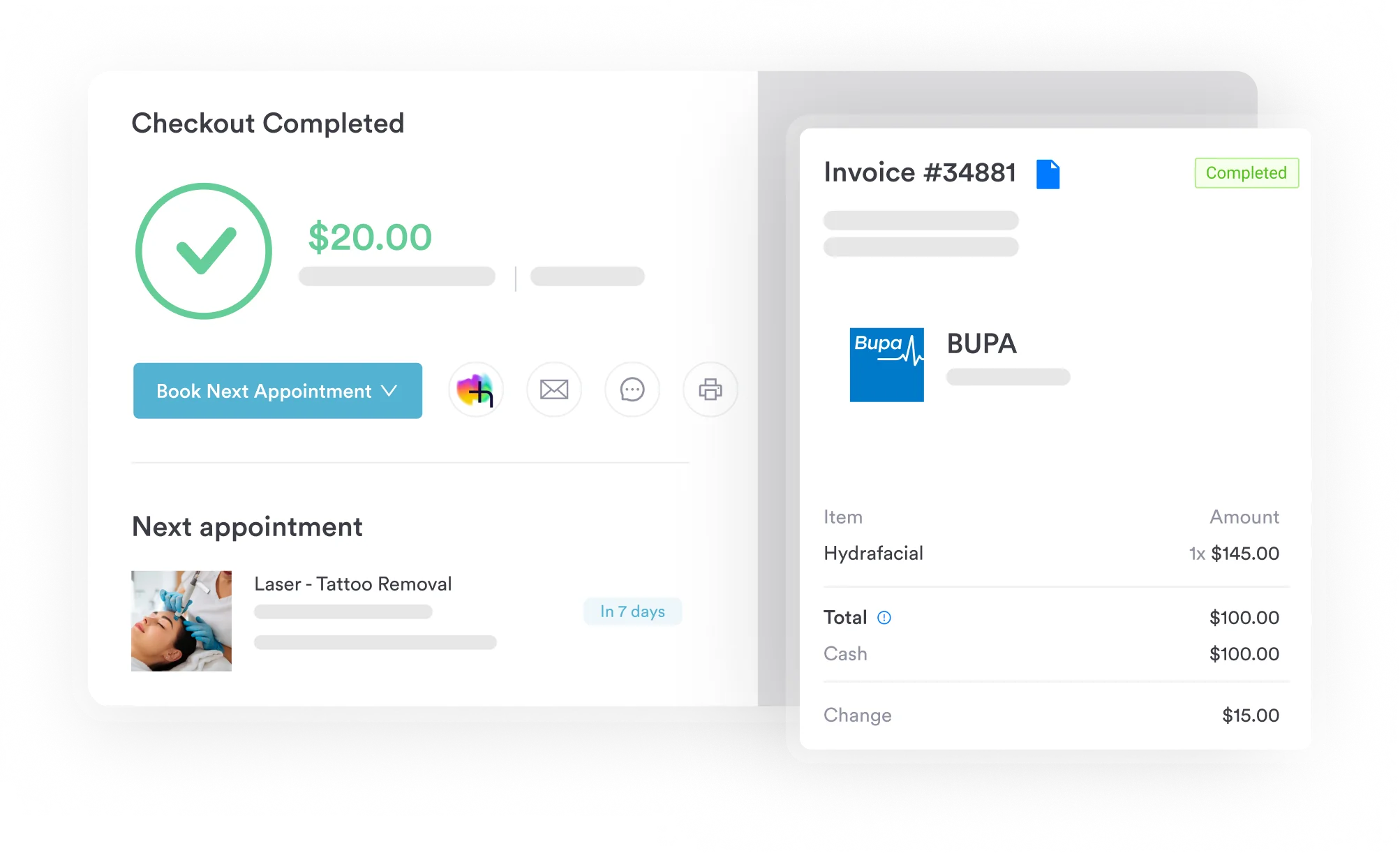
The platform is purpose-built for aesthetic and cosmetic practices. Indeed, a practice managing rhinoplasty, blepharoplasty, and forehead rhytidectomy across the same patient population needs one system for both insurance billing and cash-pay invoicing. Therefore.
For practices that also need to meet HIPAA requirements for med spas and aesthetic practices, Pabau’s documentation workflows support compliant patient record management. In addition, this works alongside standard billing operations. Therefore.

Pabau supports CPT code entry, digital documentation capture, and billing workflow organization for cosmetic and reconstructive aesthetic practices. See how it works.

CPT Code 15824 rewards practices that treat the cosmetic vs reconstructive distinction as a documentation discipline, not an afterthought. In fact, the most common denial reasons for this code are entirely preventable with the right pre-surgical checklist and accurate ICD-10 selection.
Pabau’s documentation and billing tools give aesthetic practices a single platform for CPT code entry and prior authorization tracking. In addition, compliant record storage covers both self-pay and insurance billing tracks. To see how Pabau handles rhytidectomy billing workflows, book a demo with the team.

Coding an unspecified visual pathway disorder? ICD-10 code H47.9 covers when coders assign this billable code and why audit systems flag it often.
Coding trochlear nerve palsy by eye? ICD-10 code H49.12 covers the billable code for left-eye fourth trochlear nerve palsy and laterality rules.
Excising a benign forehead lesion during the same visit? CPT Code 11406 covers benign lesion excision billing separate from rhytidectomy.
CPT Code 15824 is a rhytidectomy code that covers surgical lifting of the forehead, also known as a brow lift. Specifically, the physician removes or repositions excess forehead tissue to reduce wrinkles and elevate a descended brow. It falls under the Integumentary System section of the AMA CPT code set and belongs to the rhytidectomy family (15824-15829).
Medicare covers CPT 15824 only when the brow lift is performed for reconstructive rather than cosmetic reasons. Specifically, the procedure must address brow ptosis that demonstrably impairs the visual field. In contrast, cosmetic brow lifts are excluded from Medicare coverage under the cosmetic surgery exclusion. Similarly, commercial payers apply similar medical necessity criteria, typically requiring visual field testing and prior authorization before coverage is approved.
CPT 15824 covers rhytidectomy of the forehead only (brow lift). In contrast, CPT 15825 covers rhytidectomy of the neck with platysmal tightening, which addresses the anterior neck and platysma muscle band. Consequently, they address different anatomical regions and can be billed together on the same date of service when both areas are treated. Modifier -51 applies to the secondary code.
Reconstructive billing for CPT 15824 requires several elements: an operative report describing the functional indication, and pre- and post-operative photographs documenting brow position. In addition, payers require visual field testing results (Goldmann or Humphrey) showing superior visual field impairment, a medical necessity letter from the physician, and prior authorization. Therefore, missing any one of these elements is sufficient grounds for denial.



