HCPCS code T2043: Hospice continuous home care billing guide
HCPCS code T2043 pays for hospice crisis care by the hour HCPCS code T2043 is th...

Last Updated: Oct 7, 2026

CPT Code 15131 is an add-on code for dermal autograft applied to the trunk, arms, or legs. It covers each additional 100 sq cm in adults, or each additional 1% of body surface area in pediatric patients.
15131 must always be reported with parent code CPT 15130 and cannot be billed as a standalone code. It carries a ZZZ global period indicator as an add-on code.
Billing errors most often stem from missing graft measurement documentation, reporting 15131 without 15130, or miscalculating units when graft areas span multiple anatomical sites.
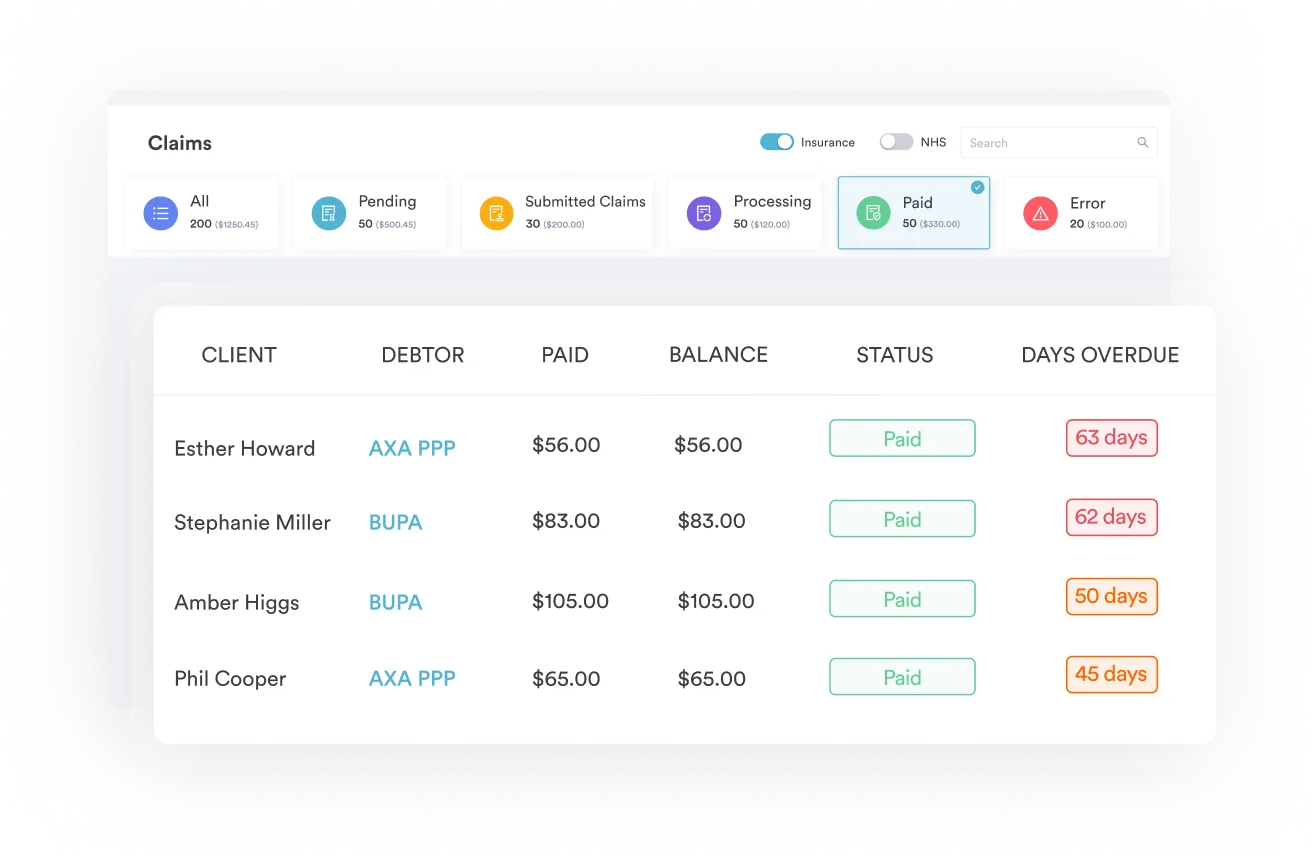
Practice management software like Pabau lets surgical and dermatology practices attach CPT codes at point of care and route claims automatically. This reduces manual transcription errors for complex add-on code scenarios.
CPT Code 15131 describes a dermal autograft applied to the trunk, arms, or legs. It covers each additional 100 square centimeters in adult patients, or each additional 1% of body surface area (BSA) in infants and children.
It is reported alongside parent code CPT 15130, which covers the first 100 sq cm of the same anatomical region.
Together, these two codes form the billing backbone for dermal autograft procedures in plastic surgery, burn care, and reconstructive wound management.
Practices that perform skin graft procedures. The cause is often unit miscalculation or missing parent-code linkage.
The sections below break down exactly how to bill correctly, what documentation CMS requires, and which related codes to know.
CPT 15131 carries a “+” prefix in the AMA code set, designating it as an add-on code. Add-on codes represent additional intraoperative services performed at the same session as a primary procedure and are always reported alongside a parent code.
For 15131, that parent is CPT 15130. Billing 15131 without 15130 on the same claim triggers an automatic denial. National Correct Coding Initiative (NCCI) edits prohibit standalone reporting of add-on codes.
Because 15131 is modifier 51 exempt, you do not append modifier 51 when reporting multiple units. The AMA lists add-on codes in Appendix D of the CPT code set. Confirm 15131’s exempt status against the current year’s edition.
For coders working across the dermatology and reconstructive surgery space, this is a frequent compliance trap. Applying modifier 51 to an exempt add-on code can delay payment without triggering an outright rejection. That makes the error harder to catch on remittance review.
Unit calculation follows different rules depending on patient age. For adult patients, each unit of 15131 represents an additional 100 sq cm of graft area beyond the first 100 sq cm covered by 15130. For infants and children, the unit represents each additional 1% of body surface area.
Measure the graft to the nearest whole 100 sq cm and document the exact measurement in the operative note. Rounding errors are common. A 210 sq cm graft requires 15131 x2, not x1. The “or part thereof” rule starts the second unit once total graft area passes 200 sq cm. Always derive units from the documented measurement, not from an estimated wound size.
For practices running high volumes of autograft cases. This reduces the transcription errors that cause unit miscounts downstream.
Several billing rules govern CPT Code 15131 beyond the add-on structure. Getting these right at the time of charge capture prevents the most common denial patterns.
Because 15131 is an add-on code, modifier 51 (multiple procedures) does not apply. Modifiers that may be appropriate include:
Never append modifier 51 to 15131. Doing so signals to the payer that you are treating it as a regular secondary procedure subject to multiple-procedure reduction. That can prompt a payment reduction or a request for documentation review.
Confirm modifier applicability against current payer policies, as commercial insurers sometimes differ from CMS on laterality modifier requirements.
CPT 15131 is billable in both facility (hospital inpatient, hospital outpatient) and ambulatory surgical center (ASC) settings. CMS maintains an ASC covered procedures list that is updated annually.
Verify current ASC status before submitting facility-side claims. The physician fee schedule payment rate differs between facility and non-facility settings. Non-facility rates include a practice expense component that compensates the practice for overhead in an office-based setting.
Facility rates are lower because CMS separately reimburses the facility for those costs.
Practices billing from a dermatology setting or outpatient wound care center should confirm their place of service (POS) code before submission.
Medicare reimbursement for CPT Code 15131 is calculated using relative value units (RVUs) from the Medicare Physician Fee Schedule (MPFS).
RVU values and resulting payment rates change each January when CMS finalizes the annual physician fee schedule rule. Because rates vary by geographic location (via the Geographic Practice Cost Index, or GPCI), the dollar amount your practice receives will differ from national averages.
For the most current payment rate, use the CMS Physician Fee Schedule Look-Up Tool or the FastRVU 2026 RVU lookup. Both allow searches by CPT code and locality. Payer contracts for commercial insurers typically tie reimbursement to a percentage of the Medicare fee schedule. That makes the MPFS rate a useful benchmark even for non-Medicare payers.
That benchmark only holds for codes the MPFS prices. HCPCS code R0070 is paid from the portable x-ray fee schedule as a flat per-trip amount, so the MPFS tool returns no rate.
Practices that track CPT utilization patterns across their autograft caseload can identify systematic undercoding. One example is consistently billing only 15130 when graft sizes frequently exceed 100 sq cm. Pabau’s reporting and analytics tools surface procedure-level billing patterns, helping practices spot missed add-on code opportunities before they become revenue leaks. Where a code carries an evaluation and management component, documented complexity sets the level billed. A resubmission does not restart the clock, so the original filing limit still governs.
Run a quarterly review of all 15130 claims. Look for cases where the documented graft size exceeded 100 sq cm but no 15131 units were billed. Cross-reference the operative note measurement against the claim. Even a single missed unit per case adds up quickly in high-volume reconstructive or burn practices.
CMS and commercial payers require specific documentation to support medical necessity and establish the correct number of billing units for CPT Code 15131. Insufficient documentation is the leading cause of post-payment audit clawbacks for skin graft codes. The operative note must contain all of the following elements to withstand payer review.
Practices that use digital clinical documentation tools can build graft measurement fields directly into their operative note templates. This ensures the required data is captured at point of care rather than reconstructed from memory during a billing review.
Medical necessity for CPT Code 15131 is established through a supporting ICD-10 diagnosis code on the claim. The diagnosis must reflect the condition that made the dermal autograft clinically necessary. Payers cross-reference the CPT code against the ICD-10 code.
A mismatch between procedure and diagnosis is a common denial trigger. Coders working across dermatology and reconstructive settings will encounter these pairings most frequently.
Note that payer LCD (Local Coverage Determination) and NCD (National Coverage Determination) policies govern which diagnosis codes support coverage for skin graft procedures. The table above reflects commonly paired codes, not a guarantee of coverage.
Always verify against the applicable MAC’s LCD before submitting claims. Coders can use ICD-10 crosswalk resources, such as the AAPC Codify CPT lookup. These help identify diagnosis codes that have historically supported medical necessity for autograft procedures.
As an add-on code, CPT 15131 carries a ZZZ global days indicator. ZZZ means the code has no independent global surgery period. Instead, it inherits the global period of the primary procedure with which it is reported. When billed with CPT 15130, the global period that governs follow-up care belongs to 15130, not to 15131 separately.
In practice, this means post-operative wound checks, dressing changes, and follow-up evaluations within the global period of 15130 are bundled. They are not separately billable to Medicare. If a patient presents for a complication or a service outside the global period, separate billing rules apply.
Confirm the global days value for 15130 via the CMS Physician Fee Schedule Look-Up Tool. Global period values can be revised in annual fee schedule updates. For coders new to skin graft add-on billing.
CPT Code 15131 belongs to a family of autograft codes organized by anatomical site and graft type. Knowing which code to use when the graft extends beyond the trunk, arms, or legs region prevents unbundling errors and payer audits. The same applies when the procedure involves split-thickness rather than dermal grafting.
Practices managing complex reconstructive cases.
The broader autograft and skin graft code family includes the following related codes. Use the correct family based on the anatomical site of graft application.
A key distinction separates the two families. Codes 15100-15101 cover split-thickness autografts (thinner, epidermis plus partial dermis). Codes 15130-15131 cover dermal autografts (full or near-full dermis, harvested from the patient’s own donor site). Using the wrong graft-type code family is an audit flag.
Surgical coders should confirm graft thickness and composition from the operative report before selecting between the 15100 and 15130 families. Coders cross-referencing burn-related autograft claims can also consult ICD-10 Code T31.52 for burns covering 50 to 59 percent of body surface area.
CPT Code 15131 denial patterns are concentrated in a handful of recurring errors. Most can be prevented at charge capture with clear documentation protocols and billing rule awareness.
Practices managing high volumes of skin graft procedures.
For practices that have implemented structured medical documentation workflows, capturing measurement data at the time of service reduces unit-count errors on complex multi-site graft cases.
Build a charge capture checklist for every autograft case: confirm the graft type as dermal vs split-thickness, and record the exact sq cm from the operative note. Then verify the anatomical site maps to the 15130 family, calculate the 15131 units, and attach the supporting ICD-10 code. Five steps, five denials prevented.
Many surgical and dermatology practices still track graft measurements on paper operative notes or in a separate EHR. Someone then re-keys the data into a billing system before submitting a claim. That hand-off is where units get miscounted and parent-code links get dropped.
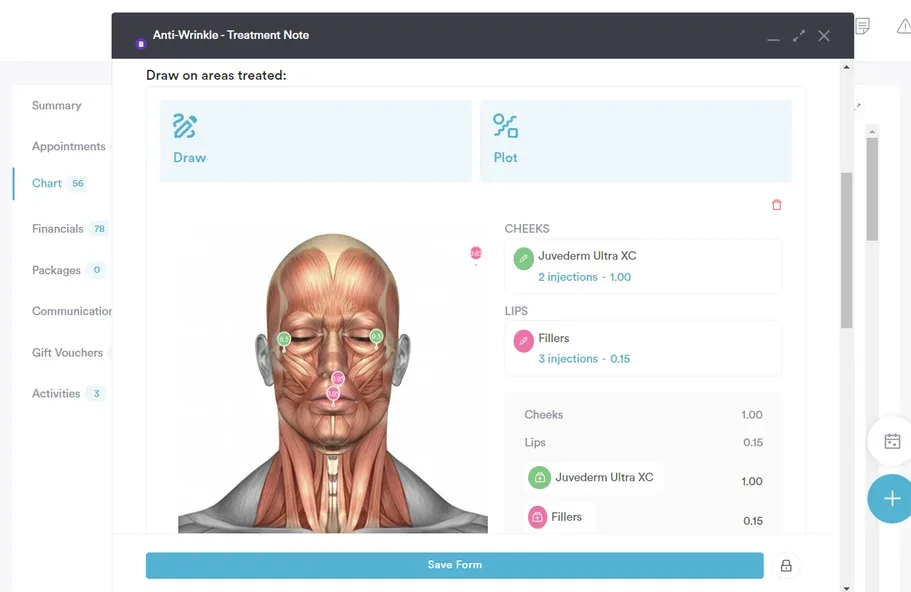
Practice management software like Pabau lets the surgical team record graft dimensions, anatomical site, and the supporting ICD-10 code directly in the treatment note. The matching CPT codes attach at the point of care, and claims route automatically from there, carrying the documented measurements through to the payer.
This keeps the operative note and the claim in sync. If a payer requests supporting documentation, a 210 sq cm graft billed as two 15131 units matches what’s already on file.

Pabau helps plastic surgery and wound care practices attach CPT codes at point of care, automate claim routing, and track add-on code utilization across every provider. See how it reduces billing errors for complex procedures like 15130 and 15131.

CPT Code 15131 is straightforward in principle. It adds billable units to the base dermal autograft code (15130) for every additional 100 sq cm of graft area.
In practice, the errors cluster around three failure points: missing the parent code, miscounting units, and selecting the wrong anatomical code family. Each of those errors is preventable with a structured charge capture workflow grounded in operative note documentation.
Practices that handle autograft cases regularly benefit from billing software that captures procedure data at the point of care and routes claims automatically. That single workflow change is often what separates a clean claim from a denied one. To see how Pabau supports surgical and wound care billing workflows, book a demo.

Stocking up for post-graft wound care? HCPCS Code A6242 covers billing for the hydrogel dressings used during graft site recovery.
Billing for the graft harvest itself? CPT Code 15002 covers the surgical preparation that precedes autograft placement.
Need the skin substitute graft comparison? CPT Code 15273 explains how skin substitute graft billing differs from the autograft codes covered here.
CPT Code 15131 is an add-on code that describes a dermal autograft applied to the trunk, arms, or legs. It covers each additional 100 square centimeters in adult patients, or each additional 1% of body surface area in infants and children. It is listed in addition to the primary code CPT 15130, which covers the first 100 sq cm of the same dermal autograft procedure.
Yes, CPT 15131 is an add-on code, indicated by the “+” prefix in the AMA CPT code set. It must always be reported alongside its parent code, CPT 15130, and cannot be billed as a standalone procedure. As an add-on code, it is modifier 51 exempt.
Medicare reimbursement for CPT 15131 varies by geographic location and changes annually when CMS updates the Medicare Physician Fee Schedule. For current rates, use the CMS Physician Fee Schedule Look-Up Tool and search by code 15131 and your MAC locality. Do not rely on rates published in prior years, as the conversion factor and RVU values are revised each January.
CPT 15131 is generally billable in an ambulatory surgical center (ASC) setting, subject to CMS’s current ASC covered procedures list, which is updated annually. Verify ASC status against the current-year list before submitting facility-side claims, as coverage status can change with annual fee schedule updates.
Common ICD-10 codes paired with CPT 15131 include burn codes from the T31.xx family, non-pressure chronic ulcer codes (L97.x), pressure ulcer codes (L89.x), open wound codes for the trunk, arm, or leg (S21.x, S41.x, S71.x), and malignant skin neoplasm codes (C44.x). Coverage depends on the applicable MAC’s Local Coverage Determination. These pairings reflect common clinical use and are not a guarantee of payer approval.
The number of billable units is determined by the total documented graft area, divided by 100 sq cm for adults. For pediatric patients, use the total percentage BSA beyond the first 1%. There is no fixed payer-mandated unit cap for 15131 in the AMA code descriptor. Individual payers may apply utilization limits or require prior authorization for large graft areas. Document the exact measured graft area in the operative note to support any number of units billed.