



CCSD code G5100: Bypass of duodenum billing guide
CCSD code G5100 bills a bypass that leaves the duodenum in place CCSD code G5100...

Last Updated: Oct 16, 2026

CPT code 01968 covers anesthesia for cesarean delivery following neuraxial labor analgesia or anesthesia; it’s an add-on code designated with the + symbol by the AMA.
01968 cannot be reported without CPT 01967, the primary neuraxial labor analgesia code; billing it alone results in automatic claim denial.
Reimbursement is calculated as (base units + time units) multiplied by the anesthesia conversion factor; CPT code 01968 carries 2 base units under the CMS fee schedule.
Pabau’s claims management software validates required submission fields and gates a claim from going out until they’re complete, helping catch missing information before it becomes a denial.
CPT code 01968 is the add-on code anesthesia billing teams report when a labor epidural or combined spinal-epidural continues, without a break in care, into anesthesia for a cesarean delivery.
It’s maintained by the American Medical Association and only ever appears on a claim alongside CPT 01967, the primary neuraxial labor analgesia code.
The definition rarely trips anyone up. What causes denials is the base unit value used in the reimbursement formula, the point where the clock starts for time units, and whether the primary code makes it onto the claim at all.
Get any one of those wrong, and an otherwise routine obstetric anesthesia claim comes back unpaid.
CPT code 01968 describes anesthesia services for cesarean delivery when the patient has already received neuraxial labor analgesia or anesthesia during active labor.
The official AMA descriptor reads: Anesthesia for cesarean delivery following neuraxial labor analgesia/anesthesia (List separately in addition to code for primary procedure performed).
The parenthetical instruction is the operative detail. CPT code 01968 is designated with the + symbol in the AMA CPT codebook, confirming its add-on status. It cannot be reported as a standalone service, and it must always accompany a primary anesthesia code.
The obstetric neuraxial anesthesia code family contains three codes. Understanding how they interact prevents the most common sequencing errors in OB/GYN EMR software billing workflows.
CPT 01967 is always the primary code. It covers the initiation and continuous maintenance of neuraxial labor analgesia, from epidural or combined spinal-epidural placement through vaginal delivery planning.
When the clinical course changes and cesarean delivery becomes necessary, CPT code 01968 is added to the claim. CPT 01969 applies only when the cesarean proceeds to hysterectomy.
A key rule from AAPC coding guidance: the add-on codes 01968 and 01969 may not be reported together on the same claim. Only one conversion add-on applies per patient encounter.
Billing staff and anesthesia providers need a clear picture of the clinical sequence that triggers CPT code 01968.
The code applies in one specific situation: a laboring patient received neuraxial analgesia (epidural or combined spinal-epidural) during active labor, and the same anesthesiologist or CRNA continues care as the delivery converts to cesarean. Consistent medical form documentation workflows for each of these steps are essential.
CPT 01968 does not apply when a new spinal or epidural is placed specifically for a planned cesarean. That scenario uses a different code (CPT 01961, anesthesia for cesarean delivery only, used when no prior neuraxial labor analgesia was in place).
The existing neuraxial catheter continuity is what distinguishes 01968 from other cesarean anesthesia codes.
Anesthesia reimbursement follows a formula rather than a flat fee. The CMS Physician Fee Schedule confirms the standard calculation for all anesthesia codes, including CPT code 01968:
CPT code 01968 carries 2 base units under the CMS Physician Fee Schedule, the methodology this guide uses throughout. Some commercial payers pricing anesthesia off the ASA Relative Value Guide instead use 3 base units for the same code, so confirm which methodology a given payer follows before quoting a reimbursement estimate.
Worked example: A patient receives a labor epidural (01967) and converts to cesarean after 90 minutes of labor. The cesarean portion itself takes 45 minutes. For CPT code 01968, the provider counts only the time spent providing anesthesia for the cesarean, not the labor time already billed under 01967.
Forty-five minutes equals 3 time units (45 / 15). Add the 2 base units: 2 + 3 = 5 total units. Using a hypothetical conversion factor of $22.00 per unit, the reimbursement for 01968 would be 5 x $22.00 = $110.00 for that add-on portion alone. The 01967 claim is calculated separately.
Time for CPT code 01968 begins when the provider transitions care to the cesarean, not from the original epidural placement. Accurate start and stop times in the anesthesia record are essential for correct unit calculation. Always verify the current conversion factor against CMS MAC bulletins, as it is updated annually.
Document the exact time the clinical decision to proceed with cesarean is made and the time the provider transitions anesthesia management to surgical-level care. This timestamp is the defensible start point for CPT code 01968 time units and protects against payer audits questioning time overlap with 01967.
Anesthesia modifier requirements depend on who delivered the service and under what supervision arrangement, for each line item on the claim. On a straightforward case, the same anesthesiologist manages the labor epidural and the cesarean, so the modifier on CPT 01967 and CPT code 01968 typically matches.
On a longer labor course, care sometimes transfers to a different anesthesiologist or CRNA for the cesarean portion. In that case, the modifiers should legitimately differ, each one reflecting who actually provided that specific portion of care.
Modifier selection follows CMS anesthesia modifier guidelines and ASA recommendations, and payer-specific rules occasionally differ, so verify requirements with each commercial payer before submission.
A mismatch only becomes a denial risk when the modifier doesn’t reflect the actual provider arrangement for that line, not simply because the two codes carry different letters.
Medicare reimbursement for CPT code 01968 is not a flat national rate. Rates are set at the Medicare Administrative Contractor (MAC) level and adjusted by geographic practice cost indices (GPCI), so a practice in Manhattan receives a different per-unit conversion factor than one in rural Mississippi.
Key Medicare considerations for CPT code 01968:
Medicare covers CPT code 01968 when the service is personally performed by an anesthesiologist (modifier AA), medically directed (QK/QY/QX), or provided by an independently practicing CRNA (QZ). The AD modifier, supervision of more than four concurrent cases, caps reimbursement at three base units rather than the full formula value.
Documentation supporting medical necessity, including the clinical indication for cesarean delivery, must be present in the anesthesia record. Where a code carries an evaluation and management component, documented complexity sets the level billed.
Documentation failures are the second most common reason claims for CPT code 01968 are denied or flagged for audit. The anesthesia record must support both the primary code (01967) and the add-on service. Checking insurance eligibility before the visit catches terminated coverage while the appointment can still be rescheduled.
Using structured digital anesthesia documentation forms reduces the risk of incomplete records. The American Society of Anesthesiologists (ASA) and CMS guidance align on the following required elements:
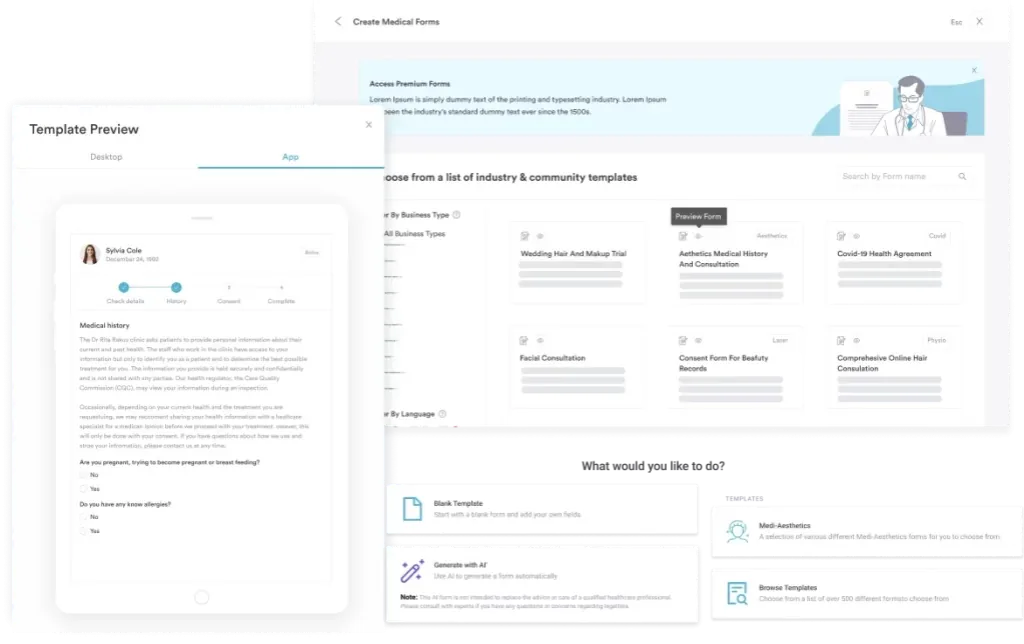
Continuity of care is easiest to prove when the handoff itself is documented the same way every time. Some hospital-based anesthesia groups standardize this with a shift handover template, so the postoperative transfer note reads consistently regardless of which clinician is closing out the case.
For practices using medical office documentation compliance frameworks, the anesthesia record should be treated as a legal document. Retroactive additions or alterations create audit exposure. Complete the record contemporaneously.
Billing errors for CPT code 01968 tend to cluster around a handful of predictable mistakes. Recognizing them before submission costs far less than appealing a denial after the fact.
The same documentation mistakes show up in other anesthesia specialties too.
Run a monthly audit of all claims containing CPT code 01968 and filter for any where 01967 is absent. A single missing primary code line is an automatic denial. Catching this pattern at the batch level before submission prevents revenue leakage across your entire obstetric anesthesia caseload.
Before a claim goes out the door, a quick pass through the record catches most of the mistakes above:
Anesthesiologists and billing staff coding obstetric cases should be familiar with the full range of codes adjacent to CPT code 01968. Knowing when each applies prevents misapplication and supports accurate claim sequencing.
The same base-and-time-unit logic carries over to other specialties:
It’s technique-agnostic, covering spinal, epidural, or general anesthesia for cesarean delivery only.
CPT code 01968 applies only when continuity from an existing labor epidural is the defining clinical fact of the case. When in doubt, the AMA CPT codebook’s AMA coding resources provide the authoritative guidance.
Manually re-keying coding decisions from an anesthesia record into a separate billing system is where friction and errors creep in.
Pabau’s claims management software keeps documentation and claim submission in the same platform: required insurer-submission fields are validated before a claim can be sent, and a claim-status dashboard shows where each one sits, from pending through paid or flagged for missing information.
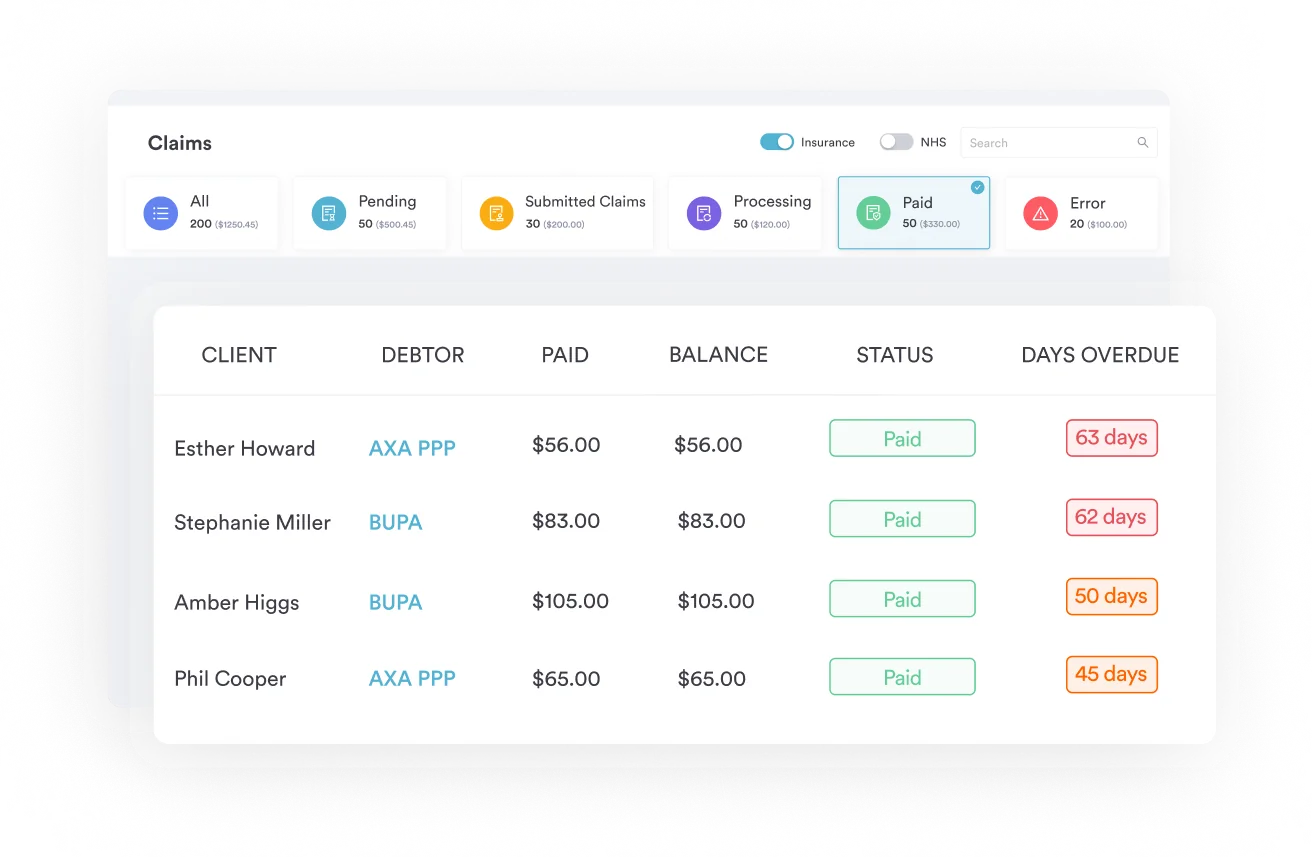
That doesn’t replace a coder’s judgment on which CPT codes or modifiers apply. It stops an incomplete claim from going out the door in the first place.
Hospital-based groups running practice management workflows across several specialties hit the identical missing-field problem before submission.

Pabau’s claims management software validates required submission fields and gates incomplete claims from going out, so obstetric anesthesia practices catch missing information on codes like CPT 01967 and 01968 before it turns into a denial.

CPT code 01968 only applies in one specific situation: a labor epidural or combined spinal-epidural that continues, without a break in care, into cesarean-delivery anesthesia. Billing it correctly comes down to that continuity.
CPT 01967 has to be on the same claim, the time units for 01968 start at the point of conversion rather than at epidural placement, and the modifier on each code has to match whoever actually managed that portion of care, even when that’s two different clinicians.
Get those three details right, and 01968 pays cleanly on the first pass. Miss any one of them, and the claim comes back for rework instead.
Pabau’s claims management software keeps the submission fields a claim like this needs complete before it goes out. Book a demo to see how it fits into an obstetric anesthesia billing workflow.

Need to code lactation support after a cesarean recovery? HCPCS code S9443 covers billing for non-physician lactation classes in the postpartum period.
Billing recombinant Factor VIIa treatment? Factor VIIa recombinant billing code explains per-microgram unit billing for HCPCS code J7189, the NovoSeven RT drug code.
Want the bigger picture on getting claims paid faster? Healthcare revenue cycle management guide covers the full claims lifecycle from eligibility check to payment posting.
No. It applies whenever an existing labor epidural or combined spinal-epidural continues into cesarean-delivery anesthesia, regardless of why the delivery converted, even a patient already laboring with an epidural ahead of a previously scheduled repeat cesarean. Continuity of anesthesia care is what qualifies the claim, not urgency.
The anesthesiologist or CRNA group bills CPT 01968 as a professional service. The hospital bills separately for the facility side of the delivery under its own revenue codes, so the two claims move through different reimbursement paths for the same encounter.
It can. When the conversion meets CMS criteria for a genuine emergency, providers may append CPT 99140, the qualifying circumstances add-on for anesthesia complicated by emergency conditions, as its own line alongside 01968.
In states that have opted out of Medicare’s physician-supervision requirement for CRNAs, yes, using modifier QZ. Where the state hasn’t opted out, or the payer applies its own supervision rule regardless of state policy, the claim still needs the matching direction modifier.



