CPT code 93503: Swan-Ganz catheter billing and modifiers
CPT code 93503: Official descriptor and procedure overview In the AMA CPT code s...

Last Updated: Oct 23, 2026

CPT code 01969 is the add-on code for anesthesia during a cesarean hysterectomy that follows neuraxial labor analgesia.
It does not describe a routine cesarean delivery, which is coded 01968, so the two codes are never interchangeable.
01969 cannot stand alone on a claim, and it is reported with the primary labor analgesia code CPT 01967.
Bill 01969 or 01968 for a delivery, never both, because the hysterectomy code already includes the cesarean work.
Pabau, our practice management software, keeps anesthesia times and the hysterectomy indication in one auditable record.
CPT code 01969 is the add-on code for anesthesia during a cesarean hysterectomy performed after neuraxial labor analgesia. It does not cover an ordinary cesarean delivery. That service is CPT 01968, and swapping the two is a costly coding error.
The code never travels alone. It is reported alongside CPT 01967, the primary code for neuraxial labor analgesia, on the same claim. Get the descriptor and that pairing right and the line pays at 5 base units plus your operative time.
CPT code 01969 is the AMA-designated add-on code for anesthesia for cesarean hysterectomy following neuraxial labor analgesia or anesthesia. The CPT book prints it with a plus sign, which marks it as an add-on code. An add-on can never be the only anesthesia code on a claim.
The clinical picture is narrow. A patient in labor already has neuraxial analgesia, usually an epidural or a combined spinal-epidural. The team proceeds to a cesarean, and the anesthesiologist deepens that block to a surgical level. The uterus is then removed during the same anesthetic. 01969 captures the anesthesia work for that combined cesarean and hysterectomy. Australian practices bill the equivalent service through MBS item numbers, which carry their own descriptors and eligibility rules. Auditors read the note before the code, so the documentation level has to support what was submitted.
Peripartum hysterectomy is usually driven by placenta accreta spectrum, atony that does not respond to treatment, uterine rupture, or hemorrhage that will not settle. Those cases run longer and consume far more blood products than a routine cesarean. The separate code exists because the anesthesia work is materially different.
01969 closes the obstetric anesthesia range. Reading the family in order is the quickest way to avoid the classic error. That error is using 01969 for a cesarean where no hysterectomy took place. Practices billing OB/GYN procedures need that distinction to hold on every claim, because NCCI edits reject the wrong pairing.
Base units above follow the ASA Relative Value Guide. Medicare’s anesthesia base unit file matches on every code in this family except 01968, which it lists at 2 units. Check which version your payer uses before you model expected payment.
Report 01969 when the cesarean proceeds to a hysterectomy under the same anesthetic. Report 01968 when it does not. The descriptors draw that line themselves, so this is a fact about the operative record rather than a payer preference.
01968 is subsumed in 01969. The hysterectomy descriptor already accounts for the cesarean delivery work, so billing both add-ons for one delivery counts the same service twice. Choose one, and let the operative note decide which.
The best medical practice management tools capture start and stop times at the point of care, which anesthesia billing depends on.
Add-on codes carry a plus sign in the CPT book and never appear on a claim as a standalone line. CPT 01969 is no exception. Submitted on its own, it draws an immediate edit rejection under NCCI bundling rules.
The primary code is CPT 01967, neuraxial labor analgesia for planned vaginal delivery. The pairing follows the clinical sequence. 01967 covers the labor analgesia, and 01969 is appended once that block is carried through the cesarean hysterectomy. Both codes sit on the same claim, on separate line items, with matching modifiers.
Across a busy labor and delivery unit, that pairing is easy to lose. A biller can then see the whole sequence of care before the claim is built.
Anesthesia payment runs on base units plus time units, multiplied by a conversion factor. CPT 01969 carries 5 base units, and the ASA Relative Value Guide and the CMS anesthesia base unit file agree on that figure. Medicare assigns 01968 only 2 units, which is the whole point of a separate hysterectomy code.
The record has to separate the labor analgesia period from the operative period cleanly. Overlapping times on 01967 and 01969 is a frequent audit finding, because it reads as duplicate billing. The documentation tools that capture anesthesia start and stop times have to support two distinct segments on one encounter.
Medicare pays anesthesia on total units multiplied by a locality-adjusted conversion factor. The CY 2026 national anesthesia conversion factor is $20.4976. Base units for 01969 are fixed at 5, so the variable in the calculation is time.
Take a cesarean hysterectomy with three hours of operative anesthesia time. That is 12 time units plus 5 base units, or 17 units in total. At the national conversion factor, the line works out at roughly $348 before geographic adjustment. Locality GPCI values move that figure in both directions, so confirm your own rate in the CMS Physician Fee Schedule.
Medicaid coverage of obstetric anesthesia varies materially by state, and some programs bundle add-on codes into the primary payment. Check your state fee schedule directly before you rely on a national figure. The CMS anesthesiologists information center publishes both the base unit file and the annual conversion factors used above.
Anesthesia services carry their own modifier set, which records who performed and who supervised the anesthetic. Every CPT 01969 claim needs one of them or it is denied for incomplete billing information. The modifier on 01969 must match the modifier on the primary code, CPT 01967, on the same claim.
Modifier consistency across the primary and add-on lines is a frequent audit trigger. If 01967 carries AA for a personally performed service but 01969 carries QK for medical direction, the claim signals a documentation problem. Your revenue cycle process should enforce modifier matching as a pre-submission check rather than a post-denial correction.
Run a modifier consistency audit on your last 90 days of obstetric anesthesia claims. Flag every encounter where the modifier on the add-on code, 01968 or 01969, does not match the modifier on CPT 01967. While you are in the data, check that no delivery carries both add-on codes. Both patterns point to a workflow problem that is generating quiet denials.
Documentation for 01969 has to establish three things: the labor analgesia service, the cesarean, and the hysterectomy performed under the same anesthetic. Miss the third and the encounter reads as a plain conversion. That is how a correctly performed case gets downcoded to 01968.
Practices using clinical record systems can pre-build an obstetric anesthesia template that prompts for each of these elements while the case is still fresh. The alternative is a chart audit weeks later, when nobody remembers the timings.
The same discipline carries across other code families. Reproductive medicine billing runs on the same documented detail.
CPT 01969 claims fail in predictable patterns, and the descriptor mix-up sits at the top of the list. Each of the errors below is preventable with a pre-submission check.
When a descriptor-level distinction is in doubt, checking the AAPC CPT code database takes a minute and settles it. The 01968 and 01969 entries there carry the full official wording, which is the only thing that decides the question.
Qualifying circumstance codes are reported alongside anesthesia codes when conditions raise the complexity of the service. Peripartum hysterectomy is the obstetric scenario where they apply most often, because these cases are frequently emergent and frequently hemorrhagic.
CPT 99140 covers anesthesia complicated by emergency conditions, which fits an unplanned hysterectomy for uncontrolled bleeding. Controlled hypotension, sometimes used to limit blood loss, is reported with CPT 99135. Age extremes trigger CPT 99100 instead, under one year or over seventy, so it rarely touches an obstetric claim.
Payers differ on whether they pay these codes separately, and some bundle the added complexity into the base procedure payment. Confirm the policy first. Then document the specific condition that triggered the code, because an undocumented qualifying circumstance is a technical denial waiting to happen.
Most of the errors above start in the record rather than the claim. Anesthesia times sit in one place, the operative indication in another, and the biller reconstructs the story afterwards. On a peripartum hysterectomy, that reconstruction is exactly where 01969 quietly becomes 01968.
Pabau, our practice management software, keeps the whole encounter in one structured record. Nothing then depends on memory, and every entry is timestamped and attributed to the clinician who made it.
Reporting then works from that record instead of from a spreadsheet. You can see which obstetric encounters are missing a documented indication before they reach billing, and track how often it happens by provider.

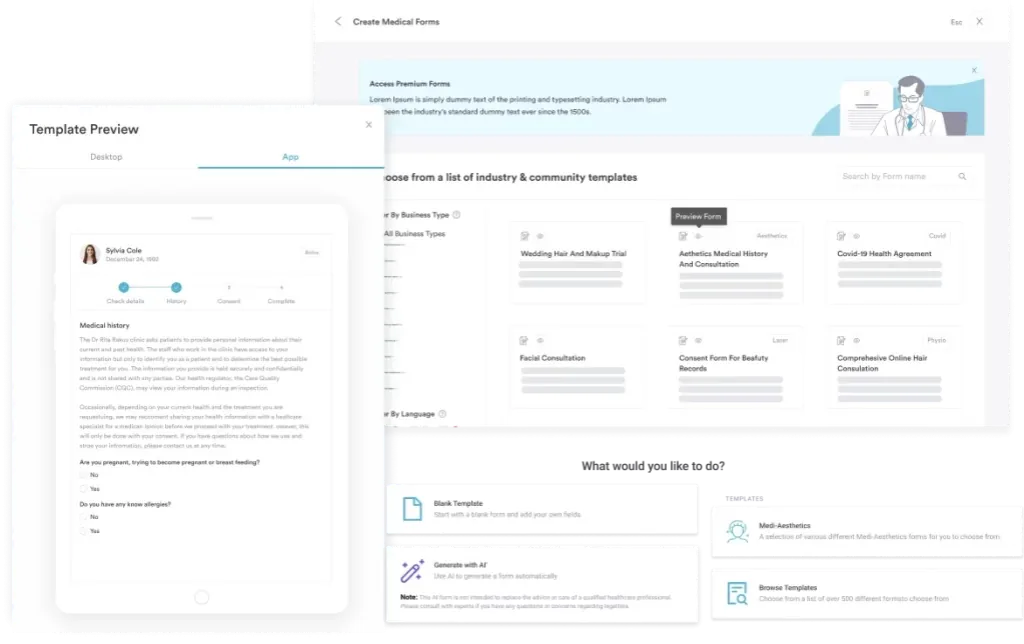
Pabau’s structured clinical records and custom forms capture anesthesia times, conversion events, and hysterectomy indications in one place. Your add-on coding is then backed by the note behind it.

CPT 01969 turns on one question. Was a hysterectomy performed under the anesthetic that began as labor analgesia? If it was, report CPT 01967 with 01969 and leave 01968 off the claim. If it was not, the correct add-on is 01968. The operative note settles which one.
At scale, the difficulty sits in the record rather than the rule. Practices that capture the indication and the time segments at the point of care code it right the first time. They also spend far less energy on appeals. Book a demo to see how Pabau keeps obstetric anesthesia documentation complete enough to support add-on coding.

Billing another add-on code this week? CPT 15005 runs on the same primary-plus-add-on logic, with its own unit math and documentation rules.
Coding other women’s health procedures? CPT 11976 walks through the descriptor, the modifiers, and the notes that keep those claims clean.
Reporting time-based services in 15-minute units? HCPCS S0265 shows how the unit count and the session notes have to line up before you bill.
CPT code 01969 is the add-on code for anesthesia during a cesarean hysterectomy that follows neuraxial labor analgesia. It applies when a patient with a labor epidural goes to cesarean and the uterus is removed under the same anesthetic. It is always reported with the primary code, CPT 01967.
No. CPT 01969 is an add-on code, printed with a plus sign in the AMA CPT book. It always needs a primary anesthesia code on the same claim, and that primary code is CPT 01967. Submitted on its own, 01969 triggers an NCCI edit rejection.
CPT 01969 carries 5 base units. The ASA Relative Value Guide and the CMS anesthesia base unit file agree on that figure. Payment is calculated as base units plus time units, multiplied by the locality-adjusted anesthesia conversion factor.
CPT 01969 requires an anesthesia-specific modifier on every claim. Use AA for a personally performed service, QK for medical direction of 2 to 4 CRNAs, and QY for a physician directing one CRNA. Use QX for a CRNA working under physician direction, and QZ for a CRNA working without it. AD covers supervision of 5 or more concurrent cases. The modifier on 01969 must match the one used on CPT 01967.