HCPCS Code Q4185: Cellesta flowable amnion billing guide
HCPCS Code Q4185: definition and official descriptor HCPCS Code Q4185 is the Lev...

Last Updated: Nov 20, 2026
T5250 is the CCSD (Clinical Coding and Schedule Development) code for endoscopic plantar fascia release. Surgeons use it to bill UK private medical insurers for dividing part of the plantar fascia through small portal incisions. It treats chronic plantar fasciitis that has not settled with conservative care.
T5250 sits in chapter 16 of the schedule, Bones, joints and connective tissue/tendon muscle. Bupa grades it MAJOR 3, with a fee of £575, and other insurers set their own fees. An open release is not billed under T5250.
Let Pabau's smart automation suggest the right codes, reduce claim denials, and keep your practice compliant—effortlessly.
Automate repetitive tasks and focus on what matters most—your patients.
Reduce coding errors and ensure compliance with the latest regulations.
Clean claims, fewer denials, and faster reimbursements.
Powerful insights and reporting to help your practice thrive.
HIPAA compliant SOC 2 certified GDPR-compliant Trusted by 4,000+ clinics worldwide

CCSD code T5250 covers endoscopic plantar fascia release, billed to UK private medical insurers such as Bupa, AXA Health, Aviva and Vitality.
Bupa grades T5250 MAJOR 3 with a fee of £575. National Friendly pays £253 for the same code, so check each insurer’s schedule.
Pair the claim with WHO ICD-10 M72.2, which includes plantar fasciitis. Add M77.3 only when a calcaneal spur is documented.
The operative note must confirm the endoscopic approach and the side. A conversion to an open release changes what the insurer is paying for.
Pabau, a practice management platform, keeps the operative note, the authorisation reference and the Healthcode claim in one patient record.
CCSD code T5250 is the UK private healthcare code for endoscopic plantar fascia release. CCSD stands for Clinical Coding and Schedule Development, the procedure code set for private healthcare in the UK. The CCSD Group, made up of Aviva, AXA Health, Bupa and VitalityHealth, maintains the schedule.
T5250 sits in chapter 16 of the schedule, Bones, joints and connective tissue/tendon muscle, under the Connective Tissue / Tendon Muscle category. Another fascia procedure in the same chapter is CCSD Code T5202, Dupuytren’s fasciectomy of the palm. For foot and ankle surgeons, the same chapter lists T6770 peroneal sling and groove reconstruction for dislocated peroneal tendons. The chapter also holds T8003 major muscle release, for pain or contracture around a large joint such as the quadriceps. Our CCSD codes for specialists list the rest of the chapter. The same category holds code T7050 for lengthening of tendon(s) or open tenotomy, which divides or lengthens a tendon rather than fascia.
Surgeons and their billing teams use T5250 to invoice UK private medical insurers such as Bupa, AXA Health, Aviva, Vitality and WPA. Each insurer then decides the claim against its own policy terms and fee schedule. Our guide to Bupa CCSD codes explains how the schedule is structured.
The operation treats chronic plantar fasciitis, which is heel pain from the fascia’s attachment to the heel bone. It is offered when conservative care has failed, usually after six months or more of stretching, orthoses, physiotherapy, steroid injection or shockwave therapy.
The operative steps for a T5250 release generally follow this sequence:
The procedure is usually a day case. The surgeon records which part of the fascia was divided, because a full release carries a different risk profile from a partial one.
T5250 pays for the whole endoscopic release as one procedure. Portal creation, the endoscopy itself, the fascial division and closure are part of the code, not extra lines on the invoice.
T5250 names the endoscopic approach in its descriptor. Neither Bupa’s schedule nor National Friendly’s lists a separate code for an open plantar fascia release. If the surgeon releases the fascia through an open incision, ask the insurer which code it accepts, and never invoice T5250 for it.
Conversion matters too. If poor visibility forces the surgeon to finish the release through an open incision, the note must say so. Tell the insurer before the invoice goes out, so the authorisation matches the operation performed.
The schedule holds several other plantar codes, and each covers a different treatment:
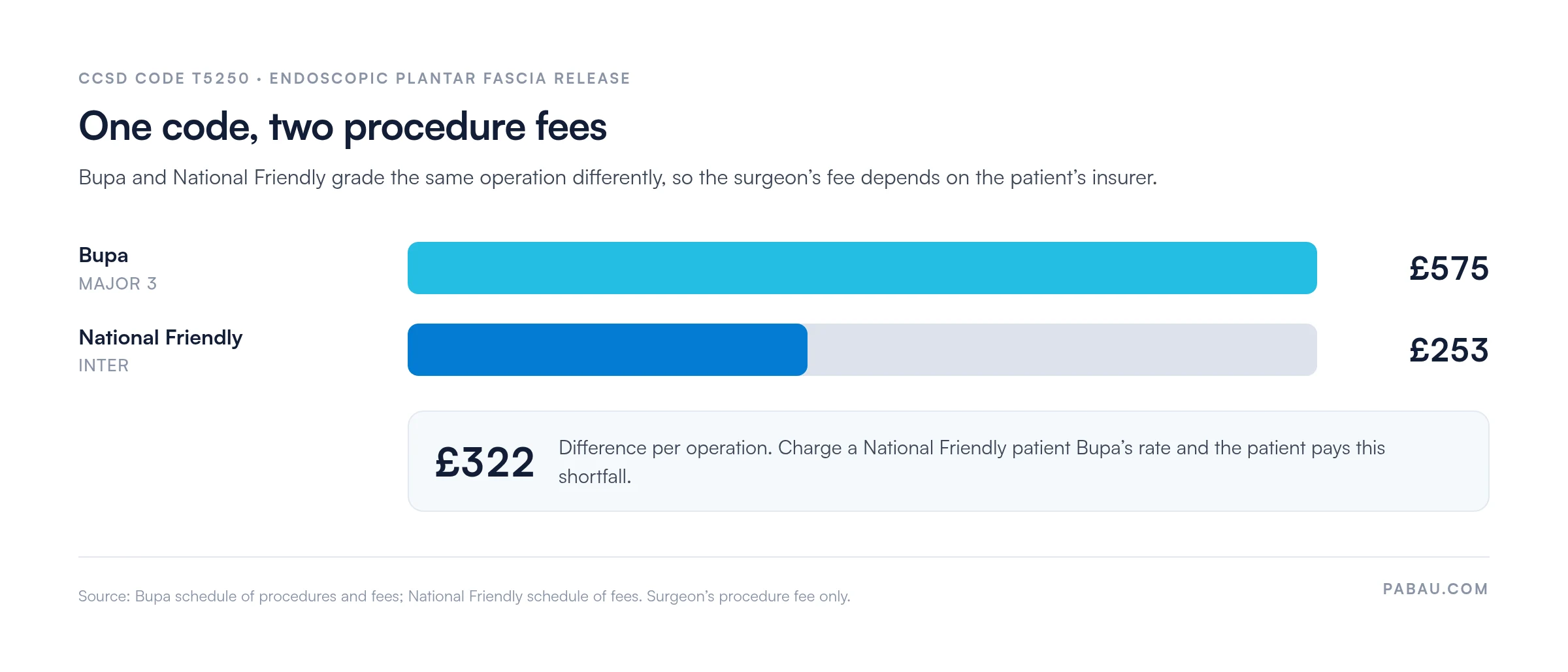
CCSD sets the codes, and each insurer sets its own fee against them. Bupa’s schedule grades T5250 MAJOR 3, with a fee of £575. National Friendly’s schedule of fees grades the same code Inter and pays £253.
National Friendly’s fee is less than half of Bupa’s for the same operation. AXA Health, Aviva, Vitality and WPA publish their own schedules too, so look the fee up for each patient’s insurer before quoting.
A surgeon who charges more than the insurer pays leaves the patient with a shortfall. Tell the patient about it in writing before the operation. When comparing UK medical billing software, check that it holds each insurer’s fee against the CCSD code.
Quote the patient from the fee in their own insurer’s schedule, never from Bupa’s figure alone. On T5250, Bupa pays £322 more than National Friendly, and the patient covers any shortfall.
UK private medical insurers expect pre-authorisation before elective surgery such as T5250. Requirements differ between insurers, policies and hospitals, so confirm them for each patient before you book theatre.
When you request authorisation, have the following ready:
Not every policy covers treatment by a podiatric surgeon, so confirm that the insurer recognises the practitioner before booking. Record the authorisation reference in the patient’s file and quote it on the invoice.
UK private medical insurers code diagnoses with WHO ICD-10, not the US ICD-10-CM. The WHO ICD-10 browser lists plantar fasciitis as an inclusion term under M72.2, Plantar fascial fibromatosis.
M72.2 also covers plantar fibromatosis, the nodular condition treated under T5230. The code alone does not tell the insurer which condition was treated, so the note has to name plantar fasciitis in words.
An insurer that queries a T5250 claim will ask for the operative note. Make sure it records each of these before the invoice goes out:
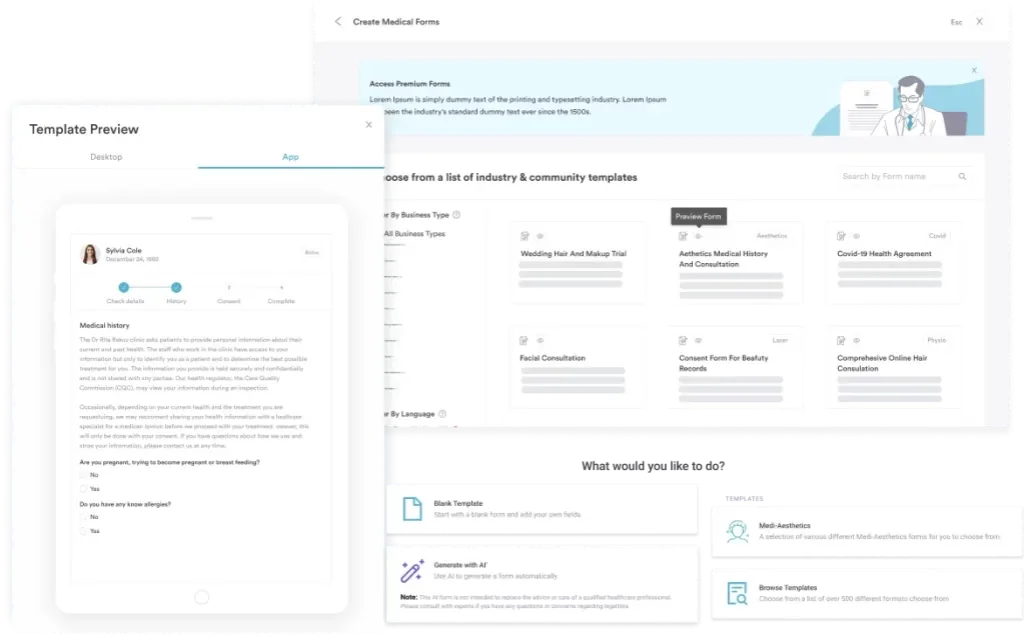
Structured digital forms make these fields mandatory, so a note cannot reach billing with the approach or the side missing.
The anaesthetist invoices separately, against the same CCSD procedure code and the anaesthetist fee in each insurer’s schedule. Both invoices should carry the same date, patient details and authorisation reference, so the insurer can match them.
When T5250 is one of several procedures in the same operation, such as a heel spur excision, each insurer applies its own multiple-procedure rules. The CCSD technical guide sets out how codes are built and which combinations are unacceptable. Check the insurer’s own policy before you add a second code.
If both feet are released in one session, ask the insurer before surgery how it wants the second side authorised and invoiced. Each insurer sets its own rule, and a single-side authorisation will not cover two T5250 lines.
Sound medical billing compliance habits, such as a short pre-submission check, catch most of these before the insurer does.
Private foot and ankle practices billing T5250 need the note, the authorisation and the invoice to agree. Pabau keeps all three in one patient record.
With Pabau’s claims management software, your team submits CCSD-coded claims through Healthcode and tracks each one to payment. Pabau also integrates with Bupa, so the claim goes out from the same record as the operative note.
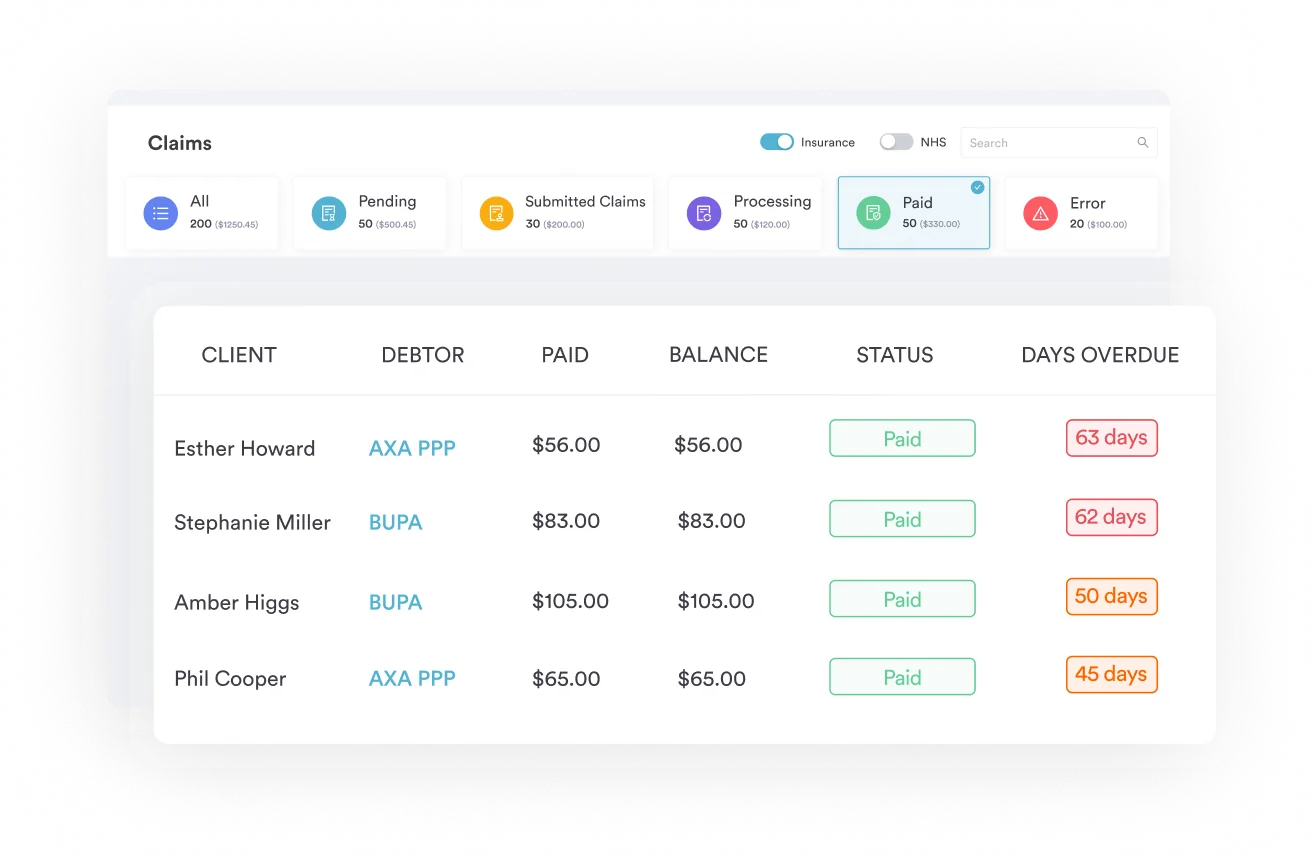

Pabau keeps operative notes, authorisation references and ICD-10 codes together, then submits CCSD-coded claims through Healthcode.

T5250 pays for one operation: releasing the plantar fascia through an endoscope. It does not cover an open release, and the fee behind it depends on the insurer, from £575 at Bupa to £253 at National Friendly.
So the claim rests on an operative note that names the approach, the side and the conservative care that came first. Match the authorisation to that note and quote from the patient’s own insurer schedule. Book a demo to see how Pabau sends CCSD claims through Healthcode with the note beside each one.

Coding the diagnosis behind the release? ICD-10 code M72.2 explains the plantar fascial fibromatosis code that supports a T5250 claim.
Confirming plantar fasciitis before surgery? The windlass test guide shows how clinicians test for plantar fasciitis and record the result.
Billing other foot and ankle tendon surgery? CCSD code T6780 covers primary Achilles tendon repair for UK private insurers.
Running a podiatric surgery practice? Our podiatry software guide compares the systems podiatrists use for bookings, notes and invoicing.
CCSD code T5250 covers endoscopic plantar fascia release, the surgical division of part of the plantar fascia through small portal incisions. It is part of the UK private healthcare schedule maintained by the CCSD Group. The code includes the portals, the endoscopy, the release and closure.
Bupa’s schedule grades T5250 MAJOR 3, with a fee of £575. National Friendly grades the same code Inter and pays £253. AXA Health, Aviva and Vitality publish their own fees.
UK insurers use WHO ICD-10. The usual pairing is M72.2, Plantar fascial fibromatosis, which includes plantar fasciitis. Add M77.3, Calcaneal spur, as a secondary code when a heel spur is documented.
Yes. Bupa, AXA Health, Aviva and Vitality expect pre-authorisation before elective foot surgery. Confirm the rules for each patient’s policy, and record the reference before the operation.
No. T5250 names the endoscopic approach. For an open release, or a release converted to open during surgery, ask the insurer which code it accepts before invoicing.
Podiatric surgeons are HCPC-registered podiatrists, and some insurers recognise them for foot surgery. Not every policy does, so confirm that the insurer recognises the practitioner before booking.
The anaesthetist invoices separately, using the same CCSD procedure code and the insurer’s anaesthetist fee. Both invoices should carry the same date, patient details and authorisation reference.