Hyperbole and a Half pain scale: Every level + free template
The Hyperbole and a Half pain scale is Allie Brosh’s humorous pain chart, ...

1
Last Updated: Oct 5, 2026

The windlass test dorsiflexes the great toe to load the plantar fascia and reproduce the patient’s heel or arch pain.
A positive result is a strong rule-in sign, with specificity reported at 100% in the primary study.
Sensitivity is poor, around 13.6% seated and 31.8% standing, so a negative test never rules plantar fasciitis out.
Use the standing version when the seated test is unclear, because body weight pre-loads the fascia before you move the toe.
Pair the test with first-step pain history and palpation over the medial calcaneal tubercle before you commit to a diagnosis.
A patient limps in and gives you a story you have heard a hundred times. The first few steps out of bed are agony. It eases after ten minutes, then comes back after a long shift on their feet.
That history points to plantar fasciitis. It also fits a fat pad contusion, a calcaneal stress fracture, or tarsal tunnel syndrome. Heel pain is far too common to diagnose on the story alone.
The windlass test loads the plantar fascia on purpose, so you can watch what the tissue does under tension. A positive result is strong evidence for plantar fasciitis. Negative results tell you almost nothing, which is exactly why your technique matters.
The windlass test is an orthopedic special test for plantar fasciitis. You passively dorsiflex the great toe at the first metatarsophalangeal (MTP) joint, which tensions the plantar fascia. A positive test reproduces the patient’s familiar heel or arch pain at the medial calcaneal tubercle.
Clinicians in physical therapy, podiatry, and sports medicine have used it for decades. Its value comes from specificity rather than sensitivity. A positive result makes plantar fasciitis very likely. Nothing much follows from a negative one, so the test belongs at the confirming end of your exam.
The plantar fascia tightens whenever the toes extend, and that tightening is the windlass mechanism. Picture a winch. As the rope wraps around the drum it shortens and stiffens. The fascia behaves the same way.
The fascia runs from the medial calcaneal tubercle to the base of each proximal phalanx. Dorsiflexing the hallux pulls it taut and lifts the medial longitudinal arch. That turns a mobile foot into a rigid lever for push-off, which is exactly what should happen in normal gait.
In plantar fasciitis the tissue is degenerated rather than simply inflamed. It cannot take that tension quietly. So the load you apply at the toe shows up as pain at the heel, several inches away from your thumb.
Four structures decide whether your test means anything. If you cannot find all four by palpation, the result is guesswork.
Anyone assessing foot and ankle pain in an osteopathy practice or a physical therapy room should be comfortable locating all four before starting.
Use the test once the history already points at plantar heel pain. It confirms a suspicion, so you need a suspicion first. The usual triggers are:
The 2023 JOSPT heel pain guideline lists the windlass test among the examination findings that support a plantar fasciitis diagnosis. It also makes the same point about pairing it with history and palpation.
Skip the test when there is severe acute irritability, broken skin over the heel, or a suspected calcaneal fracture. Clear your red flags first. For an acute injury, the Ottawa ankle rules calculator is a quick way to decide whether the foot needs imaging before anything else.
Watch the vascular picture too. Burning pain, a cool foot, or weak pulses point somewhere else. In that situation an ankle brachial index reading beats any special test.
Two variants exist, seated and standing. Both passively dorsiflex the great toe. The difference is how much tension already sits in the fascia when you start.
Standing pre-loads the fascia before you touch the toe, so the same movement applies more mechanical stress. That is why the standing version picks up more cases. Run it whenever the seated test comes back quiet but your suspicion has not gone away.
Most bad windlass results come from technique rather than pathology. These are the six that show up most often in practice:
A positive result reproduces the patient’s familiar heel or arch pain during passive toe extension. The pain sits at the medial calcaneal tubercle or along the fascia, never at the joint you are moving. Four common scenarios come up in the room:
Even a clean positive is not a diagnosis on its own. Read it alongside first-step morning pain and point tenderness over the tubercle. Then record the variant you used, the side, and where the pain appeared. That baseline is what lets you show change at week six.

The windlass test is highly specific and barely sensitive. In the primary study, specificity reached 100% for both variants. Sensitivity was 13.6% seated and 31.8% standing.
Those figures come from De Garceau and colleagues, published in Foot and Ankle International in 2003. That study remains the reference data for this test.
Read the sensitivity honestly. Roughly two-thirds of patients with plantar fasciitis will still test negative on the standing version. That is a property of the test, not a failure of your hands.
So use it to confirm and never to screen. A positive result moves your diagnosis a long way in one minute. A negative result should barely move it at all.
No single finding diagnoses plantar fasciitis. Palpation is the better screen, the windlass test is the better confirmation, and the history quietly does more work than either.
Palpation over the tubercle catches most cases, but it also flags plenty of feet that are fine. First-step morning pain is the sign patients volunteer without being asked. Put all three together and you can usually diagnose a straightforward presentation without imaging.
That cluster logic runs through orthopedic special testing generally. The O’Brien’s test for the shoulder is read the same way, as one finding among several rather than a verdict on its own.
The windlass test belongs at step five of a seven-step foot exam, after palpation and range of motion. Running it earlier throws away its main strength, which is confirming something you already suspect.
In a 20-minute new patient slot, that whole sequence takes about eight minutes. Five on history, one on gait, thirty seconds palpating the tubercle, a minute on dorsiflexion, then both windlass variants. You finish with either a working diagnosis or a good reason to look elsewhere.
Capture the sequence the same way every time. The value to the next clinician is knowing which steps you performed, not only which ones were positive.

Once the diagnosis is settled, the plan matters far more than the test. A runner needs load management and a graded, week-by-week return-to-running build. Later, a drop jump test gives you a repeatable check on landing tolerance before full training resumes.
The windlass test has a narrow job and does it well. Five limits decide whether your result deserves any weight in the notes.
Write down which variant you performed, the side tested, and the exact spot where pain appeared. A result recorded only as ‘windlass positive’ tells a colleague almost nothing six weeks later.
Most treatment rooms record special test results in free text, including practices already running physical therapy practice software. The finding lands in whatever wording the clinician reached for that day. Six weeks later, nobody can tell whether the standing variant was ever performed.
Practice management software like Pabau puts that structure into the note itself. Your digital assessment forms can carry a fixed windlass field for variant, side, and pain location. Every result then lands in the client record beside the history, photos, and treatment plan.
Pabau Scribe, our AI scribe, drafts the treatment note from the consultation itself. So the clinical detail survives without you typing through lunch. You end up with a record a colleague can act on. It also shows the patient exactly what has changed since week one.
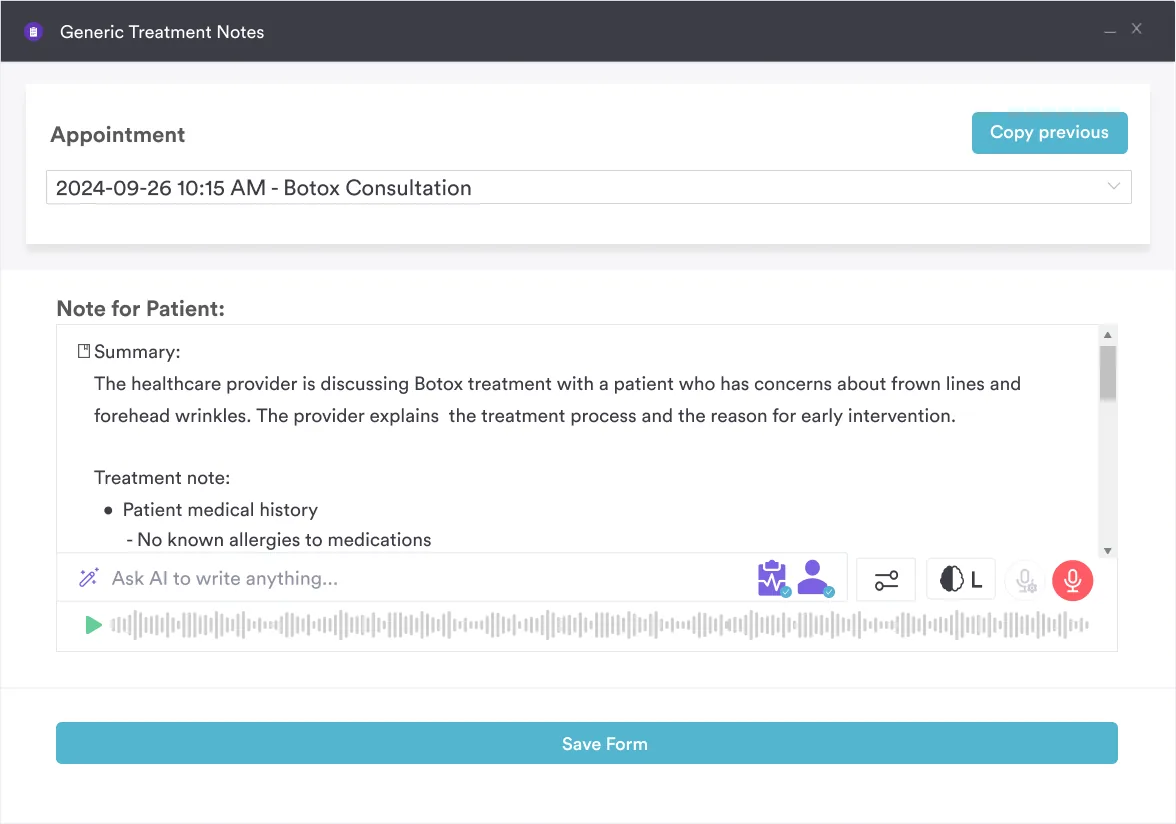

Pabau’s digital forms and client records give physical therapy and sports medicine practices a consistent place to log special test results. Track outcomes across appointments without extra paperwork.

The windlass test does one job, and it does it well. It turns a plausible history into a defensible finding in under a minute, with no equipment and no imaging request. Get the technique right and a positive result is worth a great deal.
The trap is reading a negative the same way. Two-thirds of your plantar fasciitis patients will pass this test without a flicker. Let palpation and the first-step story carry the diagnosis, and let the windlass confirm it.
Consistent notes are what turn those findings into progress you can prove to a patient. Book a demo to see how Pabau structures assessment records and outcome tracking for physical therapy and sports medicine practices.

Working through the shoulder next? Drop arm test covers the technique and accuracy figures for screening full-thickness rotator cuff tears.
Need a rule-in test for the knee? Lateral pivot shift test explains how to grade rotatory instability after an ACL injury.
Assessing a suspected biceps rupture? Bicep tear test walks through the examination when a patient reports a sudden pop in the arm.
Screening the lumbar spine as well? Kemp’s test template gives you a printable form for recording lumbar provocation findings.
Building a sports medicine test battery? Cardiopulmonary exercise testing explains what the data tells you about an athlete’s aerobic limits.
They use the same maneuver. Jack’s test, also called the Hubscher maneuver, dorsiflexes the great toe in standing to see whether the medial arch rises. The windlass test uses that identical movement, but the finding you want is pain rather than arch height. Podiatry texts often treat the two names as interchangeable.
It should only hurt when the plantar fascia is irritated, and then only briefly. Most patients describe a sharp pull at the heel that settles within seconds of releasing the toe. Warn them before you start. A patient braced for pain will guard the foot and hand you a muddy result.
You can perform the movement, but self-testing is unreliable. Standing on a step and pulling your own toe up shifts your balance, and you cannot hold the ankle still at the same time. Both problems reduce tension on the fascia. Treat it as a rough check, then get the foot examined properly.
Treatment usually starts straight away. A positive result supports a clinical diagnosis, so most patients move to load management, calf and plantar fascia loading exercises, and footwear advice. Taping or an orthosis helps when the arch needs support. Imaging is reserved for feet that have not responded after several months.