

HCPCS Code L0472: Hyperextension TLSO billing guide
HCPCS code L0472: Official descriptor and device definition HCPCS code L0472 des...

Last Updated: Nov 5, 2026
K5810 is the CCSD code for diagnostic intracardiac electrophysiological study including characterisation of intracardiac conduction and any testing of antiarrhythmic drug efficacy by programmed stimulation.
UK private insurers use it to bill the diagnostic EP study as one unit, with any drug testing in the same session included. A catheter ablation on the same list is billed under its own ablation code.
Let Pabau's smart automation suggest the right codes, reduce claim denials, and keep your practice compliant—effortlessly.
Automate repetitive tasks and focus on what matters most—your patients.
Reduce coding errors and ensure compliance with the latest regulations.
Clean claims, fewer denials, and faster reimbursements.
Powerful insights and reporting to help your practice thrive.
HIPAA compliant SOC 2 certified GDPR-compliant Trusted by 4,000+ clinics worldwide

CCSD Code K5810 covers the complete diagnostic intracardiac EPS, not just surface ECG monitoring or a standalone pacing test.
Antiarrhythmic drug efficacy testing by programmed stimulation is included within K5810, not a separately billable add-on.
Catheter ablation on the same date uses its own CCSD code. Billing K5810 alone when ablation also took place is the most common coding error.
A valid K5810 claim needs documented baseline intervals (AH, HV, SNRT), the pacing protocols used, and arrhythmia inducibility findings in the EP report.
Pabau, the practice management platform we build, keeps the structured EP report and the insurer claim in the same patient record.
CCSD Code K5810 is the code UK private medical insurers use for a diagnostic intracardiac electrophysiological study (EPS). Its descriptor covers characterisation of intracardiac conduction and any testing of antiarrhythmic drug efficacy by programmed stimulation. It is distinct from the codes for catheter ablation, device implantation, and non-invasive cardiac monitoring.
The CCSD schedule comes from the Clinical Coding & Schedule Development Group, which maintains it. It assigns alphanumeric codes to procedures that UK private healthcare providers perform. K5810 sits in chapter 8 (Thorax and intra-thoracic organs), under sub-chapter 8.9, Heart – Cardiology, alongside the catheter ablation codes. Neighbouring codes are easiest to check in our CCSD index for billers.
The K5810 descriptor names two components. The first is characterisation of intracardiac conduction, meaning baseline electrogram recording and interval measurement. The second is testing of antiarrhythmic drug efficacy by programmed stimulation. Both sit under one code, so billing them as two separate codes on the same date is unbundling.
Insurers apply the schedule in their own way. Our guide to Bupa CCSD codes covers Bupa’s current rules for K-series cardiology entries.
The team performs the procedure in a cardiac catheterisation laboratory under sterile conditions, typically with fluoroscopic guidance. They gain vascular access, usually via the femoral vein, and then advance multipolar electrode catheters to defined intracardiac positions. These are the high right atrium, the His bundle region, the right ventricular apex, and the coronary sinus for left atrial recording.
Once catheters are positioned, the study proceeds in two phases. The first is baseline conduction characterisation, in which the operator records intracardiac electrograms and measures key intervals. The second is programmed electrical stimulation. The operator paces the heart at defined drive-cycle lengths and introduces progressively premature extrastimuli to assess arrhythmia inducibility.
When the operator tests antiarrhythmic drugs, they give the drug intravenously or orally and repeat the stimulation protocol after a suitable interval. The K5810 code covers both phases within a single billing unit.
K5810 bundles several components that coders sometimes attempt to bill separately. Understanding the inclusion boundary prevents both under-coding and unbundling errors.
The K5810 descriptor explicitly includes drug testing by programmed stimulation. This means a practice cannot bill K5810 plus an additional code for the pharmacological challenge component. The phrase “any testing of antiarrhythmic drug efficacy” in the official descriptor covers every drug-and-restimulation cycle performed during the same session.
Documentation must record the drug used, dose, route, timing relative to stimulation, and the re-inducibility result after the drug dose.
K5810 is correct when the documented clinical purpose is a complete diagnostic intracardiac EPS, regardless of the underlying arrhythmia. The accepted indications in UK private cardiology practice include the following.
K5810 is the wrong code when no separate diagnostic study was intended. A therapeutic catheter ablation that includes an obligatory mapping phase takes the ablation code instead.
Check the EP study request form before coding. If the referring cardiologist has booked a ‘diagnostic EPS’ as a separate list entry from a planned ablation, K5810 is correct for the diagnostic component. If the booking is for ‘ablation’ only, use the ablation code even if baseline measurements were recorded as part of that procedure.
The CCSD schedule contains several K-series codes that cover related but distinct electrophysiology procedures. Choosing between them requires knowing exactly what was performed. The table below maps the most commonly confused codes.
The most frequent K5810 coding error occurs when ablation and a diagnostic EPS are performed on the same date. The diagram below shows how the booking and the EP report decide which codes go on the claim.
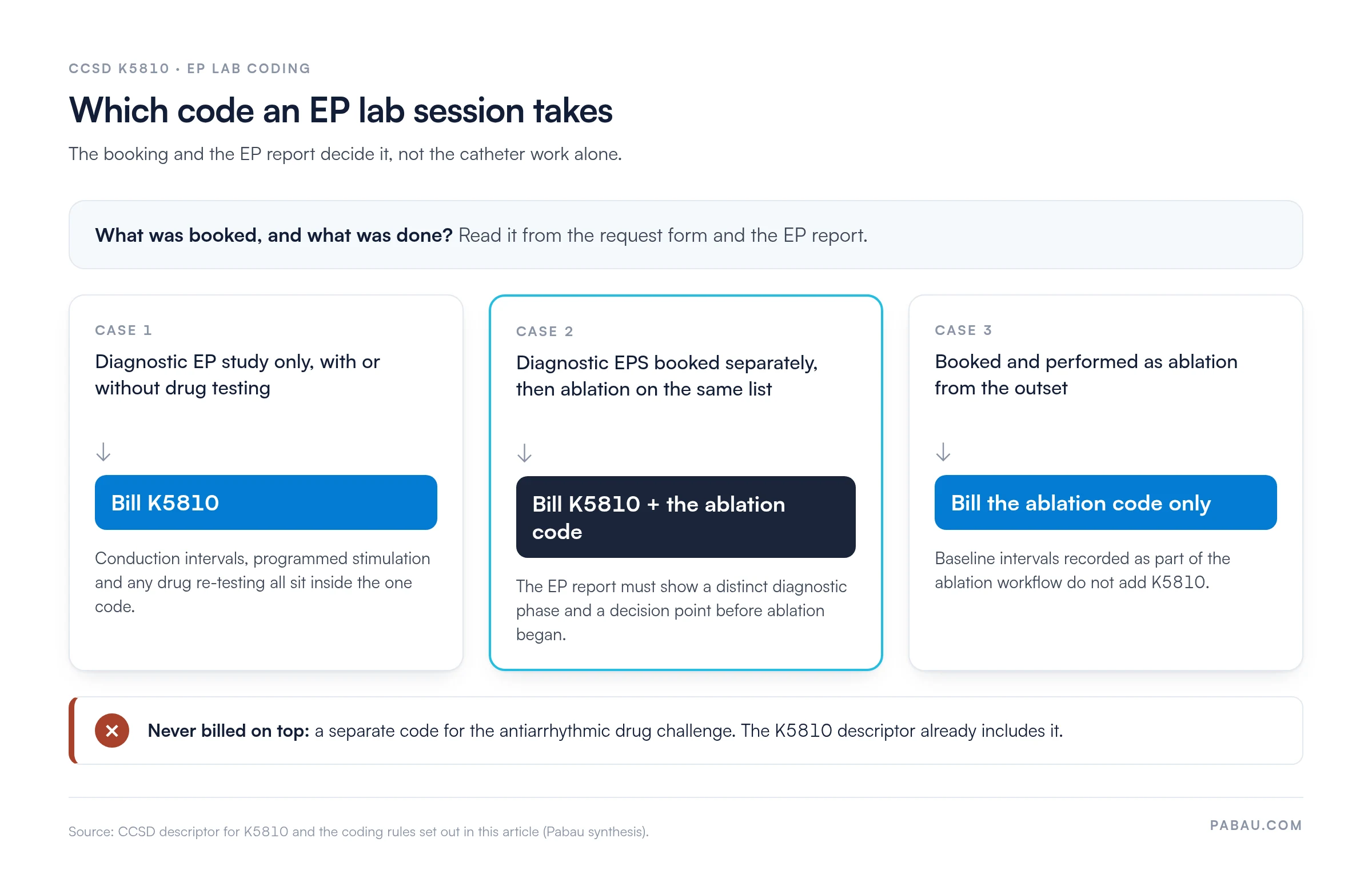
The two same-day scenarios work like this.
The clinical documentation must support whichever position is taken. Insurers reviewing K5810 alongside an ablation code on the same date will expect the EP report to show a distinct diagnostic phase.
Any UK private insurer will query a K5810 claim that lacks a full EP report. The report must be structured and must document each component that the code descriptor covers. Digital procedure forms that mirror the report structure capture each data point at the point of care. Staff then have no report to rebuild from notes later.
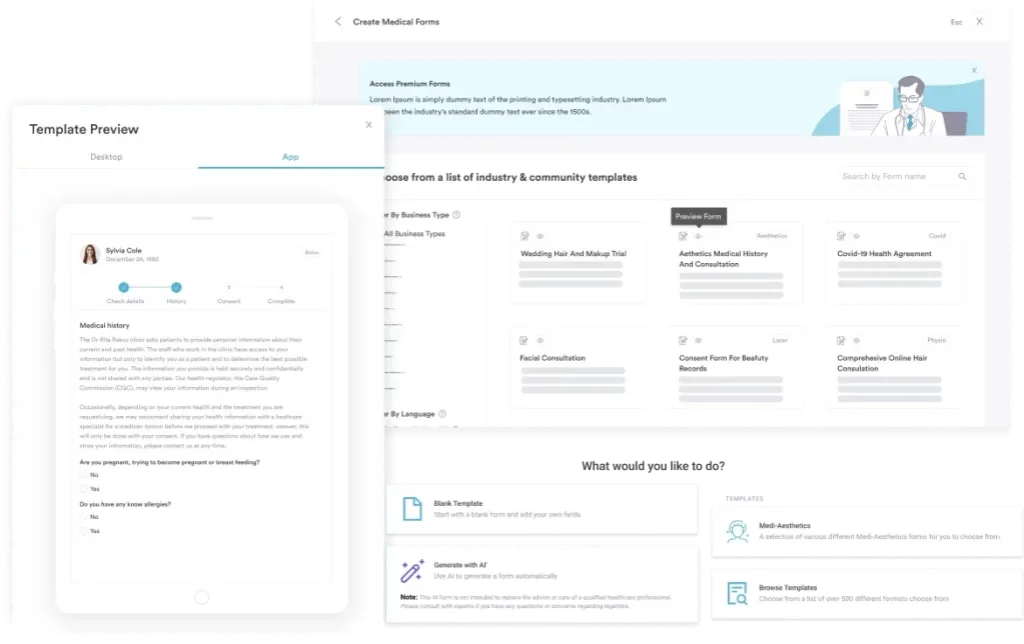
The EP study report needs the following elements to support a K5810 claim.
Major UK private medical insurers treat K5810 as a procedure requiring pre-authorisation before the patient attends. This is standard for any invasive cardiology procedure. Billing without a valid authorisation reference number is the single most reliably avoidable cause of K5810 claim denial.
Each insurer has its own portal and submission requirements, but the information requested is broadly consistent. Build the authorisation step into the booking workflow, so staff complete it before they list the patient rather than after the procedure.
Pre-authorisation requirements change periodically. Always verify current requirements directly with each insurer’s provider portal before submitting. Record the authorisation reference number in the patient record before listing the procedure.
Benefit levels differ between insurers too. Our breakdown of the Bupa fee schedule shows how one insurer sets its maximums for CCSD entries.
K5810 denial patterns are consistent across UK private insurers. Most stem from incomplete documentation rather than wrong code selection. The causes below account for most denials.
Build a K5810 documentation checklist into your EP lab’s procedure sign-off workflow. Check that the report records the AH interval, HV interval, SNRT (if assessed), pacing protocols, inducibility result, and drug details (if applicable). Do it before the patient leaves the lab. Chasing this information retrospectively costs time and delays invoicing.
Cardiology practices billing K5810 handle two parallel tasks. One is producing a structured EP report that captures every required data point at the point of care. The other is tracking pre-authorisation status before each procedure is listed.
Pabau’s claims management software records the K5810 code against the procedure and sends the claim to UK private insurers through Healthcode. Structured digital forms for the EP report capture the AH interval, HV interval, SNRT, stimulation protocol, and drug testing details. Those values sit in the patient record beside the claim, with no separate document to reconcile later.
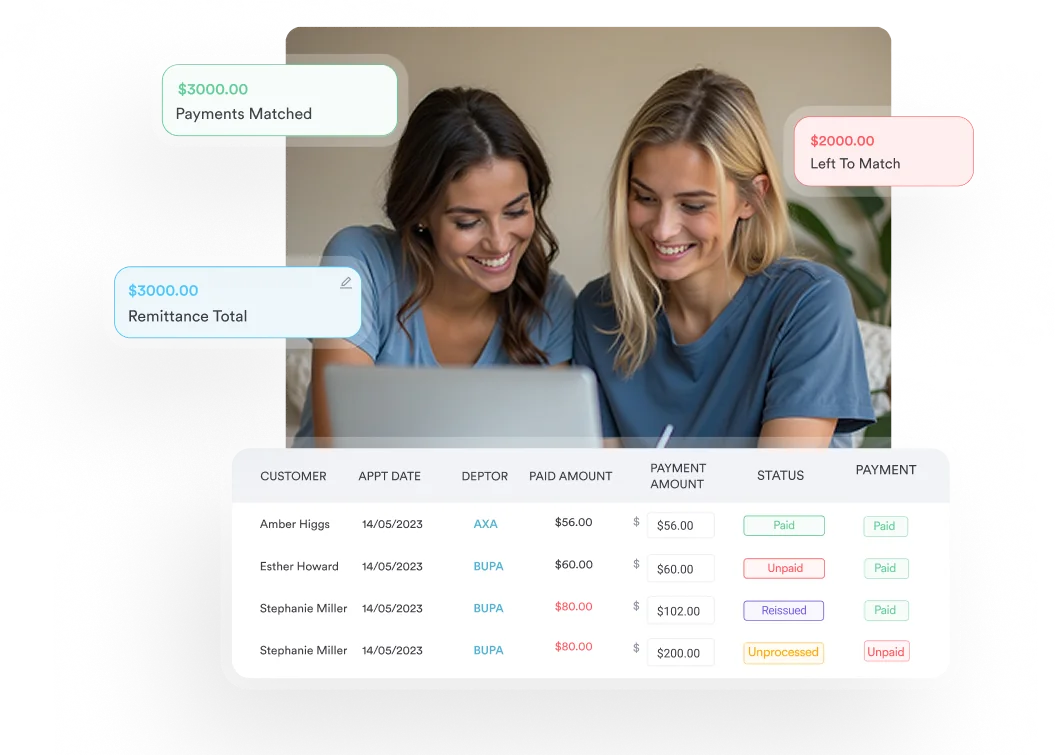
Pabau’s compliance tools also support audit readiness by retaining the full procedure documentation alongside the associated claim. When an insurer queries a claim or asks for clinical substantiation, the practice answers from one record instead of searching several systems.
Practices still comparing systems can see how Pabau stacks up in our review of UK medical billing software.

Pabau helps UK private cardiology practices manage CCSD code documentation, pre-authorisation tracking, and clean claim submission from one platform. See how it works for your team.

Get the booking right first, because it settles most K5810 decisions. A diagnostic EPS that the team lists separately from a planned ablation can carry both codes. An ablation the team booked from the outset cannot, whatever baseline measurements were taken.
Then let the EP report do the defending. Quantitative intervals, the pacing protocol, inducibility findings and a clear decision point are what an insurer checks first. A report without them puts the claim at risk even when the code is correct.
The trade-off is a few extra minutes of structured documentation in the lab against weeks spent chasing a queried claim. Book a demo to see how Pabau keeps the EP report, the authorisation and the claim together for your cardiology practice.

Need guidance on CCSD billing across UK insurers? Bupa CCSD procedure codes and fee schedule covers how Bupa applies the CCSD schedule and what billing teams need to know about K-series cardiology codes.
Checking what Bupa pays for a cardiology code? Bupa procedure codes fee schedule explains how Bupa sets benefit maximums for CCSD entries.
Coding another heart procedure from chapter 8? CCSD Code K2310 covers excision of a cardiac tumour and what its claim needs.
Looking to reduce claim denials across your private practice? Claims management software explains how Pabau structures the billing workflow from procedure to clean invoice submission.
CCSD Code K5810 is the billing code for a diagnostic intracardiac electrophysiological study. It includes characterisation of intracardiac conduction, meaning measurement of the AH interval, HV interval, and sinus node recovery time. It also includes any testing of antiarrhythmic drug efficacy by programmed stimulation. Both components sit within the single code, so they cannot be split and billed separately.
Drug testing by programmed stimulation is included within K5810. The official CCSD descriptor explicitly states “any testing of antiarrhythmic drug efficacy by programmed stimulation.” Billing a separate code for the pharmacological challenge on the same date is unbundling. UK private insurers applying CCSD bundling rules will reject it.
Most UK private medical insurers (Bupa, AXA Health, Aviva, Vitality Health) require pre-authorisation before the team performs an invasive cardiology procedure such as K5810. Typically they request the CCSD procedure code, the consultant’s recognition number, a clinical indication letter, and evidence of prior non-invasive investigation. Requirements vary by insurer and change periodically, so practices should verify current requirements via each insurer’s provider portal before listing the patient.
K5810 can be billed alongside a catheter ablation code on the same date. The EP report must clearly document a distinct diagnostic phase, with a decision point before ablation commenced. Do not bill K5810 alongside a separate code for drug testing, as K5810 already includes it. Whether it can be billed with a mapping-only code depends on CCSD bundling rules for those specific codes. Confirm with the current CCSD technical guide or the relevant insurer before submitting.



