CCSD code H3322: Laparoscopic abdominoperineal resection
CCSD code H3322: Definition and procedure scope CCSD code H3322 is the private h...

Last Updated: Oct 27, 2026
K6520 is the CCSD code for paediatric cardiac catheterisation, a diagnostic study of the pressures, oxygen saturations and anatomy inside a child's heart. It sits in chapter 8 of the CCSD schedule, Thorax and intra-thoracic organs, under sub-chapter 8.9.0 Heart - Cardiology.
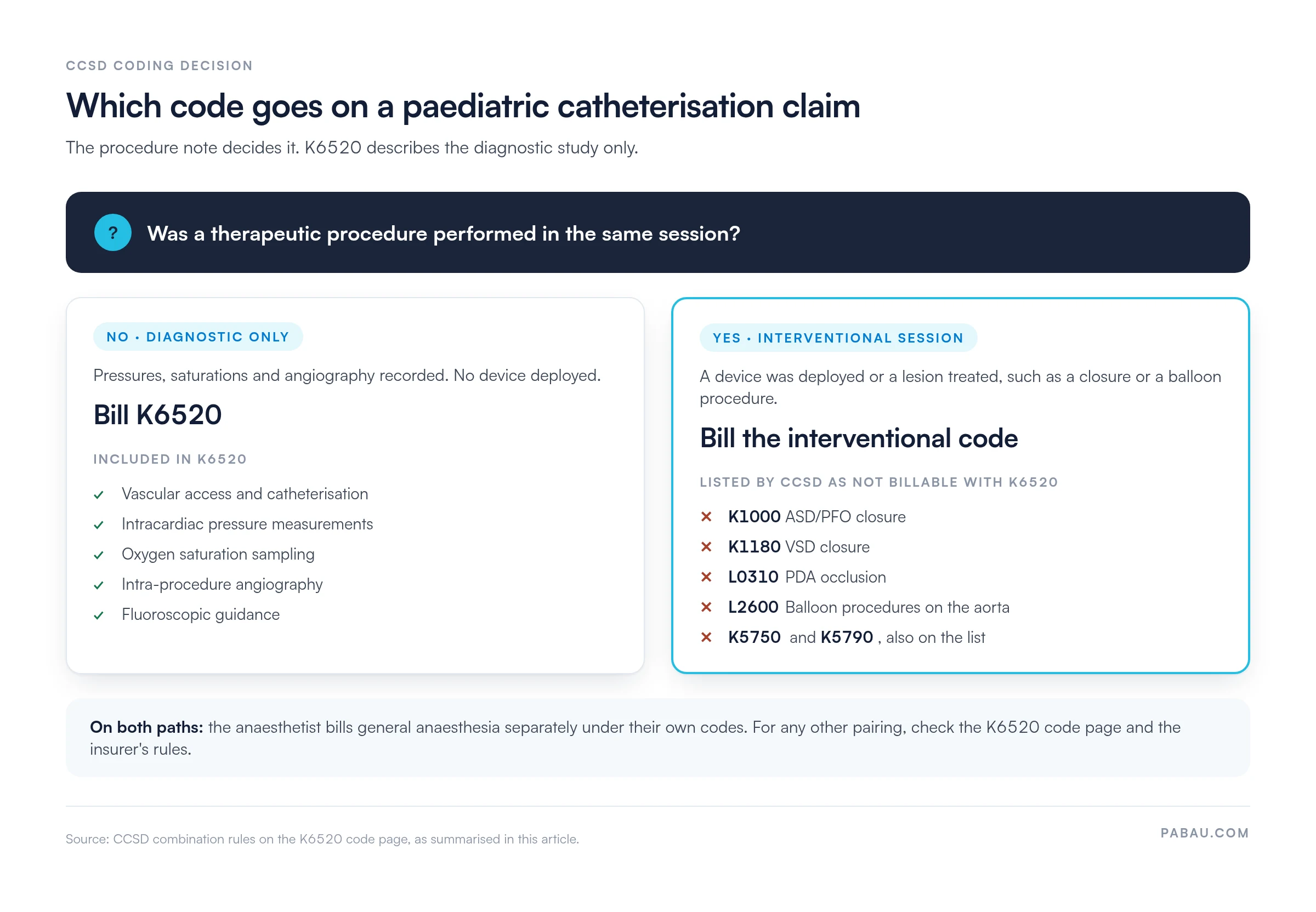
K6520 covers the diagnostic episode only. When a therapeutic procedure is performed in the same session, the interventional code describes it. CCSD lists several of those codes, such as K1000 and L0310, as not billable with K6520.
Let Pabau's smart automation suggest the right codes, reduce claim denials, and keep your practice compliant—effortlessly.
Automate repetitive tasks and focus on what matters most—your patients.
Reduce coding errors and ensure compliance with the latest regulations.
Clean claims, fewer denials, and faster reimbursements.
Powerful insights and reporting to help your practice thrive.
HIPAA compliant SOC 2 certified GDPR-compliant Trusted by 4,000+ clinics worldwide

K6520 is the CCSD code for diagnostic cardiac catheterisation in children, and it is separate from the adult catheterisation codes.
The code bundles vascular access, pressure measurements, oxygen saturations, angiography and fluoroscopy into one diagnostic episode.
An interventional session is coded with the interventional code, and CCSD lists several of those codes as not billable with K6520.
Major UK private medical insurers require pre-authorisation for this procedure, and claims without an authorisation number are routinely rejected.
Pabau, the practice management platform we build, records the authorisation number against the appointment and submits the claim through Healthcode.
CCSD code K6520 covers paediatric cardiac catheterisation in the schedule maintained by the Clinical Coding and Schedule Development (CCSD) Group. The code applies when a paediatric cardiologist performs diagnostic catheterisation on a child to evaluate cardiac anatomy and haemodynamics.
K6520 also sits in chapter 8 of the schedule, Thorax and intra-thoracic organs, under sub-chapter 8.9.0 Heart – Cardiology. Pabau’s CCSD codes library also lists the neighbouring cardiology and thoracic codes.
However, the CCSD schedule does not define “paediatric” by a single universal age threshold. In practice, private medical insurers (PMIs) apply their own age boundaries. For example, most define paediatric as under 16 or under 18, depending on the insurer and policy year. Always verify the applicable age band with the relevant PMI before billing K6520 for patients approaching those thresholds.
Teams perform paediatric cardiac catheterisation under general anaesthesia or deep sedation in a dedicated catheterisation laboratory. The procedure follows a sequence of steps, so coders need to understand each one to bill correctly and document accurately.
The key billing distinction is between diagnostic and interventional catheterisation. K6520 covers the diagnostic episode. Sometimes a therapeutic procedure, such as balloon dilation, stent placement or septal defect closure, is performed in the same session. The team then codes that session with the interventional code. CCSD lists several of those codes as not billable with K6520, so check the K6520 code page before adding it to the claim.
You can bill K6520 when the team performs paediatric cardiac catheterisation for an accepted clinical indication. In specialist paediatric cardiology practice, these are the most common indications.
A clear, documented indication is required for claim approval. Insurers will query a claim when the procedure note does not link the catheterisation to a specific clinical question. In addition, that question must be one that non-invasive imaging could not answer.
When the study is a pre-operative assessment, the surgical team claims the operation that follows under its own code. For example, on a Fontan pathway, that surgical claim might use L0610.
Undercoding and wrong unbundling are the two most common claim errors on high-value cardiology procedures. So knowing what K6520 bundles, and what you code separately, matters.
Confirm bundling rules against the current CCSD technical guide before adding a second code to a K6520 claim. The guide shows which combinations the schedule allows and which trigger an unbundling review.
Paediatric catheterisation sessions often involve other procedures, but not every related code can sit on the same claim as K6520. The decision below shows how the procedure note settles it. Then the table lists the codes most often involved.
Always verify current code numbers and fee values in the CCSD schedule, because CCSD revises codes and fees periodically.
Also, for Bupa-specific code pairings and fee schedules, the Bupa CCSD procedure codes reference on Pabau covers billing requirements for the UK’s largest PMI.
Coders often confuse three categories of CCSD codes with K6520. As a result, selecting the wrong code is the most common upcoding or downcoding error in paediatric cardiology billing.
Check the procedure note before selecting between K6520 and an interventional code. If the cardiologist’s report records only pressure measurements and saturations with no therapeutic device deployment, K6520 is correct. If a balloon, stent or occluder was deployed, bill the interventional code. Then confirm whether a separate diagnostic code can also be billed for that session.
UK PMIs validate K6520 claims against the catheterisation report, so a compliant procedure note supports the claim, justifies the fee, and defends against later audit. Digital forms help the team capture the required data points at procedure time rather than reconstruct them afterwards.
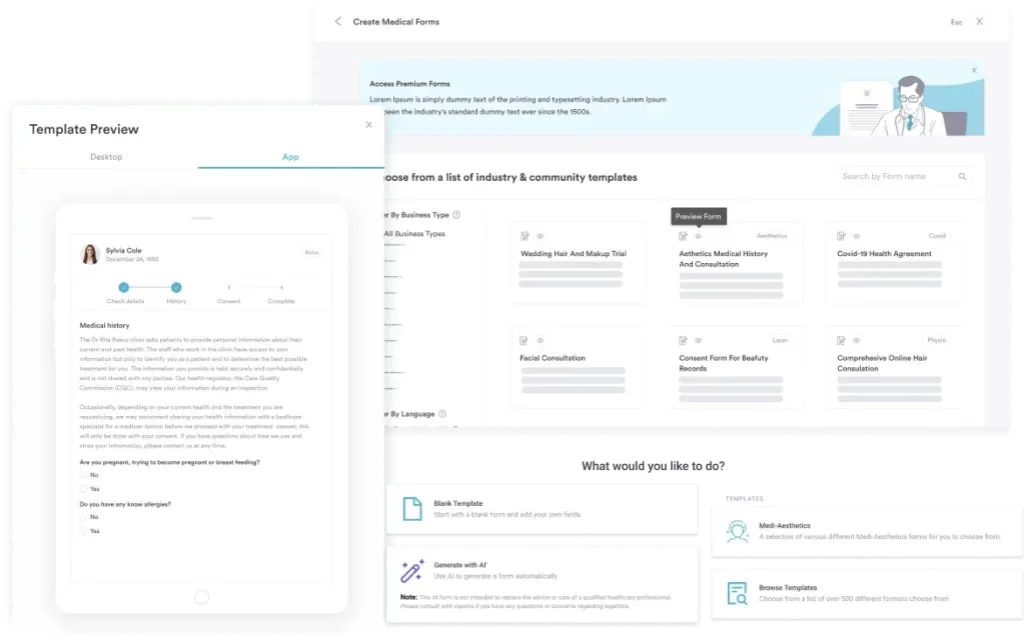
The procedure note must contain:
Structured patient records with templated catheterisation report fields help here. As a result, they reduce the risk of omitting a required data point under time pressure in a busy catheterisation laboratory.
All major UK private medical insurers require pre-authorisation before paediatric cardiac catheterisation proceeds. This is also true across Bupa, AXA Health, Aviva, Cigna, and most smaller PMIs. Insurers routinely reject claims without a valid authorisation number at the first point of assessment, regardless of clinical merit.
Each insurer has its own process, but the information usually required includes:
Bupa’s code search portal and Aviva’s fee schedule both list procedure codes and fees. Neither is a guide to pre-authorisation, so confirm the requirement with each insurer. Always obtain the authorisation in writing, or through the insurer’s digital portal, before the procedure date.
Cardiac catheterisation claims denials follow clear patterns. Most are avoidable with better process instead of better clinical work.
Paediatric cardiac catheterisation almost always requires general anaesthesia or deep sedation. CCSD code K6520 does not include anaesthesia, so the anaesthetist bills it separately using their own CCSD anaesthetic codes.
The paediatric cardiologist bills K6520, or the interventional code where one applies. The anaesthetist, however, bills independently for their component. Both bills may reference the same pre-authorisation number, but each clinician submits a separate invoice to the insurer.
Confirm with the insurer at the pre-authorisation stage that the patient’s policy covers anaesthesia. This matters because some paediatric policies have separate anaesthesia limits or exclusions.
The current CCSD schedule sets specific fee values for K6520, and CCSD revises it periodically. However, each insurer publishes its own payment rates, which may differ from the CCSD indicative fee. Common reference points include Bupa’s code search portal, the Healix fee schedule, and Aviva’s provider fee schedule.
Because paediatric cardiac catheterisation is a high-complexity, resource-intensive procedure, private practice fees should account for procedure duration, usually 1.5 to 3 hours, and for catheterisation laboratory costs. The need for a specialist paediatric cardiologist also matters. Practices operating outside PMI contracts may set their own fees, but should document the basis for their charges in case of patient or insurer query.
Never assume that CCSD fee values stay the same from one year to the next. CCSD revises the schedule periodically, so check the CCSD website for the current version, or the insurer’s portal, before quoting or invoicing.
A K6520 claim usually passes through three hands before it reaches the insurer. The booking team logs the authorisation, the cardiologist signs the report, and the billing team builds the invoice. When those steps sit in separate systems, staff copy the authorisation number by hand from one to the next.
Pabau’s claims management software stores CCSD codes, including K6520, and lets your team record the authorisation number against the appointment when they book the case. After the procedure, your team builds the invoice from the same record and submits it to the insurer through Healthcode.
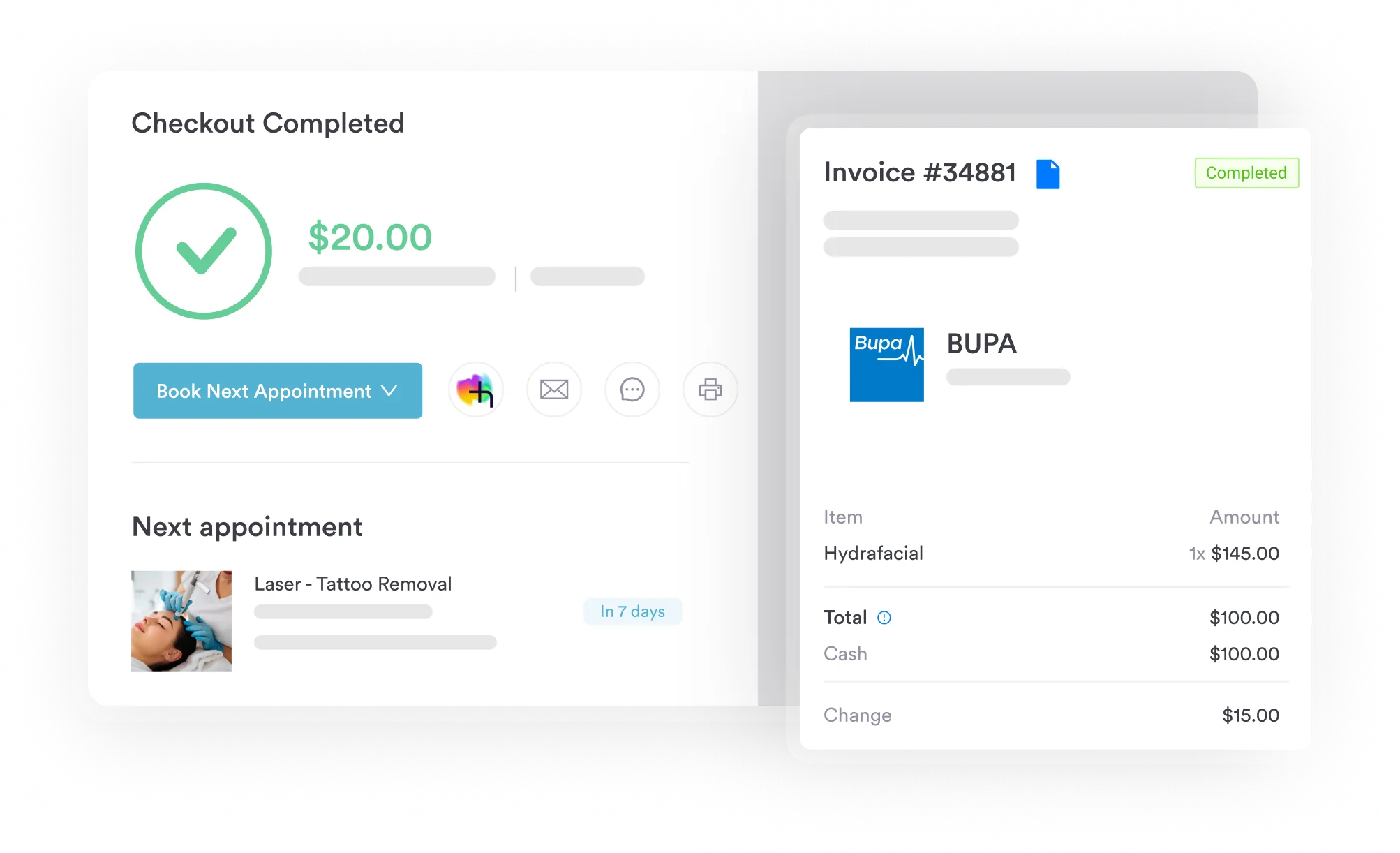
The code, the authorisation number and the invoice all sit on one appointment. So when an insurer queries the claim, your team answers it from a single record.

Pabau records the insurer’s authorisation number against each appointment, stores CCSD codes such as K6520, and submits the claim through Healthcode. Your billing team works from one record from booking to payment.

K6520 is the simple part of a paediatric catheterisation claim. But the risk sits at the edges. A closure or balloon procedure turns the session into an interventional one, and K6520 may then have no place on the invoice.
So read the procedure note before you pick the code, and check the K6520 code page before you add a second one. Then hold the written authorisation before the child reaches the catheterisation laboratory. These three checks also head off most of the denial reasons above.
Pabau also keeps the authorisation number, the CCSD codes and the Healthcode submission on one appointment record. Book a demo to see how that works for a paediatric cardiology billing team.

Need a reference for Bupa-specific CCSD codes and fees? Bupa CCSD procedure codes covers billing requirements for the UK’s largest private medical insurer.
Billing the operation after a pre-operative study? CCSD code L0610 explains how to code formation of an atrio-pulmonary connection.
Coding a non-invasive cardiac test instead? CCSD code 20130 covers exercise ECG billing for UK private practice.
Choosing a billing system for a UK private practice? Best medical billing software in the UK compares the leading options for UK private billing.
CCSD code K6520 covers paediatric cardiac catheterisation. This diagnostic procedure measures intracardiac pressures, oxygen saturations and cardiac output in children with congenital or acquired heart conditions. It also includes the catheterisation episode, haemodynamic measurements, intra-procedure angiography, and fluoroscopic guidance performed during the same diagnostic session.
Yes. K6520 does not include anaesthesia, so the anaesthetist bills it separately using their own CCSD anaesthetic codes. Both the cardiologist and anaesthetist submit separate invoices, usually referencing the same pre-authorisation number. Confirm with the PMI that the patient’s policy covers anaesthesia for the procedure before it proceeds.
K6520 applies to patients who meet the PMI’s paediatric age definition (usually under 16 or under 18, depending on the insurer). However, adult cardiac catheterisation uses a different K-series CCSD code with its own fee level. Applying an adult code to a paediatric patient, or K6520 to an adult patient, produces an age-band mismatch that triggers denial.
Code an interventional session with the interventional procedure’s own CCSD code. CCSD lists several of those codes as not billable with K6520. For example, they include K1000 for ASD or PFO closure, K1180 for VSD closure and L0310 for PDA occlusion. For other combinations, the insurer’s rules decide, so check before you submit the claim.