ICD-10 Code S53.013D: Anterior subluxation of unspecified radial head
ICD-10 Code S53.013D: Quick reference summary Use the table below as your first ...

Last Updated: Nov 6, 2026
Billable Code Specific Code
T39.94XD is the billable ICD-10-CM code for poisoning by unspecified nonopioid analgesic, antipyretic and antirheumatic, undetermined, subsequent encounter. It applies at a follow-up visit after active treatment, when no record names the drug and the provider documents that intent cannot be determined.
Coders frequently confuse this code with its initial-encounter counterpart (T39.94XA) or with other poisoning codes in the T39 category. Mixing up the 7th character or the intent character is a common cause of claim denials. The 7th character and the documentation linking the drug to the clinical manifestation determine whether the claim clears or bounces back.
Let Pabau's smart automation suggest the right codes, reduce claim denials, and keep your practice compliant—effortlessly.
Automate repetitive tasks and focus on what matters most—your patients.
Reduce coding errors and ensure compliance with the latest regulations.
Clean claims, fewer denials, and faster reimbursements.
Powerful insights and reporting to help your practice thrive.
HIPAA compliant SOC 2 certified GDPR-compliant Trusted by 4,000+ clinics worldwide

T39.94XD reports a poisoning by an unidentified nonopioid analgesic, antipyretic or antirheumatic, with undetermined intent, at a subsequent encounter.
Use undetermined intent only when the record states that intent cannot be determined. Unknown or unstated intent is coded as accidental (T39.91-).
Sequence T39.94XD first, then a code for each documented manifestation. No separate external cause code is needed, because intent is built into the code.
Once the drug or the intent is documented, switch to the specific code, such as T39.1X4D for acetaminophen or T39.92XD for self-harm.
Pabau, our practice management platform, validates claims for missing or invalid details before submission, so errors surface before the payer sees them.
ICD-10 Code T39.94XD is a billable code for the follow-up care of a poisoning by a nonopioid pain reliever that no record identifies.
The intent behind the poisoning is also on record as undetermined. For medical billing teams, each character of the code carries one of those facts.
T39.94XD sits at the least specific corner of the T39 category on two axes at once. The drug is a nonopioid analgesic, antipyretic or antirheumatic, but the record does not name it. The intent is documented as undetermined. Three questions about the chart, answered in order, show whether a follow-up visit lands there.
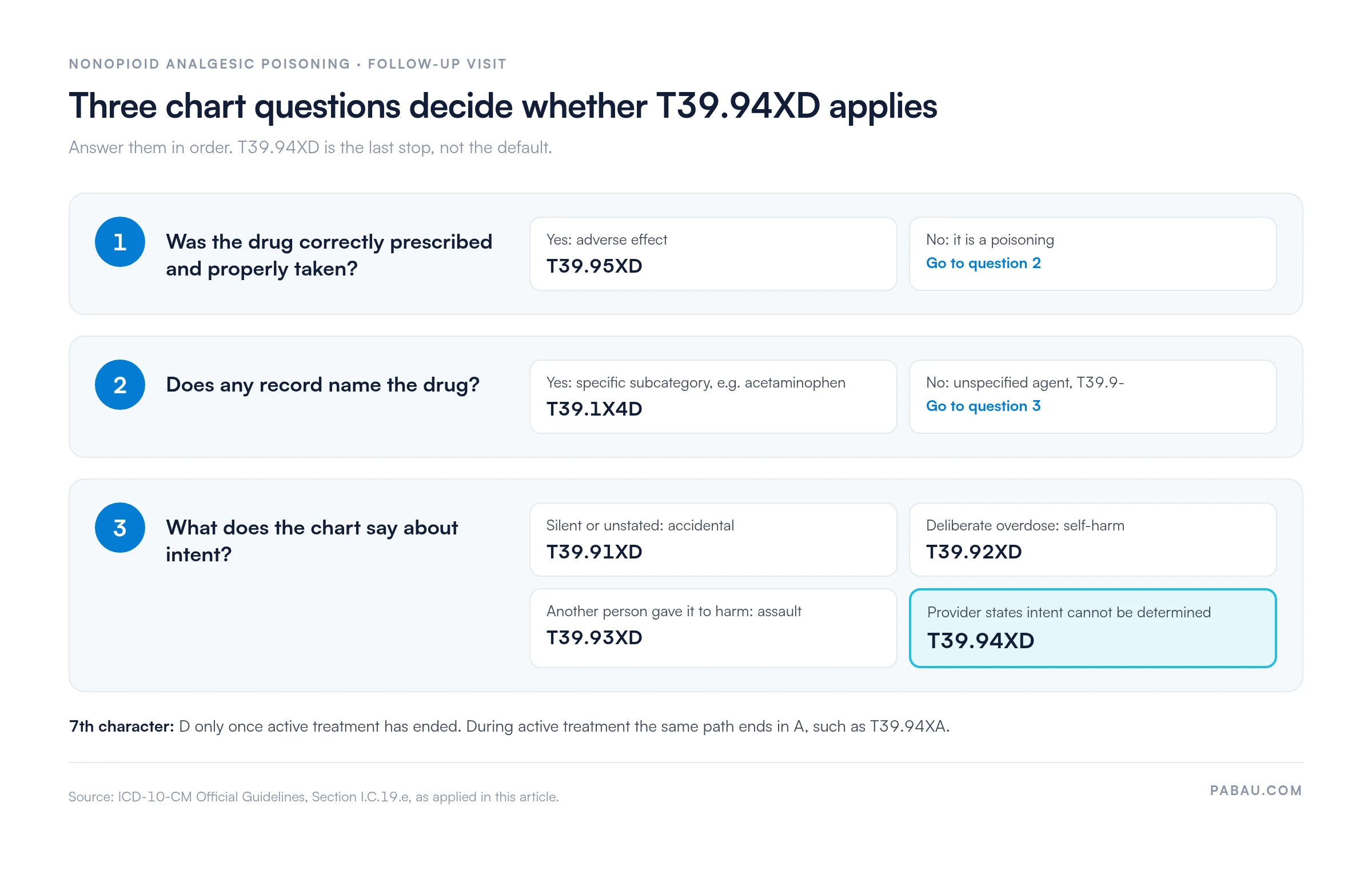
That makes it a narrow code. A coder should reach it only after confirming that the chart names neither a specific drug nor a clear intent. Whenever the record names the drug, the ICD-10-CM Table of Drugs and Chemicals routes it to a more specific subcategory.
Check the drug in the Table of Drugs and Chemicals before you settle on T39.9. A toxicology result or a pharmacy record often names the agent after the first visit. When it does, the follow-up encounter takes the specific code, not T39.94XD.
The ICD-10-CM Official Guidelines, Section I.C.19.e, set a default for poisoning codes. If the intent is unknown or unspecified, you code it as accidental. Undetermined intent is only for records where the documentation specifies that intent cannot be determined.
In practice, the difference is one sentence in the chart. “Intent unclear” from a busy emergency note does not support the code on its own. A statement such as “unable to establish whether the ingestion was accidental or intentional” does.
Intent can change between encounters. If the follow-up note now records a deliberate overdose, code T39.92XD for that visit. Do not carry the undetermined character forward from the emergency note out of habit.
The 5th character of a T39.9 code is the intent axis. Picking the wrong one turns a poisoning into an adverse effect, or the other way round, and payers read the two very differently.
A poisoning involves a wrong substance, a wrong dose, a wrong route or a drug taken by the wrong person. An adverse effect is a reaction to a drug used as prescribed. If the chart describes a correctly taken prescription, T39.95XD applies, and no T39.94- code fits.
Per the CMS ICD-10-CM Official Guidelines, the 7th character D applies once active treatment has ended. The patient is now receiving routine care during the healing or recovery phase.
The test is the phase of care, not whether symptoms persist. A patient can still feel unwell at a D visit, and a second provider can still be giving active treatment at an A visit. Do not swap in an aftercare Z code either. For injuries and poisonings, the guidelines use the 7th character D in place of aftercare codes.
For a poisoning, Section I.C.19.e of the guidelines sets the order. The T39.94XD code goes first, followed by a code for each manifestation the provider documents at this visit.
Code only what this visit addresses. A manifestation that resolved before the follow-up does not belong on the D claim.
An auditor reviewing T39.94XD looks for evidence behind each of its characters. Medical billing compliance reviews often flag poisoning codes where the chart supports only part of the code.
If any element is missing, query the provider before the claim goes out. Getting the chart right first is what makes a clean claim possible.
T39.94XD denials and audit findings cluster around five predictable errors. Sound denial management in healthcare starts with catching them before submission.
When a denial arrives, read the denial codes on the remittance. They show whether the payer objected to the code, the documentation or the coverage policy.
A patient was brought to the emergency department after taking an unknown number of tablets from an unlabeled bottle of over-the-counter pain reliever. The toxicology screen did not identify the agent. The emergency physician documented that intent could not be determined. Twelve days later, the patient sees their primary care provider for repeat liver function tests.
Track the claim through your revenue cycle management workflow so any code edit surfaces before the payer processes it.
An unsupported intent character or a missing manifestation code tends to surface as a denial weeks after the visit. By then the fix means chasing the provider for an addendum, so the chart checks above belong before the claim is built.
Pabau’s claims management software adds a second check at billing. Its claim validation scrubs claims for missing or invalid details before they leave Pabau, so errors surface before submission.
Claims go to US payers through Claim.MD, Pabau’s US clearinghouse partner, as electronic CMS-1500 claims. Electronic remittance advice comes back into Pabau and is matched to the claims it settles.
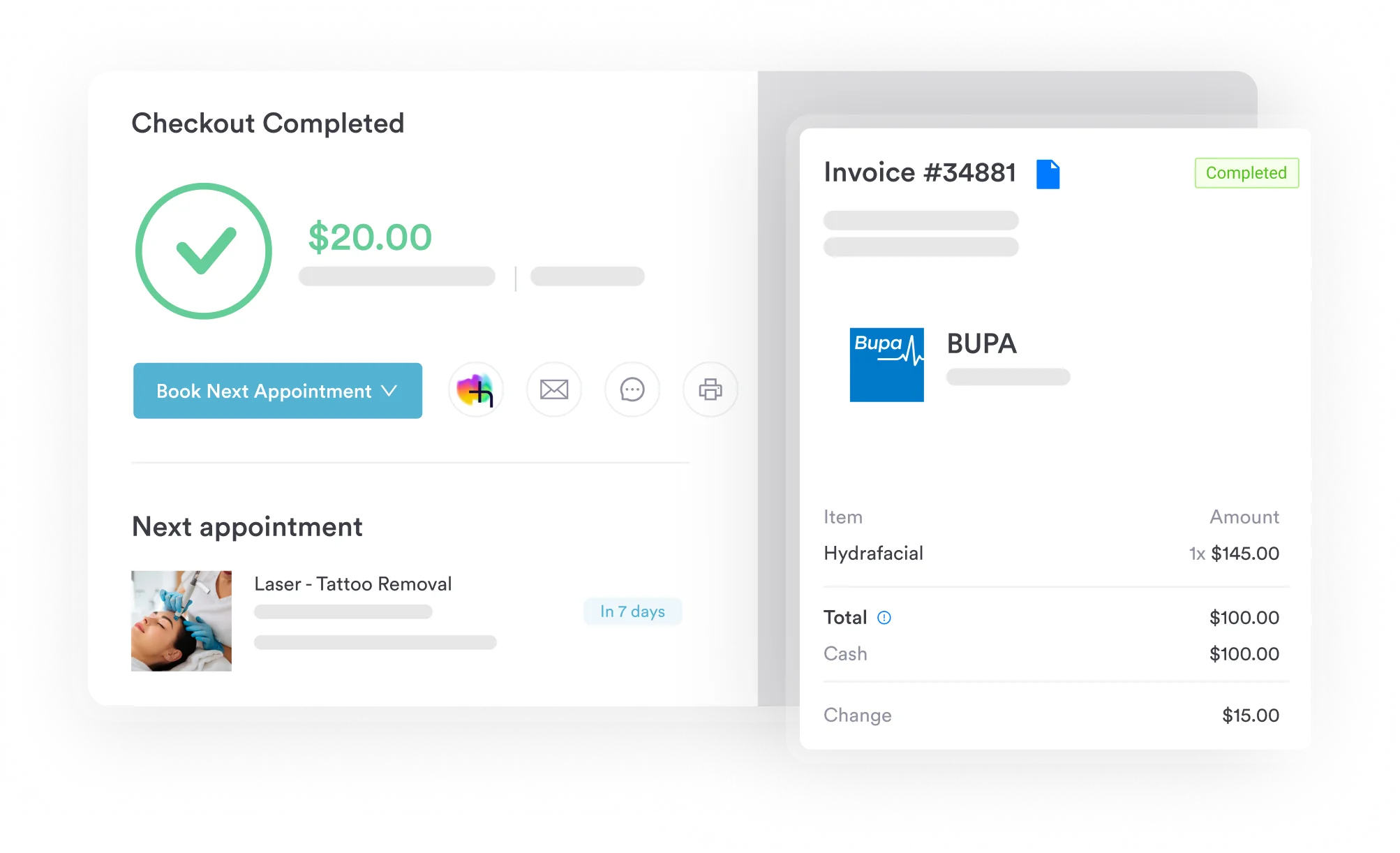

Pabau’s claim validation scrubs claims for missing or invalid details before submission. Validated claims then go to US payers through Claim.MD.

T39.94XD holds up on audit only when the chart supports both of its vague characters. The provider has to state that intent cannot be determined, and no record can name the drug. If either one fails, a more specific T39 code is the honest choice.
Recheck both axes at every follow-up, because toxicology results and patient disclosures arrive after the emergency visit. Then list T39.94XD ahead of each documented manifestation, so the claim answers each denial reason in the table above.
Book a demo to see how Pabau’s claim validation catches missing or invalid claim details before they reach the payer.

Coding another poisoning with undetermined intent? ICD-10 code T44.1X4A walks through the documentation an undetermined-intent claim needs.
Need another subsequent-encounter poisoning example? ICD-10 Code T44.902D shows how the D character works on a follow-up poisoning visit.
Want to know how clearinghouse edits catch coding errors? Medical claims clearinghouse guide explains the validation layers between your practice and the payer.
Building a clean-claim checklist for your billing team? Superbill documentation guide covers what every claim needs before submission.
ICD-10 Code T39.94XD is the billable ICD-10-CM code for poisoning by an unspecified nonopioid analgesic, antipyretic and antirheumatic, with undetermined intent, at a subsequent encounter. It applies when active treatment has ended and the patient returns for follow-up during recovery.
Code undetermined intent only when the provider documents that intent cannot be determined. If the record says nothing about intent, the ICD-10-CM guidelines direct you to code accidental intent, which is T39.91XD at a follow-up visit.
T39.94XD is a poisoning with undetermined intent, such as an overdose or a drug taken without a prescription. T39.95XD is an adverse effect of a drug that was correctly prescribed and properly taken. Choose based on how the drug was used, not on how severe the reaction was.
No. The intent is already built into the code, so the guidelines do not call for a separate Chapter 20 external cause code. Code each documented manifestation after T39.94XD instead.
Use T39.94XA while the patient is receiving active treatment for the poisoning, such as emergency care. Use T39.94XD once active treatment has ended and the visit is for follow-up, repeat labs or monitoring during recovery.
Code the encounter with the specific subcategory once the record names the drug. For example, a follow-up after an acetaminophen poisoning with undetermined intent takes T39.1X4D, not T39.94XD.