ICD-10 code T87.52: Necrosis of amputation stump, left upper extremity
ICD-10 code T87.52 at a glance: Left arm, not left leg ICD-10 code T87.52 is the...

Last Updated: Oct 26, 2026
Billable Code Specific Code
T39.8X5S is the billable ICD-10-CM code for adverse effect of other nonopioid analgesics and antipyretics, not elsewhere classified, sequela. It applies when a correctly prescribed drug in this residual group, such as nefopam, caused a reaction that has resolved but left a lasting condition.
T39.8 covers only the drugs the Table of Drugs sends there. Aspirin, other salicylates, acetaminophen, pyrazolones, NSAIDs and antirheumatics each have their own T39 subcategory. Code the lasting condition first and T39.8X5S second.
Let Pabau's smart automation suggest the right codes, reduce claim denials, and keep your practice compliant—effortlessly.
Automate repetitive tasks and focus on what matters most—your patients.
Reduce coding errors and ensure compliance with the latest regulations.
Clean claims, fewer denials, and faster reimbursements.
Powerful insights and reporting to help your practice thrive.
HIPAA compliant SOC 2 certified GDPR-compliant Trusted by 4,000+ clinics worldwide

T39.8X5S is a 7-character billable ICD-10-CM code; the 6-character parent T39.8X5 is not billable.
The S suffix marks a sequela encounter, where the reaction has resolved and left a lasting complication.
T39.8 is a residual group: aspirin, other salicylates, acetaminophen, pyrazolones, NSAIDs and antirheumatics each have their own T39 code.
Sequence the code for the lasting condition first and T39.8X5S second, and never report T39.8X5S alone.
Pabau, the practice management platform we build, validates each claim before it goes to your clearinghouse.
ICD-10 Code T39.8X5S is the billable code for a lasting condition left by a resolved reaction to a nonopioid analgesic or antipyretic. It covers drugs with no more specific T39 code. The drug was taken as prescribed, and the original reaction is over.
The code is valid for FY 2027 (October 1, 2026 through September 30, 2027). Verify current validity each fiscal year via the CDC/NCHS ICD-10-CM web tool.
T39.8X5S is a seven-character code where each position carries a specific clinical assertion. Reading it position by position shows where sequela suffix errors start.
The X placeholder in position five is purely structural and holds the 7th-character slot open. Submitting T39.8X5 without the final S creates a non-billable header code, a frequent source of claim edits.
The 7th character records the encounter type. All three codes share the same drug category and adverse-effect classification; only the encounter type differs.
The decision rule is short. If the adverse reaction is still active and being treated, use the A or D code. If it has resolved but left behind a residual condition, use the S code. These encounter types are mutually exclusive, so never assign A or D and S together for the same drug event.
Adverse effect, poisoning, and underdosing are three different clinical scenarios, and ICD-10-CM codes them through different 6th-character values. Selecting the wrong one changes the intent classification of the encounter and creates a payer mismatch.
The adverse effect classification (6th character 5) requires the provider to document that the drug was taken correctly as prescribed. If documentation is silent on this or describes a dosing error, the correct classification is poisoning, not adverse effect. Per the CMS ICD-10-CM coding guidelines, Section I.C.19.e governs this distinction for Chapter 19 codes.
A sequela is a condition that is the direct result of a previous injury or illness. Here, it is the lasting complication of a prior adverse drug reaction. T39.8X5S applies when the original adverse reaction has resolved but left behind a residual condition the patient is now being managed for.
The residual condition can be renal, gastrointestinal, hepatic or another lasting change the provider ties to the earlier reaction. The clinical test is simple. If the drug-related adverse reaction itself is still active, S is wrong, so use A or D.
T39.8X5S covers nonopioid analgesics and antipyretics that ICD-10-CM does not classify elsewhere in T39. The Table of Drugs and Chemicals decides which drugs land here, and nefopam is one it indexes to T39.8. The AAPC ICD-10-CM code reference shows the same subcategory structure.
Most common nonopioid pain relievers route to a named subcategory instead, each with its own sequela code:
The diagram below runs the three checks in order: the drug, the intent, then the state of the reaction.
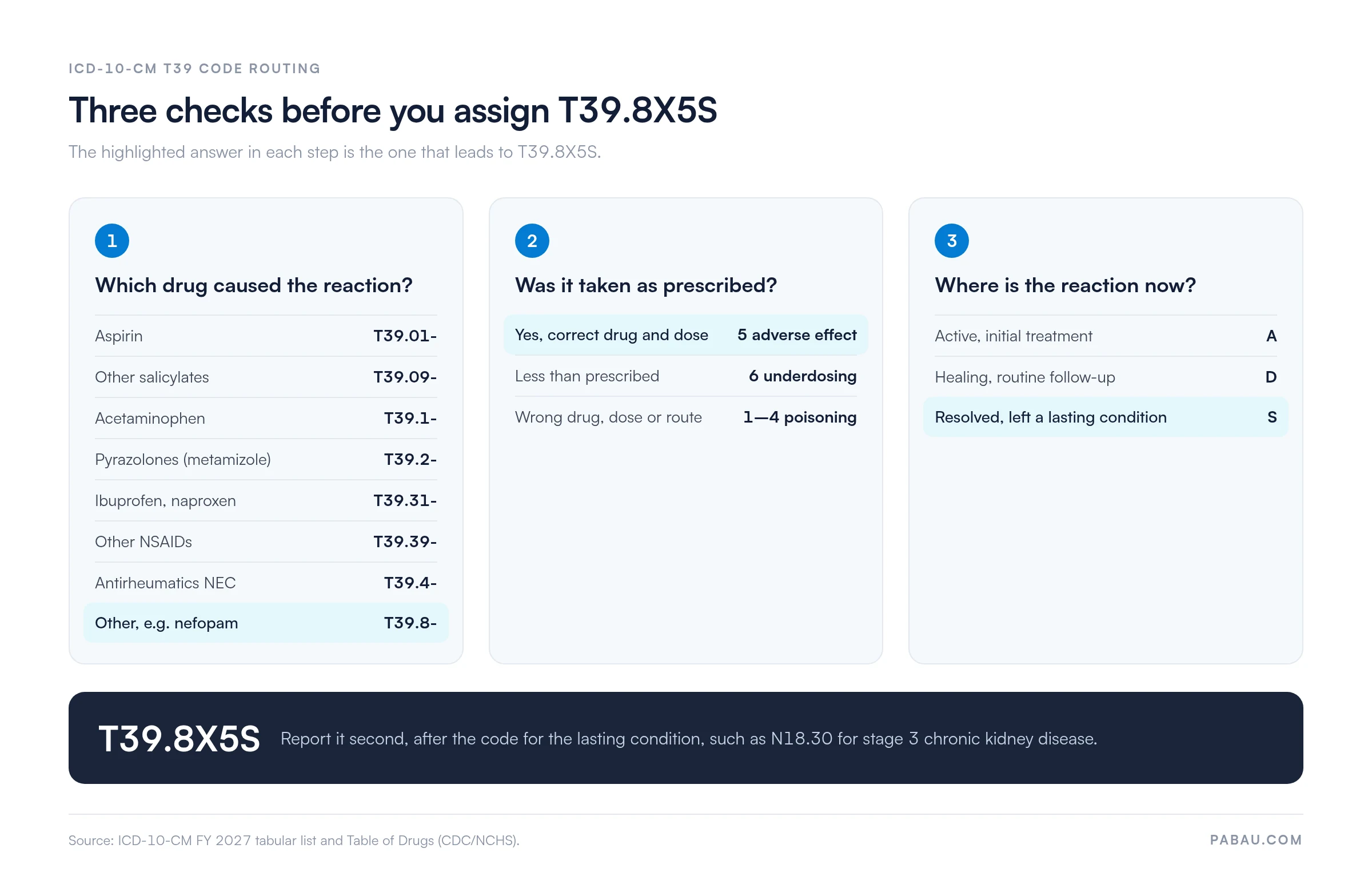
Verify the specific drug in the Table of Drugs and Chemicals before assigning T39.8X5S. This is a residual NEC category, so a more specific T39 subcategory always takes precedence. The ICD List reference tool offers a quick lookup of drug-to-code mappings within the T39 family.
Sequela encounters require more documentation than initial or subsequent encounters. The provider must establish a causal link between a past event and a current condition.
Missing any of the four documentation elements below converts T39.8X5S into an unsupportable code. Good medical billing compliance starts with provider notes that contain these elements at the time of dictation.
“Patient presents with stage 3 chronic kidney disease, assessed as a sequela of a prior adverse reaction to [drug name]. The drug was prescribed at the correct dose and discontinued after the adverse event 14 months ago. The CKD is directly attributable to the prior adverse drug reaction.”
For adverse effect encounters, ICD-10-CM Section I.C.19.e requires the manifestation code (the condition caused by the adverse effect) to be sequenced before T39.8X5S. This sequencing rule applies to the sequela encounter as well, per Section I.B.10.
Never submit T39.8X5S as the sole diagnosis code. Without the preceding manifestation code, the claim names no condition being treated, and payers deny it.
T39.8X5S denials usually trace back to one of five errors, and each one can be caught before submission. Effective denial management workflows build these checks into the billing routine.
Run a pre-submission edit check that flags any claim where T39.8X5S appears as the primary or only diagnosis code. Sequela codes always require a paired manifestation code, so a solo T39.8X5S is a denial you can stop before the claim leaves the practice.
Medicare and Medicaid accept T39.8X5S as a valid sequela encounter code when correctly paired with a manifestation and supported by documentation. Sending the claim through a clearinghouse such as the Claim.MD clearinghouse runs it past payer-specific edits before adjudication.
Commercial payer policies vary, so confirm one point before submission. Some payers ask for an external cause code alongside the sequela encounter even though the T39 code already carries the intent. Check the individual payer’s policy or claims submission guide.
Practices that run error-checking claims management software can review the T39.8X5S and manifestation code pairing before submission. A grounding in medical billing fundamentals also cuts rework when payer edits flag missing sequencing data.
T39.8X5S sits within the T39.8 subcategory (other nonopioid analgesics and antipyretics, not elsewhere classified). The NEC qualifier is the main scope check. Confirm the drug does not belong to a named T39 subcategory before you use the residual code.
For the current code hierarchy, inclusions, and exclusion notes, the CDC/NCHS ICD-10-CM web tool carries the authoritative annual tabular list. Neighboring adverse-effect codes for other drug classes follow the same A, D and S pattern in our free diagnostic code library.
Check the T39 Alphabetic Index entry for the specific drug before assigning T39.8X5S. The NEC qualifier means a more specific code takes precedence, so an acetaminophen adverse effect sequela goes to T39.1X5S. Defaulting to the residual category for a drug that has its own subcategory is a documentation mismatch payers can audit.
A sequela claim often passes through three hands. The provider documents the reaction, a coder picks the T39 code, and someone rekeys both into a clearinghouse portal. Each handoff can drop the manifestation code or the S.
In Pabau’s claims software, the claim opens pre-filled from the invoice, and the patient’s insurer and policy details already sit on the client card. Claim validation flags missing or invalid details before you submit. US claims go out as CMS-1500s through Claim.MD.
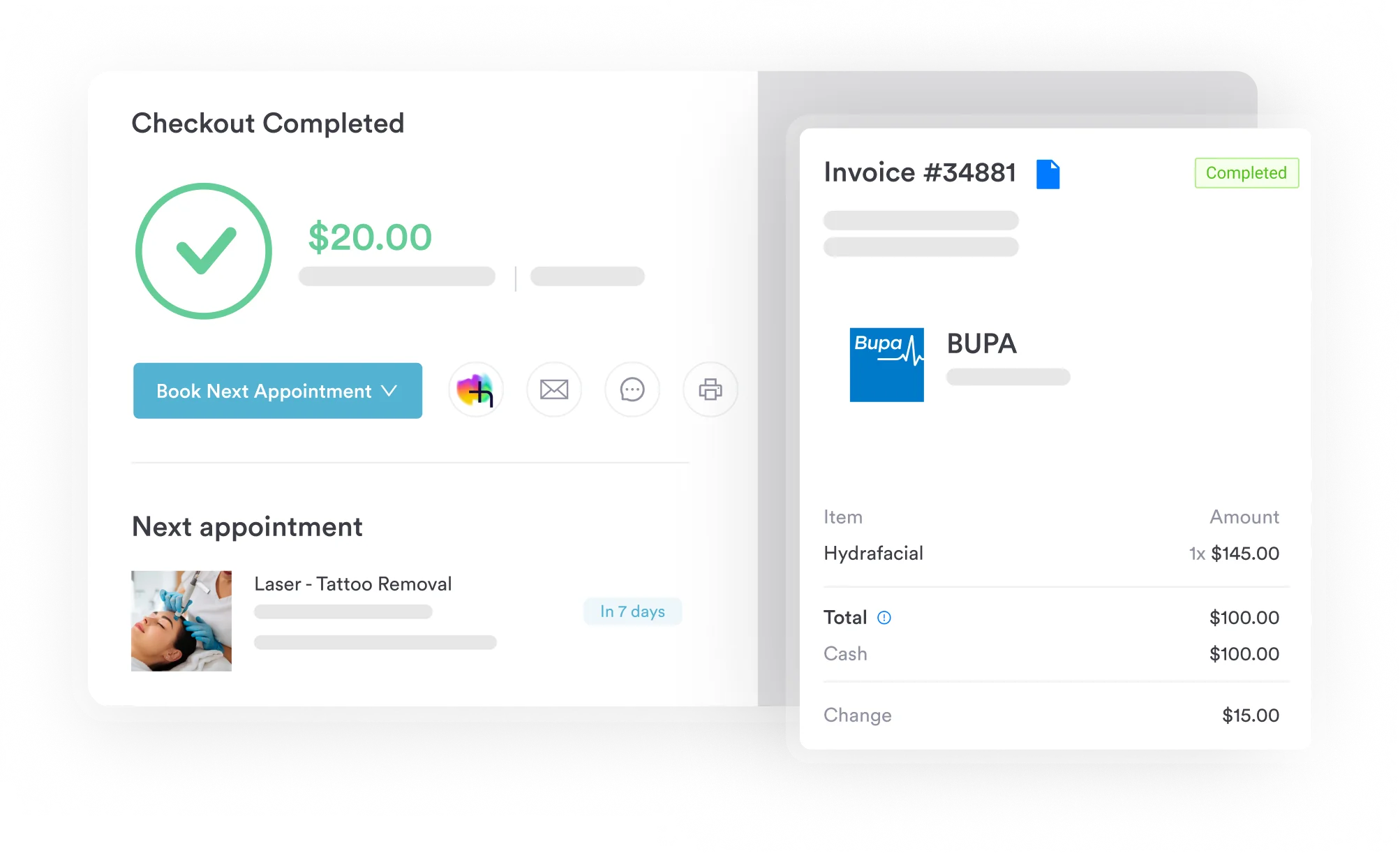
If a payer still rejects the claim, Pabau shows the reason so you can correct it and resubmit. Payments settle from electronic remittance advice files, and insurance claiming is included in every subscription.

Pabau pre-fills each claim from the invoice and validates it before submission, so missing or invalid details get fixed first.

Before you assign T39.8X5S, confirm three facts in the note. The drug has no named T39 subcategory, it was taken as prescribed, and the original reaction has resolved. If any one of them fails, a neighboring code fits better.
The trade-off is a few extra lines of documentation at the visit against rework after a denial. A note that names the drug and ties the lasting condition to it will hold up on audit. Book a demo to see how Pabau validates each claim from the invoice before it reaches your clearinghouse.

Need to understand denial patterns before they cost you? Medical claim denial management covers the full workflow for identifying, appealing, and preventing the most common payer rejections.
Coding another drug’s adverse effect sequela? ICD-10 code T45.3X5S applies the same S logic to an adverse effect of enzymes.
Want fewer claims bounced back for rework? What is a clean claim? lists the details a claim needs to pass payer edits on the first submission.
ICD-10 Code T39.8X5S is the billable diagnosis code for the adverse effect of other nonopioid analgesics and antipyretics, not elsewhere classified, sequela. It applies when a correctly prescribed drug in this group caused a reaction that has resolved. The patient still lives with a lasting complication from it.
Yes. T39.8X5S is a valid, billable 7-character ICD-10-CM diagnosis code for FY 2027. The 6-character parent code T39.8X5 is not billable; the 7th character S must be present for the code to be accepted for reimbursement submission.
The 7th character distinguishes three encounter types for the same adverse drug reaction. A (initial encounter) is used while the patient receives active treatment for the adverse effect. D (subsequent encounter) covers routine care during the healing phase. S (sequela) applies when the original reaction has resolved but a lasting complication remains. Use only one per encounter.
An adverse effect means the drug was taken correctly as prescribed and caused an unintended reaction. Poisoning means the drug was taken in the wrong dose, wrong formulation, wrong route, or was not prescribed. ICD-10-CM assigns 6th character 5 to adverse effect and characters 1 through 4 to various poisoning intents. The provider’s documentation must specify which applies.
Yes. Per ICD-10-CM sequencing rules, T39.8X5S must always be paired with a manifestation code for the current condition. That might be the chronic kidney disease, hepatic condition, or GI disorder the prior reaction caused. The manifestation code is sequenced first; T39.8X5S follows. Submitting T39.8X5S without a manifestation code is a denial pattern.
Four errors cause most denials. The claim reports T39.8X5S without a paired manifestation code, or uses A or D after the reaction has resolved. It submits the non-billable parent T39.8X5 without the S, or the note never links the current condition to the prior drug event.