ICD-10 code S99.102P: Left metatarsal physeal fracture with malunion
ICD-10 code S99.102P flags a malunited growth plate fracture ICD-10 code S99.102...

Last Updated: Oct 28, 2026
Billable Code Specific Code
S92.422D is the billable ICD-10-CM code for displaced fracture of distal phalanx of left great toe, subsequent encounter for fracture with routine healing. Use it at follow-up visits once active treatment has ended and the bone is healing as expected.
A common error is applying A instead of D at follow-up visits, after the patient's active treatment is over. That one-letter slip is a common cause of denials. The note should confirm the left side, displacement, the distal phalanx and normal healing. The checks below walk through each point, plus the CPT codes that travel with this diagnosis.
Let Pabau's smart automation suggest the right codes, reduce claim denials, and keep your practice compliant—effortlessly.
Automate repetitive tasks and focus on what matters most—your patients.
Reduce coding errors and ensure compliance with the latest regulations.
Clean claims, fewer denials, and faster reimbursements.
Powerful insights and reporting to help your practice thrive.
HIPAA compliant SOC 2 certified GDPR-compliant Trusted by 4,000+ clinics worldwide

S92.422D covers follow-up visits for a displaced fracture of the left great toe’s distal phalanx that is healing as expected.
The seventh character D means active treatment has ended, so the visit count never decides it.
A doctor who takes over active treatment still reports A, even at their first visit.
Using A instead of D at a follow-up visit is a common cause of denials.
Pabau’s claims management software scrubs every claim for missing or invalid details before submission.
ICD-10 code S92.422D is a billable, fully specified ICD-10-CM code. It reports a follow-up visit for a displaced fracture at the tip of the left big toe.
Its official descriptor reads: Displaced fracture of distal phalanx of left great toe, subsequent encounter for fracture with routine healing.
The parent code S92.422 can’t go on a claim by itself. Every fracture code in category S92 needs a seventh character to be billable. Check the CDC/NCHS ICD-10-CM web tool to confirm the code is active for the fiscal year of the date of service.
The distal phalanx is the end bone of the great toe, or hallux. It sits at the very tip, under the nail bed. Behind it, the longer proximal phalanx joins the toe to the metatarsal head.
The exact site matters at audit. A note that says “great toe fracture” without naming the phalanx is ambiguous, so payers often ask for more records.
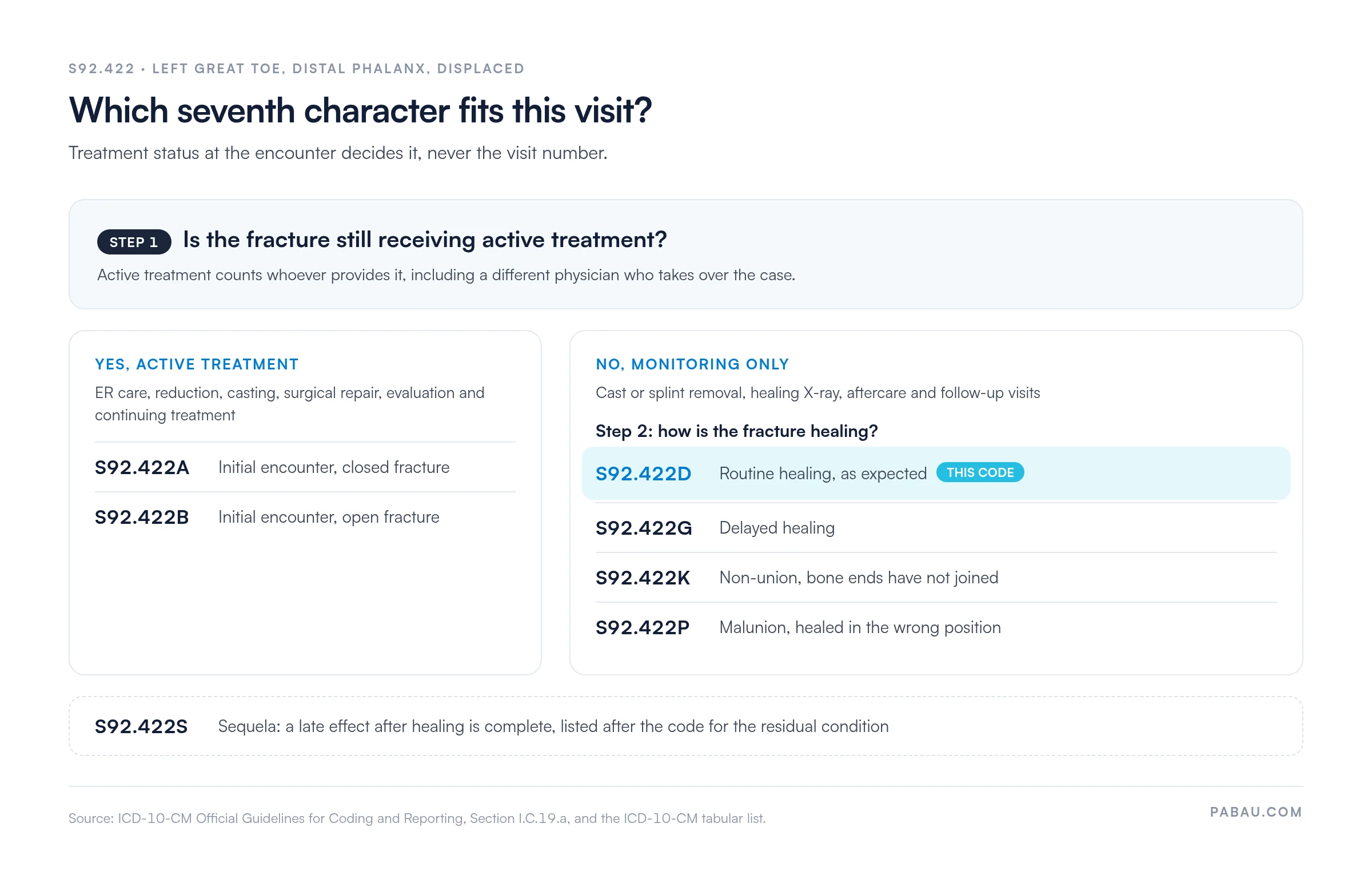
The seventh character D marks a subsequent encounter for a fracture that is healing as expected. There is no delayed healing, non-union or malunion. Under Section I.C.19.a of the ICD-10-CM Official Guidelines, treatment status at the visit picks the character. Where the visit falls in the sequence does not.
That rule catches plenty of coders out. A third visit can still take A if the provider is managing the fracture, for example with a manipulation or a new cast. The switch to D comes when active treatment ends and the visits turn to monitoring.
S92.422D fits any visit where the provider monitors this fracture after active treatment is over. Routine healing means the bone is knitting normally, with none of the problems that G, K or P describe.
Visits that usually support D include:
A new manipulation, a corrective splint or a change of plan may move the visit back to A, but only if active treatment has restarted.
Under the guidelines, active treatment means care aimed at the fracture itself. A subsequent encounter starts once that care is complete. Work through the note in this order:
Visit number never sets the seventh character on its own. The ICD-10-CM Official Guidelines base it on active treatment, even when a new or different provider sees the patient. So a specialist who takes over active management after ER care still reports A.
D applies only once the visits are monitoring only, such as cast removal, a healing X-ray or aftercare. The diagram below maps both decisions, treatment status first and healing second.
Here’s how one fracture moves through the codes. A patient drops a weight on her left big toe. The ER X-ray shows a displaced distal phalanx fracture, and the ER reports S92.422A.
Each visit is coded on what happened that day. As a result, the same fracture carries three different codes in six weeks.
Several neighboring codes get confused with S92.422D. The table shows each one and what sets it apart.
One rule works in the coder’s favor here. Under Section I.C.19.c of the guidelines, a fracture not described as displaced or nondisplaced is coded as displaced.
Each part of the code needs a matching line in the note. If a claim can’t be traced back to the note for each element below, expect a denial.
Before you close a follow-up note for a displaced great toe fracture, run a four-point check. Confirm the left side, displacement wording that matches the code, the distal phalanx and normal healing. Missing any one turns a billable S92.422D claim into an audit finding.
A follow-up fracture visit carries a diagnosis code and a procedure code. The CPT codes below often appear alongside S92.422D.
Check NCCI bundling edits before you pair any procedure with an E/M code at the same visit.
Most S92.422D problems start well before the payer sees the claim. Here’s the usual path for a follow-up visit, with the trip point at each step.
Seventh-character slips and thin notes are a common cause of denials on S92.422 fracture claims. The table pairs each mistake with its fix.
A denial management workflow that tracks rejections by seventh character shows where errors start. You’ll see whether the note or the code choice is at fault, which tells you who needs training.
Run this check on every S92.422D claim before it leaves the practice.
Medicare covers follow-up fracture care when each visit is medically necessary. No national coverage determination caps the number of follow-up visits for toe fractures.
Instead, coverage depends on the Local Coverage Determination (LCD) for your MAC jurisdiction and on the specialty. Podiatry LCDs usually expect the note to give a clinical reason for each visit.
A visit coded S92.422D with only “routine check” as its rationale may be denied under LCD review. So capture the decision made at each visit, such as cast removal, an imaging read, a gait check or discharge planning.
Getting each claim right the first time is the heart of a clean claim, and it shortens payment delays. Before each fiscal year, check the AAPC ICD-10-CM code reference for changes to the S92.422 family.
ICD-10 code S92.422D has stayed valid and billable across recent fiscal years, with no descriptor changes.
Check its status each year in the Check ICD-10 database, which mirrors the CMS and NCHS release files. Our ICD-10-CM code library lists the neighboring S92 codes too.
Cross-check against the official CMS annual update files as well. Payers tie fee schedules to one fiscal year’s code list. A claim built from last year’s file can be rejected once the date of service falls in the new year.
Our guide to medical billing basics shows where that yearly update fits in the claim cycle.
Set a reminder for October 1, when each new ICD-10-CM fiscal year takes effect. Pull the updated tabular list from the CDC tool and search for S92.422D. Confirm it’s still active and unchanged before you process October claims.
Many podiatry and orthopedic practices still check fracture claims by hand. A biller reads the note, keys in the codes and hopes the claim is complete before the clearinghouse sees it.
Pabau, the practice management platform we build, opens each claim pre-filled from the invoice. Its error-catching claims management then scrubs every claim for missing or invalid details before it leaves Pabau.
US practices submit CMS-1500 claims through Claim.MD, which also runs insurance eligibility checks before the visit. A rejected claim is flagged “Needs action” with its reason, so your team can correct it and resubmit. The seventh-character call stays with your coder, while the scrub checks the rest of the claim.
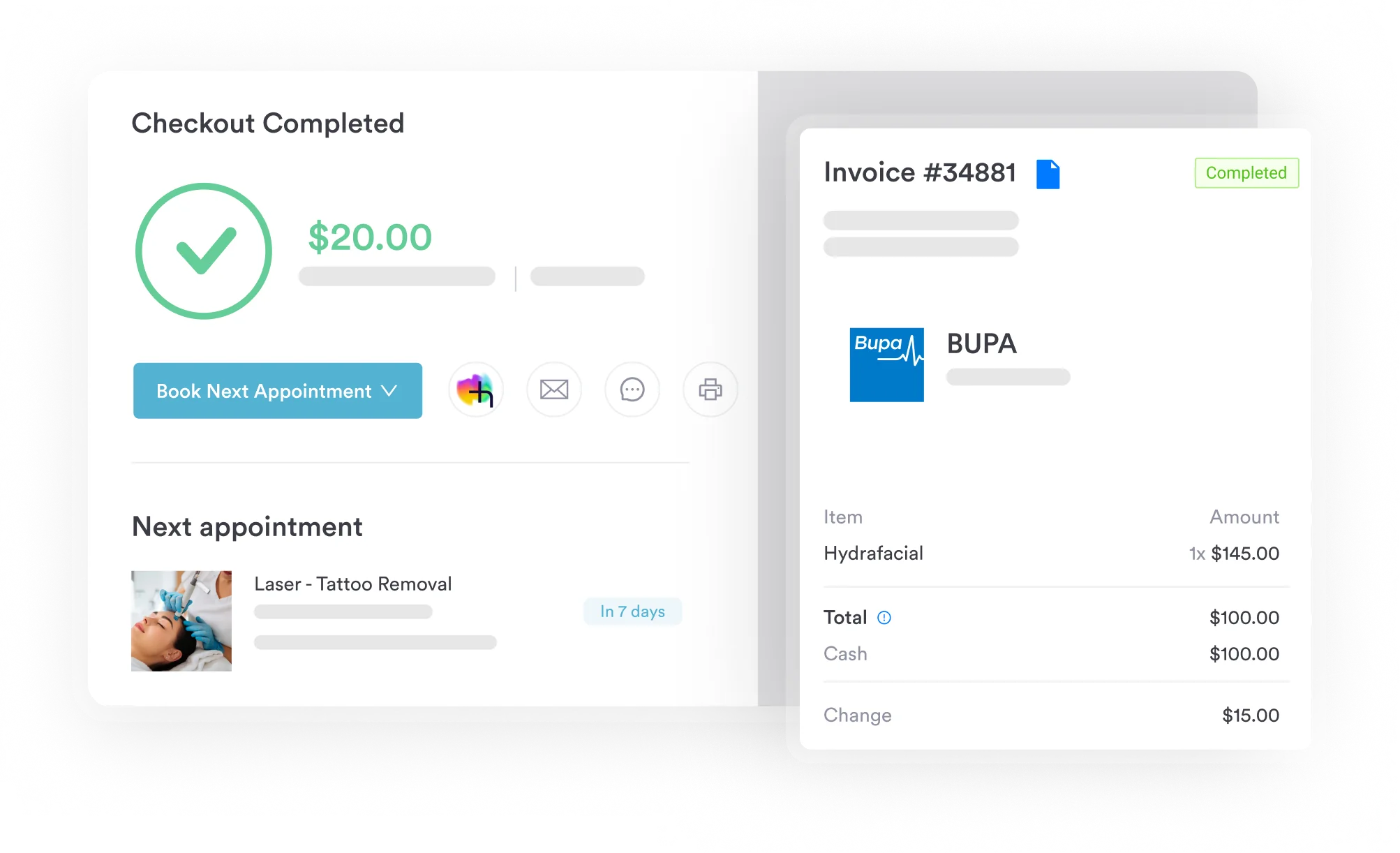

Pabau’s claims management scrubs every claim for missing or invalid details before submission. US practices submit CMS-1500 claims and check eligibility through Claim.MD.

S92.422D comes down to one question about each visit: was the fracture treated or watched? Once active treatment ends and the toe is healing on schedule, D is the right call.
The effort sits in the note. A few words on side, displacement and healing take seconds to write. A denied claim, by contrast, costs a resubmission and weeks of waiting. Build those prompts into your follow-up template, and run the checklist before each claim goes out.
Book a demo to see how Pabau scrubs fracture follow-up claims before they reach the payer.

Need to understand how claims move through the clearinghouse? Medical claims clearinghouse overview explains how claims travel from your billing system to payers and where rejections occur.
Dealing with repeated fracture code denials? Denial codes in medical billing breaks down the most common CARC codes and how to respond to each.
Want to verify eligibility before the follow-up visit? Insurance eligibility verification covers real-time 270/271 checks and how to integrate them into your workflow.
Billing Medicare for follow-up fracture care? Medicare billing walks through how Part B claims are prepared and paid.
It’s the billable ICD-10-CM code for a follow-up visit on a displaced distal phalanx fracture of the left great toe with routine healing.
Report one when your payer or state requires external cause data. It takes the same seventh character as the injury code, so D at a follow-up visit. Activity (Y93) codes are reported only once, at the initial encounter, and place (Y92) codes usually are too.
Code it as displaced and closed, the two defaults in guideline Section I.C.19.c. An undescribed fracture of this bone still lands on S92.422, with treatment status picking the seventh character.
No. The guidelines bar aftercare Z codes for traumatic fractures. Report S92.422D itself, since the D already tells the payer this is follow-up care.
List the residual condition first, such as chronic pain or stiffness, then S92.422S. The S goes only on the injury code and names the fracture that caused the problem.
S92.422D is valid and billable for FY2025 and FY2026, with no descriptor changes. Confirm FY2027 in the official tabular list, which took effect October 1, 2026, before you bill visits on or after that date.