ICD-10 Code Y76.0: Diagnostic obstetric and gynecological devices
ICD-10 Code Y76.0: Definition and billable status ICD-10 Code Y76.0 is a valid, ...

Last Updated: Oct 23, 2026
Billable Code Specific Code
S48.922S is the billable ICD-10-CM code for partial traumatic amputation of left shoulder and upper arm, level unspecified, sequela.
The amputation itself is coded on the encounter where it was treated.
Let Pabau's smart automation suggest the right codes, reduce claim denials, and keep your practice compliant—effortlessly.
Automate repetitive tasks and focus on what matters most—your patients.
Reduce coding errors and ensure compliance with the latest regulations.
Clean claims, fewer denials, and faster reimbursements.
Powerful insights and reporting to help your practice thrive.
HIPAA compliant SOC 2 certified GDPR-compliant Trusted by 4,000+ clinics worldwide

ICD-10 code S48.922S covers a partial traumatic amputation of the left shoulder and upper arm, level unspecified, at a sequela encounter.
S48.922S is billable and specific, valid for FY2026 from October 1, 2025, and accepted for HIPAA-covered transactions.
The 7th character ‘S’ applies only to a condition caused by the earlier amputation, never to the original injury encounter.
Shoulder-level stump and scar revisions fall in the 23920-23921 range, which coders often confuse with the forearm range.
Practice management software like Pabau helps practices apply these codes accurately, cutting denials caused by 7th-character and laterality errors.
S48.922S is a billable, specific ICD-10-CM code. It reports a diagnosis for reimbursement and is valid for fiscal year 2026, effective October 1, 2025. The code is accepted for HIPAA-covered transactions.
Verify the current-year edition with the CDC ICD-10-CM web tool before submitting claims, because code validity resets every October 1. The CMS ICD-10 codes page carries the update files and official descriptions. Pair this with a medical coding cheat sheet that covers the same ICD-10 structure alongside CPT and HCPCS ranges.
The 7th character is the most error-prone element of traumatic injury coding. Every code in the S48 category requires one to indicate the encounter type. Choosing wrong is a leading cause of denials on post-amputation management visits.
A sequela is a complication or condition that the original injury caused. ICD-10-CM guidelines require the sequela code to be sequenced first, followed by a code for the specific condition. That second code names the phantom pain, the neuroma, or the scar.
The original traumatic amputation is coded on its own encounter, using S48.922A. Encounter characters work the same way across the rest of the shoulder region.
Knowing where S48.922S sits in the hierarchy helps you select the most specific code and avoid non-billable parent codes. The full path from chapter to code runs like this:
S48.922 is the parent code without a 7th character, and it is not billable on its own. A claim submitted with S48.922 alone will be rejected. Use the complete 7-character code S48.922S for sequela encounters.
The same extension pattern runs through the rest of Chapter 19.
A sports medicine platform keeps the injury, its treatment, and the athlete’s recovery timeline in one record.
S48.922S has several sibling codes within the S48.922 and S48.9 subcategories. They differ by laterality, level specificity, and encounter type. Choosing the wrong side is a frequent error that triggers medical necessity denials. Use the table below alongside the AAPC code lookup to confirm each encounter.
Practices managing post-amputation rehabilitation need the laterality right before they bill prosthetic fittings and functional sessions.
S48.922S applies to conditions arising from an earlier partial traumatic amputation at the junction of the left shoulder and upper arm. The original documentation did not state the amputation level.
Partial means some tissue, bone, or vascular continuity remained intact at the time of injury. That separates it from the complete amputation codes in the S48.91x series.
Accepted clinical synonyms and approximate alternate descriptions for S48.922S include:
Common presentations at sequela encounters include phantom limb pain, stump neuroma, heterotopic ossification, scar contracture, and myodesis-related complications. Code the specific condition separately and sequence it after S48.922S.
Document the causal relationship explicitly in the clinical note before submitting a sequela claim. Write something like this: ‘The patient presents with [sequela condition] as a direct result of the traumatic amputation of the left shoulder sustained on [date].’ Without that linkage in the record, payers may deny the sequela code as unsupported by documentation.
The ICD-10-CM Official Guidelines for Coding and Reporting give specific direction on sequela encounters for traumatic injuries. Five rules apply directly to S48.922S:
Sequela records often span multiple providers and facilities. Systems that link the current encounter to the historical injury record.
ICD-9-CM was replaced by ICD-10-CM in the United States on October 1, 2015. The crosswalk from S48.922S back to ICD-9 is approximate. ICD-9-CM did not carry the same specificity for laterality, the partial versus complete distinction, or encounter-type characters.
ICD-9 code 905.9 was a broad late-effect category covering all traumatic amputations, whatever the site, side, or type. That makes the crosswalk approximate. For legacy record comparisons or research on historical Medicare claims, the ResDAC ICD codes guidance explains how the transition affects longitudinal analysis. Where a payer still requires a paper claim, the practice needs the current revision of the form.
The CPT and HCPCS codes billed alongside S48.922S depend on the sequela being treated. The ICD-10 code describes the diagnosis. The procedure codes describe what happened at the visit. Common pairings vary by payer, so confirm coverage policies before submitting.
Shoulder-level revisions fall in the 23920-23921 range. Claims are often built from 25900-25931 instead, which covers forearm and wrist amputations rather than the shoulder. Graft coverage of the stump is billed separately. Anesthesia for the revision is coded on its own too.
CPT and HCPCS pairings are context-dependent rather than universally required, and payer policies on medical necessity vary by code. Confirm local coverage determinations for your Medicare Administrative Contractor before billing prosthetic HCPCS codes.
Prosthetic training itself is usually delivered by therapists.
Practice management software like Pabau tracks those payer-specific requirements for you. Pabau’s claims management attaches supporting documentation to each claim, so post-amputation sequela visits stop bouncing back for missing detail.
Review the applicable Local Coverage Determination before billing HCPCS L-code prosthetics with S48.922S. Medicare requires prior authorization for many upper-extremity prosthetic devices. The sequela diagnosis code must appear in the documentation supporting that request, not only on the claim form.
Sequela coding errors rarely start with the code itself. They start in the clinical note. Three details go missing most often:
Pabau lets you build structured encounter templates for post-amputation visits. Each one prompts the clinician to record the side, name the earlier injury, and mark the encounter type.
Across a course of post-amputation visits, that record keeps every claim pointing back to the same documented injury.
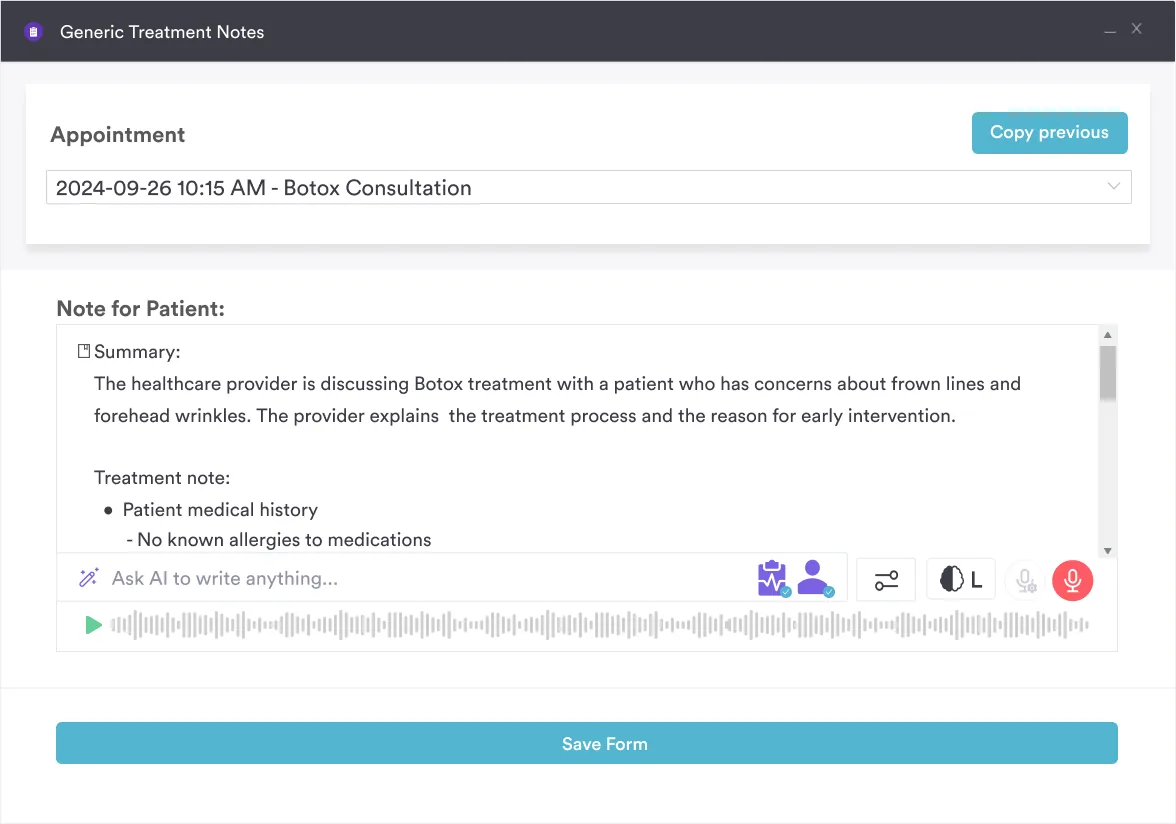

Pabau captures the clinical detail sequela coding needs. It links prior injury records to the current encounter, so claims go out with the causal statement, the side, and the encounter type already documented.

S48.922S is straightforward once the note is right. The wrong 7th character, the wrong side, and a missing causal statement account for most denials on this code. All three are settled in the note long before anyone picks a code.
Fix the template once and the code takes care of itself on every later visit.
Book a demo to see how Pabau keeps sequela documentation ready before the claim goes out.

Coding a nonunion after a shoulder-region fracture? S42.442K shows how the K character changes what the claim needs.
Billing surgery on a traumatic amputation? 20816 walks through replantation coding and the modifiers that apply.
Working through the left humerus fracture codes? S42.475G covers transcondylar fracture documentation and its encounter characters.
Billing a Nexplanon removal? CPT 11976 contraceptive capsule removal covers the code for removing implantable contraceptive capsules, most often billed for Nexplanon removal.
Billing a hormone implant insertion? CPT 11981 drug-delivery implant guide covers the 2022 descriptor update that folded dissolving implants like Nexplanon and testosterone pellets into this code.
S48.922S is a billable ICD-10-CM diagnosis code for a partial traumatic amputation of the left shoulder and upper arm, level unspecified. It is reported as a sequela encounter. The 7th character “S” means the patient is being seen for a condition caused by a prior traumatic amputation. The original injury is coded on its own encounter.
Yes. S48.922S is a specific, billable ICD-10-CM code valid for fiscal year 2026, effective October 1, 2025. It is accepted for HIPAA-covered transactions. The parent code S48.922 without the 7th character is not billable.
Use S48.922A for the initial encounter, when you are actively treating the traumatic amputation. Use S48.922D for subsequent encounters during routine healing follow-up. Use S48.922S once the acute phase is over and the patient presents with a condition the amputation caused. Phantom limb pain and stump neuroma are the usual examples.
The parent code is S48.922, partial traumatic amputation of left shoulder and upper arm, level unspecified. It is not billable on its own. The full path runs from Chapter 19 through S48, then S48.9, S48.92, and S48.922. The complete 7-character code S48.922S sits at the end.
The approximate ICD-9-CM equivalent is 905.9, late effect of traumatic amputation. This is an approximate mapping only. ICD-9 did not specify laterality, the partial versus complete distinction, or encounter type. For historical claims research, the mapping works for identification but not for direct clinical equivalence.
Evaluation and management visits use 99202-99215, and physical therapy uses 97110 and 97530. Nerve blocks for phantom limb pain use 64415 and 64417. Upper-extremity prosthetics fall in the HCPCS L-code series, with L6300-L6320 covering shoulder disarticulation. Payer coverage varies by code, so confirm local coverage determinations before billing.
Use 23920 and 23921, which cover disarticulation of the shoulder including secondary closure and scar revision. Coders often reach for 25900-25931 by mistake, but that range describes forearm and wrist amputations. Check the operative report for the level before you choose.