ICD-10 code T87.52: Necrosis of amputation stump, left upper extremity
ICD-10 code T87.52 at a glance: Left arm, not left leg ICD-10 code T87.52 is the...

Last Updated: Oct 26, 2026
Billable Code Specific Code
S52.355R is the billable ICD-10-CM code for nondisplaced comminuted fracture of shaft of radius, left arm, subsequent encounter for open fracture type IIIA, IIIB, or IIIC with malunion.
The code is valid for fiscal year 2026 under CMS ICD-10-CM guidance. It took effect on October 1, 2025, and is accepted for HIPAA-covered transaction submission.
One letter separates this code from a denied claim. S52.355J describes the same fracture with delayed healing, while S52.355R describes malunion.
Let Pabau's smart automation suggest the right codes, reduce claim denials, and keep your practice compliant—effortlessly.
Automate repetitive tasks and focus on what matters most—your patients.
Reduce coding errors and ensure compliance with the latest regulations.
Clean claims, fewer denials, and faster reimbursements.
Powerful insights and reporting to help your practice thrive.
HIPAA compliant SOC 2 certified GDPR-compliant Trusted by 4,000+ clinics worldwide

ICD-10 code S52.355R covers a nondisplaced comminuted fracture of the left radial shaft. The 7th character R marks a subsequent encounter for an open type IIIA, IIIB, or IIIC fracture with malunion.
The letter R is easy to confuse with J. R means malunion, and J on the same base code means delayed healing.
Laterality is built into the base code. S52.355 is the left arm, S52.354 the right arm, and S52.356 the unspecified arm.
Only 16 letters are valid 7th characters for this code family, and I, L, and O are never used.
Practice management software like Pabau helps orthopedic and musculoskeletal practices document displacement status, Gustilo subtype, and encounter type at every visit.
S52.355R is a specific, billable ICD-10-CM code. The table below captures every detail a coder needs at a glance before reviewing the supporting sections.
Each word in the ICD-10 code S52.355R description carries a billing consequence. Misreading any component leads to the wrong code selection.
For practices documenting complex musculoskeletal cases. That removes most of the post-visit chart chasing.
The 7th character is the most consequential element of any S52-range fracture code. Without it, the code is invalid and unpayable. For S52.355, there are 16 valid 7th character options covering initial encounters, subsequent encounters, and sequela across closed and open fracture types.
Character R sits at the far end of that list. It encodes three facts at once: a subsequent encounter, a Gustilo type IIIA, IIIB, or IIIC open fracture, and malunion as the healing outcome.
Characters I, L, and O are not used in this range, because ICD-10-CM avoids letters that resemble the numerals 1 and 0. The same 16-character table runs across the whole S52 forearm category.
In software built for occupational therapists, each S-code links to the functional goals guiding a patient’s recovery.
The Gustilo-Anderson classification is the standard system for grading open fracture severity. It grades on wound size, degree of soft tissue injury, and vascular involvement.
For ICD-10 code S52.355R, the medical record must document that the original fracture was a Gustilo type III injury. The subtype determines surgical management, but character R covers IIIA, IIIB, and IIIC alike. For practices managing these patients.
When the operative note or discharge summary specifies the Gustilo subtype, coders should record it in the documentation. ICD-10-CM groups IIIA, IIIB, and IIIC under one 7th character, but the detail supports medical necessity and protects against audit queries. Type IIIB cases often need staged wound bed preparation before soft tissue coverage.
These three healing complications are frequently confused, and coding them incorrectly changes the 7th character entirely. The table below shows how each one maps to a different character in the S52.355 family. The same malunion logic runs elsewhere in the upper limb.
The critical distinction is simple. Malunion means the bone has healed, just incorrectly. Nonunion means the bone has not healed at all. Submitting S52.355R when the patient actually has a nonunion is a material coding error with fraud and abuse implications.
In software built for sports medicine, injury codes connect to rehab milestones and clearance decisions.
Understanding the classification tree helps coders verify that S52.355R is the most specific code available, and it supports chart audits. Each level narrows the clinical picture, and the 7th character attaches only once the base code is settled.
Two different decisions sit behind every code in this range. First, pick the base code that matches the documented side. Second, pick the 7th character that matches the encounter and healing status.
S52.351, S52.352, and S52.353 look like near neighbors, but they belong to the displaced comminuted family. Swapping one of them in changes the clinical picture on the claim. Concurrent injuries at other sites keep their own codes.
Sequencing follows different rules from code selection. If a patient carries this malunion diagnosis into a delivery admission, Chapter 15 rules sequence O74.8 first, with S52.355R reported as an additional diagnosis.
Once the side is settled, the 7th character does the rest of the work. The table below lists the siblings most often confused with S52.355R. Practices treating sports-related forearm injuries can cut selection errors with a sports medicine platform that builds coding into the follow-up workflow.
Use the AAPC Codify ICD-10-CM lookup to verify the full S52.355 sibling list. Confirm which 7th characters are valid for the fiscal year you are billing before submission.
Every element of the 7th character R must appear explicitly in the medical record. Coders cannot infer these details from context, and payer audits look for documented support for each qualifier. Gustilo subtype is the element most often missing. Purpose-built clinical documentation software keeps each qualifier in the note rather than in a coder’s follow-up query. Revenue cycle management reporting separates claims that were denied from claims nobody submitted. Box-by-box requirements on the professional claim form change by payer, so one filled sample is not a universal template. Revenue cycle management reporting separates claims that were denied from claims nobody submitted. Box-by-box requirements on the professional claim form change by payer, so one filled sample is not a universal template.
Practices using customizable clinical forms can build encounter-type and healing-status checkboxes into follow-up templates. Providers then capture every required ICD-10 qualifier at the point of care, rather than during a retrospective chart review.
Before submitting any S52.355R claim, run a short documentation checklist. Confirm that nondisplaced status is stated, and that the operative note names the open fracture and its Gustilo subtype. Check that the visit is a follow-up rather than an initial encounter, and that the record names the left radius. Malunion must be documented explicitly, not inferred from an X-ray report alone.
With S52.355R, most errors happen at the 7th character, not the base code. The clinical descriptions are granular, and coders working quickly through high-volume orthopedic encounters often apply the wrong qualifier. Tools that streamline medical records management reduce the retrospective coding burden behind those error rates.
The CDC/NCHS ICD-10-CM web tool lets coders look up codes by description. It also shows the 7th character table straight from the official tabular list, which is the fastest way to confirm R before submission.
Operative notes, discharge summaries, and referral letters use varied clinical language. Coders who meet any of these terms should treat S52.355R as a candidate code, then verify every qualifying condition.
None of these synonyms replaces a direct code lookup. They work as pattern-recognition triggers. When a coder meets this language, it signals that the S52.355 family is the right starting point. The 7th character then follows a full documentation review.
Orthopedic and musculoskeletal practices treating open fractures face the same documentation problem at every follow-up. The note has to carry laterality, Gustilo subtype, and healing status, or the coder cannot defend the 7th character. Miss one element and the claim either changes code or becomes unpayable.
Practice management software like Pabau closes that loop inside the clinical record. Pabau’s claims management software links diagnosis codes to each encounter, checks documentation completeness before submission, and tracks claim status afterward.
Paired with the platform’s appointment management tools, it separates initial from subsequent encounter visits at the scheduling stage. Your team therefore settles the 7th character before the claim is ever generated, instead of correcting it after a denial.
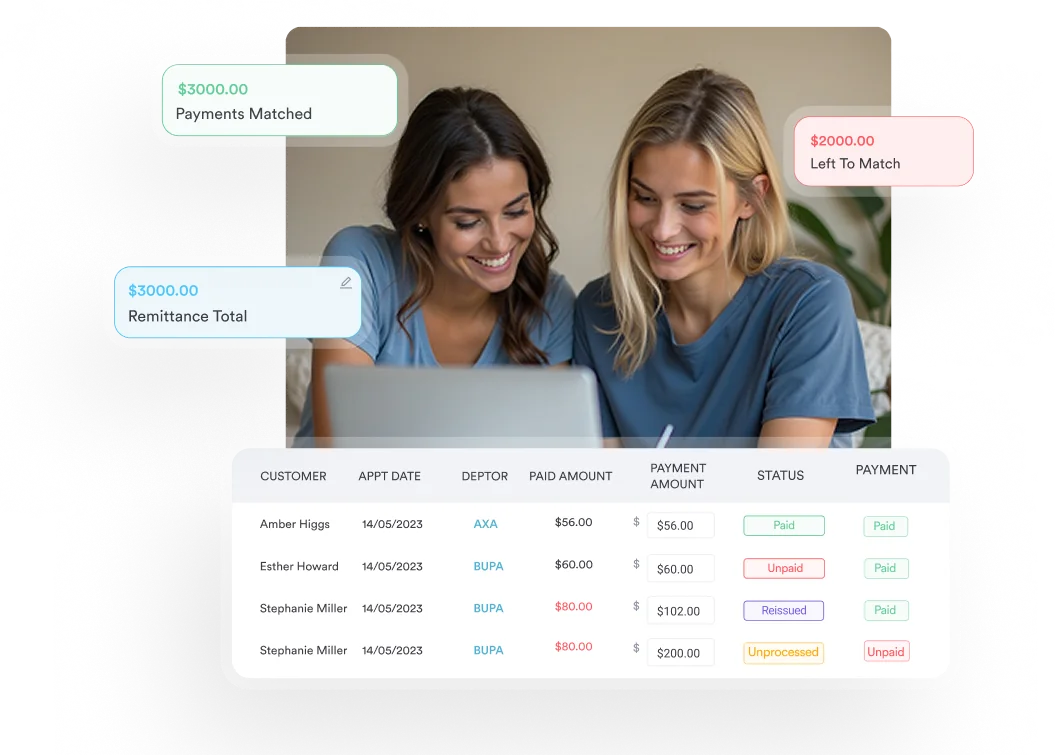

Pabau’s claims management tools link every diagnosis code to the encounter that supports it. Your team catches a missing Gustilo subtype or laterality before the claim goes out.

S52.355R is narrow by design, and that narrowness is what makes it defensible. Five facts have to line up in the record before the code holds. If any one of them is missing, the answer is a provider query rather than a best guess.
The letter is where the money sits. R, J, N, and P all describe the same broken bone at the same stage of care. Only the documented healing status separates them. A follow-up template that forces the clinician to name that status turns a recurring denial into a routine claim.
Book a demo to see how Pabau keeps laterality, Gustilo subtype, and healing status on every fracture follow-up note.

Need a closed-fracture parallel to this malunion code? S42.409P applies the same malunion qualifier to the lower end of the humerus.
Coding a fracture that never healed? S42.131K shows how the nonunion 7th character works on a displaced coracoid fracture.
Documenting a late effect rather than active care? S43.491S covers the sequela 7th character for a shoulder sprain.
Coding an open fracture at the initial encounter? S42.009B walks through open fracture documentation before any healing status applies.
Handling an upper-limb injury with no fracture? S40.019A covers contusion coding when imaging rules a fracture out.
ICD-10 code S52.355R is a billable ICD-10-CM diagnosis code for a nondisplaced comminuted fracture of the shaft of the left radius. It applies at a subsequent encounter, after an open fracture graded Gustilo type IIIA, IIIB, or IIIC has healed with malunion. The code is valid for FY2026, effective October 1, 2025, and is accepted for HIPAA-covered transaction submission.
Both codes describe the same fracture at a subsequent encounter for an open type IIIA, IIIB, or IIIC injury. R means the fracture has healed in a non-anatomic position, which is malunion. J means the fracture is still healing, but more slowly than expected. Choose the character that matches the healing status documented at the visit you are coding.
Malunion means the fracture has healed, but in a non-anatomic position. Nonunion means the fracture has failed to heal at all. For the left-arm base code S52.355, 7th character R covers malunion after an open type IIIA, IIIB, or IIIC fracture. The same site with nonunion takes 7th character N, giving S52.355N. Swapping the two is one of the most common errors in this code family.
Subsequent encounter applies once the patient has received active treatment and has moved into the healing or rehabilitation phase. Follow-up visits, wound checks, pin removal appointments, and physical therapy evaluations all qualify. The initial encounter code for this fracture is S52.355C, and it covers only the episode of care that delivered the first treatment.
Use S52.354R for the right arm. S52.355R is the left arm, and S52.356R covers an arm the record never identifies. All three share the same base description, a nondisplaced comminuted fracture of the shaft of the radius. Do not reach for S52.351 through S52.353, because those codes describe displaced fractures.
Use it only when the medical record genuinely never identifies left or right. In that case the code is S52.356R, not S52.355R, because S52.355 already means the left arm. Auditors routinely flag unspecified laterality when the chart clearly names a side. Query the provider rather than defaulting to the unspecified code.
The Gustilo-Anderson classification grades open fracture severity by wound size, soft tissue damage, and vascular involvement. Types I and II map to 7th characters B, E, H, M, and Q in this code family. Types IIIA, IIIB, and IIIC map to C, F, J, N, and R instead. ICD-10-CM does not separate IIIA from IIIB or IIIC, so the operative report must still name the subtype.
Yes, S52.355R is a specific, billable ICD-10-CM code valid for FY2026 and accepted for HIPAA-covered transactions. Medicare, Medicaid, and commercial payers that use the current ICD-10-CM tabular list all recognize it. Verify payer-specific medical necessity and prior authorization rules separately, because individual policies vary.