CPT code 93503: Swan-Ganz catheter billing and modifiers
CPT code 93503: Official descriptor and procedure overview In the AMA CPT code s...

Last Updated: Oct 23, 2026

CPT code 11740 reports evacuation of a subungual hematoma by any method, including electrocautery, a heated needle, or laser trephination.
A digit modifier tells the payer which nail you treated: FA and F1 through F9 for fingers, TA and T1 through T9 for toes.
Pair the code with the ICD-10 contusion codes that include damage to the nail. Examples are S60.111A for a thumb and S90.211A for a great toe.
The 2026 non-facility total is 1.72 RVUs, which works out to roughly $57 before your locality adjustment.
Practice management software like Pabau checks the fields your payer submission needs, then tracks every claim’s status in one place.
CPT code 11740 reports evacuation of a subungual hematoma, the pocket of blood that collects under a fingernail or toenail after trauma. The descriptor covers the procedure by any method. Electrocautery, a heated needle, and a laser all map to the same five digits.
Draining the nail takes about two minutes. Getting paid for it takes longer. Two details decide the outcome: the digit modifier that names the nail you treated, and an ICD-10 code that agrees the nail itself was damaged.
Get both right and 11740 becomes one of the easiest minor-procedure claims you file all week.
Official descriptor: Evacuation of subungual hematoma.
Blood pools between the nail plate and the nail bed, usually after a crush injury or a dropped object. The plate is rigid, so the pressure has nowhere to go. That pressure is what hurts. The code covers relieving it by making a small hole in the plate so the blood drains.
Repetitive microtrauma produces the same picture without a single dramatic injury. Runners and racquet players collect these from shoes that fit badly.
The American Medical Association places 11740 in the Surgical Procedures on the Nails family, which runs from 11719 to 11765. Because the descriptor says “by any method,” your technique never changes the code. Three are in common use:
One code covers fingernails and toenails alike. The digit modifier carries that distinction, not a separate code, which keeps the nail family compact without losing claim detail.
Payers expect the note to show pressure, pain, and a collection large enough to justify opening the nail. Not every subungual hematoma meets that bar. A small, painless spot of blood under the plate is an observation, not a procedure.
Evacuation is generally indicated when:
That last point drives the code choice. A larger collection raises the odds of a nail bed laceration underneath. When the bed is torn and needs suturing, CPT 11760 describes the repair, and it replaces 11740 rather than sitting alongside it.
The procedure itself is quick. You clean the digit, perforate the plate over the thickest part of the collection, and let it drain. No sutures, no closure, usually under five minutes. Then comes the part that shows up on the claim: a dressing, wound care instructions, and a warning about the signs of infection.
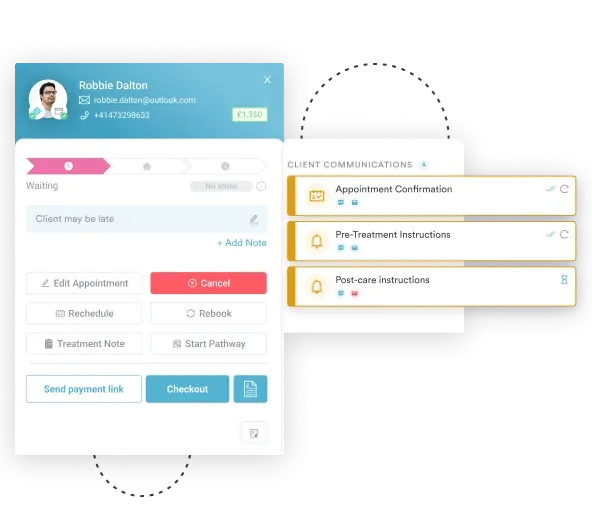
Most 11740 denials trace back to a note that is too thin to support the charge. Six elements carry the claim. Check that all six are in the record before the charge goes out.
None of that takes long to write once the fields are already on the screen. A practice running digital procedure note templates can pre-load all six, so the clinician fills gaps instead of composing a note from a blank box.
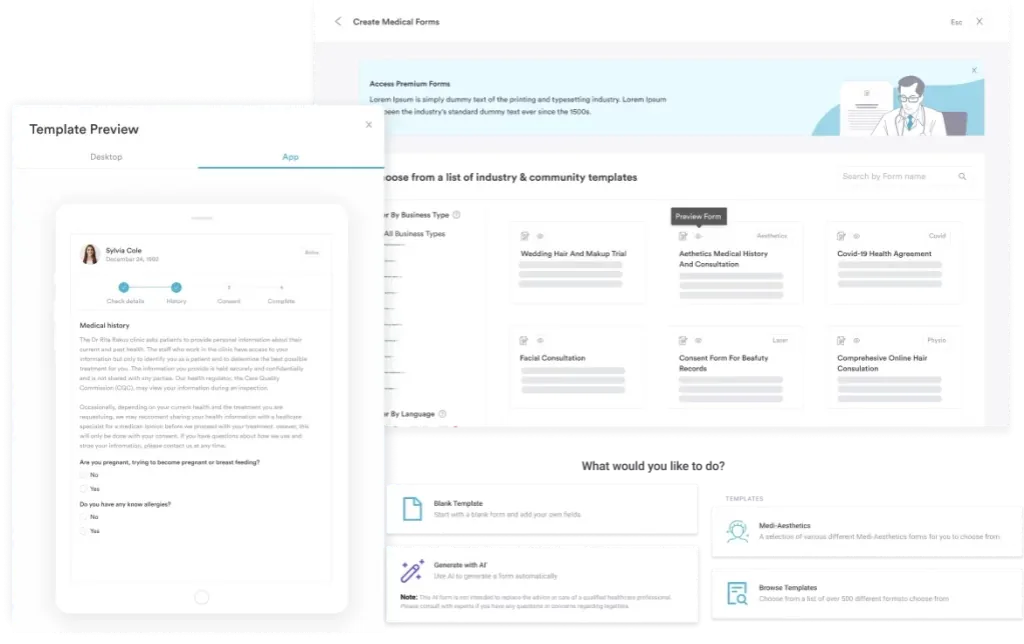
Consistent medical form workflows pay off again months later. When a contractor asks for records, you pull one structured note instead of reconstructing the visit from scattered free text.
Every 11740 line needs a digit modifier. Without one, the payer knows a nail was drained but not which nail, so the claim either stalls for more information or comes straight back. This is the single most avoidable denial on the code.
Two nails means two lines. Report 11740 twice, each line carrying its own digit modifier, rather than raising the unit count on one line. Some contractors want modifier 50 for a true bilateral pair instead, so check your Local Coverage Determination first.
Check your contractor’s bilateral rule before you bill two nails. Some accept modifier 50 on a single line. Others want two lines, each carrying its own digit modifier, such as TA and T5. Sending the wrong format is a common cause of split-claim denials on nail codes.
The right ICD-10-CM family is S60.1- for fingers and S90.2- for toes. Both describe a contusion with damage to nail, which is what a subungual hematoma is.
This is where thin coding references go wrong. The neighboring S60.0- and S90.1- codes read almost identically, but they describe a contusion without damage to the nail. Attach one of those to 11740 and the diagnosis contradicts the procedure. Verify every code against the current fiscal year edition in the CDC ICD-10-CM tool. A clearinghouse submission report arrives before the payer remittance, and it is the first place a format problem shows.
Two habits keep this section clean. First, code to the most specific digit available rather than the unspecified subcode. Second, attach an external cause code for every traumatic case, because it completes the injury story a reviewer reads.
The seventh character matters just as much. Use A for the encounter where you drain the nail, D for later visits in the healing phase, and S for sequela. Practices keeping HIPAA-compliant records still get caught out here, because the character has to change on the second visit even when nothing else does. An external cause code has to track the injury code’s seventh character. ICD-10 code V00.382D reports the follow-up visit after a flat-bottomed conveyance collision, so a contusion code still reading A beside it fails validation.
Expect roughly $57 in your office and roughly $31 in a facility, before your locality adjustment. Place of service drives most of that difference, and the RVU split explains why.
Notice how small the work component is. Practice expense carries this code, which is the whole reason the office rate sits so far above the facility rate. Confirm the figures for your own locality in the CMS fee schedule lookup.
2026 is the first year with two conversion factors. Qualifying alternative payment model participants are paid at $33.57, and everyone else at $33.40. That gives two national figures for the same procedure.
Your geographic practice cost index then moves those numbers up or down. The spread is small on a code this size, but it compounds across a busy urgent care schedule.
In a physician office, place of service 11, your practice buys the cautery unit, the dressings, and the staff time. Medicare pays the non-facility rate to cover that. In a hospital outpatient department or surgery center, place of service 22 or 24, the facility bills its own overhead, so your rate drops.
These are national averages, so treat them as a sanity check rather than a contract. Commercial payers usually settle at a percentage of Medicare, or at whatever rate you agreed during credentialing.
The National Correct Coding Initiative, or NCCI, lists code pairs that cannot be billed together without justification. When 11740 is the column two code in one of those pairs, the unbundling modifier belongs on 11740, not on the other code. Putting it on the wrong line is a quiet, repeatable denial.
Check the current quarter’s tables on the CMS NCCI edits page before you assume a pair is payable. The lists change quarterly.
11740 is a minor procedure with a zero-day global period. Nothing is bundled after the day of service, so a follow-up visit next week is a normal billable office visit.
Same-day evaluation and management is different. That service is bundled into the procedure unless it addresses a separate, distinct problem. When it genuinely does, append modifier 25 to the E/M line and make sure the note reads as two problems, not one described twice.
Four questions, roughly thirty seconds, and most of the denial risk on this code disappears:
Nail codes look interchangeable on a superbill and are not. This table covers the range from 11719 to 11765, with the distinction that decides each one.
The pair that trips people up is 11730 against 11740. Both involve a needle or a blade near an injured nail, and the wording in a rushed note rarely separates them.
The test is simple. Is the nail still attached at the end of the visit? If it is, you evacuated a hematoma. A note that says “nail avulsion” after only a perforation puts the code and the record in conflict. That claim will not survive review.
In most practices, 11740 leaves the building on trust. A coder keys the code, adds a digit modifier from memory, and sends the batch. Nobody notices a blank required field until the rejection lands three weeks later. Busy dermatology practices can absorb that once. They can’t absorb it every week.
Its claims management tools validate the fields your payer submission requires, and Send stays locked until each one is filled.
Once a claim is out, it appears on a status dashboard: submitted, paid, or waiting. So you can spot a stalled 11740 at a glance rather than in a monthly reconciliation. The procedure note sits in the same client record, which turns an audit request into a lookup instead of a hunt.
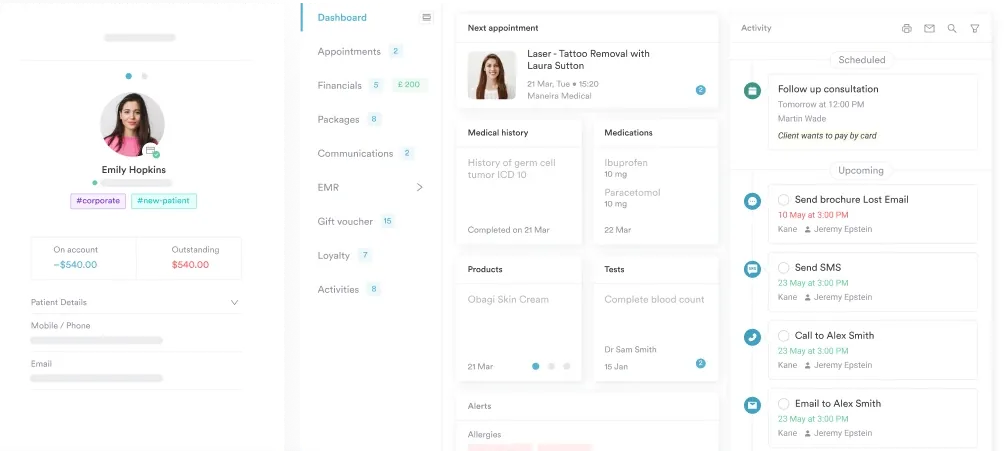

Pabau validates the fields your payer submission needs before a claim can be sent, then tracks its status through to payment. Fewer rejections come back for detail you already had.

If you bill 11740 more than a few times a month, fix the diagnosis habit before anything else. A missing digit modifier gets caught in review because it is visible on the line. But a contusion code from the wrong branch looks complete, sails past your own checks, and gets flagged by the payer instead.
That is the trade-off worth remembering on small codes. The errors you can see are the cheap ones. Expensive errors look tidy on the claim form and quietly disagree with the procedure note.
Build the check into the workflow once, rather than into a coder’s memory, and this code stops showing up in your denial report. Book a demo to see how Pabau keeps nail procedure claims complete before they go out.

Billing routine nail care in the same practice? CPT 11719 covers trimming of nondystrophic nails, including the Q modifiers and coverage limits that catch most claims.
Need the permanent nail removal code? CPT 11750 sets out excision of the nail and matrix, and where it separates from a simple avulsion.
Coding excisions alongside nail work? CPT 11404 walks through benign lesion excision sizing, the same measure-before-you-code discipline.
Repairing a laceration at the same visit? CPT 13120 explains what makes a repair complex rather than intermediate.
Excising a lesion on a hand or foot? CPT 11622 covers malignant lesion excision in those sites, where margins change the code.
No. Local anesthesia, including a digital block, sits inside the CPT surgical package for 11740. You would bill anesthesia separately only if another provider gave regional or general anesthesia, which is rare for this procedure.
One unit per nail. Two nails means two claim lines, each with its own digit modifier. The code has no add-on companion, so never raise the unit count to cover a second nail.
Yes, a zero-day global period. Nothing is bundled after the day of service, so a visit the following week is separately billable. A same-day E/M service still needs modifier 25 on the E/M line.
Use POS 20 for a freestanding urgent care center, which pays the non-facility rate just like POS 11. A hospital-based urgent care uses POS 22 and pays the lower facility rate.
Original Medicare does not require prior authorization for minor office procedures like this one. Commercial plans rarely do either, though some request records after payment. Check the plan’s minor surgery policy if your nail volume is high.