

ICD-10 Code S42.444P: Medial epicondyle fracture, right humerus
ICD-10 Code S42.444P: full descriptor and code validity ICD-10 Code S42.444P car...

Last Updated: Oct 13, 2026
Billable Code Specific Code
S44.42XA is the billable ICD-10-CM code for injury of musculocutaneous nerve, left arm, initial encounter.
Let Pabau's smart automation suggest the right codes, reduce claim denials, and keep your practice compliant—effortlessly.
Automate repetitive tasks and focus on what matters most—your patients.
Reduce coding errors and ensure compliance with the latest regulations.
Clean claims, fewer denials, and faster reimbursements.
Powerful insights and reporting to help your practice thrive.
HIPAA compliant SOC 2 certified GDPR-compliant Trusted by 4,000+ clinics worldwide

ICD-10 Code S44.42XA describes injury of musculocutaneous nerve, left arm, initial encounter and is a billable ICD-10-CM diagnosis code valid for FY2026.
The 7th character A confirms this is the initial encounter. Sibling codes S44.42XD (subsequent encounter) and S44.42XS (sequela) apply to later care stages.
S44.42XA falls under category S44, injury of nerves at shoulder and upper arm level, within the S00-T88 injury block. Always code the external cause alongside it.
Practice management software like Pabau attaches diagnosis codes such as S44.42XA to the patient record, which cuts re-entry errors on claims.
S44.42XA is the ICD-10 code for injury of the musculocutaneous nerve, left arm, initial encounter. It is billable on its own, and it applies while the patient remains in active treatment.
In ICD-10-CM terms, S44.42XA is a billable and specific code. It can stand as a principal diagnosis for reimbursement and, where applicable, support admission to an acute care hospital. No additional sub-code is needed to complete the diagnosis description at this level.
The code became effective on October 1, 2025 and runs through September 30, 2026. That window follows the FY2026 ICD-10-CM guidelines issued by the Centers for Medicare and Medicaid Services (CMS). It belongs to the American ICD-10-CM version. The WHO international edition uses a different code set for peripheral nerve injuries. What a superbill includes decides whether the patient insurer processes or rejects the reimbursement request.
UK private medical insurance is a separate system again: specialist invoices carry CCSD procedure codes such as W8782 for flexible diagnostic arthroscopy. Those claims reach insurers through Healthcode, carrying a preauthorization reference and an operative note in place of an ICD-10-CM diagnosis code.
Use this table for fast code verification before submitting a claim or entering a diagnosis in a patient record.
The musculocutaneous nerve is a branch of the lateral cord of the brachial plexus, typically arising from C5, C6, and C7 nerve roots. It runs through the coracobrachialis muscle, supplying the biceps brachii and brachialis. It then continues as the lateral cutaneous nerve of the forearm.
Injury on the left side produces a recognizable clinical picture on nerve examination tests. Expect weakness in elbow flexion and forearm supination, plus sensory loss along the lateral forearm.
Common causes include shoulder dislocation, blunt trauma to the upper arm, and traction injuries. Iatrogenic injury during surgery is another, particularly in procedures near the proximal humerus or shoulder joint. When the injury occurs in isolation, S44.42XA is the appropriate code.
If the injury is part of a broader brachial plexus pattern, check whether a brachial plexus code captures it more precisely. That distinction decides which code survives payer review.
Approximate synonyms and inclusion terms that map to this code in the ICD-10-CM alphabetic index include:
These synonyms help coders confirm the right code when a note uses non-standard descriptive language. Clinical wording rarely matches the official ICD-10-CM terminology word for word.
Understanding the parent structure of S44.42XA helps coders navigate the tabular list and confirm they have not stopped at a non-billable header code. The full hierarchy from broad to specific is shown below.
S44, S44.4, and S44.42 are all header/non-billable codes. Only the 7th-character extension produces a billable code. Coders who stop at S44.42 without appending the encounter type character will generate an invalid claim. The CDC/NCHS ICD-10-CM web tool lets you verify the full hierarchy by chapter, section, and code level.
The 7th character is the most frequently misapplied element of injury codes in this family. Each character signals a distinct phase of care, and payers use it to determine appropriateness of services billed. Selecting the wrong character is one of the most common reasons claims for nerve injury encounters are flagged for review.
In ICD-10-CM injury codes, “initial encounter” marks the active treatment phase for the injury rather than the patient’s first visit to any provider. A patient seen by a specialist three weeks after the original trauma is still coded with A if active treatment continues.
That convention is a common source of confusion, so document the care phase clearly in the note. Every injury family works the same way, including nerve codes such as S34.21XD.
Document the phase of care explicitly in every clinical note for nerve injury encounters. A note reading ‘patient currently undergoing physical therapy for musculocutaneous nerve injury’ supports the A character. A note reading ‘follow-up for healing left arm nerve injury’ supports D. Ambiguous notes trigger payer requests for medical records and delay payment.
Coders handling upper arm nerve injuries need to distinguish S44.42XA from closely related codes. Laterality and nerve specificity are both required for correct code selection.
For practices managing sports medicine or orthopedic caseloads, tracking laterality at the point of documentation prevents the two most common errors here. The first is swapping left and right. The second is defaulting to the unspecified code when the note documents the side.
An ICD-10 code lookup in the AAPC Codify tool shows the full S44 family side by side for quick laterality checks.
Several ICD-10-CM Official Guidelines apply specifically to injury codes in the S44 range. Missing any one of them is a common cause of denied claims and audit flags.
ICD-10-CM guidelines require an external cause code alongside injury diagnosis codes whenever the cause is known. Sports collisions, workplace falls, and motor vehicle accidents each have their own code, sequenced after S44.42XA from the V00-Y99 block.
An injury caused during a procedure draws on the misadventure codes, including misadventure codes, including Y69. Omitting external cause codes does not invalidate the claim, but many payers and quality programs expect them on injury encounters. Maintaining HIPAA-compliant clinical documentation that captures mechanism of injury supports this requirement.
S44.42XA sequences as a principal diagnosis when the nerve injury is the primary reason for the encounter. If the patient presents for a separate condition, that condition codes first. S44.42XA then follows as an additional diagnosis, including when the nerve injury is a procedural complication.
For inpatient admissions, the Present on Admission (POA) indicator applies. S44.42XA carries POA indicator “Y” when the injury was present on the day of admission. It carries “N” when the injury developed during the stay, which is uncommon in trauma but does happen with operative complications.
To support S44.42XA, the clinical record should document:
Practices using patient record documentation tools that structure clinical notes can capture these elements consistently at every encounter. Structured templates reduce the risk of missing laterality or phase-of-care documentation.
ICD-10 Code S44.42XA became effective on October 1, 2025 under the FY2026 update cycle. It remains valid for discharges and encounters through September 30, 2026.
CMS and the CDC National Center for Health Statistics update the ICD-10-CM tabular list every October. Any code used after October 1 should come from the current fiscal year’s release, so verify it before you submit.
S44.42XA has not undergone a description change or status revision in recent fiscal year updates. It carries the same description as the prior edition, so there is no retired predecessor code to migrate from.
Coders can confirm current-year validity with an ICD-10 lookup on ICD10Data. Its S44.42 entry mirrors the CMS and NCHS release data and shows the effective and expiry dates.
Manually looking up ICD-10 codes, confirming billable status, and entering them into separate billing platforms adds minutes to every patient encounter. For a busy orthopedic or physical therapy practice coding dozens of nerve injury encounters per week, that time compounds into hours of administrative overhead.
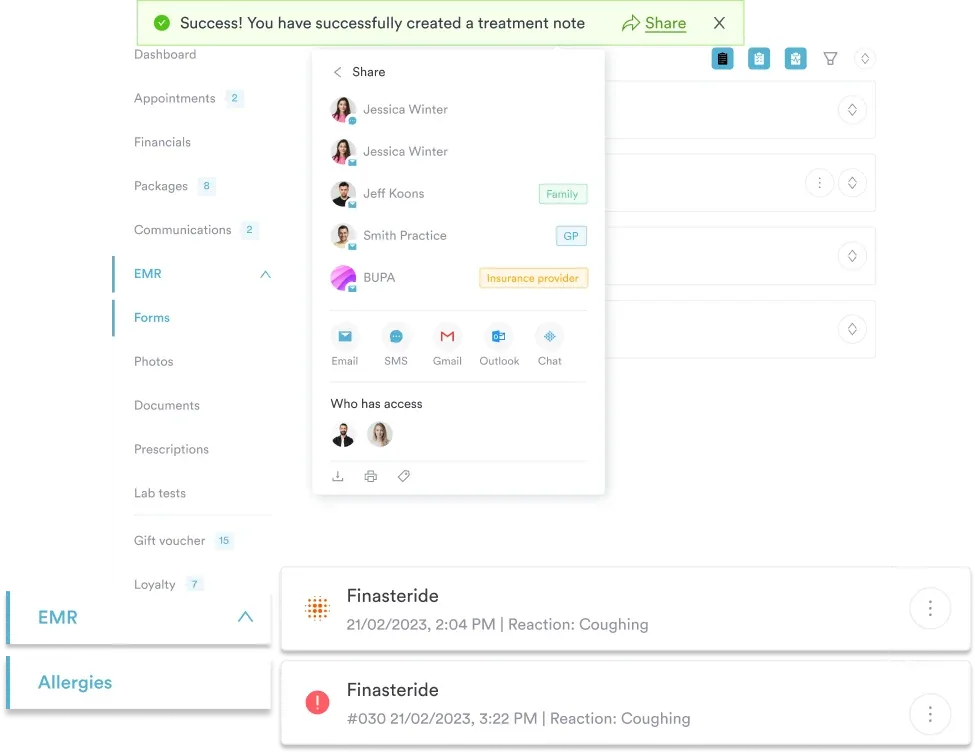
Practice management platforms that tie code lookup to patient records and claim generation remove that friction. When a clinician documents a left-arm musculocutaneous nerve injury, the system attaches S44.42XA to the encounter record. It flags the code as billable and carries it through to the claim without manual re-entry.
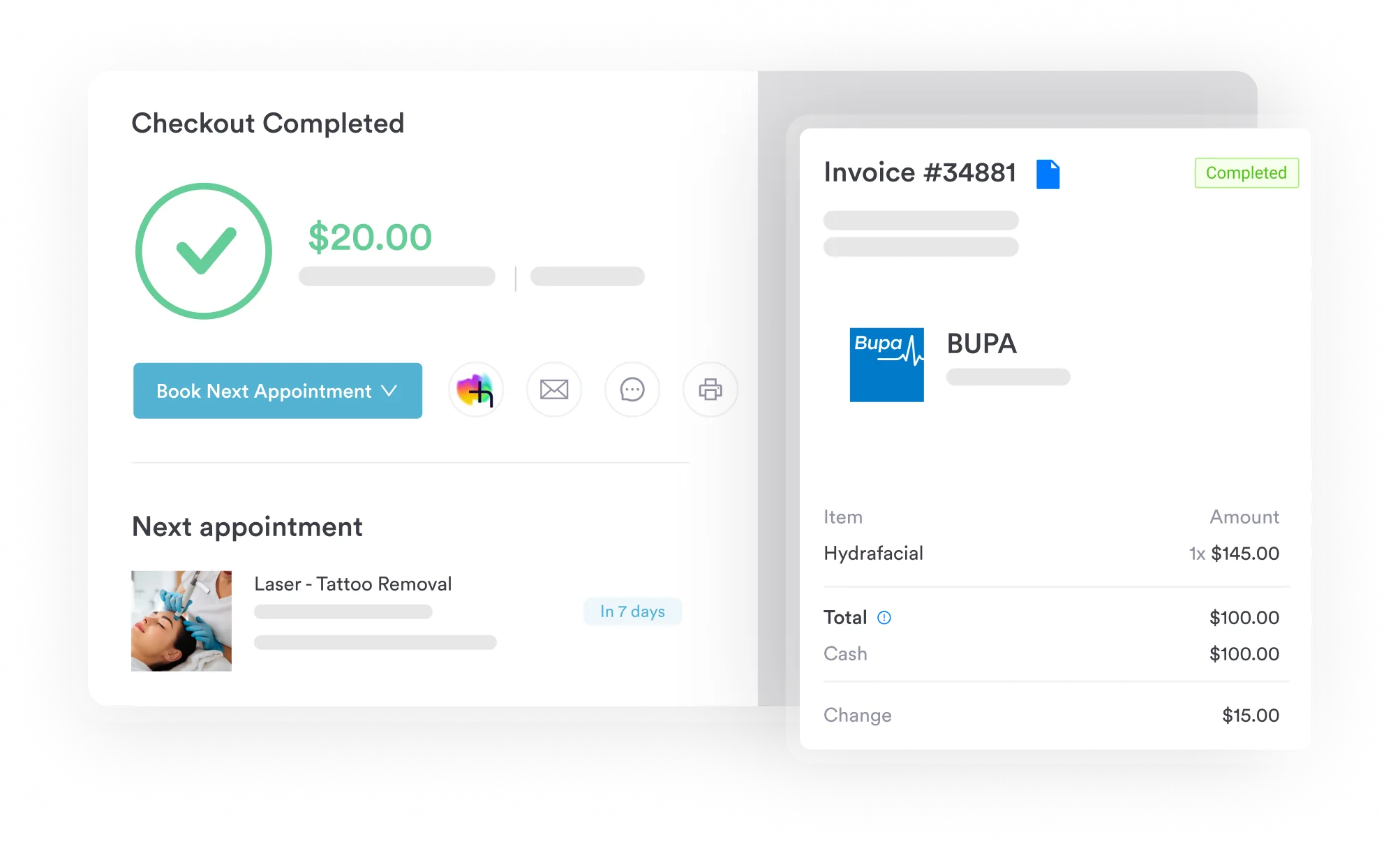
That is where claims management software pays off. You get fewer transcription errors, faster claim turnaround, and an audit trail linking the diagnosis code to the documentation behind it.
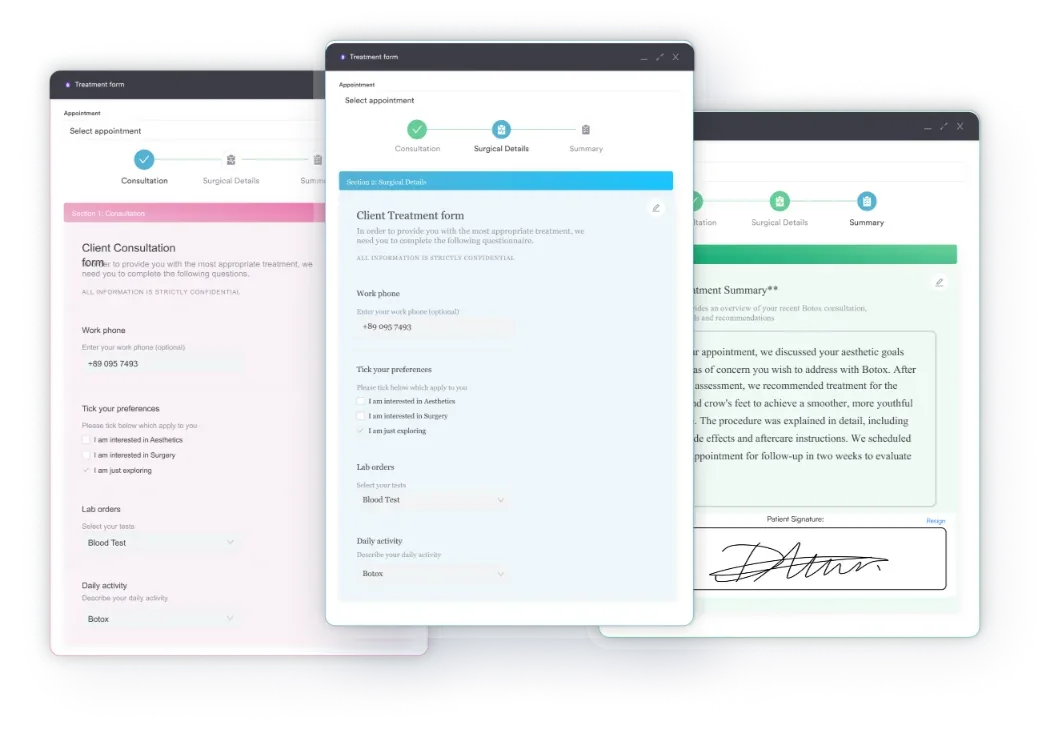
Practice management software like Pabau brings digital intake forms that capture mechanism of injury, laterality, and care phase at the start of every visit. That structured data feeds straight into the coding workflow, so nobody reconstructs it in a retrospective review.
This matters most in physical therapy practice management. PT practices carry much of the subsequent encounter (D) and sequela (S) work on injuries like musculocutaneous nerve damage. The record has to show when active treatment ended and recovery began, because that transition drives the 7th character.
Streamlining these workflows also benefits the broader clinical record. Structured documentation, integrated billing, and automated claim submission all work off the same patient file. Staff stop bridging three separate systems by hand.
Capturing the right elements in your clinical documentation workflows removes the most preventable reasons for denial on codes like S44.42XA. Pabau’s practice management software connects intake, clinical notes, and billing in one platform, so fewer manual steps sit between the note and the claim.
Run a quarterly audit of claims submitted with the S44.42 code family. Check whether subsequent encounter (D) and sequela (S) claims have the correct encounter type relative to the visit notes. Mismatched 7th characters are a common trigger for targeted payer reviews in orthopedic and rehabilitation billing.

Pabau helps practices structure patient records, attach diagnosis codes directly to encounters, and manage claims from a single platform. See how it works for your practice.

S44.42XA is only as good as the note behind it. If the record names the left arm, fixes the care phase, and gives the mechanism, the code holds up under review. If any one of those is missing, the code cannot be defended when the claim is reviewed.
Practices that connect clinical documentation to their billing workflow catch these requirements at the point of care rather than during a retrospective audit. Pabau brings diagnosis coding, patient records, and claims into one platform, so nothing is lost between the note and the claim.
To see how Pabau keeps laterality, care phase, and mechanism attached to the claim, book a demo.

Billing a permanent nail removal? CPT 11750 nail matrix excision covers the modifiers and Medicare rates for partial or complete nail matrix removal.
Billing an extensive pilonidal excision? CPT 11771 pilonidal cyst excision covers why the word extensive separates this code from its siblings and draws payer scrutiny.
Coding another upper limb injury this week? S62.291B walks through laterality, 7th character selection, and the documentation an open fracture claim needs.
Billing injections into multiple lesions? CPT 11901 intralesional injection guide covers the code for injecting more than seven lesions and why the drug bills separately.
ICD-10 Code S44.42XA is a billable ICD-10-CM diagnosis code for injury of musculocutaneous nerve, left arm, initial encounter. It describes traumatic damage to the musculocutaneous nerve on the left side during the active treatment phase. That includes emergency visits, specialist consultations, and surgical encounters while treatment continues.
Yes. S44.42XA is a billable/specific ICD-10-CM code, meaning it is sufficiently specific to serve as a principal diagnosis for claim submission and reimbursement purposes. It can also justify admission to an acute care hospital when used as the principal diagnosis.
All three codes describe injury of the musculocutaneous nerve, left arm, but differ by phase of care. S44.42XA covers initial, active treatment encounters. S44.42XD applies once active treatment has ended and the patient is healing. S44.42XS covers late effects such as persistent weakness or chronic sensory loss.
The 7th character A in ICD-10-CM injury codes designates the initial encounter, meaning the patient is still receiving active treatment for the injury. The character tracks the phase of care rather than the visit number. A patient seen weeks after the injury still uses A while active treatment, such as surgery or specialist management, continues.
S44.42XA became effective October 1, 2025 and is valid for discharges and encounters through September 30, 2026 under the FY2026 ICD-10-CM code set. It can be verified using the official CDC/NCHS ICD-10-CM web tool or the CMS ICD-10 code files.
To code a musculocutaneous nerve injury in ICD-10-CM, start with laterality. Right is S44.41XA, left is S44.42XA, and unspecified is S44.40XA. Then set the phase of care, using A for initial, D for subsequent, and S for sequela. Add an external cause code from V00-Y99 when the mechanism of injury is documented. Confirm the selected code is billable and valid for the current fiscal year before submitting.




