CRM for chiropractors: how to manage patients, bookings and marketing
A CRM for chiropractors is a patient relationship management system built around...

Last Updated: Oct 13, 2026
The seated flexion test is a palpation-based assessment of sacral motion at the sacroiliac (SI) joint during forward trunk flexion. The examiner tracks both posterior superior iliac spines (PSIS) as the seated patient bends forward. If one PSIS rises first or travels further, the test is positive and suggests restricted sacral motion on that side.
Osteopathic physicians, physical therapists, and chiropractors use it as one part of a wider SI joint assessment, never as a standalone diagnosis. This page covers the procedure, how to read the result, and how the test differs from the standing flexion test.
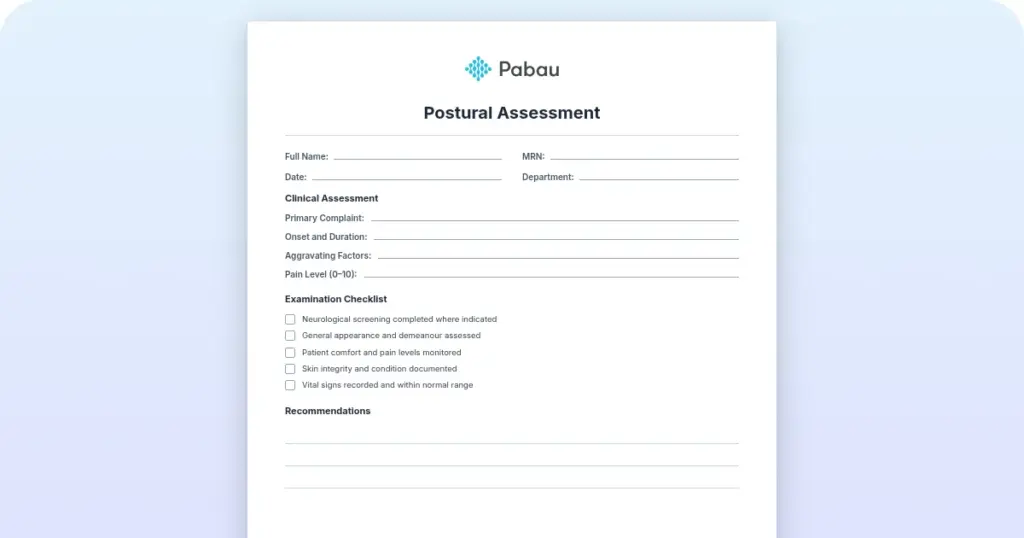
Completed assessments can live in Pabau digital forms, part of the practice management platform we build, so each finding stays with the patient record.
A printable PDF with fields for patient details, a test overview, the step-by-step procedure, and a positive, normal, or negative result to tick. The seated flexion test is a clinical assessment tool used by practitioners to evaluate sacral motion at the sacroiliac joint.
Download template
The seated flexion test checks sacral motion with the legs held still.
A positive result is a motion finding, not a standalone diagnosis.
Evidence on reliability is limited, so pair results with other SI joint tests.
Pabau digital forms can keep each assessment in the patient’s record.
The seated flexion test assesses sacral motion during forward trunk flexion. It is generally taught with the patient seated so that the innominate bones move less, which lets the examiner focus on the sacrum.
Clinicians typically reach for it when they suspect sacroiliac joint dysfunction, pelvic asymmetry, or low back pain that may come from the SI joint. The method is described in Physiopedia’s seated flexion test entry and in osteopathic teaching texts.
The test relies on three landmarks:
Knowing these landmarks well makes the movement easier to read. If you can’t find both PSIS points with confidence, the result will be unreliable, so take time to palpate before you start.
To perform the test, seat the patient on a treatment table with the legs supported and the feet resting flat. Then follow these steps:
Record which side moved first and how far, not only whether the test was positive. Stop the assessment if the patient reports new or severe pain, and follow your local clinical protocols.
Common mistake: rushing the trunk movement makes it hard to see which PSIS leads. Move at a steady pace so each side is easy to compare.
Here’s the whole test on one page, including how to read what you see.
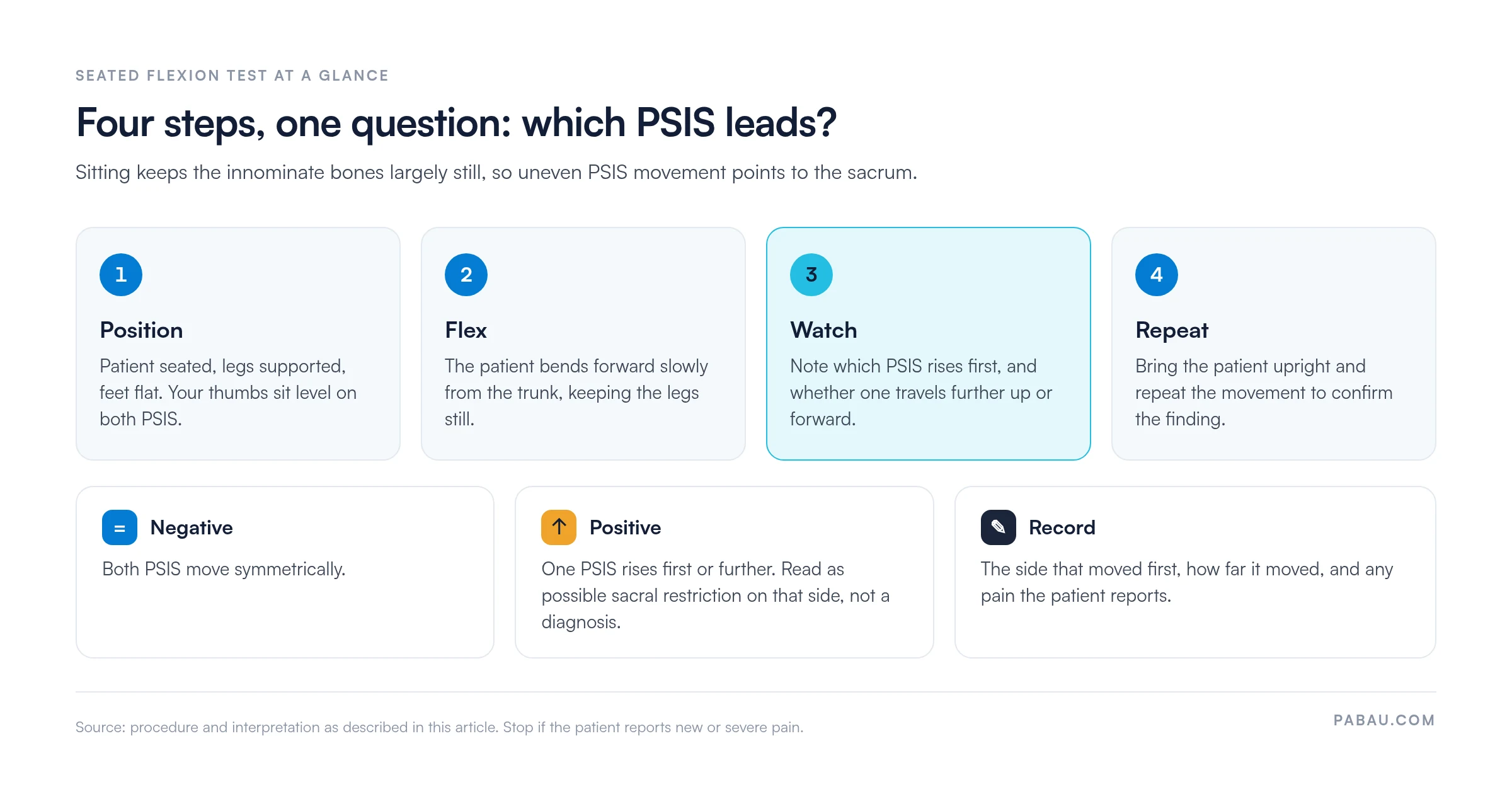
A positive seated flexion test indicates a possible motion asymmetry at the SI joint, not a confirmed diagnosis. Many practitioners read the side where the PSIS rises first as the side of sacral restriction. That link comes mainly from manual therapy teaching rather than strong trial data.
Before acting on a positive result, check it against the rest of the picture:
Reliability evidence for this test is limited and debated, so a single positive result shouldn’t drive treatment decisions on its own. Pain provocation tests, such as the thigh thrust test, tend to show better reliability, so many clinicians add one to the exam.
The seated flexion test isolates sacral motion, while the standing flexion test is generally taught as a way to assess innominate motion. Both use the PSIS as their main landmark, so the difference lies mainly in the starting position.
Many clinicians run both tests in the same assessment, since comparing the two findings can help narrow down which structure is involved. Treat that comparison as a clinical judgment, not a fixed rule.
This template suits practitioners who assess the sacroiliac joint as part of a wider examination. It is most relevant in three settings:
Osteopathy teams can keep this test next to their other notes in osteopathy practice software, so findings stay linked to each treatment plan. The American Osteopathic Association has also shared research on how reliable the standing and sitting flexion tests are.
Physical therapy practices can file the result with each plan of care in an EMR built for physical therapists.
Chiropractic offices often need a repeatable way to record pelvic findings across visits. Practices that want a home for these notes can look at chiropractic software built around that routine.
A shared form keeps findings consistent between practitioners and between visits. That consistency makes follow-up comparisons far easier.
Review the form wording with your clinical lead before rolling it out. Agree on how each landmark is described, including which PSIS is recorded as rising first. Shared language makes it far easier to compare results across patients and practitioners, and it reduces disagreement when a finding is questioned later. Revisit the wording every six months as your team’s experience grows.
On paper, this test is hard to track over time. A sheet filed after one visit rarely sits next to the sheet from the visit before, so nobody checks which PSIS led last time.
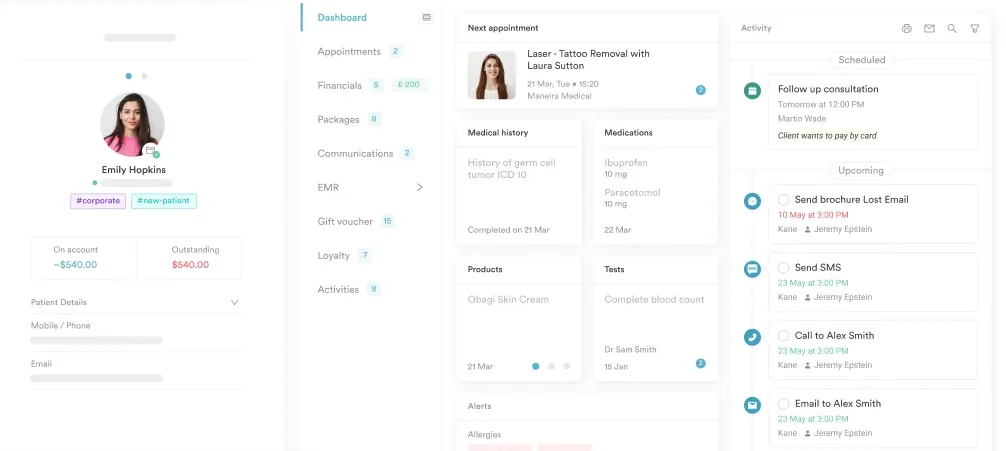
In Pabau, the template becomes a digital form attached to the patient’s file. Each completed assessment is stored in client records in Pabau, beside earlier notes, treatment plans, and other SI joint tests.
If your team writes long clinical notes, Pabau Scribe, our AI scribe, can turn dictated findings into structured documentation and cut write-up time. Clinicians still review every note before it is saved.
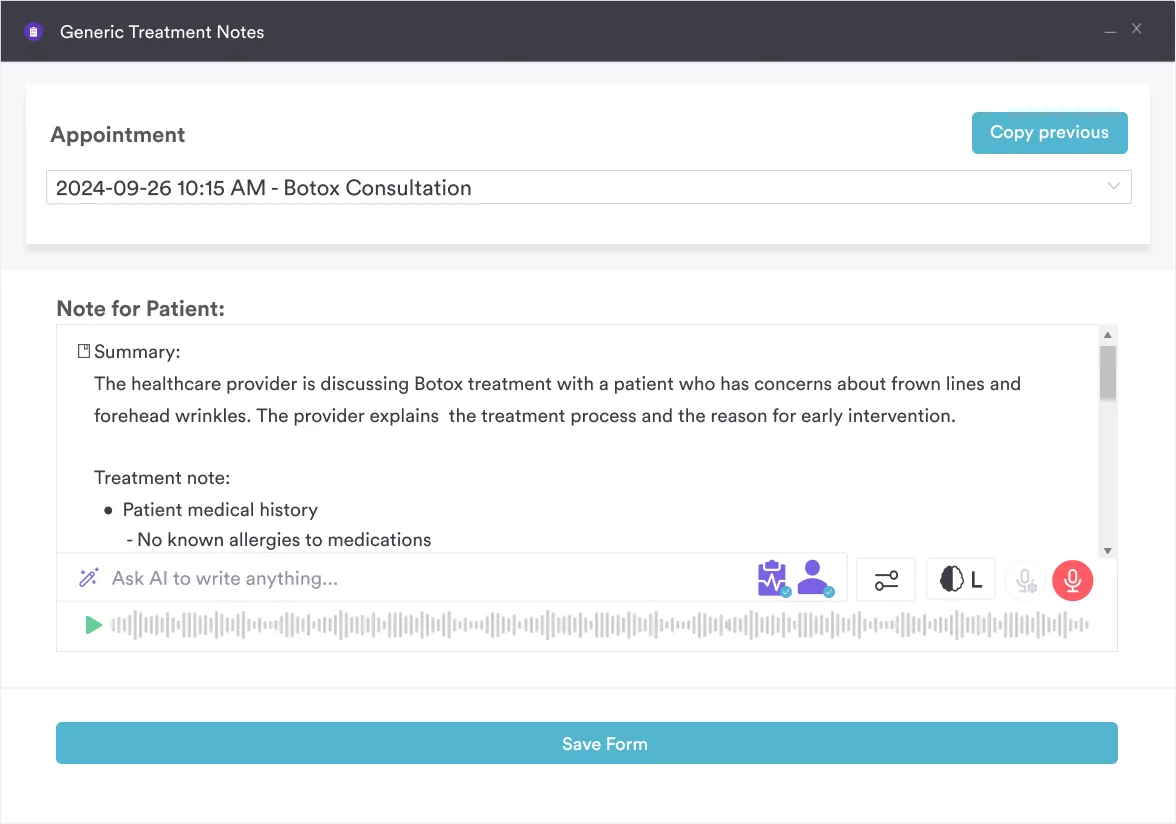
The payoff comes at the next appointment. You open the patient’s file, see last visit’s finding beside today’s, and know whether treatment changed the motion.

Book a demo to see how Pabau digital forms and client records store clinical assessments alongside the rest of the patient history.

Treat the seated flexion test as one motion finding, read alongside provocation tests and the patient’s history. On its own, it shouldn’t decide treatment.
Its value grows with repetition. Run it the same way at every visit, and write down which side led and how far. Then you can tell whether treatment changed the motion or the reading simply drifted between examiners.
Book a demo to see how Pabau keeps each SI joint assessment ready to compare at the next visit.

Need an intake process before the assessment? Chiropractic intake form template is a starting point for collecting history before a spinal exam.
Want patients to show you where it hurts? Back pain location charts let patients mark their pain before you examine the SI joint.
Checking pelvic posture as well? Anterior pelvic tilt covers how forward pelvic rotation is assessed.
Running an osteopathic practice? Osteopathy practice management software looks at software built for osteopathic practices.
The seated flexion test is a palpation-based assessment of sacral motion during trunk flexion. Osteopathic physicians, physical therapists, and chiropractors use it as part of a wider sacroiliac joint assessment.
Evidence for its reliability is limited, and inter-rater reliability is debated in the literature. Read the peer-reviewed reliability studies on PubMed before relying on the result, and check findings against your own palpation.
Clinicians often combine it with the Gaenslen, Gillet (march), and stork tests, depending on the clinical picture. The right combination depends on your training and the patient’s presentation.
Record the PSIS landmark you observed, which side moved first, and any pain the patient reported. Store the completed form in the patient record so the finding can be compared at the next visit.