



CCSD code G5100: Bypass of duodenum billing guide
CCSD code G5100 bills a bypass that leaves the duodenum in place CCSD code G5100...

Last Updated: Oct 16, 2026

CPT Code 01430 describes anesthesia for procedures on the veins of the knee and popliteal area, not otherwise specified, billed by anesthesiologists and CRNAs
CMS assigns 01430 a value of 3 base units; reimbursement is calculated as (base units + time units) multiplied by the anesthesia conversion factor
Modifier selection (AA, QZ, QK, QX, QY) depends on who delivers care and the supervision arrangement; choosing the wrong modifier is the leading cause of claim denial
The most common miscode is treating 01430 as a knee-joint code; it is a venous code, distinct from 01400, 01402, and the arteriovenous fistula code 01432
Practice management software like Pabau can capture anesthesia encounter details and time documentation accurately, reducing the manual re-entry that leads to modifier and charge errors
CPT Code 01430 is the anesthesia code for procedures on the veins of the knee and popliteal area, not otherwise specified. Anesthesiologists and certified registered nurse anesthetists (CRNAs) report it for venous procedures in the knee and popliteal region, such as vein ligation, venous thrombectomy, or varicose vein surgery, when no more specific anesthesia code applies.
This reference covers the exact code descriptor, the CMS base unit value, the reimbursement formula with a worked example, Medicare fee schedule data, modifier guidance for each supervision scenario, the related knee and popliteal codes 01430 is most often confused with, documentation requirements, and the most common denial reasons.
CPT Code 01430 describes anesthesia services for procedures performed on the veins of the knee and popliteal area. Per the American Medical Association’s (AMA) CPT code set, it is a venous (vascular) code classified within the anesthesia section of the CPT manual, in the knee and popliteal range (01320-01444).
The descriptor ends in “not otherwise specified,” so 01430 is the default for venous work in this region when a more specific code does not apply. The one carve-out is the arteriovenous fistula code 01432. Both anesthesiologists and CRNAs report 01430, with modifier selection determining who delivered care and whether physician supervision was present.
These venous procedures are frequently scheduled within vascular surgery, general surgery, or dermatology practices, where anesthesiologists or CRNAs deliver anesthesia alongside the treating surgeon. Practices using dermatology-focused practice management software to schedule these cases benefit from keeping the surgical and anesthesia records tied to the same patient encounter. An eligibility check at booking and again at arrival catches mid-month plan changes.
CPT 01430 carries 3 base units. CMS assigns each anesthesia code a base unit value that reflects the relative difficulty and risk of providing anesthesia for that procedure.
These base unit values are published annually through the CMS Anesthesiologists Information Center, not the standard RVU-based Physician Fee Schedule Look-Up Tool, which does not include anesthesia base units or the anesthesia conversion factor.
The value of 3 sits at the lower end of the knee and popliteal cluster, below the arteriovenous fistula code 01432 (6 base units) and the arterial code 01440 (8 base units).
Base units are only one component of the reimbursement calculation. Time units, which reflect how long anesthesia was administered, are added before the conversion factor is applied. Accurate time capture protects that base unit value from underpayment:
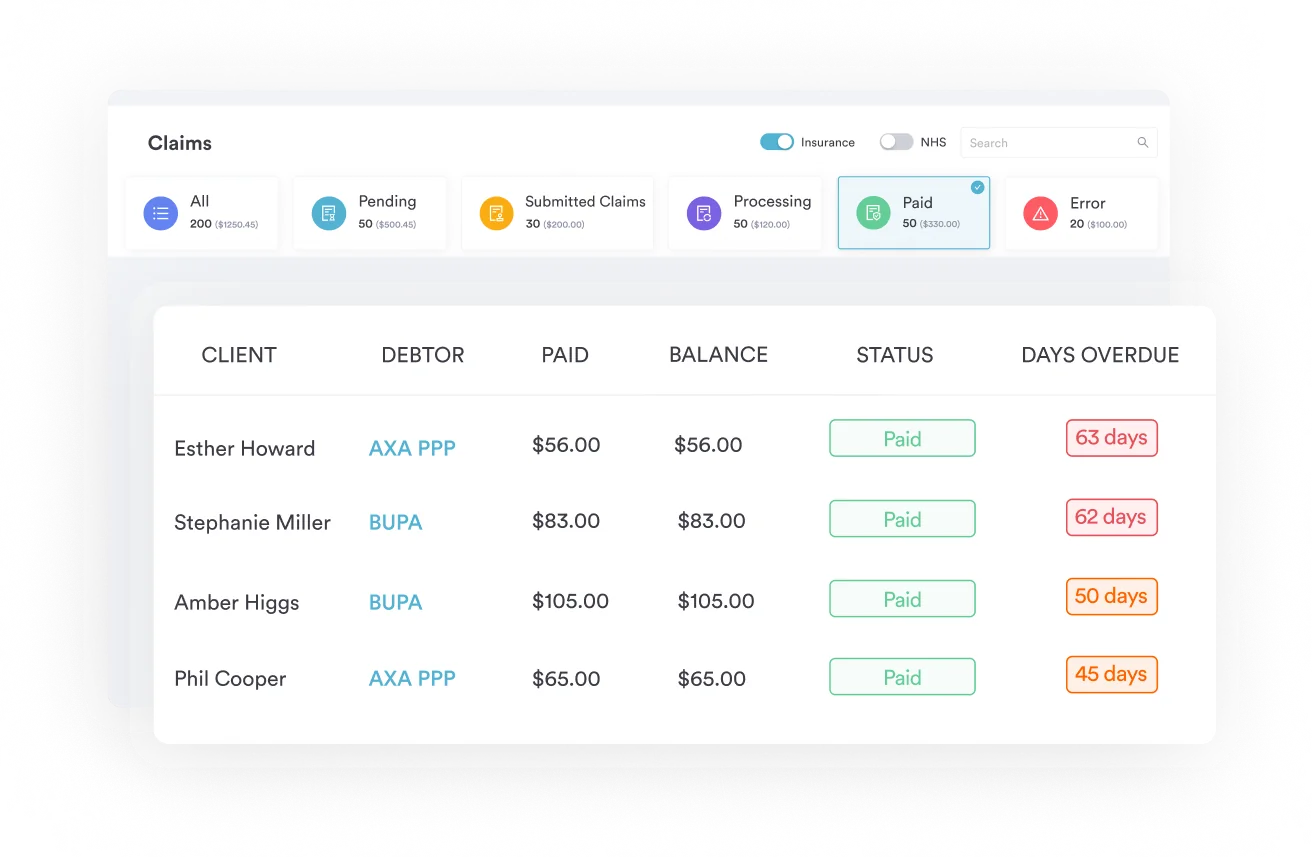
Capturing time accurately only pays off if the base unit value it multiplies against is current, and that figure is not static.
CMS updates anesthesia base unit values annually in the Medicare Physician Fee Schedule (MPFS) final rule. Always verify the current FY base unit value before submitting claims, since values can change year over year. Pull the current CMS anesthesia base unit file directly from cms.gov rather than relying on third-party lookups.
Anesthesia reimbursement does not use the standard relative value unit (RVU) structure. Instead, CMS calculates payment using a formula defined in the AMA’s CPT coding resources: (base units + time units) x anesthesia conversion factor (ACF).
Worked example. A 45-minute popliteal vein ligation produces 3 time units (45 min / 15 = 3). Add 3 base units for a total of 6 units. If the applicable Medicare ACF for that locality is $23.00, the Medicare allowed amount is 6 x $23.00, or $138.00.
Private payer rates and locality-adjusted ACF values will produce different totals. Confirm the ACF for your specific locality through the CMS Anesthesiologists Information Center; the standard Physician Fee Schedule Look-Up Tool does not publish anesthesia conversion factors.
The same base-unit-plus-time-unit formula applies across the anesthesia code set. Upper arm and elbow surgery billed under 01710 and a vulvectomy billed under 00932 use the identical calculation, just with different base units and time totals for the procedure and case length.
Practices using HIPAA-compliant clinical documentation workflows that capture procedure start and stop times automatically have a structural advantage here: time unit calculation becomes a byproduct of good documentation rather than a separate manual step.
Anesthesia billing runs smoother when medical practice management software ties time units, modifiers, and charges to the visit record.
Medicare reimbursement for CPT 01430 varies by geographic locality because the anesthesia conversion factor (ACF) differs by region. The table below shows representative 2026 Medicare ACF values for selected localities; actual payment is the formula output using the locality-specific ACF.
Verify current rates through the CMS Anesthesiologists Information Center, which publishes anesthesia conversion factors. The standard Physician Fee Schedule Look-Up Tool covers RVU-based specialties and does not include anesthesia rates.
Note: ACF figures above are illustrative ranges based on typical regional variation, not exact current-year rates. Private payer rates may differ significantly and are negotiated separately from Medicare.
For surgical procedures billed alongside 01430.
The anesthesia modifiers reported with CPT Code 01430 communicate the provider type and supervision arrangement to the payer. Selecting the wrong modifier is the most common denial trigger for these claims. The five modifiers most relevant to this code are listed below.
CRNA eligibility to bill CPT 01430 independently depends on whether the state has opted out of the Medicare physician supervision requirement.
In non-opt-out states, a CRNA must bill under physician supervision (modifier QX) unless the supervising anesthesiologist also bills separately using QK or QY. In states that have exercised the opt-out, a CRNA practicing independently uses modifier QZ and receives the full allowed amount.
Practices managing both anesthesiologist and CRNA providers benefit from digital anesthesia documentation that captures provider role and supervision status at the encounter level, feeding accurate modifier selection downstream.

CPT 01430 sits in a cluster of knee and popliteal anesthesia codes split across three anatomical targets: the knee joint, the veins, and the arteries. Billing across those boundaries is the most common audit flag for this code.
The same vein-versus-artery distinction carries into other regions of the body. Anesthesia for arterial interventional radiology elsewhere in the body, for example. The table below compares the knee and popliteal codes 01430 is most often confused with, including base units and the distinction that decides which code applies.
For the adjacent codes in this range, see Pabau’s references on 01400 for knee-joint procedures and 01432 for arteriovenous fistula billing. The AAPC CPT code lookup provides searchable descriptors across the full anesthesia range.

Pabau helps anesthesia and surgical practices capture encounter data accurately and link provider roles to the correct modifiers, so charge information is right before a claim ever goes out the door. See how it fits your workflow.

CMS requires specific documentation elements to support compliant billing of CPT 01430. Missing any component gives auditors grounds to recoup payment. Three documents anchor the anesthesia record.
Incomplete intraoperative time recording draws the most audit attention. When a regional nerve block supplements the anesthesia, the injected agent needs its own charge capture too; ropivacaine, for example, is billed separately under J2795. If the encounter included an assessment and a plan, the evaluation and management component needs its own documentation.
Practices using standardized medical forms for anesthesia encounters reduce this risk by prompting providers to capture start and stop times as part of the standard workflow rather than as a retrospective addition.
For practices managing compliance documentation at scale. Maintaining time-saving practice features across a surgical or anesthesia practice creates a meaningful downstream reduction in denial rate.

Three failure patterns account for the majority of CPT 01430 denials. Knowing them in advance is more efficient than learning them from a remittance advice.
Code accuracy is the first line of defense. The claim edit that catches a wrong code costs nothing to fix in-house, while the same error caught on a remittance advice costs a full resubmission cycle and delays payment. Documenting the absence of an agent matters just as much on the orthopedic side. CPT code 23650 requires a note confirming no anesthetic was given, since sedation moves the reduction to 23655 and the anesthesia provider bills 01620.
Run a quarterly internal audit on CPT 01430 claims: pull the last 90 days of claims, sort by modifier, and verify the supervision arrangement documented in each encounter matches the modifier billed. Mismatches found internally cost nothing to fix. Mismatches found by an OIG audit carry repayment obligations and potential penalties.
Most CPT 01430 denials are preventable. The formula is not complicated, but it requires the right code for a venous procedure, accurate time documentation, and modifier selection that reflects the actual supervision arrangement on each case.
Pabau brings scheduling, encounter documentation, and billing workflows into a single environment, reducing the manual re-entry that creates time unit errors and modifier mismatches. To see how it supports anesthesia and surgical practice documentation, book a demo.

Need the billing details for a related knee procedure? 20605 covers arthrocentesis, aspiration, or injection of an intermediate joint, including the knee.
Handling anesthesia or billing for a different minor procedure? 10081 covers incision and drainage of a complicated pilonidal cyst.
Billing a dual chamber pacemaker implant? dual chamber pacemaker billing guide covers the device code, Medicare payment rules, and the ICD-10-CM crosswalk for this implant.
CPT Code 01430 is used to bill anesthesia services for procedures on the veins of the knee and popliteal area, not otherwise specified. It is reported by anesthesiologists and CRNAs for venous work such as vein ligation, venous thrombectomy, and varicose vein surgery in the knee and popliteal region.
Medicare reimbursement for CPT 01430 is calculated as (base units + time units) x the locality-specific anesthesia conversion factor (ACF). For a 45-minute case with 3 base units and an ACF of approximately $23-$27 depending on locality, the Medicare allowed amount typically ranges from $138 to $162 for a 6-unit scenario. Verify current ACF values via the CMS Anesthesiologists Information Center before billing.
The most common modifiers are AA (anesthesiologist personally performed the service), QZ (CRNA without supervision in opt-out states), QK (anesthesiologist directing 2-4 CRNAs), QX (CRNA under medical direction), and QY (anesthesiologist directing one CRNA). Modifier selection must match the actual supervision arrangement documented in the anesthesia record.
Yes. A CRNA can bill CPT 01430, but the modifier depends on state opt-out status. In states that have opted out of Medicare’s physician supervision requirement, CRNAs use modifier QZ and receive the full allowed amount. In non-opt-out states, the CRNA bills modifier QX under physician direction, receiving 50% of the allowed amount while the supervising physician bills QK or QY for the other 50%.
CPT 01420 covers anesthesia for cast applications, removal, or repair involving the knee joint, while CPT 01430 covers anesthesia for procedures on the veins of the knee and popliteal area. They target different work, so the two are not interchangeable; billing 01430 for casting work, or vice versa, triggers a code-to-procedure mismatch.
Both cover anesthesia for procedures on the veins of the knee and popliteal area, but 01432 is specific to arteriovenous fistula procedures and carries 6 base units, while 01430 is the not-otherwise-specified venous code and carries 3 base units. Use 01432 when the venous procedure is an arteriovenous fistula; otherwise the default venous code is 01430.
CMS requires three core documents: a pre-anesthesia evaluation completed before the procedure, a continuous intraoperative anesthesia record capturing agent, monitoring data, and precise start and stop times, and a post-anesthesia note documenting patient status on PACU discharge. Missing or incomplete time documentation is the most common documentation deficiency audited by payers.



