GLP-1 diet plan
A GLP-1 diet plan is a structured eating framework for patients taking semagluti...

2
Last Updated: Oct 13, 2026

Nursing pain assessment is the systematic collection of subjective and objective pain data to guide clinical decision-making and treatment planning.
Self-report is the gold standard for pain measurement. Validated tools like the NRS, FLACC, and CPOT are selected based on the patient’s age and cognitive ability.
Structured frameworks such as SOCRATES and PQRSTU ensure nurses capture all relevant pain dimensions, reducing the risk of undertreated pain.
Pabau’s digital forms and client record system help nurses document pain scores consistently, flag reassessment intervals, and maintain a full clinical audit trail.
Pain is consistently underassessed in clinical settings. NCBI StatPearls notes that inadequate pain assessment remains one of the most common failures in nursing practice. It contributes directly to undertreated pain, avoidable patient suffering, and increased litigation risk. For practice owners and managers, the consequence is tangible: poor documentation, inconsistent reassessment, and staff who rely on informal judgment rather than validated tools.
Nursing pain assessment covers selecting the right scale for a non-verbal patient and structuring a comprehensive pain history using frameworks like SOCRATES. This guide covers validated tools, structured frameworks, special population considerations, documentation requirements, and how clinical software supports consistent pain assessment across a practice.
Nursing pain assessment is the systematic process of identifying, measuring, and documenting a patient’s pain experience to inform treatment decisions. It incorporates both subjective data (what the patient reports) and objective data (observable behavioral and physiological indicators).
A patient recovering from surgery might report mild discomfort on the NRS while displaying guarding behavior, grimacing, and an elevated heart rate. Each of those behavioral signals carries clinical meaning in physical therapy settings.
Three pain types drive different assessment priorities:
Accurate assessment matters beyond patient comfort. The clinical workload pressure nurses face every shift makes it tempting to rely on a single NRS score. But a number alone rarely captures the full picture, and incomplete assessment consistently leads to under-dosing, delayed referrals, and documented adverse events.
Mnemonics give nurses a reliable cognitive scaffold during busy clinical encounters. Two are dominant in practice, each with slightly different emphasis.
Validated for structured pain history-taking and widely referenced in nursing education, SOCRATES ensures no dimension is overlooked during assessment. The British Journal of Nursing recommends it as a primary framework for adult pain history. Its radiation question also steers the physical exam. Right upper quadrant pain spreading to the right shoulder tip, for instance, warrants a gallbladder physical exam.
PQRSTU is common in North American nursing curricula, and it adds an explicit “Understanding/Impact” element that SOCRATES lacks. That addition is particularly useful for chronic pain and rehabilitation contexts, where functional impact drives the care plan.
The “U” component is the key differentiator. A patient managing chronic low back pain may score 4/10 on the NRS but report being unable to work or sleep. That functional impact should shape the nursing care plan and referral decisions. For occupational therapy practices, capturing functional impact at intake is standard clinical practice.
No single scale works for every patient. Tool selection depends on cognitive ability, age, communication capacity, and clinical setting. The table below summarizes the six tools appearing most consistently across clinical guidelines.
The NRS is the most widely used tool in adult clinical nursing. The patient rates pain from 0 (no pain) to 10 (worst imaginable), either verbally or in writing.
Scores of 1-3 are generally classified as mild, 4-6 as moderate, and 7-10 as severe, though clinical context always takes precedence over cutoffs. Its simplicity is its strength and its weakness: a 6/10 rating tells you intensity but nothing about quality, location, or functional impact.
The FLACC scale scores five behavioral categories, each on a 0-2 scale, for a total of 0-10. Royal Children’s Hospital guidelines score a 0 as relaxed and comfortable, and 1-3 as mild discomfort. A score of 4-6 signals moderate pain, and 7-10 signals severe pain or discomfort.
The Critical Care Pain Observation Tool (CPOT) is validated for ICU patients who cannot self-report, including those on mechanical ventilation. It assesses four indicators: facial expression, body movements, muscle tension, and compliance with ventilator or vocalization.
Scores range from 0 to 8. A score above 2 indicates significant pain requiring intervention. The CPOT gives critical care nurses an objective, reproducible measure when subjective rating is impossible.
The Hartford Institute for Geriatric Nursing recommends the PAINAD (Pain Assessment in Advanced Dementia) scale for patients with advanced dementia. It scores breathing, negative vocalization, facial expression, body language, and consolability, each 0-2, for a total of 0-10.
Unlike the FLACC, the PAINAD is designed specifically for the dementia context and accounts for the stoic behavioral patterns common in this population.
Document which pain tool you used in every clinical encounter. Switching between tools without recording the change makes longitudinal tracking clinically meaningless. If a patient’s score drops from 7 to 3 between visits but you changed from the FLACC to the NRS, the numbers are not comparable.
Standard tools frequently underperform in three high-risk groups. Failing to adapt the assessment approach means these patients receive systematically worse pain management than communicative adults.
Tool selection in children depends on developmental stage and communication ability:
Parental input is not optional for younger patients. Caregivers often recognize subtle behavioral pain cues that a nurse conducting a brief assessment may miss. Chiropractic care practices benefit from structured intake questions that prompt parental observation data before the clinical encounter begins.
The Hartford Institute for Geriatric Nursing notes that older adults are at high risk of under-assessed and undertreated pain. Cognitive impairment reduces accurate self-report, sensory deficits interfere with scale administration, and stoicism leads many elderly patients to minimize or deny pain.
For cognitively intact older adults, the NRS or Verbal Descriptor Scale (VDS) works well. When dementia is present, PAINAD is the validated standard. Screening every patient with a cognitive function check before selecting a pain tool prevents systematic misassessment in memory care settings.
When self-report is impossible, behavioral observation is the clinical standard. The tool choice depends on setting and patient profile:
In every case, documenting which behavioral indicators prompted the score gives the next nurse on shift a meaningful clinical handover rather than just a number. The patient care management continuity depends on this level of specificity at the point of documentation.
Three categories of barrier consistently compromise nursing pain assessment quality. Recognizing them is the first step to designing workflow and documentation systems that push back against them.
The British Journal of Nursing corroborates nurse workload and time pressure as documented barriers. A practice seeing 40+ patients per day without structured pain documentation fields will produce inconsistent records across shifts. That inconsistency compounds risk during audits and patient handovers. For multi-location operations, standardizing the pain documentation template across all sites is a clinical governance priority.
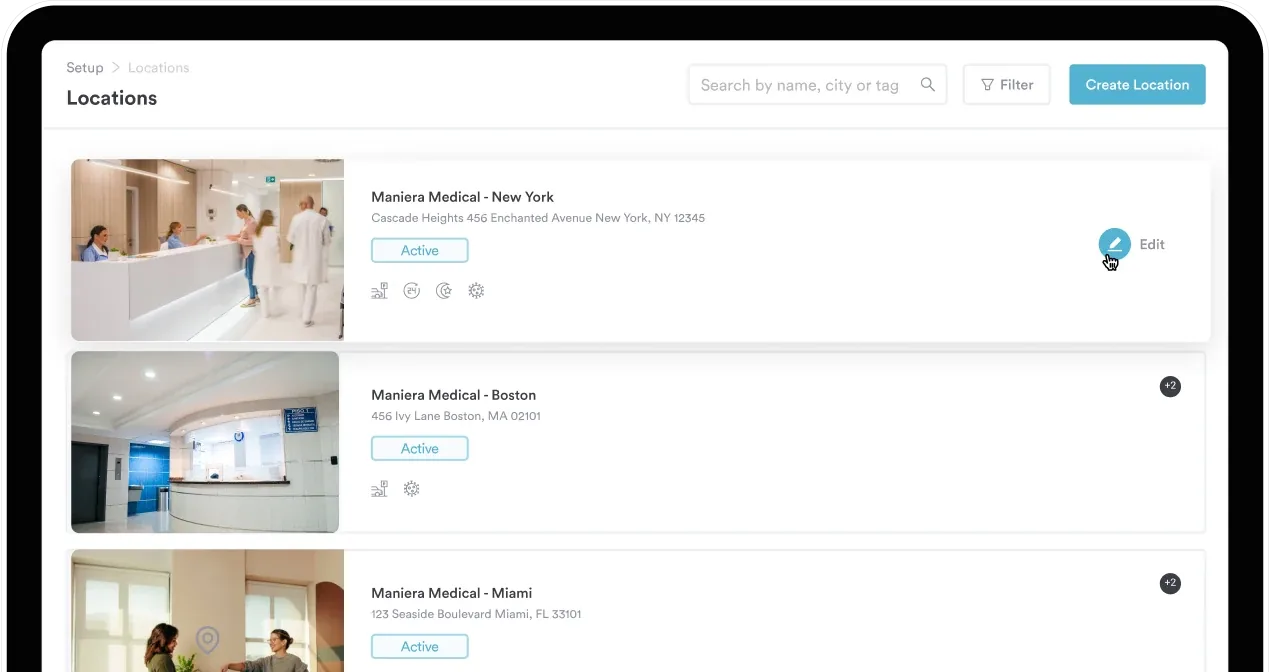
Cultural background influences how patients experience, express, and report pain. A nurse who interprets cultural stoicism as low pain intensity may systematically undertreat entire patient groups.
Key dimensions to address in practice:
Culturally competent pain assessment doesn’t mean abandoning validated tools. It means pairing tool scores with behavioral observation and explicit documentation of any cultural factors that may affect the reliability of self-report. The structured clinical assessment guidance available through Pabau’s resource library extends this same principle across a range of patient-facing assessments.
Documentation is where nursing pain assessment becomes legally and clinically defensible. A score in a nurse’s memory is worthless at handover, audit, or legal review. What the record must contain:
Reassessment timing is not arbitrary. The UCSF Pain Management Center and Royal Children’s Hospital guidelines both specify that reassessment should occur at regular intervals and following any intervention.
In acute settings, reassessment after analgesia is typically 30-60 minutes post-oral medication and 15-30 minutes post-IV. In outpatient practice settings, the reassessment interval should be documented in the care plan. A clinical prompt should trigger it, not individual nurse discretion.
Practice managers overseeing clinical documentation quality should ask one question: can you pull a report showing which patients were reassessed after pain-related interventions, and when? If the answer is no, the documentation system is a liability. The move to digital medical forms is the most reliable way to make reassessment compliance visible and auditable across a clinical team.
Structured pain assessment is easier to sustain with the right clinical software in place, especially as a practice’s daily patient volume grows.
Consider a practice running 60 appointments per day across two practitioners. Relying on paper or a generic notes field for pain documentation means scores get recorded inconsistently. Reassessment stays informal, and the data can’t be audited or trended.
Pabau’s client record system structures clinical note-taking so pain scores, tool used, and intervention outcomes are captured as discrete data points instead of free text. That matters when a patient returns three weeks later and the clinician needs to see whether their pain has improved, stayed the same, or worsened.
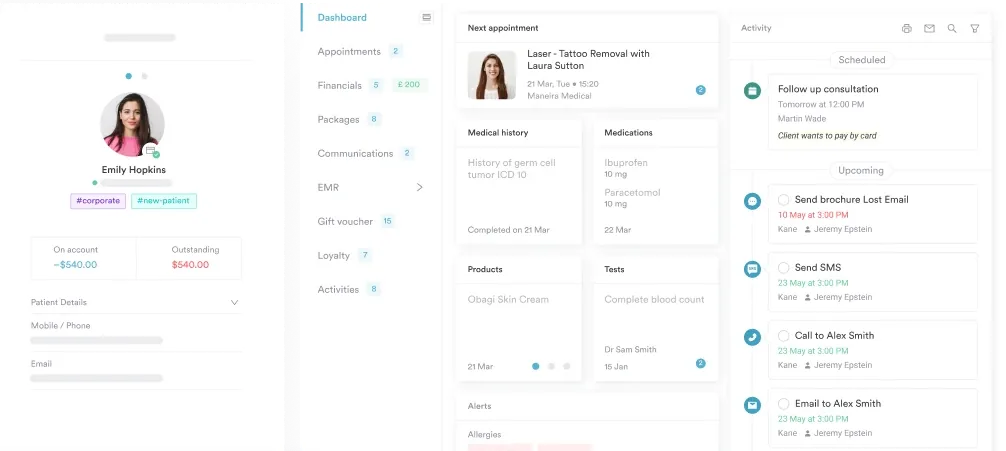
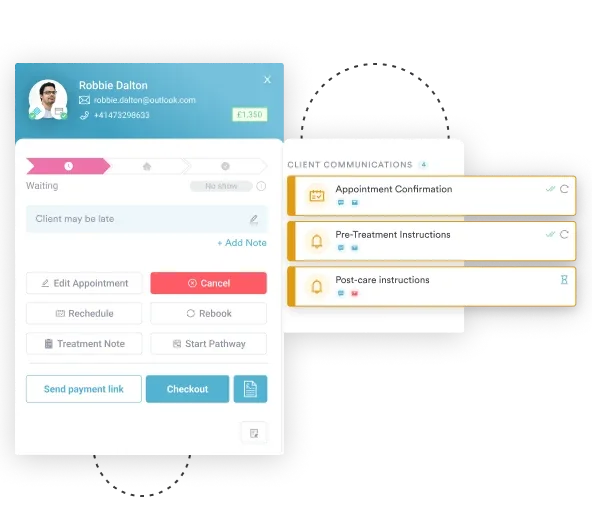
Automated workflows are equally relevant. Pabau’s automated clinical workflows can trigger reassessment reminders at configured intervals after a pain-related encounter, reducing the reliance on individual nurse memory. For practices operating across multiple sites, compliance management tools can verify that every practitioner uses the same validated tools. Everyone documents to the same standard.
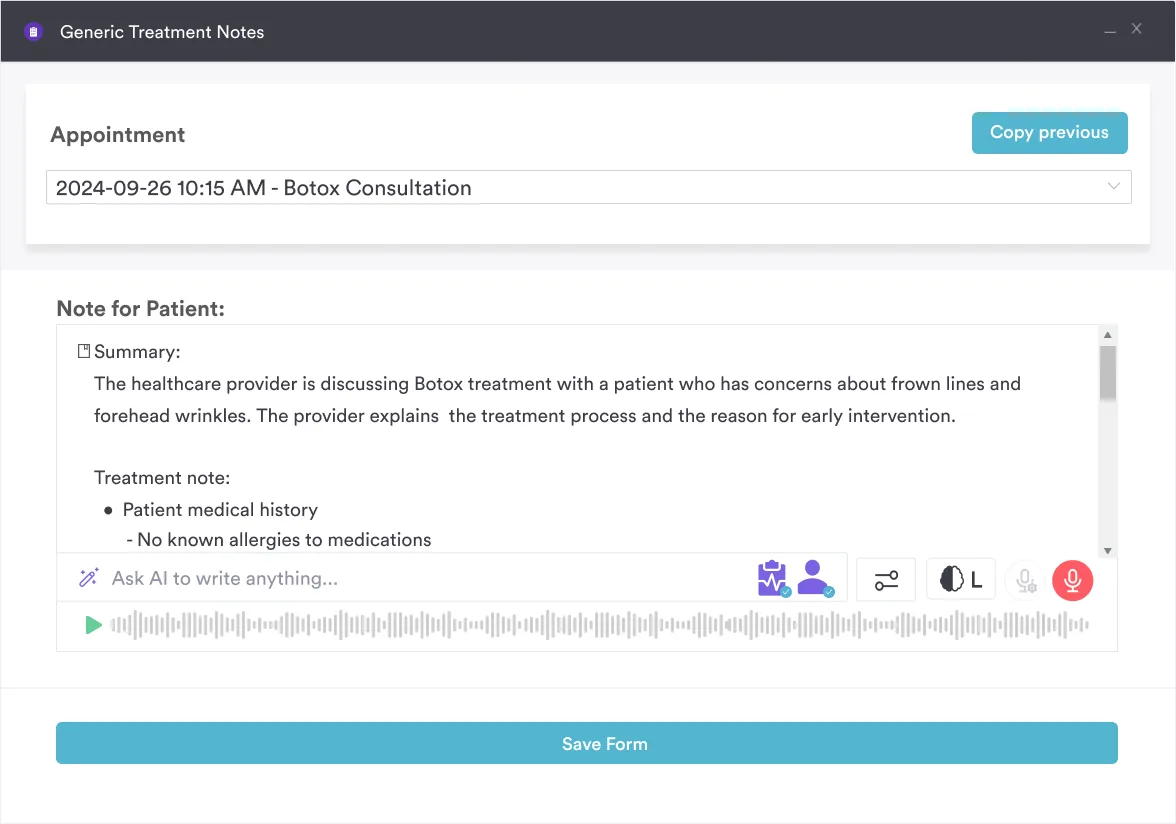
Pabau Scribe, our AI scribe, captures spoken clinical encounters and structures them into a SOAP note format. That cuts the documentation time associated with comprehensive pain history-taking. This is particularly useful in busy practice environments where time pressure is itself a barrier to thorough assessment. Practices managing sports medicine software are among those seeing the most benefit from AI-assisted note generation during complex pain consultations.

Pabau’s digital forms and client record system capture pain scores, tool selection, and reassessment intervals in one place. Every entry stays in the audit trail, with no separate paper record to track down.

A validated pain score only holds value when the same tool gets used consistently and the record survives handover. Leaving tool choice and reassessment timing to individual judgment shows up later as incomplete audits and inconsistent shift handovers.
Standardizing pain assessment starts with picking one validated tool per patient population. Write the reassessment interval into the care plan, not into a nurse’s memory. Structured digital forms and a client record system make that standard easy to enforce across every shift and every site.
Pabau’s digital forms and client record system give practices pain scores, reassessment reminders, and a complete audit trail without extra paperwork. Book a demo to see how Pabau supports consistent pain documentation across your practice.

Need a structured template for clinical assessments? Psychiatric evaluation template provides a step-by-step framework for comprehensive mental health and pain history documentation.
Concerned about documentation compliance across your team? Mandatory compliance for physiotherapy clinics outlines audit requirements and documentation standards relevant to musculoskeletal pain management.
Looking to reduce clinician burnout from documentation load? How AI scribes impact patient care covers the clinical and operational evidence for automated note-taking in practice.
Nursing pain assessment is the systematic collection of both subjective (patient-reported) and objective (behaviorally observed) pain data to guide clinical decision-making. It includes selecting a validated scale appropriate for the patient’s age and cognitive ability, and applying a structured framework such as SOCRATES or PQRSTU. Findings get documented in the clinical record alongside any interventions and their outcomes.
The five core components are location, intensity, quality, timing, and impact on function. Location covers where the pain is and whether it radiates. Intensity is scored with a validated tool such as the NRS or FLACC. Quality describes what the pain feels like, such as sharp, dull, or burning. Timing covers onset, duration, and pattern, and impact on function covers how pain affects daily activities, sleep, and work. These components map directly onto the SOCRATES and PQRSTU frameworks.
The FLACC scale is the most widely used tool for non-verbal patients and children under three years old. The CPOT is the validated standard for ICU patients on mechanical ventilation, and the PAINAD is recommended for patients with advanced dementia. Tool selection depends on the patient’s setting, age, and specific communication barrier.
Pain should be reassessed at regular intervals throughout a clinical encounter and after any intervention. In acute settings, reassessment typically occurs 30-60 minutes after oral analgesia and 15-30 minutes after intravenous administration. In outpatient practices, the reassessment interval should be specified in the care plan and triggered by a structured clinical prompt, not left to individual discretion.
SOCRATES is a structured mnemonic for pain history-taking: Site, Onset, Character, Radiation, Associated symptoms, Time course, Exacerbating and relieving factors, and Severity. It ensures nurses collect all clinically relevant pain dimensions during a single assessment encounter, reducing the risk of incomplete documentation or undertreated pain.
Barriers fall into three categories. Patient-side factors include stoicism, fear of appearing drug-seeking, and cognitive impairment. Nurse-side factors include time pressure, inadequate training in validated tools, and reliance on objective indicators alone. System-level factors include a lack of structured documentation fields, inconsistent reassessment prompts, and poor clinical handover standards.