CRM for chiropractors: how to manage patients, bookings and marketing
A CRM for chiropractors is a patient relationship management system built around...

Last Updated: Oct 13, 2026

Hand exercises for rheumatoid arthritis improve range of motion, ease morning stiffness, and help maintain grip strength without any equipment.
Aim for five to ten repetitions, two to three times daily, and stop if a movement causes sharp pain.
During a flare, gentle range of motion movements are safer than strengthening work, so rest inflamed joints first.
Practice management software like Pabau helps therapy practices track exercise adherence, store session notes, and automate follow-up reminders.
Rheumatoid arthritis (RA) affects around 1.3 million adults in the United States, and the hands are among the most commonly affected joints. Morning stiffness, reduced grip, and aching knuckles are daily realities for many RA patients.
One of the most accessible tools for managing those symptoms costs nothing and needs no equipment. Regular hand exercises can improve joint mobility, reduce stiffness, and help patients keep the hand function they need for everyday tasks.
This guide covers the movements that matter most and how often to do them. It also covers what to avoid during a flare, and when to bring in professional support. It is written for patients and for the clinicians who treat them.
Physical activity is a cornerstone of RA management. The American College of Rheumatology treats exercise as a core part of maintaining function and quality of life in inflammatory arthritis.
For the hands, regular movement helps in three ways:
RA hits some hand joints harder than others. The metacarpophalangeal (MCP) joints at the base of the fingers take much of it. So do the proximal interphalangeal (PIP) joints at the middle knuckle. The wrist is commonly involved too.
Persistent inflammation in these areas can reduce mobility and, over time, cause deformity. Exercises do not reverse the underlying disease process. They can slow functional decline and keep patients independent for longer.
Hand exercises manage RA symptoms rather than curing the condition. Gains in grip strength and range of motion are measurable, but they work alongside medication and medical care rather than instead of it.
Practices supporting RA patients benefit from tracking patient compliance with home exercise programs. That record shows who is progressing and who needs a revised plan.
Consistency matters more than intensity. The Arthritis Foundation recommends hand exercises two to three times daily, with five to ten repetitions of each movement. That frequency drives meaningful improvement without overloading inflamed joints.
Timing matters too. Many RA patients find that exercising after a warm shower takes less effort, because heat loosens stiff connective tissue. Morning stiffness usually peaks in the first hour after waking, and gentle movement at that point can shorten how long it lasts.
Occupational therapists (OTs) often ask patients to keep a simple log of the movements they completed each day. It makes patterns easier to spot, such as which exercises trigger discomfort, and gives clinicians something concrete to work from at the next appointment.
Good patient engagement tools for therapy practices can automate follow-up reminders and make that tracking easier on both sides.
Range of motion (ROM) exercises move each joint through its full arc of movement. They do not build muscle strength, but they stop stiffness from hardening into permanent restriction. These are appropriate during a mild flare, when strengthening exercises are not.
Work through these finger exercises in order, resting briefly between each one. Place your hand flat on a table, or hold it comfortably in the air.
The thumb accounts for roughly half of hand function. RA often affects the carpometacarpal (CMC) joint at the base of the thumb, which makes targeted thumb work especially valuable.
The wrist is frequently inflamed in RA, and losing wrist mobility affects every hand function above it. These movements target wrist flexion, extension, and rotation. Perform them seated, with your forearm resting on a table.
A therapy practice tracking these movements across several sessions can see when wrist ROM is slipping and adjust the patient’s program. Occupational therapy software stores session notes, tracks progress across visits, and flags the patients who need reassessment.
Strengthening exercises differ from range of motion work. They put controlled load on the muscles and tendons around a joint to build the strength that protects it. Because they demand more, they are generally avoided during an active flare.
Equipment is minimal. Foam balls and putty cost under ten dollars and are widely available. Patients who find even light resistance uncomfortable can switch to water-based exercises in a bowl of warm water, which give resistance with less joint compression.
Therapists usually measure baseline strength before prescribing resistance, and the pinch grip test is one of the quickest ways to do it. Physical therapy software records those numbers next to the exercise plan, so progress is visible at the following visit.
The guidance below applies to every RA hand exercise, at any level of severity.
Practices should make sure their intake documentation covers current disease activity, recent flares, and any joint deformity before prescribing a program. Well-designed medical intake forms capture that baseline, and a comprehensive assessment template keeps it consistent between therapists.
Before any hand exercise session, patients should rate their pain from zero to ten and note any visible swelling. If pain is above six, or joints are hot and swollen, skip strengthening entirely. Choose rest or very gentle range of motion instead. Share the log with your occupational therapist at the next visit, so they can adjust the program from patterns rather than memory.
Home exercises are a useful foundation, but they do not replace professional assessment. Consider booking an OT or rheumatology review if any of the following apply:
An occupational therapist can build a personalized program around the joints affected, the patient’s functional goals, and their current disease activity. A rheumatologist can judge whether a medication review is needed alongside it. The two disciplines work best together.
An assessment may also include hand nerve tests, since RA-related swelling at the wrist can compress the nerves that supply the hand. Practices using telehealth software can offer reviews to patients who find travel hard during a flare.
Home exercises are only part of the picture. OTs and rheumatology teams assess hand function, prescribe the program, and monitor progress over time. For a practice carrying a caseload of RA patients, the hard part is tracking adherence and outcomes across dozens of people at once.
Practice management software like Pabau gives those teams one place to do it. Patient care management workflows let them document baseline grip strength and record ROM measurements at every visit. Reminders for review appointments go out on their own, so nobody has to chase them.
That structure earns its place because RA fluctuates. A patient who was progressing well in month two may need the program modified after a flare in month four. Pabau’s client record tools hold exercise compliance, pain scores, and functional assessments in one structured note.
Pabau’s automated workflows send the appointment reminders that keep no-show rates down in chronic condition management. Digital intake forms capture the relevant history first, so a therapist opens the session with a full picture instead of ten minutes of admin.
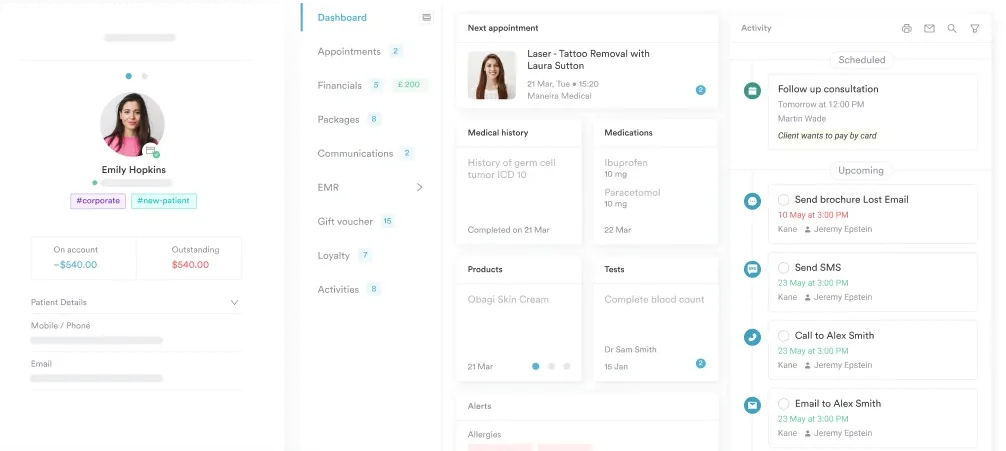

Pabau helps occupational therapy and rheumatology practices manage appointments, track patient progress, and automate follow-up messages. Clinicians spend more time on care and less on paperwork.

RA-related hand stiffness and grip loss are not inevitable. Consistent hand exercises, done gently and adapted during flares, give patients something they can use between appointments. Low intensity, done often, with close attention to pain signals is what the evidence supports.
The trade-off worth remembering is that exercise supports medical treatment rather than replacing it. Keep the routine small enough that patients will keep doing it every day.
For the OT and rheumatology practices behind those patients, the work is operational. Adherence, follow-up appointments, and functional progress all have to be tracked across a caseload that keeps shifting.
Pabau’s occupational therapy software handles that admin layer, so therapists spend more of the day on care. Book a demo to see how it fits the way your practice already works.

Checking for a knee extension deficit? Bounce home test is a one-page clinical form covering patient positioning, technique, and a positive or negative result classification with end-feel description.
Evaluating heel pain in another patient? Calcaneal squeeze test template is a printable template for documenting heel pain evaluation through medial-lateral calcaneal compression testing, with differential diagnosis guidance.
Planning the business side of your practice? Chiropractic business plan template is a free, fillable template covering the executive summary, market analysis, marketing plan, operations, and core financial statements.
Running a therapy practice with too much admin? Physiotherapy clinic management software covers the workflow tools that matter most for musculoskeletal practices.
Measuring femoral anteversion next? Craig’s test assessment form is a ready-to-use form covering patient positioning, examiner technique, and angle measurement, with normal-value reference ranges.
Hand exercises for rheumatoid arthritis are movements that maintain joint range of motion, reduce stiffness, and build grip strength. They target the fingers, thumbs, and wrists affected by RA. Range of motion work includes finger bends, fist formation, and wrist circles. Strengthening work includes ball squeezes, putty exercises, and pinch holds. They do not cure RA, but they help manage symptoms alongside medical treatment.
During an active flare, avoid strengthening exercises. Very gentle range of motion movements may be appropriate if joints are only mildly inflamed. Rest is the priority when joints are hot, swollen, or acutely painful. Check with your rheumatologist or occupational therapist before exercising through a flare, because disease activity varies from person to person.
Two to three times daily, with five to ten repetitions of each exercise, is the general recommendation from the Arthritis Foundation and Mayo Clinic. Start at five repetitions if joints are sensitive, then build gradually. Spacing sessions through the day works better than doing every repetition in one sitting.
Yes. Targeted strengthening exercises such as ball squeezes, putty work, and pinch holds can improve functional grip strength in RA patients. Gains are measurable, but they take consistent practice over several weeks. Better grip helps with everyday tasks like opening containers, writing, and carrying objects. How much you gain depends on disease severity and treatment response.
See an occupational therapist if your hand function is declining despite regular home exercises. Other reasons include visibly deformed joints, or pain that consistently exceeds four out of ten during exercise. A newly diagnosed patient who has had no formal exercise guidance should also be referred. An OT can assess the specific joints involved and provide a personalized program based on disease activity and functional goals.
Exercise may help reduce the forces that contribute to deformity by maintaining muscle balance around affected joints, but it cannot guarantee prevention. Joint deformity in RA is primarily driven by the inflammatory disease process. It is best addressed through disease-modifying medications prescribed by a rheumatologist. Exercise is a supportive strategy alongside that treatment.