

CPT Code 20220: Bone biopsy, trocar or needle, superficial

CPT code 20220: official descriptor and clinical overview CPT code 20220 is defined by the American Medical Association as: Biopsy, bone, trocar, or needle; superficial (e.g., ilium, sternum, spinous process, ribs). The code sits in the Musculoskeletal System section of CPT, in the Excision range of the General subsection (20150-20251). Three elements decide whether 20220 […]
Bike riding exercise plan: Free 4-week template (PDF)
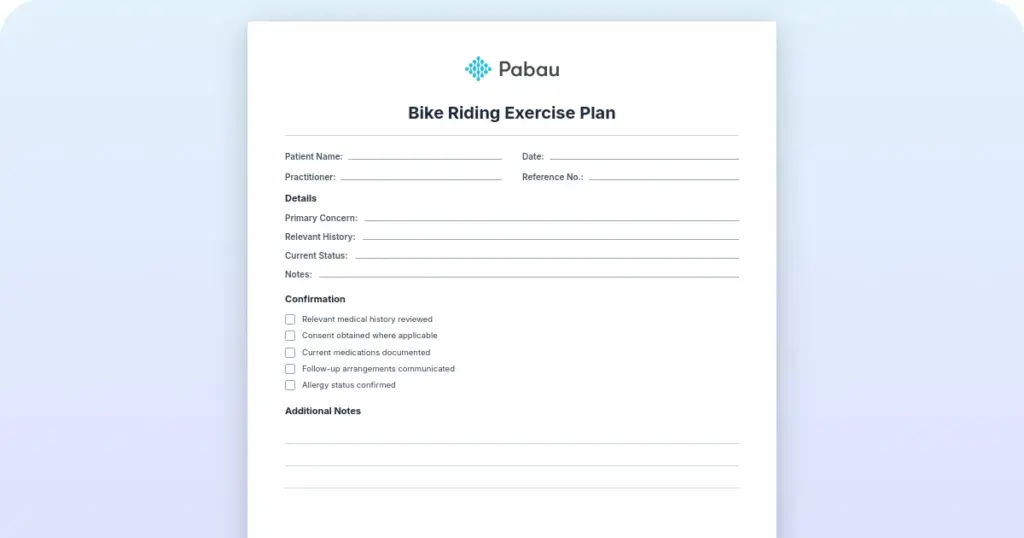
A bike riding exercise plan is a week-by-week schedule that moves you from your current fitness toward a set goal. That goal might be heart health, weight loss or endurance. This one runs four weeks, with three rides a week on Monday, Wednesday and Saturday. Weeks 1 and 2 build an aerobic base with 20- […]
Inverted supinator test: How to perform and interpret it

The inverted supinator test is a quick reflex check for cervical myelopathy, which is compression of the spinal cord in the neck. You tap the brachioradialis tendon near the wrist and watch the forearm and fingers together. A positive result pairs a weak or absent forearm jerk with an unexpected flick of the fingers. That […]
Lymphatic massage chart: Node map, flow and MLD sequence
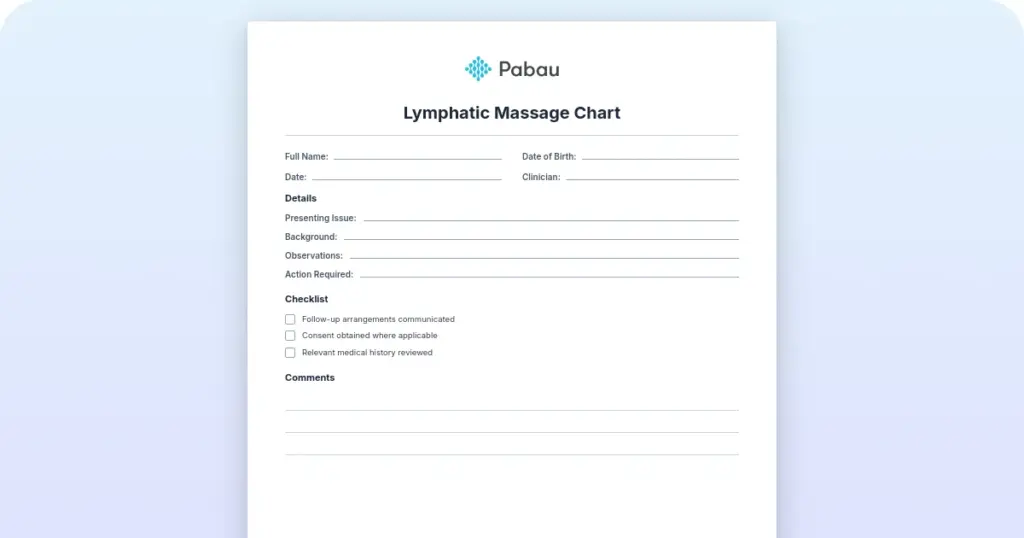
A lymphatic massage chart is a visual body map of lymph node locations, drainage pathways, and hand-placement sequences for manual lymphatic drainage (MLD) massage. Therapists and wellness practitioners use it as a reference during treatment, and patients can use it as a take-home guide for self-massage between appointments. This guide maps the four regions of […]
Rib spring test: Technique, interpretation, and clinical use

The rib spring test is a manual assessment that checks mobility at the costovertebral and costotransverse joints, where each rib meets the thoracic spine. The clinician applies a gentle posterior-to-anterior pressure over the rib angle and feels whether the rib springs back or resists. A rib that resists, or a push that reproduces the patient’s […]
Barometric pressure pain scale
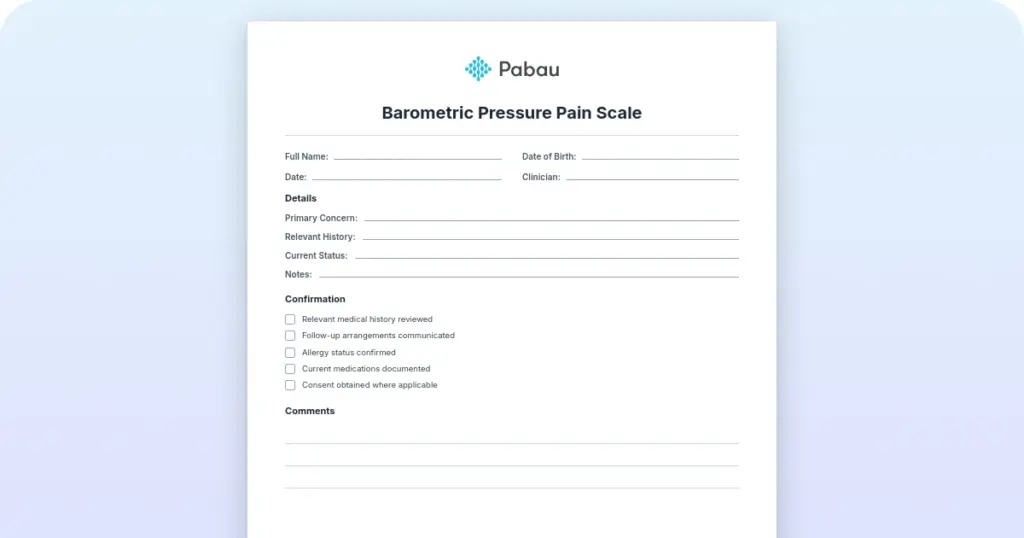
A barometric pressure pain scale is a tracking tool that pairs a patient’s daily 0-10 pain score with that day’s atmospheric pressure reading. Over a few weeks, it shows whether pain follows pressure changes. Clinicians can then predict flare-ups and adjust care a day or two ahead. The template adds body location, medication timing and […]
PT SOAP note
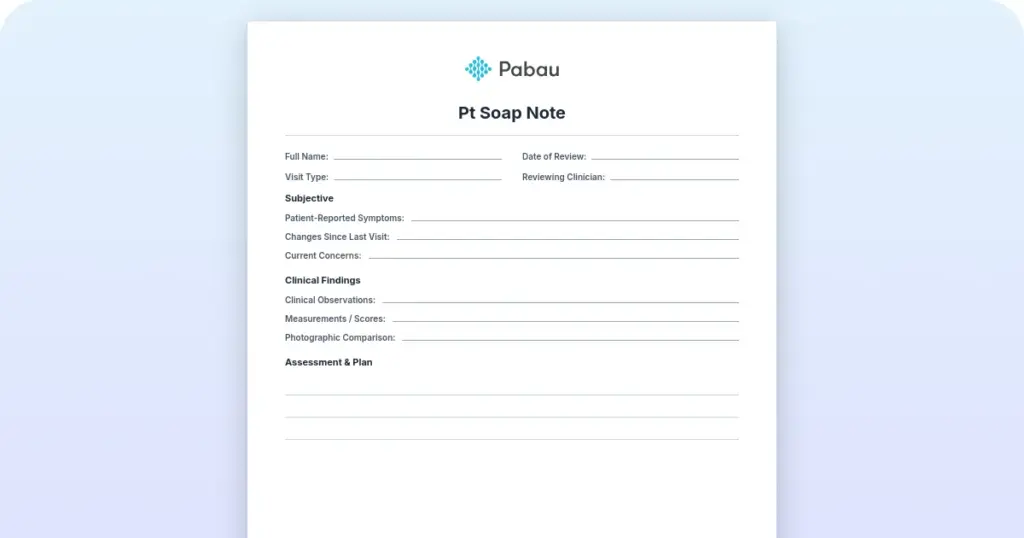
A PT SOAP note is the four-part format physical therapists use to document a visit: Subjective, Objective, Assessment and Plan. Each section answers one question. What does the patient report, what did you measure, what do the findings mean, and what happens next? Written well, the note shows a payer that therapy is skilled, measurable […]
Outcome measures template: Choose, score and track progress
Outcome measures are standardized tools that turn a patient’s pain, function or quality of life into a score you can compare from visit to visit. Without one, “she’s moving better” is an opinion. With one, it’s evidence you can show a payer, a referring physician or the patient. The most useful habit is also the […]
6 Week exercise plan

A 6 week exercise plan is a progressive training program that runs for 42 days in three two-week phases, called foundation, build, and peak. Each phase raises the load a step, so beginners move from bodyweight form work to heavier lifts and a final test day. You train three or four days a week in […]
VA knee rating chart
The VA knee rating chart is the set of rating tables in 38 CFR 4.71a that turns knee measurements into a disability percentage. Limited flexion (DC 5260) rates from 0% to 30%, and limited extension (DC 5261) rates from 0% to 50%. Instability, ankylosis, meniscus damage and knee replacement each have their own code. Ankylosis […]