

Bear hug test: Procedure, interpretation and free template
The bear hug test is a quick shoulder special test that screens for subscapularis tears, one of the easiest rotator cuff injuries to miss. A patient who cannot hold the hand pressed on the opposite shoulder against the examiner’s resistance may have a subscapularis problem. In the study that introduced it, the bear hug test […]
Free exercise log template: PDF and printable (2026)
An exercise log template is a ready-made sheet for recording every workout in the same format, so you can compare weeks without relying on memory. Our free version is a five-week PDF. Each weekly block records the date and time, type of exercise, distance, duration or intensity, and notes. It works for people tracking their […]
Sulcus Test: Shoulder Instability Assessment
The sulcus test is an orthopedic special test that checks for inferior glenohumeral instability. The examiner pulls the arm downward and measures the gap that opens below the acromion. A gap wider than on the other shoulder, graded I to III by size, points to inferior laxity. This article covers how to perform the test, […]
Slocum test: How to perform, interpret and record it
The Slocum test is a knee drawer test performed with the tibia rotated. It checks for rotatory instability, most often after an ACL injury. Slocum and colleagues described it in the 1970s, and it uses two positions. With the knee flexed to about 90 degrees, you pull the tibia forward in 30° internal rotation, then […]
Running readiness scale
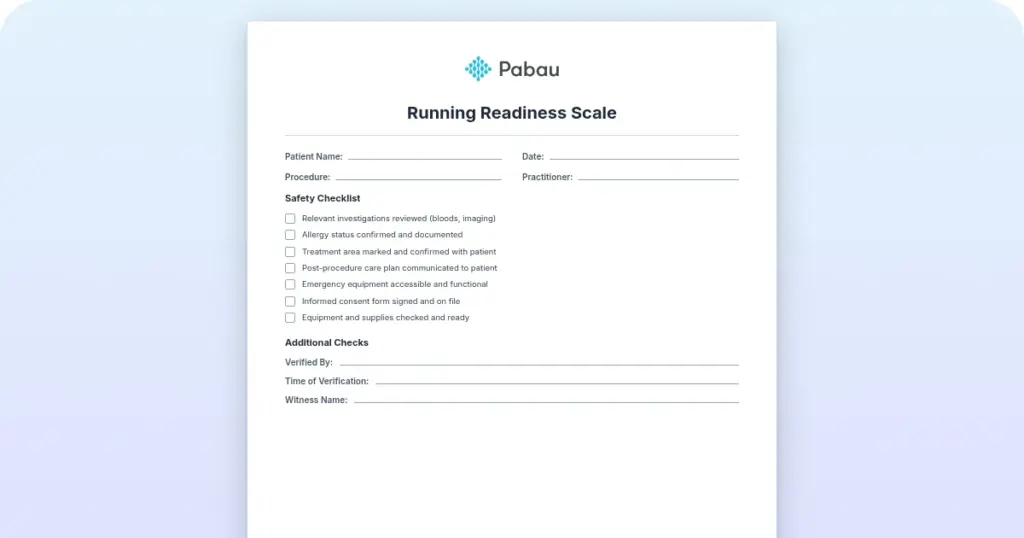
The running readiness scale (RRS) is a five-task movement test that shows whether a patient can hold good form under running-like load. Each task lasts one minute and earns one point if form holds, for a total of 0 to 5. A higher score means better control, and the cutoff matters. The cutoff comes from […]
Scapular assistance test: Procedure, interpretation and free template
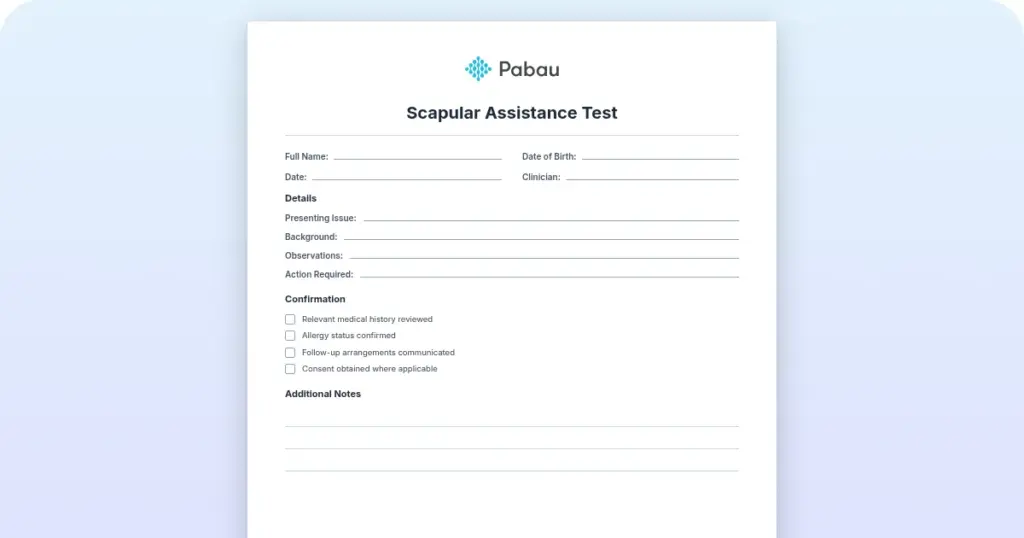
The scapular assistance test is a manual examination in which the clinician supports the shoulder blade while the patient raises the arm. A positive result means that help eases pain or improves range. That points to scapular positioning as one contributor to the symptoms. Physical therapists and other musculoskeletal clinicians use it inside a wider […]
Gout diagnosis criteria: The 2015 ACR/EULAR scoring checklist
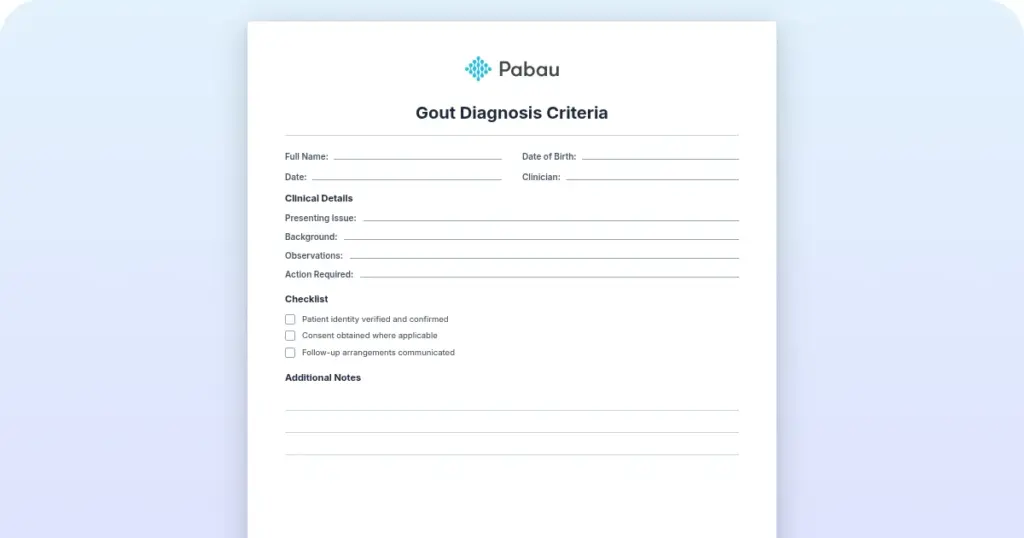
Gout diagnosis criteria are the structured rules clinicians use to decide whether a patient’s symptoms meet the threshold for gout. The 2015 ACR/EULAR set is the current standard. They are classification criteria rather than diagnostic criteria, so they support a clinical diagnosis instead of replacing it. The framework applies once a peripheral joint or bursa […]
Internal rotation lag sign: Technique, interpretation, and free template
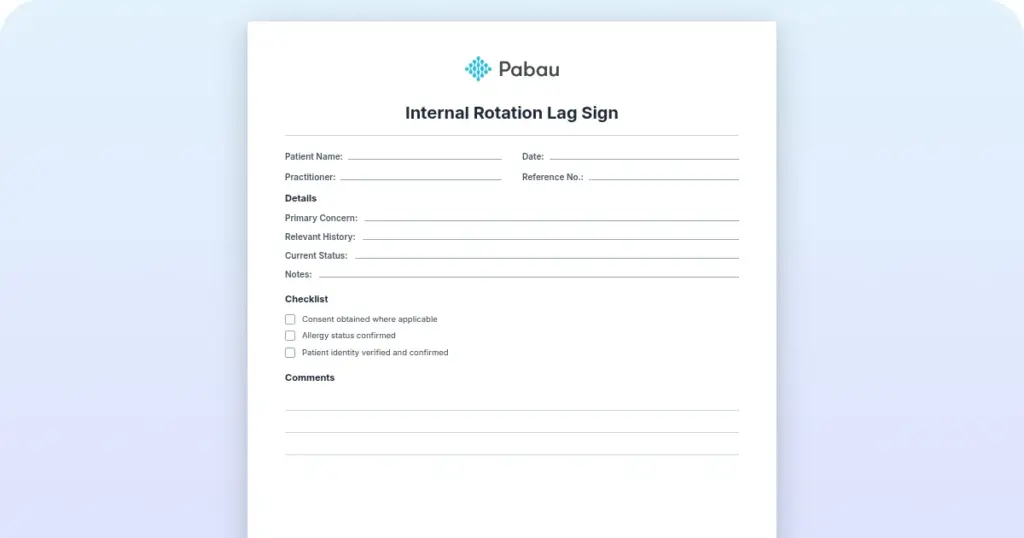
The internal rotation lag sign is a shoulder test for the subscapularis. It checks whether the patient can hold the arm off the lower back once the examiner releases the wrist. A lag is the hand drifting back toward the lumbar region, and it points to a possible subscapularis tear rather than a confirmed one. […]
Physical therapy documentation cheat sheet
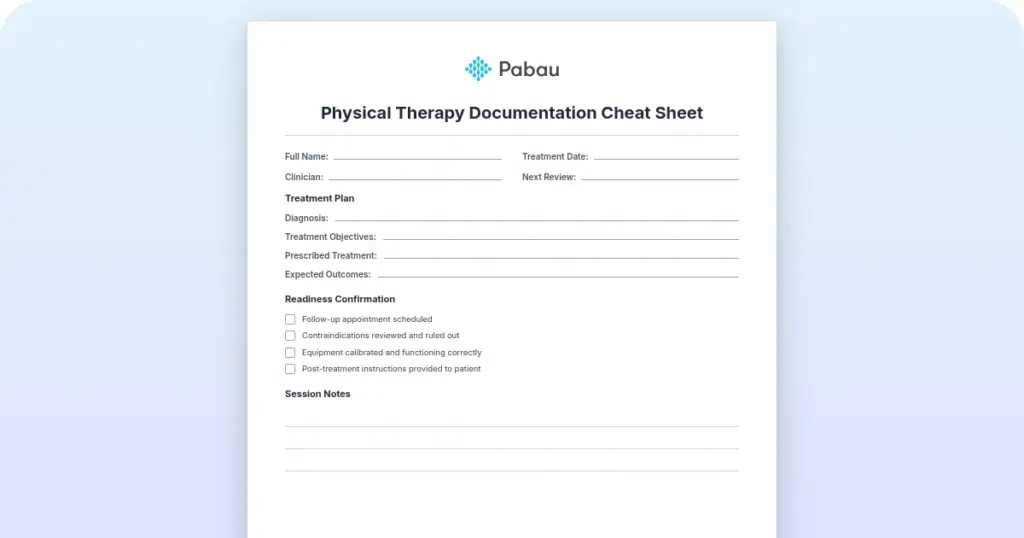
A physical therapy documentation cheat sheet is a one-page reference listing the elements every PT and PTA note needs, from evaluation through discharge. This free download condenses SOAP note structure, progress note content, evaluation components, Medicare documentation points, and common abbreviations into a single printable resource. A missing element in a PT note is rarely […]
Orthopedic examination template: Free 6-stage form (PDF)
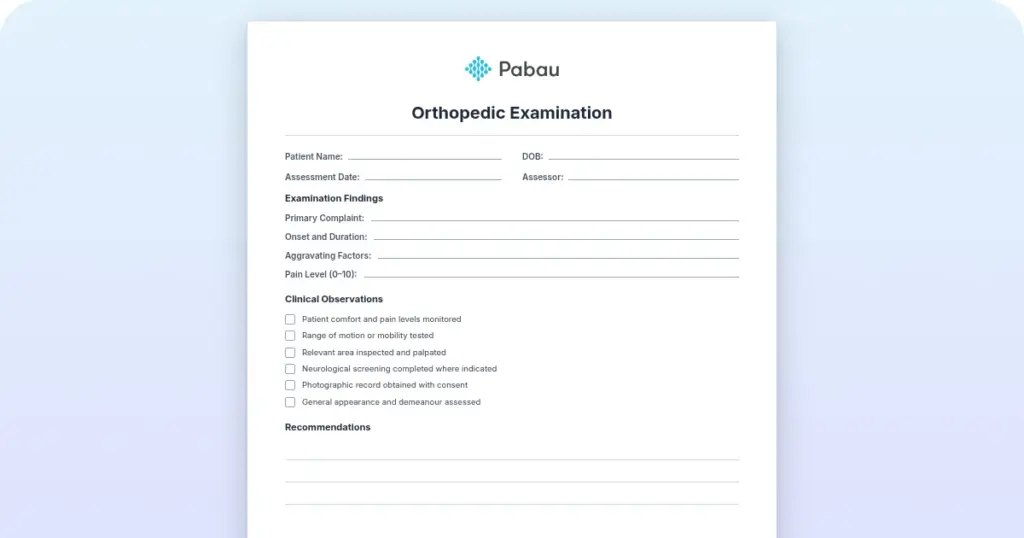
An orthopedic examination is a structured physical assessment of the bones, joints, muscles, ligaments, and tendons that finds the source of pain or lost movement. It runs in six stages: history, observation and gait, range of motion, neurological and vascular checks, special tests, and a diagnosis with a plan. This free template gives each stage […]