

Gustilo-Anderson classification: Grading criteria, treatment, and limitations

The Gustilo-Anderson classification is the grading system trauma teams use to sort open fractures into five levels: Type I, II, IIIA, IIIB, and IIIC. It scores wound size, soft tissue damage, contamination, and whether an artery needs repair. The grade decides what happens next. It sets the antibiotic regimen, the urgency of debridement, whether the […]
Prone knee bend test: How to perform, grade and document it
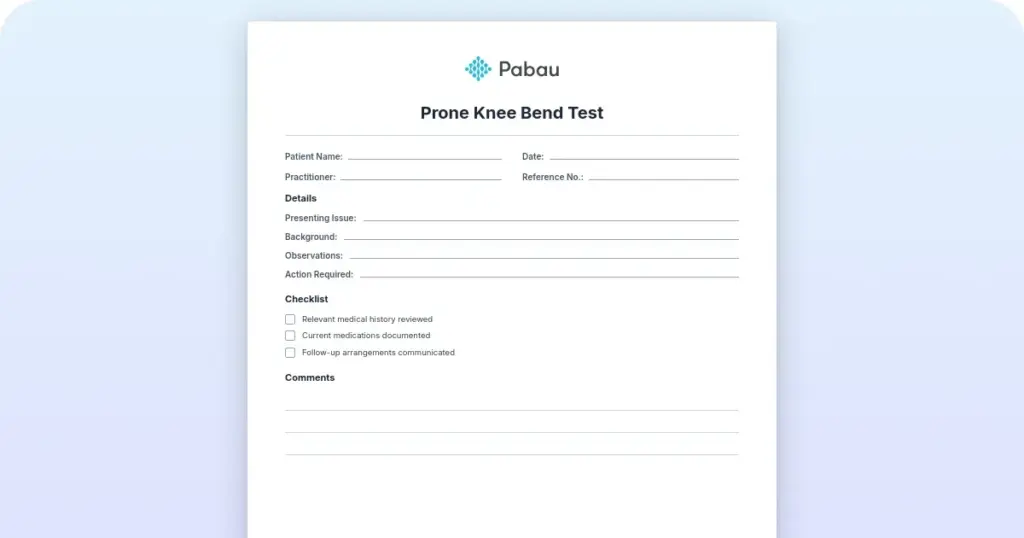
Download your free prone knee bend test form A one-page assessment form with fields for patient positioning, flexion angle by side, symptom location, and pain score. It closes with a SOAP note section you can copy straight into the patient record. Download template The prone knee bend test screens the upper lumbar nerve roots, L2 […]
Mind over mood worksheet
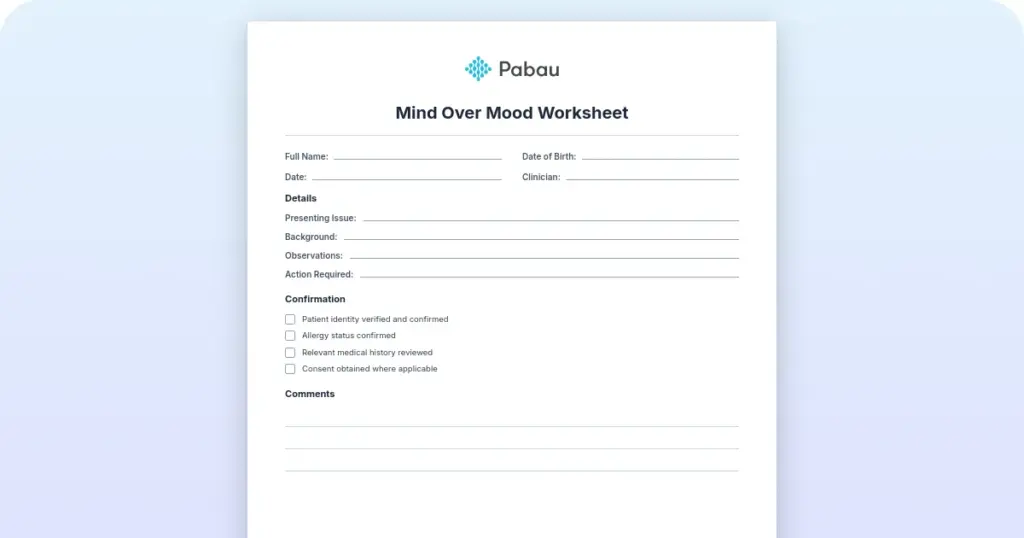
A mind over mood worksheet is a cognitive behavioral therapy form that takes a client from a triggering situation to a balanced alternative thought. Christine Padesky and Dennis Greenberger wrote the set, and Guilford Press publishes it. The set has four forms, each with a different job. The 7-column thought record does the cognitive work, […]
Godin leisure-time exercise questionnaire
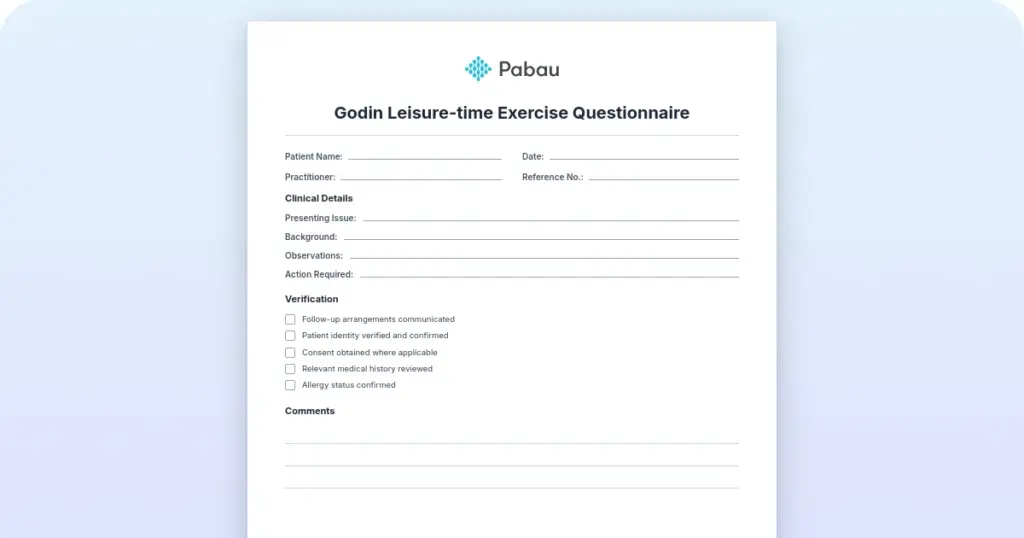
The Godin leisure-time exercise questionnaire is a four-item self-report form that measures how often a patient exercises in their free time. You score it with the Leisure Score Index: (9 × strenuous) + (5 × moderate) + (3 × mild), using weekly session counts. A total of 24 or above classifies the patient as Active, […]
ICD-10 code S76.202S: Adductor muscle left thigh sequela
S76.202S at a glance, before you code it S76.202S is a specific, billable ICD-10-CM code, valid for the current fiscal year under the CMS ICD-10-CM code set. The table below holds the facts worth confirming before a claim goes out. Field Detail Code S76.202S Full description Unspecified injury of adductor muscle, fascia and tendon of […]
Free load and shift test template + what it is and how to perform one
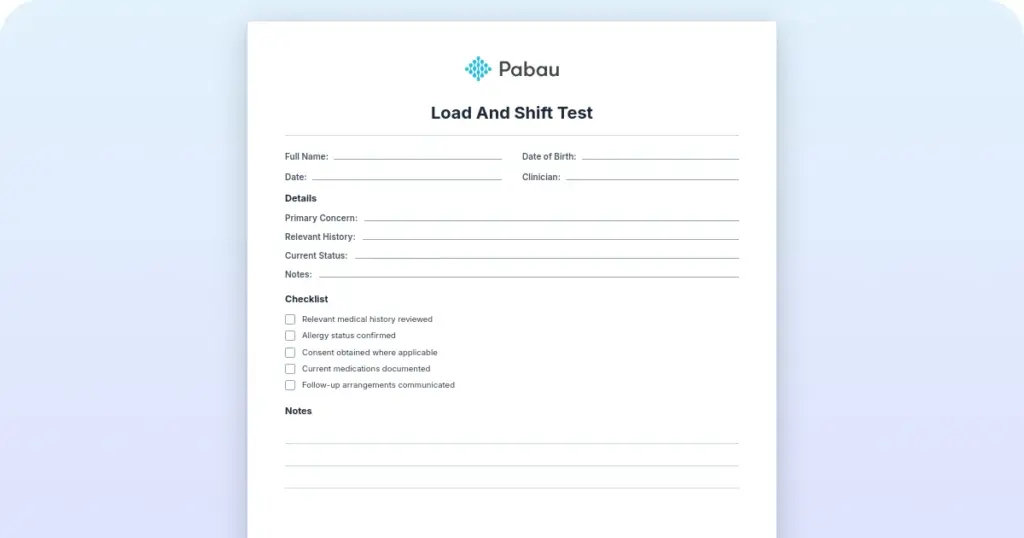
Download your free load and shift test template A ready-to-use assessment form with fields for patient positioning, anterior and posterior grading, bilateral comparison, symptom type, and clinical interpretation. Print it, or copy the fields straight into your own notes template. Download template The load and shift test measures how far the humeral head travels on […]
Crank test: How to perform, interpret and document findings
A missed labral tear costs the patient months. The crank test gives you a rapid, low-cost signal for glenohumeral labral pathology before you order imaging. Performed the same way every time, it narrows the differential. Performed loosely, it adds noise to the record. This guide covers the procedure, the interpretation criteria, and what the accuracy […]
Scapholunate ballottement test: step-by-step and accuracy
What the scapholunate ballottement test is The scapholunate ballottement test is a provocative wrist assessment that checks the integrity of the scapholunate interosseous ligament (SLIL). To perform it, you fix the lunate, translate the scaphoid forward and back, and then watch for pain, laxity, or crepitus at the joint. First, settle the accuracy question before […]
Postural stability exercises: the complete clinical guide
In fact, many adults spend more than seven hours a day sitting, according to NHS guidance on sitting time. That sustained load on the spine, hips, and shoulders gradually shifts muscles out of their best length-tension balance. The result is the aching neck, stiff thoracic spine, and persistent low back pain that fill physical therapy […]
Olfactory nerve test: how to perform and interpret CN I
The olfactory nerve is one of the most commonly skipped steps in a routine cranial nerve examination. Clinicians cite time pressure, and many assume the patient will volunteer a loss of smell without being asked. The test itself is short. Occlude one nostril and present a familiar, non-irritating odorant to the open side. Record whether […]