All about me worksheet for adults
An all about me worksheet for adults is a guided self-reflection form that maps ...

5
Last Updated: Oct 14, 2026

The wheel of life assessment asks clients to rate their satisfaction in 10 life domains on a 1 to 10 scale.
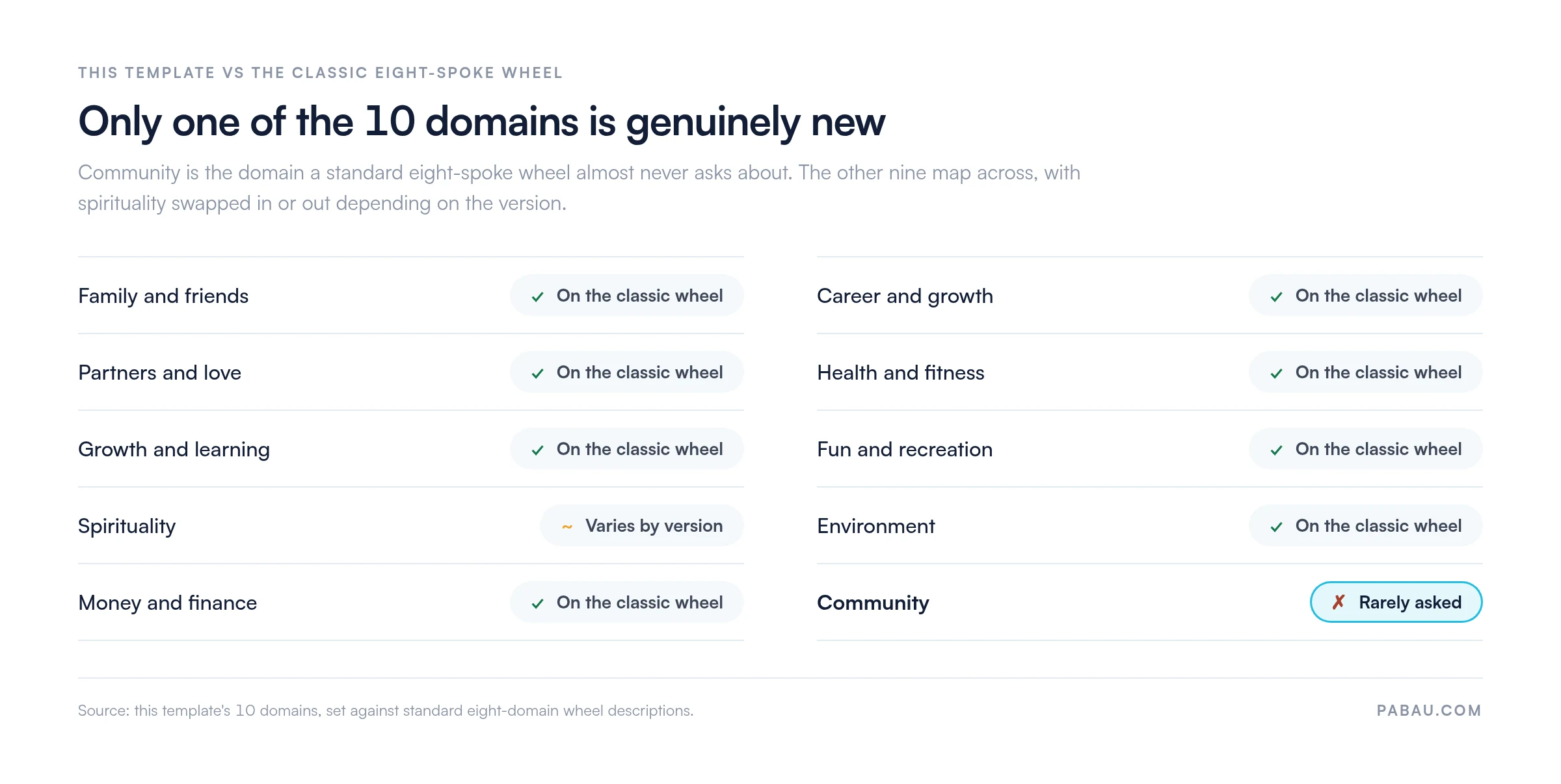
This template covers family and friends, partners and love, growth and learning, spirituality, and money and finance. The other five are career and growth, health and fitness, fun and recreation, environment, and community.
Community is the one domain a standard eight-spoke wheel rarely asks about, which is what makes the 10-domain version worth printing.
Run the sheet at intake to set priorities, then repeat it every three months to show the client what has moved.
Practice management software like Pabau lets coaches send the sheet before the first session and store every result beside the notes.
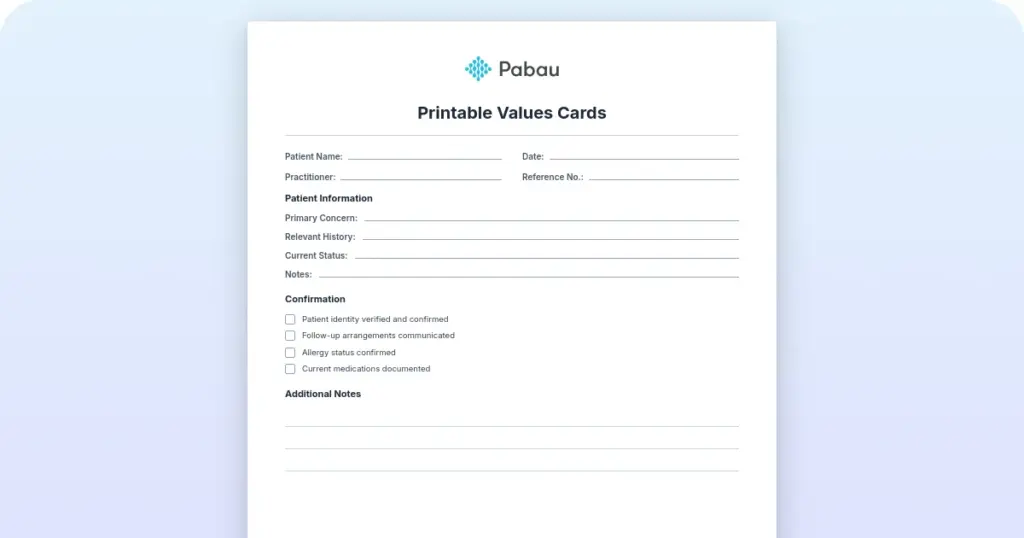
A one-page clinical form with fields for name and date, all 10 life domains, and a 1 to 10 rating row for each one. A notes area at the bottom leaves room for the actions you agree in session.
Download templateA wheel of life assessment asks clients to rate 10 areas of their life from 1 to 10. The unevenness is the point. Someone can be thriving at work while their friendships quietly thin out, and one page makes that visible.
Clients rarely name their lowest-scoring area out loud, because they arrive talking about the loudest problem instead. The sheet gets past that in about 15 minutes.
Below you will find what the free template covers and how to run it in session. You will also see how its 10 domains differ from the eight-spoke wheel most coaches trained on.
It measures satisfaction, not achievement. Clients score how content they feel in each area of life right now, from 1 to 10. A high earner with an empty calendar can still rate money and finance a 4, and that is the point of asking.
Paul J. Meyer popularized the exercise in the 1960s, and it has been standard intake material in coaching ever since. Clients rate every domain, then plot the scores on a circle to see the shape their life makes.
The metaphor does the work. A wheel carrying a 9 beside a 2 is not round, and a wheel that is not round does not roll. That plain image is why the tool has outlasted most coaching fads. It still turns up in therapy intakes and wellness consultations for the same reason.
The International Coaching Federation lists evoking awareness among the core competencies it expects from credentialed coaches. A wheel session is one of the plainest ways to do it, and the form itself is deliberately plain too.
The template is a single page, and it carries no printed circle. Plan for that before the session. Draw the wheel on a whiteboard or a second sheet once the ratings are in.
The page is headed Clinical Form Template, with fields for the client’s name and the date. One instruction line sits under the header. It asks the client to rate each aspect of their life from 1 to 10. A 1 means least satisfied, a 10 means most satisfied.
Under that come the 10 domains, each with its own row of numbers to circle. A notes area closes the page, and that is where the actions you agree in session belong.
Each domain covers a slice of life that clients tend to keep in a separate mental box. Rating them side by side is what stops one box hiding another.
Nine of those 10 will look familiar to anyone who has run a wheel before. One will not.
Community is the genuine addition here. Standard eight-spoke wheels cover career, money, health, relationships, growth, fun, and physical environment. Belonging rarely gets a spoke of its own.
That absence matters more than it sounds. A client can score family and friends a 7 and community a 2. The distance between those two numbers explains a loneliness that neither work nor a partner accounts for. Coaches working with people who have recently moved or changed careers see it constantly.
Environment is on the classic wheel too, usually as a single home-and-work line. It still repays attention, because a client rating environment a 3 is normally describing something specific.
That might be a home that never feels clean, a desk in a hallway, or an hour each way on a bus. Those problems are fixable in weeks rather than quarters, which makes environment a fair first target for a client who needs an early win.
Set the two lists side by side and the difference is narrower than the marketing around 10-domain wheels suggests.
The sheet takes 10 to 15 minutes and needs no special training to administer. Work through it in five steps.
Store the completed sheet in your client record system beside the session notes. The next conversation then starts from the numbers rather than from memory.
Four mistakes account for most disappointing sessions. None of them are about the form itself.
Avoid those four and the exercise starts paying off at the point most coaches use it: the first session.
At intake, the wheel surfaces priorities before a client settles into a story about what is wrong. Someone who booked to talk about work stress often turns out to be scoring 2s in health and community. That reframes the engagement inside 20 minutes.
It also hands you a defensible agenda. Rather than picking a topic yourself, you point at the two lowest numbers the client wrote down and ask which one to start with. Clients rarely argue with their own handwriting.
Be straight about what the tool is, though. The wheel is a conversation starter rather than a validated instrument, and clients who ask deserve that answer. If you need a scored measure alongside it, this rundown of life satisfaction scales compares the Satisfaction With Life Scale and similar questionnaires.
Yes, you can rename any of the 10 domains. Keep the count and the 1 to 10 scale, so results stay comparable between sessions.
A therapist working with burnout might rename fun and recreation as rest and recovery, because clients in that state hear fun as one more demand. An athlete might swap career and growth for training and competition. A practice supporting new parents could split family and friends into partner support and childcare load.
A team version works the same way. Rate collaboration, communication, psychological safety, workload, goal clarity, recognition, growth opportunity, and rest instead. Whatever labels you land on, freeze them, because comparison is where the sheet earns its keep.
Three months is the right interval. It is long enough for a domain to move, and short enough that the client still remembers what they agreed to.
Keep both sheets side by side rather than only the newest one. Note which domains improved, which stalled, and what the client was doing in each case. If health climbed from 4 to 7 while community stayed at 2, the next quarter has written itself.
Then watch for the wheel that gets rounder because expectations dropped. A client who rates career a 6 after giving up on a promotion has not improved. The notes area is where you catch it, which is the main reason it is worth filling in.
Therapists reach for the sheet when a presenting problem has no shape yet. A client describing general anxiety who scores 2s in money and finance, environment, and community has handed you three specific places to work.
It also carries a one-off session well. A client weighing a relocation or a career change can rate the 10 domains as they stand today. Then they rate the same domains as they expect them to be afterward. The two sets side by side usually flush out the worry they had not mentioned.
A therapy practice running the sheet usually has three or four other intake forms in play. Software built for therapists keeps every one of them in the same client file, rather than four separate folders.
Plenty of coaches print the sheet, fill it in by hand, and then lose track of it. The scores go into a folder, and the quarterly comparison never happens, because nobody wants to dig out a piece of paper from March.
Pabau closes that loop. You can attach the wheel of life assessment PDF to a digital intake form, so the client completes it before the first session. By the time they walk in, the numbers are already in front of you.
From there the result sits in the client’s record beside the session notes and the appointment history. You can schedule an automated reminder three months out, so the reassessment gets booked rather than remembered. That keeps your coaching client management workflow current without anyone chasing paper.
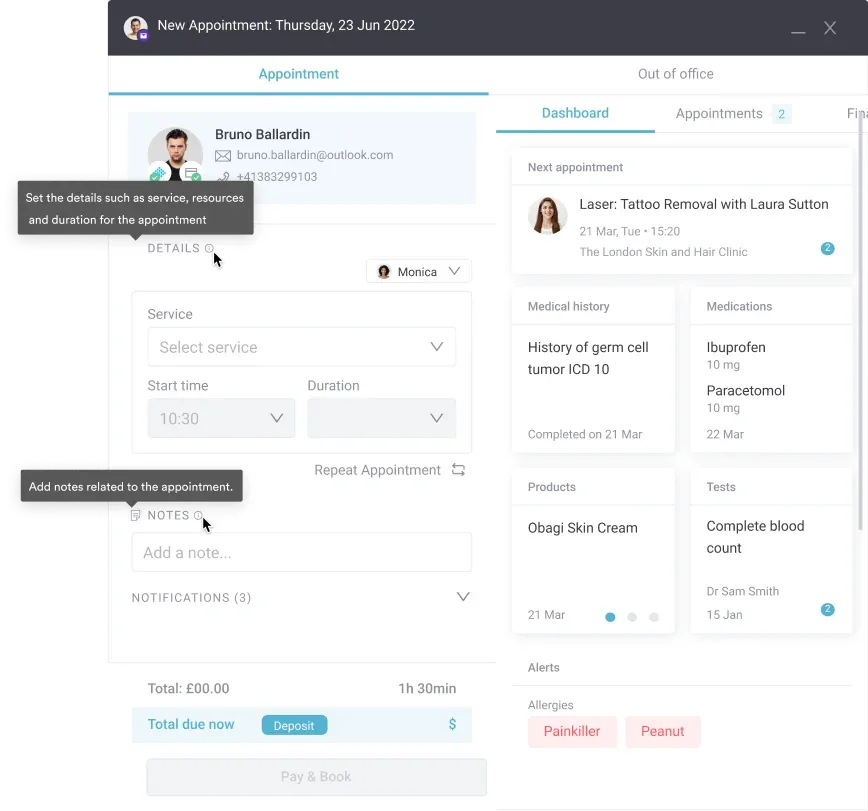
That turns a 15-minute exercise into a progress record you can put in front of a client a year later.

See how Pabau’s digital forms and client records hold every completed wheel. Automated reminders bring the client back for the three-month reassessment.

The wheel earns its keep because it makes something diffuse countable in 15 minutes. Ten numbers in a client’s own handwriting are harder to argue with than any amount of discussion about balance.
The judgment call is what happens next. Pick one domain rather than five, and let the neighboring scores rise on their own. Environment tends to move fastest, which makes it a fair place to start with a client who needs an early win.
The second wheel is where the value lands, and that only happens if the first one is still findable in three months. Book a demo to see how Pabau files each completed assessment in the client record and schedules the reassessment for you.

Want a reflection sheet rather than a rating scale? The self-care wheel asks two open questions in each of eight sections, which suits clients who freeze when asked for a number.
Need to know what is driving the low scores? The personal values list helps a client name the five to ten values a wheel session keeps circling around.
Looking for something to build on after the wheel? The strengths list gives clients the vocabulary to describe what already works, which balances a sheet full of low ratings.
Ready to turn the low domains into a plan? The life coaching template structures goals, actions, and review dates once the wheel has told you where to start.
Yes, and it saves time. Send it with your intake pack and ask the client to score quickly, without overthinking. Read the domain labels back at the start of the session anyway, because clients interpret spirituality and community very differently. If a score changes once you define the domain, that shift is worth discussing.
Anything at 4 or below usually points to something the client can name in one sentence. Treat 5 and 6 as a holding pattern rather than a problem. The distance between domains matters more than any single number, so a 7 sitting beside a 2 tells you more than either score alone.
No. Ask for fresh numbers first, then put the two sheets side by side. Showing the old scores anchors the client, and you end up rating the progress rather than the present.
It does, with plainer labels. Swap career and growth for school, and money and finance for pocket money or a part-time job. Keep spirituality only if the family already uses that language. Teenagers tend to score fast and honestly, so the conversation afterward matters more than the numbers.