Questionnaire privacy statement: Free healthcare practice template
A questionnaire privacy statement tells the person filling in your form how thei...

12
Last Updated: Sep 18, 2026

This free download is a two-page activity log covering five group SEL activities, not a full curriculum.
The five activities are Emotion Charades, Gratitude Journaling, Empathy Circle, Goal Setting for Emotional Growth, and Mindful Breathing.
Each activity prints an objective and short instructions, plus space for the date completed and comments on how it went.
The competency tables, extra activity ideas, and grade-level notes on this page are guidance, not pages inside the file.
Practice management software like Pabau keeps completed logs on the client record, so emotional progress sits beside every other note.
A printable two-page log for five group SEL activities: Emotion Charades, Gratitude Journaling, Empathy Circle, Goal Setting for Emotional Growth, and Mindful Breathing. Each one prints its objective and instructions, with space for the date completed, comments on how it went, and a final notes sheet.
Download templateMost social emotional learning resources hand you a theme and leave the session planning to you. This one works the other way around. It gives you five ready-to-run group activities and a place to record what happened after each one.
The file is short and deliberately plain. It is a starting point and a record, not a curriculum. The rest of this page fills in the teaching around it. You get the CASEL mapping for those five activities and notes on adapting them by age.
The download is a two-page printable form. Page one lists five SEL activities in a fixed order. Each activity gives you an objective, a short set of instructions, a Date completed field, and a Comments on how it went box.
Page two is a single Additional Notes sheet with no prompts on it. Use it for observations that do not fit the comment boxes, such as who spoke up for the first time.
It is worth being clear about what the file is not. There are no student worksheets, no emotion wheels, no coping cards, and no decision trees. There are no grade-level versions and no rating scales to score. Everything the PDF contains is in the table above.
Social emotional learning teaches emotional literacy and interpersonal skills inside the normal routine rather than in a therapy room. The work is the habit of naming feelings, managing them, and reading them in other people.
The Collaborative for Academic, Social, and Emotional Learning (CASEL) defines it as the process by which young people and adults acquire knowledge, skills, and attitudes. Those skills let them build healthy identities and manage their emotions. CASEL also reports that every state has adopted SEL competencies for preschool, with around half doing the same for K-12.
The reason to bother is measurable. CASEL’s summary of the research points to a widely cited 2011 meta-analysis by Durlak and colleagues. Students in schools running structured SEL gained about 11 percentile points in academic achievement over students who had none.
The CASEL framework splits SEL into five competencies. Use it as a checklist. Any activity you run should serve at least one of them. The table below is reference material on this page, not a page inside the download.
The five activities in the file were not written against the CASEL framework, so it helps to place them yourself. Mapping them tells you what one cycle of this log actually covers, and what it leaves untouched.
Four of the five competencies get some coverage. Responsible decision-making gets none. If you run the full set, pair it with one decision-making activity from the next section so the cycle covers all five.
The balance also leans toward self-awareness and self-management. That is a reasonable place to start with a new group, because naming and regulating feelings comes before using them well with other people.
These ideas are not printed in the download. They are here so you can extend the log once your group has worked through the five activities. Swap one out when it does not land.
The download prints one version of each activity, so the differentiation is yours to make. Developmental readiness decides how long you run an activity and how abstract the discussion gets. In a practice setting, get a signed consent form for minors on file before group work starts.
Keep activities concrete, playful, and short at five to ten minutes. Emotion Charades works almost unchanged. Mindful Breathing works better with a prop, such as bubbles, a feather, or a pinwheel to blow.
Name the competencies out loud and add writing. Sessions can run ten to twenty minutes. Empathy Circle pairs well with a read-aloud, and Gratitude Journaling can share a slot with literacy work.
Older students want autonomy and peer connection, so lean on discussion. Goal Setting for Emotional Growth carries the most weight here, especially tied to identity, stress, and peer pressure. Keep the comments box private if you want honest answers.
The log has no schedule printed on it, which makes it flexible. One activity a week for five weeks is the simplest cycle, and it leaves the comments box useful rather than rushed.
Fill in the date and the comment box straight after each session, while you still remember who said what. A log completed a week later is a guess. If a colleague runs the next session, hand the notes over in a set format such as an SBAR report.
Write the comments box for your future self, not for a file. Note one thing that worked, one thing that fell flat, and one participant to watch. Five sessions later that pattern is the most useful thing you own, and it is far more revealing than any score. If a group struggles with an activity, log why before you decide to drop it.
Nothing in the file is written for children. The instructions say participants, not students, so the same log works for staff groups, therapy and counseling groups, and parent workshops without any editing. Community mental health programs run structured group sessions of this kind, including the clubhouse services billed under H2031.
Adult groups tend to find Empathy Circle and Goal Setting the most useful, and Emotion Charades the most uncomfortable. Run charades anyway with a team that has worked together for a while. The awkwardness is usually the point.
For school staff, the payoff is modeling. Teachers who practice the same regulation skills they teach set a tone students copy. Parent sessions do the same job at home, and clear engagement and follow-up keeps families involved between them.
A completed paper log is only useful if someone can find it in three months. Paper forms like this tend to end up in a drawer or a scanned folder nobody opens. Progress across a term then gets rebuilt from memory.
Practice management software like Pabau closes that loop. You can rebuild this five-activity log as a digital form and send it to a client or a parent before the session. The completed version then files itself on the client record.
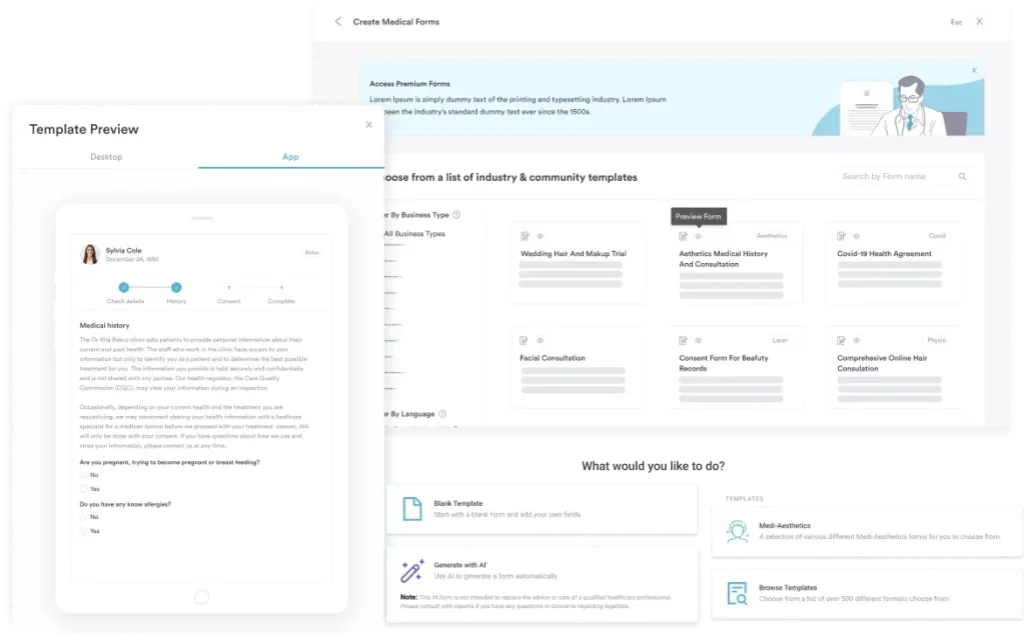
Because every completed form lands on the client record, the emotional picture sits beside appointments, notes, and correspondence. Counselors and therapists working in a mental health practice system can then show a parent or a case reviewer how someone moved across five sessions.
You can also share the outcome without chasing anyone. Our online booking portal gives families a place to read updates and complete forms in their own time. The reflection then happens before the session rather than in the doorway.

Pabau’s digital forms capture each completed SEL activity and file it straight onto the client record. Progress across a term stays searchable, shareable with families, and ready for review.

Treat this download for what it is. Five activities and a comments box will not carry a term of SEL teaching on their own. They will get a group started this week with no prep and no budget.
The value shows up in the record rather than the worksheet. Run the five in order, write the comment while the session is fresh, and after five weeks you can point to how a person changed. Add one decision-making activity of your own and the cycle is complete.
If those notes matter beyond a single group, keep them somewhere they can be found. Book a demo to see how Pabau stores completed forms on the client record and tracks emotional progress over time.

Want a reflection worksheet with more structure? Emotional intelligence worksheet walks a client through the five Goleman domains with written prompts instead of group activities.
Working with someone whose reactions escalate fast? Identifying triggers worksheet gives you a simple three-trigger form to complete before you teach regulation skills.
Need in-the-moment coping skills? Distress tolerance skills worksheet covers the DBT ACCEPTS technique for clients who need something to use during a crisis.
Looking to build on strengths instead of deficits? Resilience worksheet helps clients name the coping resources they already have before adding new ones.
Measuring how a client regulates emotion? Emotion regulation questionnaire measures cognitive reappraisal and expressive suppression with a standard self-report tool.
The five CASEL core competencies are self-awareness, self-management, social awareness, relationship skills, and responsible decision-making. Each one is a cluster of skills that supports emotional intelligence and effective relationships at any age.
Build it into routines you already run, such as an opening check-in, a breathing pause between activities, and a closing reflection. Consistency matters more than adding a new session. Even fifteen minutes of regular practice changes how a group talks to each other.
Free printable SEL resources are widely available, and the download on this page is one of them. It is an activity log rather than a set of student worksheets. It prints five group activities with their objectives and instructions, plus a date completed field and a comments box for each. No login or subscription is needed.
No. The file contains five activities in a fixed order. There are no CASEL headings, no grade bands, and no separate worksheets for participants to fill in. The competency mapping and grade-level notes on this page are guidance to use alongside the file.
Yes. The instructions refer to participants rather than students, so staff groups, therapy groups, and parent workshops can use the same log unchanged. Adult SEL also lowers burnout and improves how colleagues handle conflict.