Hell’s Itch pain scale
The Hell’s Itch pain scale is a numeric rating system that quantifies the ...

4
Last Updated: Oct 5, 2026

Coping cards are small, pocket-sized reference cards with brief coping statements, grounding steps, or reminders that help clients manage anxiety, depression, or distress between sessions.
They work because they’re rooted in CBT and DBT, evidence-based methods that support emotional regulation and reduce anxiety when used consistently.
Coping cards work best when co-created with the client in session, personalized to their own triggers and strengths, and reviewed regularly as treatment progresses.
Documenting each card and how it’s used in the clinical record turns coping-card practice into a measurable part of treatment, not just an informal aside.
Once you and your client have built a coping card together, use this free printable to capture what happens after they use it. It has space for basic patient details and three short reflection prompts: what worked, how the client felt afterward, and any other notes, so you can both review progress at the next session.
Download reflection logA client leaves your office calm. Two days later, panic hits in a grocery store line, and every technique you rehearsed together disappears. That’s exactly the moment a coping card is built for. It’s a small card, wallet-sized or smaller, that puts the client’s own coping words back in their hands. They don’t need your voice in that moment, just the card.
Most therapists already scribble a coping statement onto a sticky note or a business card between sessions. A coping card just makes that habit intentional and easy to track. Grab the free reflection log below. Then read on for how to build a card that actually gets used, not one that sits in a drawer.
A coping card is a small, pocket-sized reference tool with a handful of personalized statements, techniques, or reminders. Clients pull it out when a thought or feeling threatens to take over, and use it to steer themselves back to steadier ground.
Coping cards show up across CBT, DBT, and other evidence-based modalities, wherever a therapist wants a skill to survive outside the session.
A well-built card usually draws on a mix of the following:
Clients keep the card in a wallet or as a photo on their phone, so it travels with them into the moments where a two-page worksheet is out of reach.
That’s really the whole point of the format. A client mid-spiral cannot process a long handout, but three grounding steps and one honest thought? That they can use standing in a supermarket aisle.
Unlike a full patient care plan, a coping card is not meant to hold everything. It holds the one or two things a client needs when their working memory is already stretched thin.
The card only works if the client believes in it. That means building it together in session, not handing over a printed list of statements you wrote in advance. Here’s the sequence that tends to hold up.
A quick example: a client with panic attacks in traffic wrote just two lines on hers: “This is panic, not danger. Box breathe for four counts.” Six weeks later she added a third line after a session on self-compassion: “I’m allowed to pull over.” Small edits like that are the sign a card is actually being used, not just carried around.
Log each version in the client’s clinical record. Over a few months, you’ll see which strategies the client keeps and which ones quietly disappear, and that pattern tells you as much as a symptom scale does.
A few minutes of quality control here saves the card from ending up forgotten in a drawer. Before the client leaves with it, check that:
Skipping that last point is the most common mistake new therapists make with coping cards. Keep the two tools separate, and both work better.
Telehealth tools make it easy to review this resource with clients face to face online.
Coping cards turn up across a wide range of disciplines and client ages, not just in CBT-focused practices.
Whatever the setting, a card that’s tracked and reviewed in the client’s file tends to earn its keep faster than one handed over and never mentioned again. That’s easier to keep on top of with mental health EMR software that flags homework for follow-up at the next appointment.
First, it closes the gap between the therapy room and real life. A client learns a cognitive restructuring technique in session, then freezes when panic hits at home.
The card is the therapist’s voice, condensed to a line or two, right when the client needs it. Clients who use between-session tools tend to show faster symptom reduction than those relying on sessions alone.
Second, it builds ownership. Co-creating the card, in the client’s own words, shifts the frame from “my therapist fixes me” to “I can regulate myself.” That shift is often as valuable as the words on the card, and it tends to predict better follow-through with the rest of treatment.
Third, it gives you something concrete to document. “Client created a coping card for panic; reports frequency dropped from four times a week to one or two” reads far better in a note, or to an insurer, than “client reports feeling better.”
Fourth, it takes some pressure off you. Therapists often feel responsible for what happens to a client between sessions. A card with clear, practiced steps shifts some of that responsibility back to the client, which is exactly where lasting change needs to live anyway.
Keep a running library of the coping statements and grounding sequences that work well for your caseload. After a few dozen cards, patterns emerge: certain statements land with most anxiety clients, particular grounding sequences work well for trauma survivors. A short bank of evidence-backed lines speeds up co-creation without making the card feel generic.
There’s no single template that fits every client. The content and structure shift with the modality and the concern you’re treating.
A CBT card focuses on the thought-feeling-behavior link. It usually opens with a prompt like “What thought is making me anxious right now?” followed by a counter-statement such as “My worry is a prediction, not a fact.”
Some clients do better with a mini three-column layout: situation, thought, realistic response. If you’re already using a cognitive triangle worksheet in session, the card is really just the pocket version of that same work.
DBT cards organize skills by module: distress tolerance, emotion regulation, mindfulness, and interpersonal effectiveness. For a crisis moment, a card might list the TIPP skills: temperature change, intense exercise, paced breathing, and paired muscle relaxation.
Many clients also add a dialectical phrase, something like “I am doing my best AND I can do better.” Therapists running DBT skills groups often pair the card with a fuller BPD worksheet for the module being taught that week.
Anxiety-specific cards lean on grounding and breathing. Common entries include the 5-4-3-2-1 sensory technique (five things you see, four you hear, three you feel, two you smell, one you taste) and box breathing on a 4-4-4-4 count. Pair the physical technique with a reassuring line: “Panic is uncomfortable, not dangerous. I can ride this wave.”
For clients whose anxiety spikes before an event rather than during it.
Cards for younger clients use plain, concrete language, sometimes with drawings or color. Instead of naming “cognitive distortions,” a child’s card might say “Worry thoughts are like clouds, they come and go. I don’t have to believe them.” Add a physical action (jump 20 times, squeeze ice, hug a pet), a feeling word, and a safe person to call.
A parenting worksheet sent home alongside the card helps caregivers reinforce the same language outside your office.
Depression-focused cards push back on avoidance and rumination. They lean on behavioral activation (“Do one small thing even if you don’t feel like it”) and self-compassion (“Depression lies about my worth. I’m not a burden”).
A weekly activity plan and a reminder to reach out to one person work well alongside the card.
A card that only exists on paper in the client’s pocket is easy to lose track of. Building it into your practice’s routine, assignment, tracking, and documentation, keeps it from becoming an afterthought.
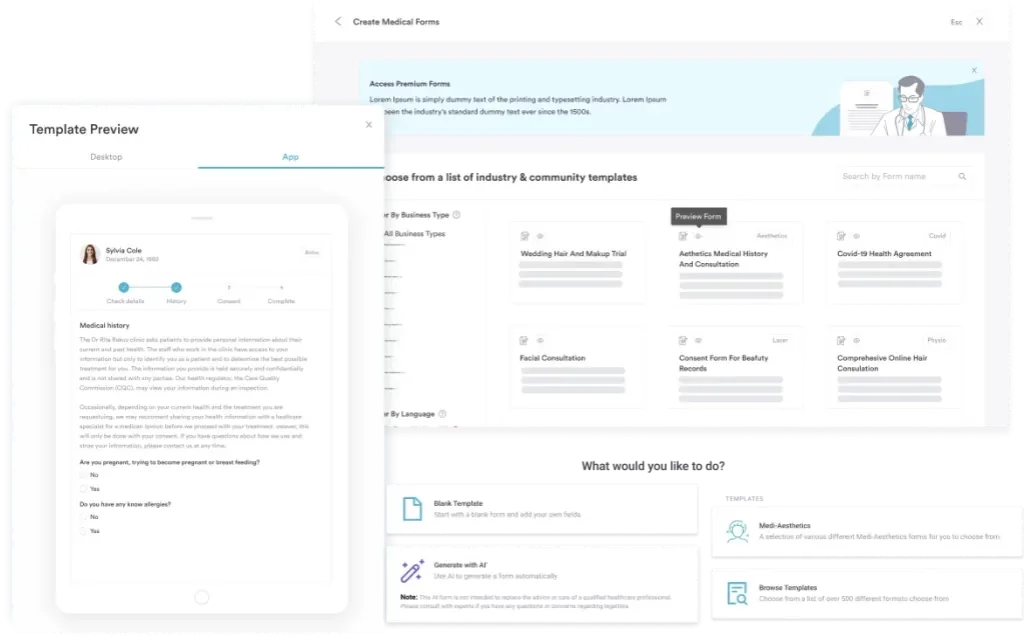
Assignment. Treat the card as formal homework, not a friendly extra. Practice management software like Pabau lets you build a standardized “coping card” digital form that you and the client complete together in session, then export as a PDF for them to keep. That gives you a copy in the file the moment it’s created, rather than relying on the client to mention it later.
Tracking use. At the next appointment, ask a simple question: did they use it, and how many times? Log the answer. A patient follow-up form sent between sessions is an easy way to capture this without waiting until the client is back in the room.
Documentation. Store the card itself, printed or digital, in the client record, linked to the session note where it was built and refined. That gives you an audit trail of the client’s skill-building, not just a vague reference to “coping tools discussed.”
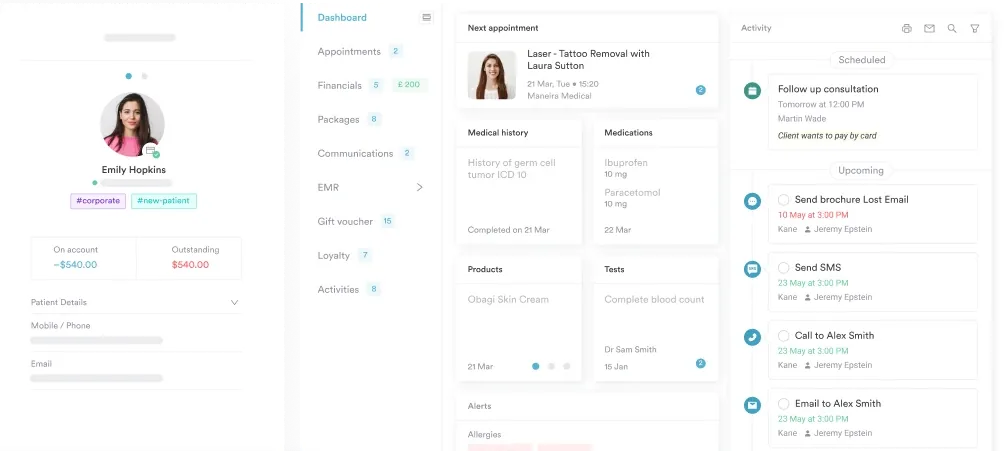
Outcome measurement. Card use is a workable proxy for engagement. A CORE-10 score score tracked alongside card use frequency can show whether the tool is actually correlating with symptom change, rather than just relying on a subjective “I feel better.”
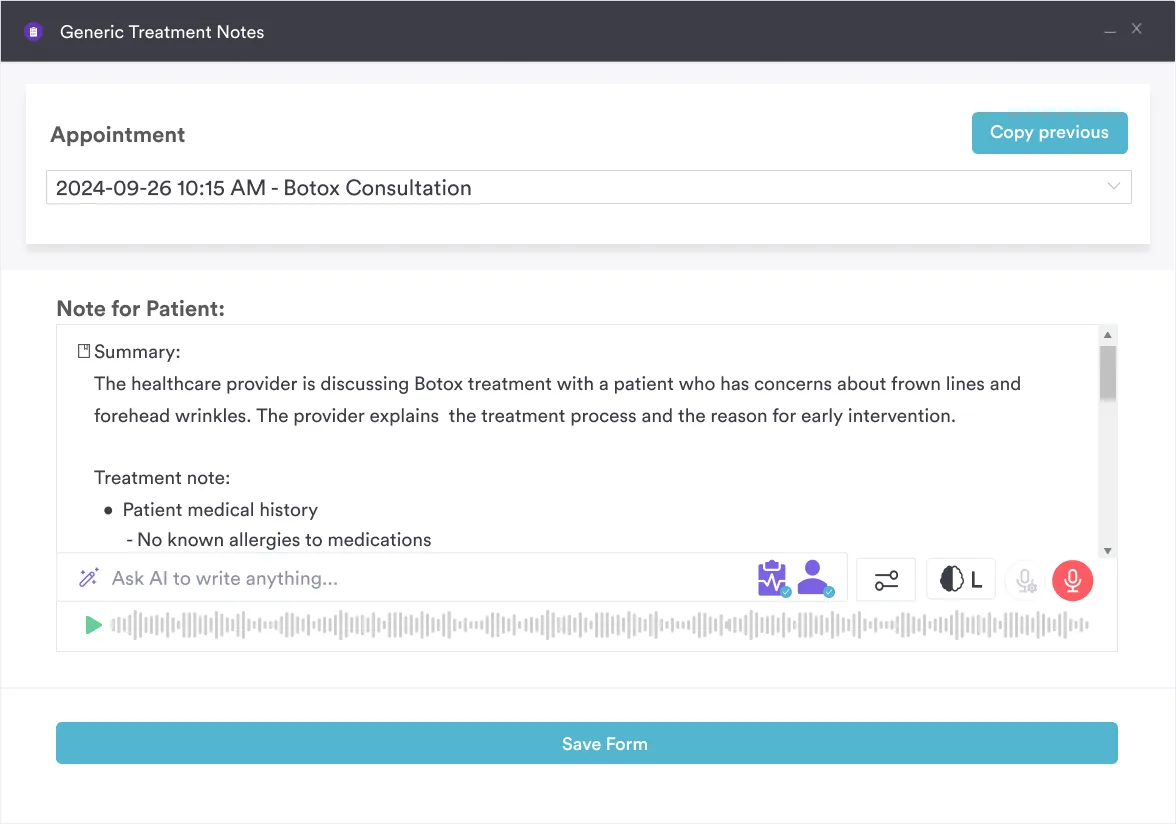
Many practices build the coping card step directly into their note-writing process, so “client created a coping card for panic episodes” becomes a standard line rather than an easy detail to forget on a busy day. This kind of therapy practice management setup is what turns a one-off tool into a habit clients and therapists both keep up with.
The two tools get confused often, but they’re not interchangeable. A safety plan is a full suicide-prevention document: warning signs, internal coping strategies, distractions, people to contact, and professional resources. A coping card is smaller and narrower, built around one emotion or trigger at a time.
For a client at risk, the safety plan comes first. The coping card sits alongside it as a lighter, faster tool for the moment-to-moment grounding between the safety plan and an actual call to a crisis line or therapist.
As part of broader crisis intervention strategies, treat the card as a support, not a replacement, and review both regularly so the client always knows which one to reach for.
Most cards that end up ignored fail for one of a few predictable reasons.
Most of these come down to the same fix: keep the card small, keep it collaborative, and keep checking in on it.
A coping card won’t replace therapy, and it isn’t meant to. What it does is put a small piece of the work into a client’s pocket, ready for the exact moment they need it and you’re not in the room. Built together, reviewed regularly, and documented properly, it earns its place as a genuine part of treatment rather than a handout that gets forgotten.
Download the free reflection log above, build a card with your next client, and use the notes it generates to see what’s actually working between sessions. If you want to see how a practice management platform can help you assign, track, and document tools like this across your whole caseload, book a demo with Pabau.

Want a companion tool for emotion identification? Body map emotions worksheet helps clients name what they feel before they reach for a coping statement.
Need a longer grounding exercise for anxious clients? Body scan meditation script pairs well with a card for clients who need more than a few lines to settle.
Looking for a way to help clients name their feelings? Color your feelings worksheet works alongside coping cards for younger or visually-minded clients.
DBT coping cards organize skills into modules: distress tolerance, emotion regulation, mindfulness, and interpersonal effectiveness. A DBT card might list TIPP skills (temperature change, intense exercise, paced breathing, and paired muscle relaxation) for crisis moments, or a dialectical phrase like “I am doing my best AND I can do better.”
Either works, so let the client decide. Paper survives a dead phone battery and fits in a wallet. A photo on a phone is faster to pull up mid-panic and harder to lose. Some clients keep both: a paper copy at home and a photo saved to their phone.
Yes. Group facilitators often have each member build a card during the session, then share one strategy aloud before the group ends. It reinforces the skill just taught and gives quieter members a personal takeaway even if they didn’t speak much in the room.
No. A coping card is a support tool, not a substitute for treatment. It helps a client manage a moment between sessions or doses, but it doesn’t address the underlying condition the way therapy or medication does. Frame it that way from the start so clients don’t expect too much from a small card.