Reflection questions: 14 examples and a free template
Reflection questions are open-ended prompts that guide a person through structur...

8
Last Updated: Oct 16, 2026

Coaching notes are structured records of client sessions that capture goals, insights, actions, and progress.
Consistent documentation ensures continuity across sessions, supports accountability, and creates an evidence trail of client transformation.
Essential elements include session date, client goals discussed, key insights, action items, and next session focus.
Practice management software like Pabau ties these notes automatically to treatment history, client progress, and appointment scheduling.
A structured framework for documenting client coaching sessions, tracking progress, and maintaining comprehensive records of coaching interactions for life, health, workplace, and wellness coaching contexts.
Download templateEvery coaching session generates details worth keeping: what the client wants, what shifted during the conversation, and what they promised to do next. Writing those details down consistently is what turns a series of conversations into a documented coaching relationship.
Most coaches rely on memory to track what happened in a session. Without written records, key details slip away, client goals get forgotten, and progress markers become invisible. This is why the International Coaching Federation’s code of ethics calls for professional documentation as part of ethical coaching practice.
Coaching notes serve three critical functions: continuity, accountability, and a longitudinal record of client transformation. Together, they let both coach and client see progress over time instead of relying on memory alone.
For coaches managing multiple clients, consistent notes prevent the confusion that comes from juggling details. A health coach working with a client on metabolic health needs to reference baseline labs from three months ago.
A workplace coach needs to connect behavioral changes discussed in session four to commitments made in session one. Coaching notes make this continuity automatic.
Effective coaching notes capture the essentials without becoming a verbatim transcript. You need enough detail to reconstruct the session, without spending longer writing notes than you spent coaching.
This structure ensures your notes serve both immediate needs (what happens next session) and long-term needs (how the client is progressing over months). A client record system ties these notes directly to each client’s history, making patterns easy to spot.
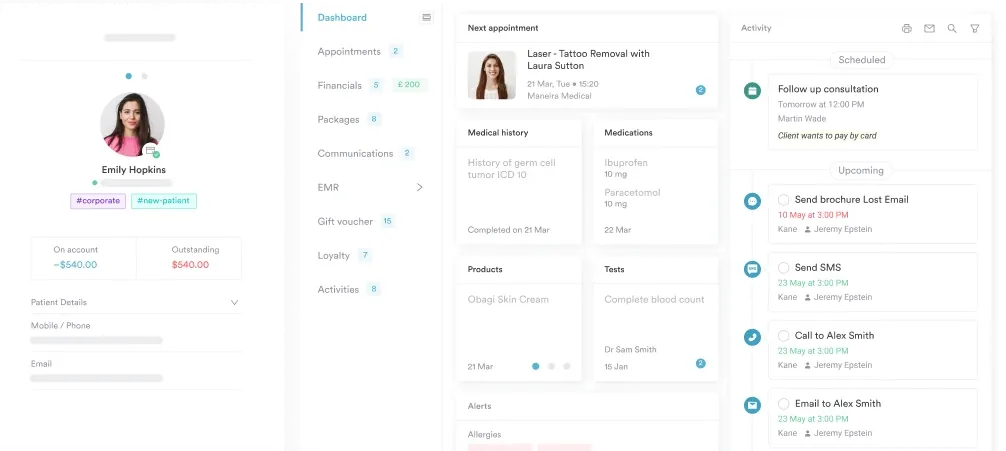
The best time to write coaching notes is immediately after a session while details are fresh. Most coaches find 5-10 minutes is sufficient for a complete set of notes.
When a disclosure raises safeguarding concerns, a structured tool like a mental abuse checklist helps coaches document specific warning signs accurately.
Set a recurring 10-minute block in your calendar immediately after each coaching session to write your notes while the conversation is fresh. Batch-writing notes from memory at the end of the week leads to missing details and inaccuracies. The 10-minute discipline pays dividends in data quality and client progress visibility.
If a client shares what was most valuable about your coaching, include it. This helps you refine your approach and gives the client a sense of being heard.
A patient management platform stores every completed form against the right patient record automatically.
The five templates below cover different coaching contexts and client needs. Choose the one that matches your primary coaching niche, or adapt them to your practice.
The simplest universal format. Works for life coaching, career coaching, or any niche where you need a quick, straightforward record.
Aligns with the GROW coaching framework (Goal, Reality, Options, Will). Ideal if your coaching method is structured around this model.
For managers, HR professionals, or executive coaches working on employee development, performance, or leadership skills.
Pairing these notes with a validated tool like the Maslach Burnout Inventory helps workplace coaches track employee wellbeing alongside performance goals.
For health coaches, nutrition coaches, fitness coaches. This template ties coaching conversations to measurable health outcomes and integrates with clinical workflows.
Health coaches supporting clients on psychiatric medication can pair sessions with a dedicated medication tracking list to log prescription changes.
Use this quarterly or biannually to review the client’s journey over a longer time frame. Highlights progress, celebrates wins, and identifies new growth areas.
A standardized measure such as the Life Satisfaction Scale gives coaches a consistent baseline to compare against each review.
Coaching notes are confidential documents. Depending on your location and whether you handle sensitive health information, you may be subject to data protection regulations.
GDPR (UK and EU): If your clients are EU or UK residents, UK GDPR guidance requires you to handle personal data securely. You must delete it once it’s no longer needed. Most coaches retain coaching notes for five to seven years, then delete them securely. Clients can request a copy of their notes at any time.
HIPAA (USA): If you’re a health coach or mental health coach in the USA, you may be covered by HIPAA. Coaching notes containing health information must be stored securely (encrypted), and access must be limited to authorized staff only.
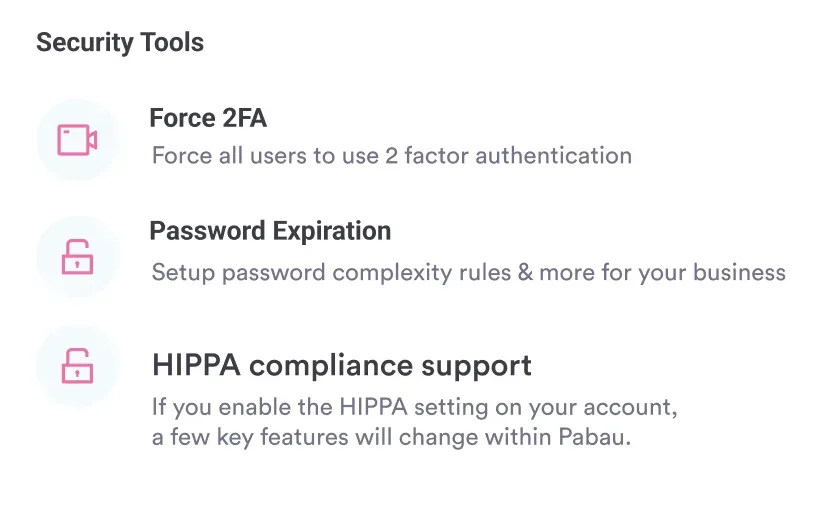
Practice management software with built-in compliance features makes this far easier. Encryption, audit logs, and role-based access happen automatically, removing the burden of manual compliance work.
You can take coaching notes on paper or digitally. Each has trade-offs.
Most professional coaches move to digital notes within their first year, because the searchability and integration benefits quickly outweigh the setup effort.
A client who committed to “schedule the difficult conversation” gets a gentle reminder email before the next session.
Manual templates work, but they fragment your practice. Notes live in Word files. Client details live in a spreadsheet. Scheduling happens elsewhere. You spend time switching between tools instead of coaching.
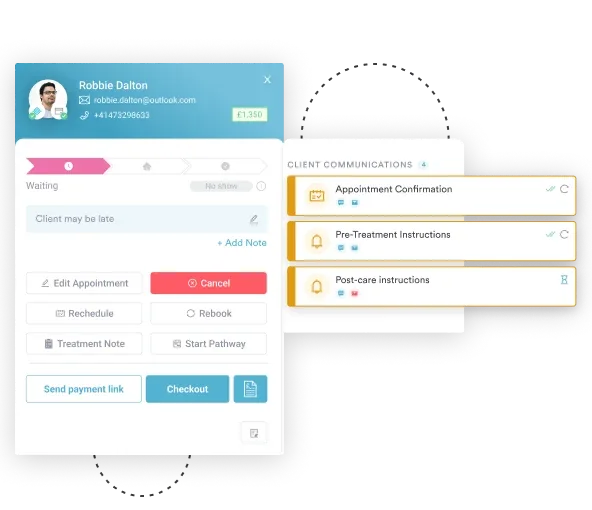
Pabau brings all of this together. When you take coaching notes in Pabau’s client portal, they’re stored automatically with that client’s full record. Appointment history, health goals, previous session notes, and action items are all visible in one place. Your notes get encrypted and backed up, and GDPR/HIPAA compliance is built in, so you’re not scrambling to meet regulations manually.
This turns coaching notes from a habit you maintain by hand into part of your daily workflow. That frees up time for the coaching itself, rather than the admin behind it.

Pabau ties coaching notes to each client’s record, encrypting and backing up every entry automatically. GDPR and HIPAA safeguards are built in, so coaches spend less time on admin and more time with clients.

Coaching notes only earn their keep when they sit next to everything else you know about a client. A template fixes the format of what you write. It does nothing for where that writing ends up living six months from now.
Start with whichever of the five templates matches your coaching niche, and use it the same way after every session. That’s the trade-off worth remembering: a standalone template costs nothing to adopt, but it stays disconnected from your scheduling and client history. A connected system takes longer to set up, and it pays that time back every time you need to trace a client’s progress.
Book a demo to see how Pabau keeps coaching notes, client records, and scheduling in one connected system.

Need a framework for effective clinical notes? SOAP notes for social work shows mental health professionals how to write clear, structured clinical documentation.
Want to walk a client through cognitive restructuring? 7-column thought record gives clinicians a step-by-step worksheet for challenging and reframing unhelpful thoughts.
Want a framework for lasting habit change? 7 Habits printable worksheets translates Stephen Covey’s personal development framework into structured tools for clinical practice.
Want a script for mindfulness sessions? Equanimity meditation script offers a ready-made guide for coaches building calm and focus into client sessions.
A coaching notes template is a structured form or framework that helps coaches document client sessions consistently. It typically includes fields for session date, client goals, key discussion points, action items, and next steps-ensuring no important details slip through the cracks between sessions.
Most coaches retain notes for 5-7 years after the coaching relationship ends. This provides enough time to respond to any client queries or regulatory audits, while respecting data minimization principles under GDPR. Check your professional body’s guidelines (ICF, EMCC) for specific requirements.
Only with the client’s explicit written consent. Health coaches working alongside a doctor may need to share relevant information (e.g., “Client committed to walking 30 mins daily”) with the medical team-but this requires the client’s permission first.
Coaching notes capture the details of a single session (goals, discussions, insights, actions). A coaching log is a longitudinal record tracking the client’s overall journey-milestones reached, patterns over time, and progress toward long-term goals. Many coaches maintain both.
Take minimal notes during the session (key words, action items only) to stay present with the client. Write comprehensive notes immediately after while the conversation is fresh. This balance preserves rapport while ensuring accuracy.