CRM for chiropractors: how to manage patients, bookings and marketing
A CRM for chiropractors is a patient relationship management system built around...

Last Updated: Oct 13, 2026

The motivation assessment scale (MAS) is a 16-item questionnaire that shows why a challenging behavior keeps happening.
Four subscales, known as SEAT, cover sensory, escape, attention and tangible reinforcement, and each one holds four items.
You score it by averaging each subscale, then ranking the four means. The highest mean points to the primary function.
Durand and Crimmins published the scale in 1988, and later replication studies found its reliability inconsistent.
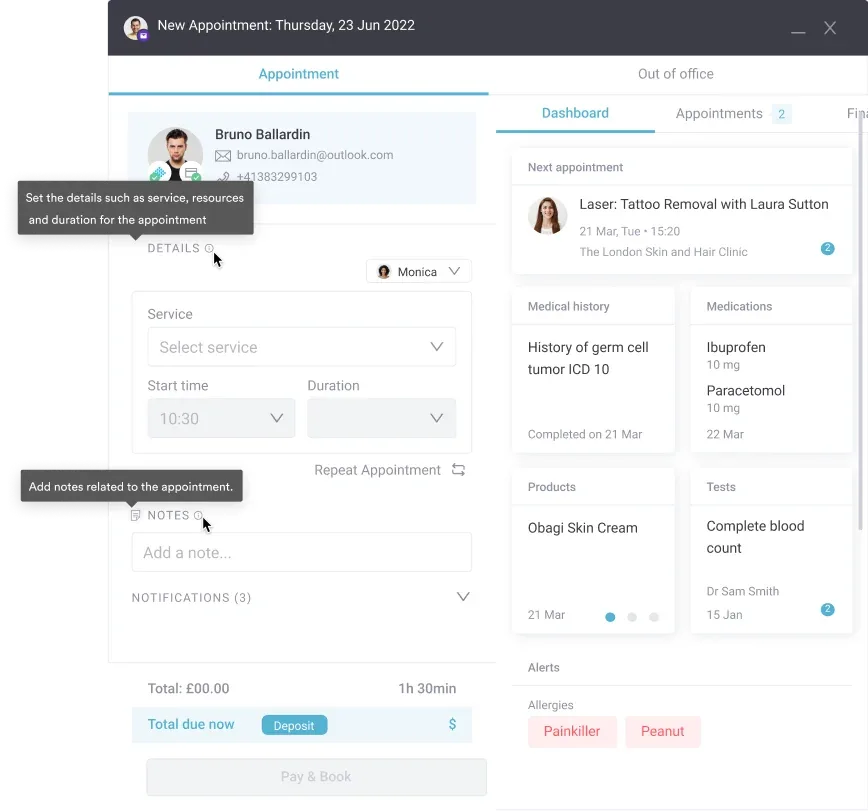
Practice management software like Pabau stores the completed scale in the client record, so scores and trends stay together.
A print-ready 16-item form with the 0 to 6 rating scale, the four SEAT subscales, and space for subscale totals. It also carries mean score and relative ranking fields, plus room for your interpretation notes.
Download templateA child bites her hand every time the worksheet comes out. Is she trying to escape the task, or does the biting feel good on its own?
The motivation assessment scale (MAS) answers that question with 16 structured caregiver ratings. It takes a few minutes to fill in, and it points you toward one of four maintaining functions. Here’s how to fill it carefully before you commit to an intervention. Practices with an aesthetic service line will find HIPAA compliance and charting compared across eight platforms in our ranking of medical spa software.
The MAS measures why a behavior happens, not what a person has. It’s a functional tool, so it never diagnoses autism or an intellectual disability. What it gives you is a hypothesis about reinforcement.
V. Mark Durand and Daniel Crimmins introduced the scale in 1988, in a Journal of Autism and Developmental Disorders paper on self-injurious behavior. A formal administration guide followed in 1992, and the design has not changed since.
A caregiver who knows the person well rates 16 statements, each on a scale from 0 for never to 6 for always. Every statement describes a situation rather than the behavior itself. One asks whether the behavior happens when the person is left alone. Another asks whether it happens when you stop paying attention.
The pattern across those answers is what you read, and it feeds straight into the behavior intervention plan.
The 16 items sort into four subscales, remembered by the acronym SEAT. Each subscale stands for a different kind of reinforcement that can keep a behavior going.
A sensory result points toward enrichment and safer alternatives that give the same feedback. An escape result points toward task gradation and a workable break request. An attention result often calls for differential reinforcement, backed at home by something simple like a behavior rewards chart.
Reliable results start with a tightly defined behavior and a rater who sees it often. Work through these six steps in order.
Add each subscale’s four items, divide that total by four, then rank the four means. The highest mean is your primary function. Here is the sequence in full.
Take a boy whose hand-biting starts when handwriting practice begins. His four subscale totals come out like this.
Escape ranks first by a wide margin, so the plan starts with the demands of the task. Now imagine escape had scored 3.0 and attention 2.75. The ranking would separate them on paper and tell you almost nothing in practice.
One caution matters more than any other. The authors never published a cutoff that makes a score clinically significant. A mean of 5.0 is not a diagnosis, and a mean of 2.0 is not an all-clear. Read the order of the four means, then go and watch the behavior.
Most disappointing results trace back to a decision made before the form went out. Run through this list first:
Three mistakes come up again and again. Teams compare raw totals across subscales instead of means. They read a high score as behavior severity, when it only describes how consistently a situation triggers it. Then they run the scale on a behavior that happens once a month, which no rater can judge reliably.
The MAS earns its place early, when you need a working hypothesis before the next session. ABA teams, psychology practices and school staff tend to use it at four points.
Pairing it with a progress measure is what makes the repeat useful. Behavior function tells you where to aim. Something like an outcome rating scale tells you whether family life has improved since March.
The scale is quick and easy to run, but its measurement record is mixed, and that has been known for decades.
Zarcone and colleagues failed to replicate the original reliability figures in 1991. Newton and Sturmey reported similar problems in 1994. Paclawskyj and colleagues then found only weak agreement between MAS results and direct functional analysis in 2001. Two raters watching the same child often rank the functions differently.
Four limitations follow from that record:
The fix is to treat the MAS as one input to a full functional behavior assessment. Direct observation, interviews and a look at the environment complete it. The Behavior Analyst Certification Board expects that kind of multi-method approach behind clinical decisions.
A note on the revision: Durand released the MAS-II Test Version in 2002. Whether it measures better than the original is still argued over in the literature. Check the publisher’s guidance before you switch your team to it.
On paper, the MAS costs you twice. Someone prints the form, someone else adds up the columns by hand, and the result gets typed into the record days later. By the time you want to compare two administrations, one of them is in a filing cabinet.
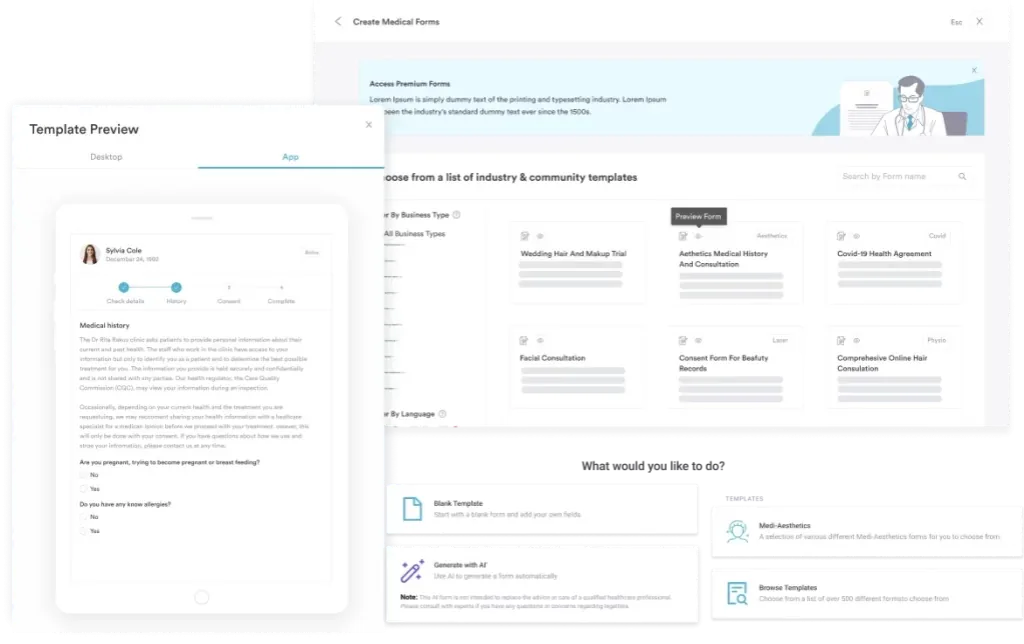
Practice management software like Pabau closes that loop. You build the scale once as a digital form, then send it to the parent or teacher before the appointment. Responses land straight in the client record, and Pabau tracks scored questionnaires over time, so March’s means sit beside September’s.
That changes what you can put in front of a review meeting. Instead of saying “escape, we think”, you can show both raters’ rankings and how they moved after a term of work. HIPAA-compliant storage and a secure client portal mean the family completes the form at home, without sensitive answers travelling by email.

Pabau turns the motivation assessment scale into a digital form, files it against the client record, and tracks every administration over time. Your team stops rekeying results and starts comparing them.

The MAS gives you a fast, structured guess at why a behavior keeps happening. That guess is worth having, as long as it stays a guess until observation backs it up. Clinicians who get real value from the scale are the ones who always follow it with a watching brief.
Two habits make most of the difference. Score the means rather than the totals, and add a second rater whenever the top two functions sit close together. Do both, and a five-minute questionnaire becomes a defensible first step in a therapy practice.
If your assessment forms still travel on paper, that is the next thing worth fixing. Book a demo to see how Pabau stores scored assessments in the client record and tracks them across sessions.

Starting with a new ABA client? The ABA child intake form collects history, consent and baseline detail before the first session.
Escape ranked first? A visual schedule for autism makes task demands predictable, which is often where the plan begins.
Working on emotional literacy? primary and secondary emotions worksheet includes an emotion chain table, a feelings wheel, and prompts to name a feeling.
Behavior escalating to risk? A mental health safety plan sets out warning signs, coping steps and who to call.
Need a screening step first? The autism screening questionnaire flags traits that deserve a fuller assessment.
All three ask an informant why a behavior happens. The QABF adds a physical or medical category that the MAS does not cover, and the FAST is built as a quick first screen. Its four functions map cleanly onto everyday intervention choices, which is why the MAS stays in use.
Anyone who knows the person well can complete the ratings. Interpretation is a clinical job, so a behavior analyst or psychologist should weigh the ranking against observation before it shapes a plan.
No. Replication studies found that MAS results agree only weakly with direct functional analysis. Use it to build a hypothesis, then test that hypothesis by observation before you commit to an intervention.
It was built for people with developmental disabilities, including autism, and is used with children and adults alike. The rater matters more than the age. Pick someone who sees the behavior regularly in the setting you care about.
Re-rate when the behavior changes, when the setting or staff change, or at a planned review. Running it monthly adds noise, because caregiver impressions move slowly.