Treatment summary
A treatment summary is a written record of what care was delivered during an epi...

3
Last Updated: Oct 16, 2026

Risk for aspiration is a NANDA-I risk diagnosis, so it describes susceptibility to airway entry rather than an event that already happened.
The strongest risk factors are reduced consciousness, dysphagia, an enteral feeding tube, and a weak or absent cough.
A Glasgow Coma Scale score of 8 or below is the threshold usually cited for an airway the patient cannot protect.
Positioning does the heaviest lifting, so keep the head of bed at 30 to 45 degrees during and after every feed.
Practice management software like Pabau holds the plan, the active precautions, and the review date in one client record.
A bedside-ready care plan with assessment fields, the NANDA-I diagnosis statement, measurable goals, an intervention checklist with rationale, and an evaluation column for every review. Print it, or import the fields into your practice’s record system.
Download templateA risk for aspiration nursing care plan protects the airway of a patient who cannot reliably protect it alone. It rests on a NANDA-I risk diagnosis, so you are documenting susceptibility rather than an event that has already happened.
One decision sits at its center: who eats, who stays NPO, and who waits for a formal swallow study. Get that call wrong and aspiration pneumonia arrives as the complication nobody charted.
What follows is the six-step assessment, the interventions that hold up at the bedside, and a template you can download and use today.
NANDA International defines risk for aspiration as susceptibility to the entry of gastrointestinal secretions, oropharyngeal secretions, solids, or fluids into the tracheobronchial passages. The cause is dysfunction or absence of the normal protective mechanisms.
That wording separates it from impaired swallowing, which describes trouble with the mechanical act of moving food from mouth to stomach. A patient can swallow normally and still sit at high risk, because the gag and cough reflexes that catch a mistake are gone.
The reverse also happens. Someone with obvious dysphagia may have protective reflexes strong enough to clear a stray bolus.
Write the diagnosis as a two-part statement. A risk diagnosis carries risk factors rather than signs and symptoms, so no third clause describes something you have already seen. “Risk for aspiration as evidenced by decreased level of consciousness secondary to sedation” says it in full.
Aspiration rarely travels alone. Sometimes secretions are already sitting in the airway and the cough is too weak to shift them. An ineffective airway clearance plan then runs alongside this one.
Risk factors are what you document, and they are what the rest of the plan is built on. NANDA-I groups them across several domains, and most at-risk patients carry more than one.
Older adults, patients recovering from stroke, and anyone on mechanical ventilation sit at the top of that list. Record every factor you find in a shared medical records system rather than only the one that seems most obvious.
Precautions come off factor by factor, so the list you write today is the list somebody reviews next week.
Assessment is where the plan earns its place, and it takes minutes rather than a full shift. Gather what you need first, because breaking off halfway to find suction is how a swallow trial goes wrong.
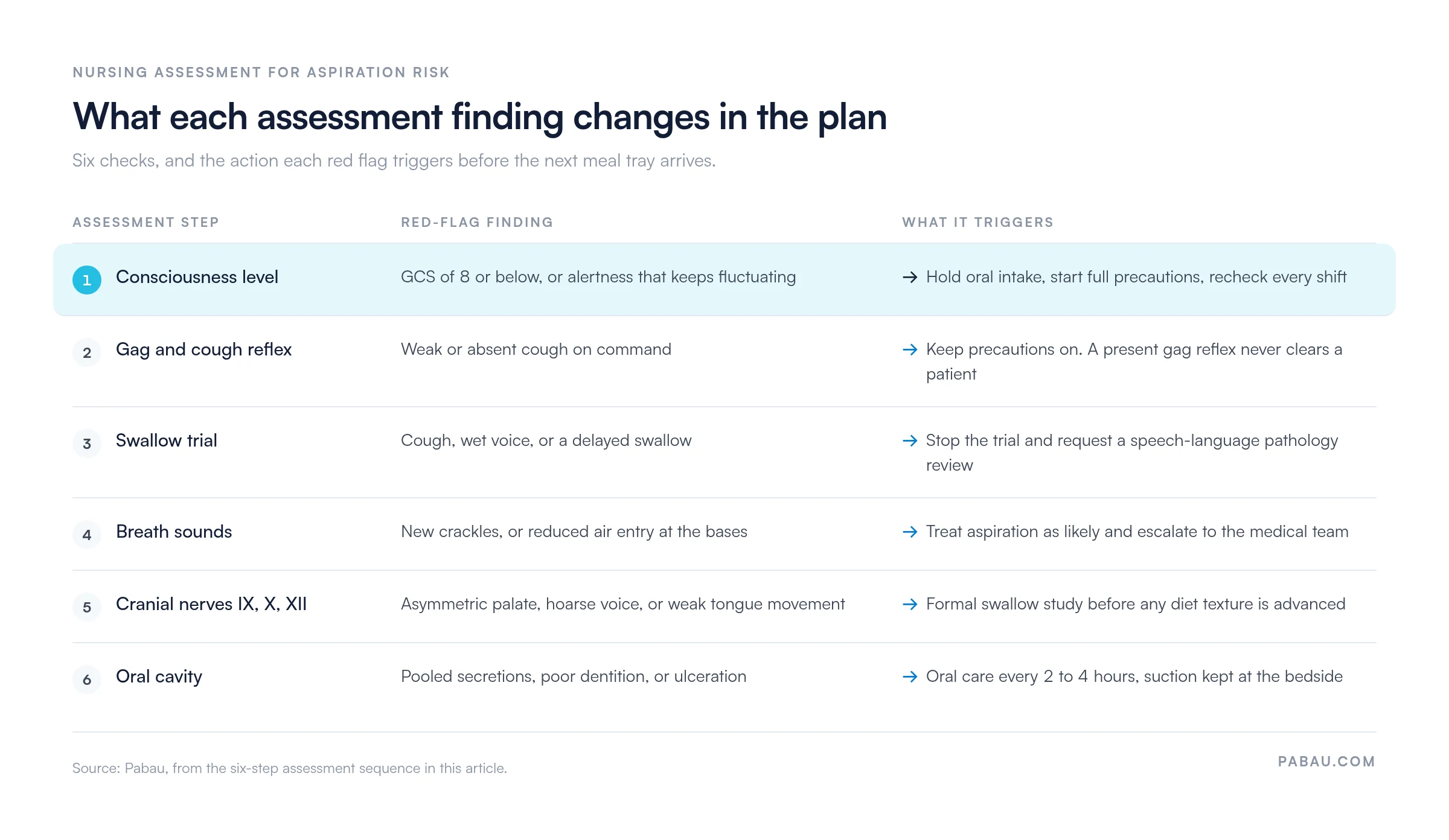
Steps one and five carry the most weight, since between them they tell you whether the airway is defended at all. Where the Glasgow Coma Scale score is doing the deciding, a structured level of consciousness assessment gives you a repeatable record between shifts.
The table below pairs each check with the finding that should stop you, and the action that follows.
Write the findings up while they are fresh. Free-text notes from three nurses rarely describe the same patient, so structured fields beat prose here.
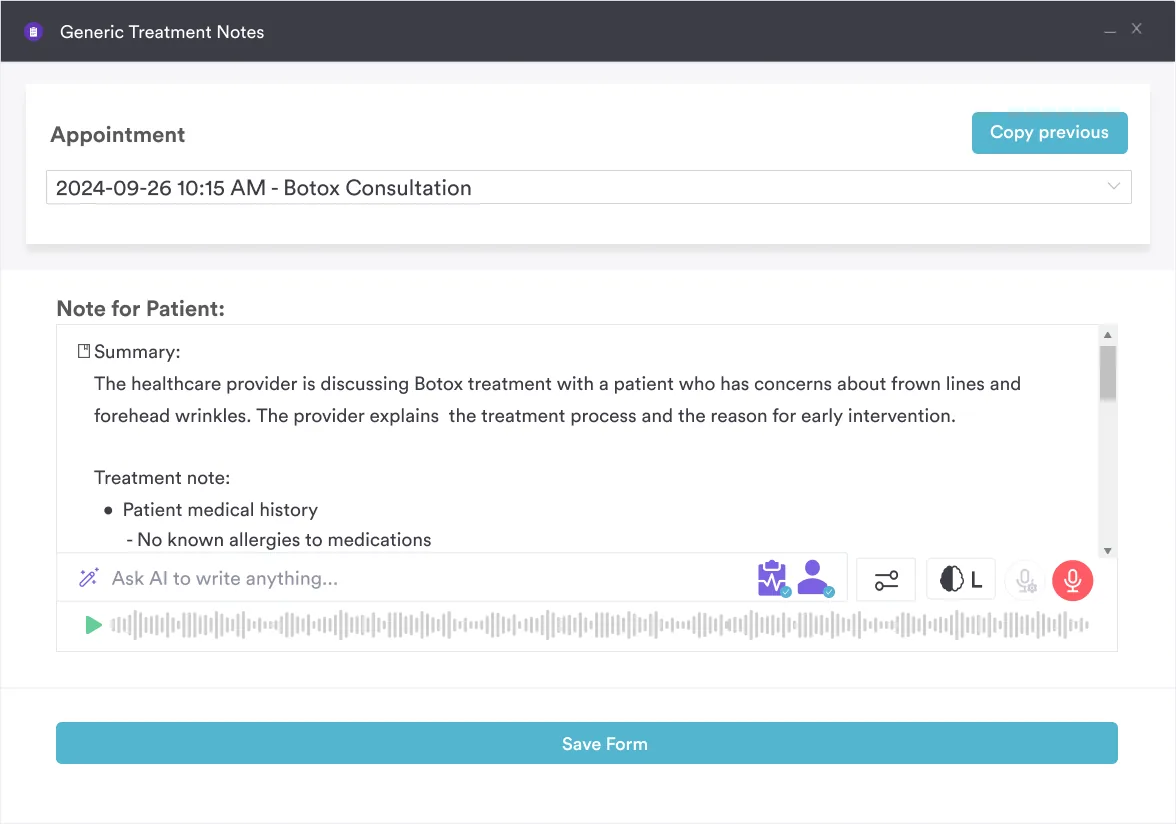
An AI medical scribe can draft the note from the encounter, leaving you to check the detail rather than type it. Where dysphagia is suspected, refer to speech-language pathology for a formal swallowing assessment.
Goals give the plan an endpoint. Write them the way you would want to inherit them, with a number and a deadline attached.
Compare two versions of the same goal. “Patient will not aspirate” cannot be evaluated, so it survives every handover unchanged and tells nobody anything. “Patient tolerates a level 5 minced and moist diet at three consecutive meals without coughing” either happened or it did not.
Interventions cluster into five domains. None of them works alone, and the first is the one most often left to chance.
Position is the one intervention available at every bedside, on every shift, at no cost. Hold it consistently, and document that you did. A plan that says 30 degrees and a bed sitting at 10 are not the same plan.
Where dysphagia is present, texture-modified diets do the work, and the wording has to travel with the patient. The IDDSI framework gives every discipline the same numbered scale, so “soft diet” stops meaning six different things along one corridor.
Agree the level with speech-language pathology, then watch for signs that the level is wrong. A wet cough, a change in voice, or a fever with no chest findings all point the same way. Tell the team plainly that oral intake restrictions are temporary while the swallow is under assessment. Otherwise NPO drifts from a precaution into a default nobody reviews.
A feeding tube takes the swallow out of the equation and puts reflux in its place. Keep the head of bed at 30 degrees or higher throughout the feed.
Check gastric residual volumes to your unit’s protocol and verify tube placement before every feed. Stop the feed if the respiratory rate or the oxygen saturation shifts.
Oral care does not prevent aspiration. It changes what a patient aspirates, which is why it belongs in a pneumonia-prevention plan rather than a comfort round.
Provide mouth care every two to four hours, use an antimicrobial rinse where it is indicated, and remove dentures overnight. Clear pooled secretions with gentle suction, because that fluid is the material most likely to reach the lungs.
The fifth domain is the one that survives a handover. Record which precautions are active, who authorized the current diet level, and when the next reassessment falls due.
Teams only coordinate when they read the same page, so keep the plan in one record rather than a bedside folder plus a separate chart.
Families do the feeding at home, so they need the reasoning and not only the rules.
Demonstrate the positioning rather than describing it, then ask the family to show it back to you. Written instructions raise recall, and a copy in the discharge pack means the advice outlives the conversation.
The template is a working document. Fill it in at the bedside and update it as the picture changes, rather than writing it once at admission and filing it.
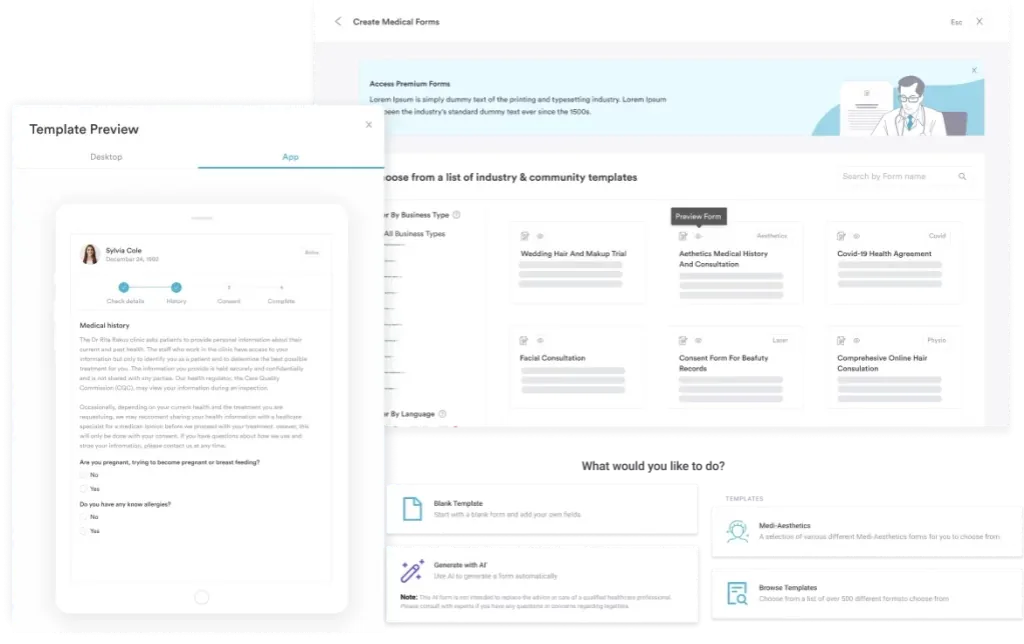
A completed plan also satisfies the care planning documentation that Joint Commission surveyors ask to see. Practices that collect the assessment through intake forms for nurses capture those fields once. Nobody re-keys the same history at every stage.
Reassess at every handover, and again whenever the clinical picture moves. Sedation wearing off, a new opioid, a chest infection, or an extubation all change the answer.
Goals are met when the patient holds a clear airway, takes the assigned texture with no respiratory signs, and can describe the precautions unprompted. If they are not met, look for a risk factor you missed before you start rewriting the interventions.
Stopping is the harder call. Discontinue precautions only once a formal swallow study or an SLP evaluation confirms it is safe, never on the strength of one good meal.
In most practices the aspiration plan lives in three places at once. The assessment sits in a paper form, the diet level sits on a handover sheet, and the review date sits in one nurse’s head. When that nurse goes off shift, the precautions loosen by the hour.
Pabau, our practice management software, keeps the plan inside the client record the team already opens. Custom digital forms carry your assessment fields, so the risk factors are captured once and stay attached to the patient.
Pabau Scribe, our AI scribe, drafts the note from the encounter itself. Recall reminders put the reassessment back in the diary before it slips.
The outcome is a plan that reads the same at 3am as it did on the ward round. Nobody has to reconstruct why a patient is NPO, because the risk factors, the diet level, and the review date sit together in one record.

Pabau’s digital forms, client records, and recall reminders hold the aspiration plan in one place. Your team sees the same precautions, the same diet level, and the same review date.

A care plan is only as good as the reassessment behind it. Aspiration risk moves with sedation, infection, and recovery, so a document written at admission and never revisited stops describing the patient in front of you.
Download the template, complete the assessment at the bedside, and set a date for the next review before you close it. The trade-off worth remembering is that precautions cost nutrition and dignity, so lifting them promptly matters as much as starting them early.
Book a demo to see how Pabau keeps the assessment, the precautions, and the review date in one shared client record.

Managing aspiration risk after a stroke? CVA nursing care plan sets out the neurological assessment and the swallow screen that come first.
Worried that NPO status is costing intake? Imbalanced nutrition nursing care plan covers the monitoring and referrals that keep calories on track.
Need to document cranial nerves properly? Cranial nerve nursing assessment walks through testing CN IX, X and XII and recording what you find.
Following an aspiration event? Impaired gas exchange nursing care plan covers oxygenation targets and the respiratory monitoring that follows.
Losing precautions at handover? Bedside shift report gives you a structure for passing on diet level, positioning, and review dates.
Start them the moment a risk factor appears, before any swallow screen is booked. The usual triggers are a Glasgow Coma Scale score of 8 or below, dysphagia, and an absent or weak cough. NPO status with pooled secretions and the first 24 hours after extubation also count.
IDDSI is one continuum of eight levels, numbered 0 to 7, rather than two separate scales. Drinks occupy levels 0 to 4 and foods occupy levels 3 to 7, so the two overlap in the middle. Everyone then reads “level 4” the same way.
Silent aspiration produces no cough, so a bedside trial can look clean. Suspect it when a patient runs a low-grade fever, loses weight, or picks up recurrent chest infections. Only an instrumental swallow study confirms it.
A risk diagnosis takes two parts, not three. Name the diagnosis, then the risk factors, as in “Risk for aspiration as evidenced by decreased level of consciousness secondary to sedation”. No signs and symptoms belong there, because the event has not happened.
Yes, in most settings. Positioning, oral care, and suction readiness are nursing interventions. Changing a diet texture or making a patient NPO usually needs an order or a standing protocol, so check your unit’s policy.