Head to toe assessment cheat sheet: Printable nursing guide
A head to toe assessment cheat sheet gives you one fixed order at the bedside, s...

2
Last Updated: Oct 23, 2026

Imbalanced nutrition: less than body requirements is retired, and inadequate nutritional intake is the current NANDA-I label for undernutrition.
NANDA-I lists it in Domain 2 (nutrition), Class 1 (ingestion), with risk for inadequate nutritional intake and readiness for enhanced nutritional intake alongside it.
Weight-related concerns moved to Domain 1, where nurses now chart ineffective overweight self-management, ineffective underweight self-management, or readiness for enhanced weight self-management.
Evidence the diagnosis with intake history, weight change and muscle mass, because albumin and prealbumin fall with inflammation rather than poor intake.
Practice management software like Pabau keeps goals, interventions and evaluations in one record, so the next review starts where the last one finished.
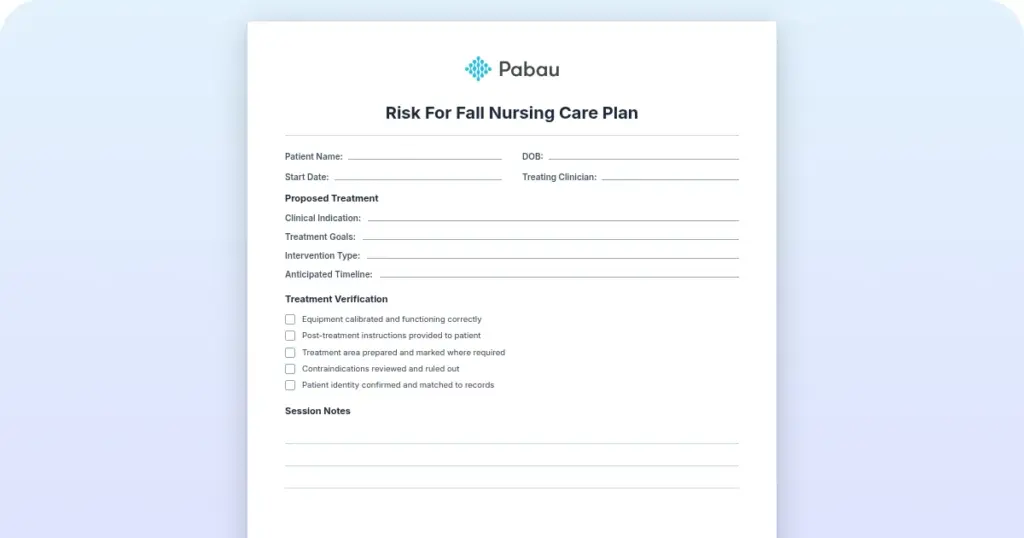
A one-page fillable form with fields for patient information, allergies and medications, the nursing diagnosis statement, and four paired short-term and long-term goals. It also carries interventions, rationales, evaluation, additional notes and a signature line with license number. Collected once and stored where clinicians read it, patient intake software removes the second round of questions.
Download templateMost care plan libraries still open with imbalanced nutrition: less than body requirements. NANDA-I retired that wording. The label for a patient who is not eating enough is now inadequate nutritional intake.
One out-of-date label can cost a student marks, and it leaves a ward nurse’s note out of step with the record system. So the plan below uses the current wording, with the cues that justify it and the goals that follow.
In the 13th edition of the NANDA International classification, covering 2024 to 2026, undernutrition is charted as inadequate nutritional intake. It sits in Domain 2 (nutrition), Class 1 (ingestion), and describes intake of nutrients insufficient to meet metabolic needs.
Two things changed at once. NANDA-I renamed the undernutrition label, then moved the weight side of the old pair into a self-management framework in Domain 1.
The umbrella term imbalanced nutrition no longer appears in the taxonomy at all. A bare risk for imbalanced nutrition, with no qualifier after it, was never a NANDA-I label in the first place.
Check which edition your facility works from before you write. Some records still carry the older wording, so follow your employer’s terminology and still name the patient’s problem precisely.
The diagnosis fits any patient whose intake falls short of metabolic demand, whatever the cause.
Two neighboring diagnoses in the same class often fit better. Inadequate protein energy nutritional intake covers a shortfall in protein and energy specifically, rather than nutrients in general.
Readiness for enhanced nutritional intake is the health promotion version. Use it for the patient who eats enough and wants to eat better. Outpatient teams reach for it most. A patient switching to plant foods can work from a vegan diet plan, which names the nutrients to watch.
A diagnosis statement with only one half of that pair reads as an opinion. Related factors name the cause, and defining characteristics carry the proof.
Serum albumin and prealbumin fall with inflammation, not only with poor intake. A septic patient who clears every meal can still show an albumin of 2.8 g/dL. The number says more about illness than about eating.
The 2012 consensus from the Academy of Nutrition and Dietetics and ASPEN set six indicators of malnutrition, and serum proteins are not among them. GLIM criteria came later, and they pair one phenotypic finding with one etiologic finding.
GLIM sets lower body mass index thresholds for Asian populations, so check the version your facility uses. Labs still matter for safety, and they belong in the plan for refeeding risk and for the electrolyte problems that follow poor intake.
A wellness practice platform turns templates like this into trackable client programs.
The template follows the order you would chart in. Work down the page once, and the plan stands up on its own.
Here is the statement in one line. Inadequate nutritional intake related to chemotherapy-induced nausea, as evidenced by intake of 25% of offered meals and a 3.2 kg loss over three weeks.
Run these five checks and you catch most of what a marker or an auditor would send back.
The same handful of phrasings trip students and new staff up every time. Here is what to write instead.
Both columns describe the same patient. Only the right-hand one tells the next nurse what to do on the next shift.
A goal answers three questions. What will be different, by when, and how will you know? Short-term goals cover days, and long-term goals cover weeks, which is why the template pairs them.
Nursing Outcomes Classification labels such as nutritional status give you a scored measure if your record uses NOC. Where it does not, a percentage, a weight or a date does the same job.
Interventions carry the plan, and the rationale makes each one reviewable. The pairs below fit most patients with inadequate nutritional intake.
Write the rationale while the intervention is still fresh. If you dictate notes, check the tool sits among the HIPAA-compliant AI tools your facility approves.
That last row is a shared decision. Record the tube feeding conversation.
Most of the eating happens once you are out of the room, so teaching carries the plan into the patient’s kitchen. Three questions come up in almost every conversation.
Two more points belong in every discharge conversation. Name the warning signs that prompt a call, such as further weight loss or new swallowing trouble. Then point the household toward local food support, including food banks and meal delivery services.
Send the patient home with something in writing. A one-page nutrition cheat sheet and a set review date make the same message repeatable at the next appointment.
Evaluation closes the loop. Compare each goal with the data you collected, then act on the answer you get.
Useful indicators include meal intake percentage, weight trend, grip strength or general function, wound healing, and the patient’s own report of appetite. Charting formats such as DAR notes keep that evaluation next to the data behind it.
Every evaluation also restarts the nursing process. Assessment, diagnosis, planning, implementation and evaluation keep cycling until the problem resolves or the patient moves on.
Use risk for inadequate nutritional intake when nothing has happened yet. It carries risk factors and no defining characteristics, because there is no shortfall to evidence.
Every preventive plan still needs a baseline and a date. Take that baseline with a validated screening tool, then weigh the patient at each visit. Agree on a review date before the visit ends.
The overnutrition side of the old pair changed twice. Earlier editions replaced imbalanced nutrition: more than body requirements with overweight and obesity. The 13th edition then moved the concern again, into self-management.
NANDA-I now lists these labels in Domain 1 (health promotion), Class 2 (health management):
The shift is more than a rename. Nurses now judge how well the patient manages a weight-related regimen, rather than counting intake. Goals target behavior, monitoring and follow-through.
Undernutrition driven by illness or poor intake still belongs in Domain 2. Reach for a self-management label when the problem is how the patient runs the regimen, rather than the intake itself.
A care plan fails quietly when it lives on paper. The review date passes, the next nurse starts a fresh plan, and nobody sees which goal was already partially met.
Practice management software like Pabau turns this template into a form your team fills in once and can find again. Build the diagnosis, goals, interventions and rationale as a reusable form.
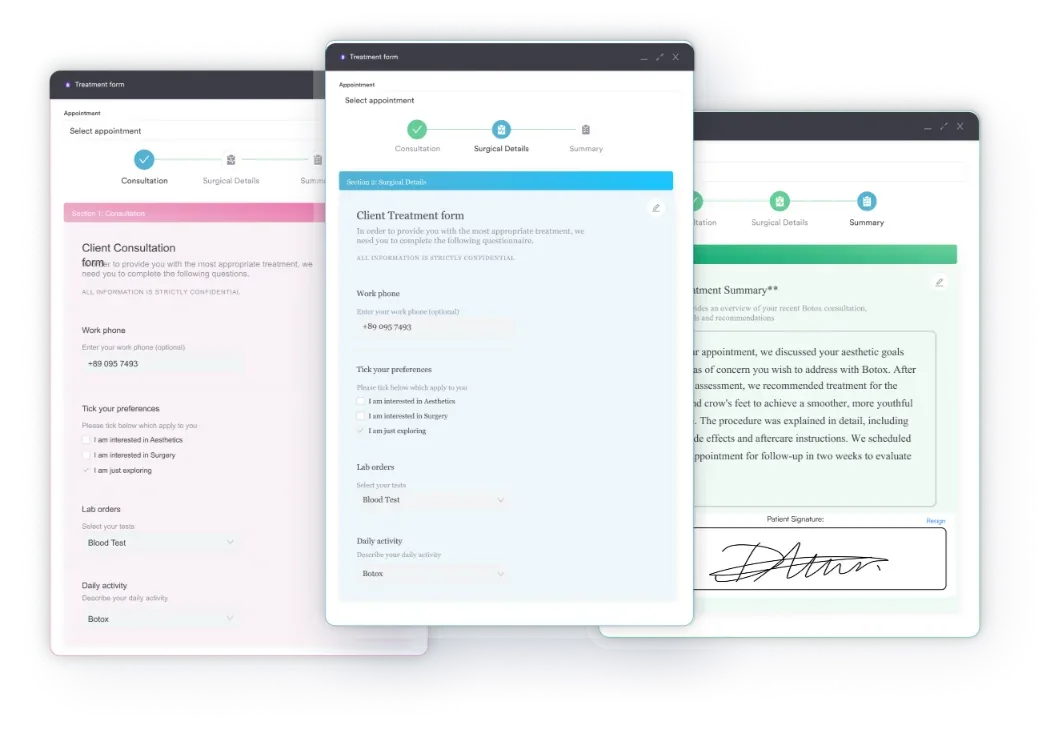
Because the plan sits in the patient record, the evaluation date can drive a recall or a follow-up appointment instead of a sticky note. Every version stays visible, so the next review starts from the last one.
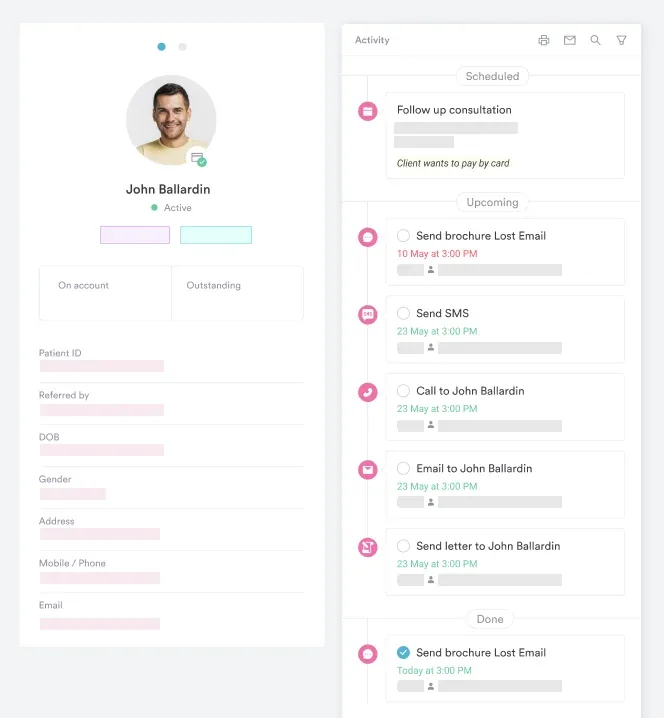
When the taxonomy changes again, you edit one form template instead of every plan in a filing cabinet. Your team then works from the same shared care plan, wherever they happen to see the patient.

Pabau’s custom clinical forms and patient records hold the diagnosis, goals, interventions and evaluation together. Your whole team sees the current plan, and review dates trigger the follow-up appointment.

Getting the label right is the cheapest quality improvement available in a care plan. Write inadequate nutritional intake, evidence it with intake, weight and muscle mass, then let measurable goals do the rest of the work.
The template gives you the fields, and the judgment stays yours. Decide whether the shortfall comes from intake, swallowing, absorption, or a regimen the patient cannot keep up with.
Keeping that plan visible to the next person is a records problem rather than a clinical one. Book a demo to see how Pabau holds care plans, review dates and evaluations in one patient record.

Need a second care plan for the same patient? Constipation nursing care plan covers a problem that often travels with poor intake and reduced mobility.
Managing a patient with a fever on top of poor intake? Fever nursing care plan sets out the assessment and intervention pattern for raised metabolic demand.
Not sure how to word the evaluation section? Evaluation nursing care plan shows how to chart met, partially met and not met goals with the data behind them.
Caring for a stroke patient who is losing weight? CVA nursing care plan covers the swallowing and feeding problems that follow a stroke.
Need consent paperwork before treating a minor? Consent to treat minor form covers parent and guardian details, authorized caregiver information, and the treatment scope needed for legal protection.
Name the tool your facility approves. MUST, the Mini Nutritional Assessment Short Form and NRS-2002 are the common ones. Record the score and the date, because the plan’s baseline comes from it.
No. Nursing diagnoses are not billable codes. Malnutrition codes such as E43 and E44.0 come from the provider’s documentation, although your intake records and weights support them.
Match the setting. Inpatient teams usually review intake every shift and weigh once or twice a week. Community plans often run on a two to four week review, agreed at the last visit.
Record the refusal, the reason given, and what you offered instead. Refusal is data rather than a failed goal. Ask about preferences, involve family and the dietitian, then reassess.
Yes. A patient who is nothing by mouth, or NPO, still qualifies when nutrition support falls short of demand. For a brief planned NPO period, the risk label fits better.
Nurses screen, weigh, chart intake, treat the barriers to eating and teach. Dietitians calculate requirements, set therapeutic diets and plan nutrition support. Send your intake data with the referral.