GLP-1 diet plan
A GLP-1 diet plan is a structured eating framework for patients taking semagluti...

2
Last Updated: Oct 13, 2026

USDA retired MyPlate on January 7, 2026. The Dietary Guidelines for Americans, 2025–2030, published at RealFood.gov, are now the official US portion reference.
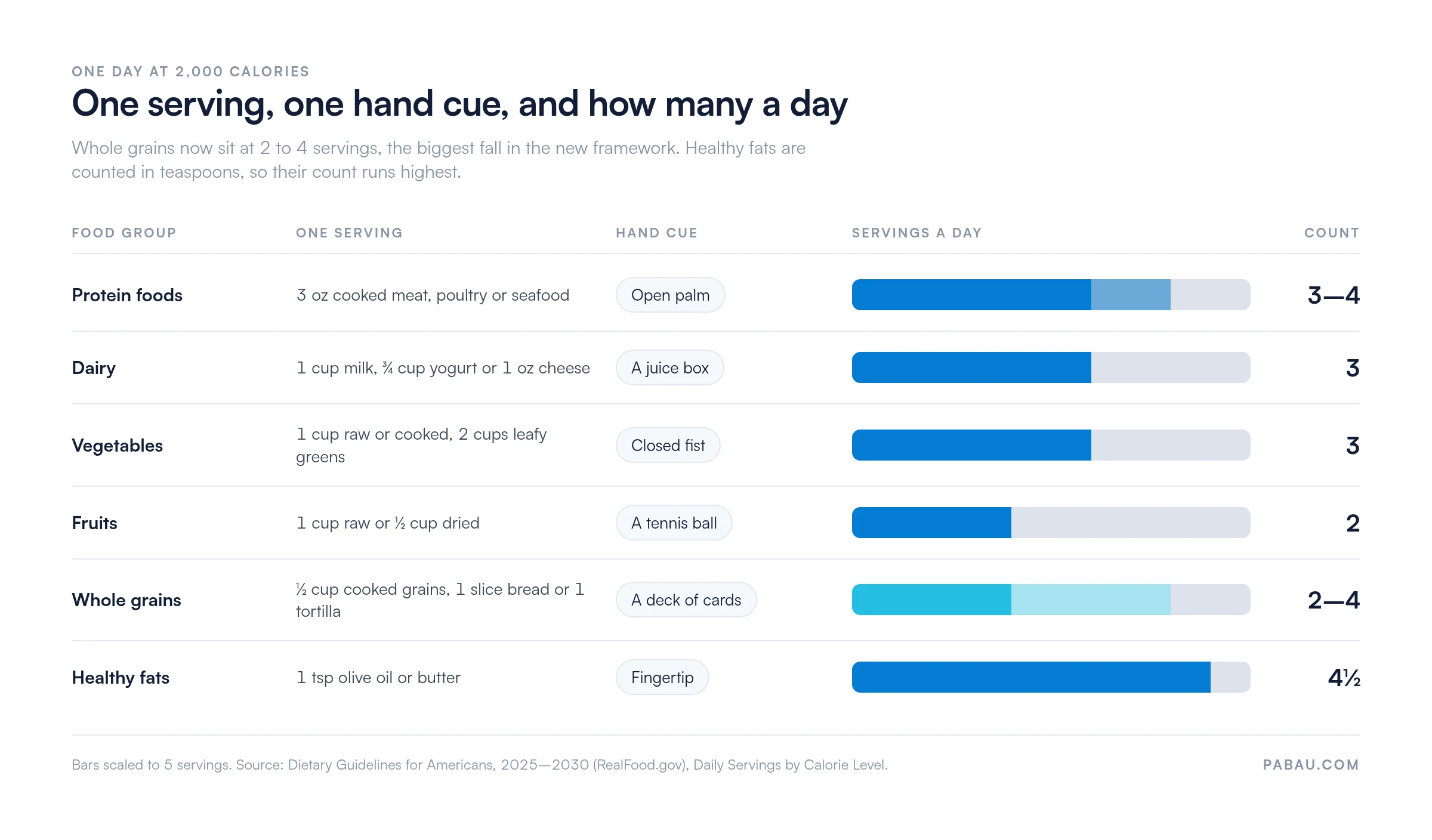
The new framework counts servings instead of ounce- and cup-equivalents. At 2,000 calories the goals are 3–4 servings of protein foods, 3 dairy, 3 vegetables, 2 fruits, 2–4 whole grains and 4½ healthy fats.
Protein is now set by body weight, at 1.2–1.6 grams per kilogram per day. Whole grains dropped to 2–4 servings a day, well below the old MyPlate range.
A patient’s hand still works as a free measuring tool. A fist is about 1 cup and a palm about 3 oz of protein. A fingertip is about 1 teaspoon of oil.
Practice management software like Pabau captures the dietary baseline, stores the portion plan in the patient portal, and tracks weight between visits.
A printable clinical form for building one patient’s portion plan. Record height, weight, activity level and dietary requirements, then write the agreed servings against each food group. Complete it during the consultation and send a copy home.
Download templateA food portion size chart translates serving advice into amounts a patient can picture. It is the handout that turns “three servings of vegetables” into a plate someone can build at dinner. The version most practices are working from is now out of date, because USDA retired MyPlate on January 7, 2026.
Replacing it are the Dietary Guidelines for Americans, 2025–2030, published at RealFood.gov, where servings take over from ounce- and cup-equivalents. Every serving size, hand cue and daily count below follows that current guidance, so you can reprint your handouts with confidence.
A portion size is the amount a patient actually eats at one sitting. A serving size is a standardized reference amount.
The FDA Nutrition Facts Panel defines it on labels, and USDA sets it in the federal food group charts. Patients use the two words interchangeably, and that is where most portion confusion starts.
Once a patient can name the difference, the label stops being a trap. The chart below makes it concrete, showing the visual amount and the serving equivalent side by side.
MyPlate is gone. The plate icon gave way to an inverted pyramid, and myplate.gov now points visitors to RealFood.gov. Any MyPlate printout in your consultation room is a historical document.
Five changes matter for the advice you give:
In the consultation room the change lands in two places. A patient who learned portions from MyPlate was taught to count ounces of grain. Current guidance asks for servings instead, and for a body weight in kilograms before any protein target gets set.
This is the reference to work from at the desk or the bedside. It pairs the official serving size for each food group with a visual cue, then adds the daily servings for a 2,000-calorie pattern.
Two details trip practitioners up. Nuts and seeds count as protein foods rather than fats. Cheese is a 1 oz serving, not the 1.5 oz the old labeling convention used.
Figures come from the Daily Servings by Calorie Level guide that accompanies the 2025–2030 Guidelines.
The most practical teaching tool in your room is free. Hand references scale with body size, since a larger person usually has a larger hand and larger calorie needs. They also travel, which a set of measuring cups does not.
The thumb row is the one worth flagging in the room. A healthy fat serving is a single teaspoon, so a thumb of oil at the pan is three servings. Patients who pour rather than measure are usually well past their daily fat allowance by dinner.
Line up the serving size, the hand cue and the daily count, and the whole framework fits on a single page.
Teach the hand method at the first consultation and the patient carries it into restaurants and family meals. Record their starting point on a nutrition assessment form so the plan has a baseline to move from.
Daily servings follow calorie level, not an activity label. The 2025–2030 Guidelines publish a Daily Servings by Calorie Level chart for exactly that reason.
They also send clinicians to the USDA DRI calculator to work out where a patient sits. The four columns below cover the range most adults fall into.
Protein carries a second target that overrides the serving count when the two disagree. The Guidelines set it at 1.2 to 1.6 grams per kilogram of body weight per day. For a 70 kg adult that works out at 84 to 112 grams daily. Write the figure on the form.
Two numbers stay fixed as calories climb. Dairy holds at 3 servings a day from 1,600 calories upward, and saturated fat should stay under 10% of daily calories.
Weight and body composition tell you whether the plan is working, so record both with measurement tracking at each review.
When a patient is losing weight, portion control does most of the work. A calorie deficit usually means eating 20% to 30% less than usual while holding the nutrition steady.
Under the 2025–2030 framework that means moving down a calorie column, rather than shrinking every plate by eye.
Start by asking the patient to keep a food diary for a week. Work from what it records, not from what they remember at the next appointment.
Portion targets also change as weight comes off, so the plan needs revisiting rather than reprinting. Practices running a structured program review portions, weight and medication together at every visit. Holding those three in one record is what weight loss clinic software is built for.
Record the agreed servings per food group on the downloadable form, then track adherence in your patient portal. When patients log meals or check in weekly, you can compare what they report against the plan you wrote together. Pair that with weight, energy and clothing fit, and the review becomes a conversation about data rather than willpower.
Children need fewer servings than adults, and the current Guidelines set them by calorie level rather than by age.
Work out the child’s calorie needs with the DRI calculator, then read down the matching column. Serving sizes themselves do not change.
Sodium is the other number worth writing on a parent handout, because the limits sit well below the adult figure:
The Guidelines also state that no amount of added sugars is recommended for children aged 5 to 10. Full-fat dairy supports energy needs and brain development at that age.
Pair the servings with the division of responsibility model. Parents decide what, when and where food is offered, and the child decides how much.
Theory rarely survives a restaurant menu. These five tactics do, and they are worth repeating in your written education materials.
A laminated wallet card carrying these five tips and the hand guide is cheap to produce. Hand one out at every nutrition appointment, then reinforce it at follow-up. Pair it with a nutrition label worksheet for patients who want to check packaged food themselves.
Some practices run a wellness program, provide meals to patients, or operate a child care component. If yours does, the Child and Adult Care Food Program (CACFP) portion standards apply to you.
They are federally mandated, they carry their own age-based tables, and reimbursement depends on meeting them.
Check the USDA CACFP site for the meal pattern charts currently in force before you print anything for a kitchen. Train food service staff on the version you post. Date the copy on the wall so nobody works from a superseded chart.
In most practices the portion conversation ends at the door. A printed chart goes home, the dietary notes sit in one system, and the weight readings sit in another. At the next visit nobody can tell whether the advice was followed.
Practice management software like Pabau keeps those pieces in one patient record. Digital forms capture the dietary baseline before the appointment starts. The patient portal then holds the agreed portion plan where the patient and their family can find it.
Measurement tracking records weight and body composition visit by visit. So you open a follow-up already knowing what the patient reported eating and what the scale did. Portion advice becomes a plan you can review, adjust and evidence, rather than a speech you repeat.
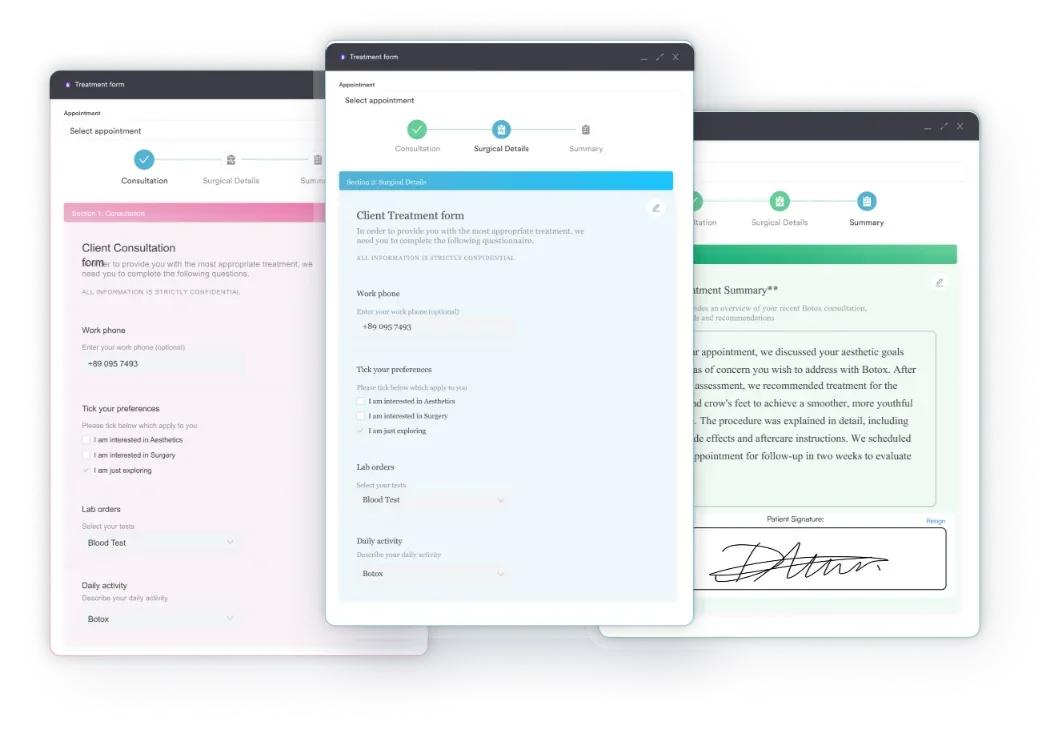

Pabau’s digital forms and patient portal let you share portion guidance, track what patients report eating, and measure the results, all in one platform.

The January 2026 reset is the reason to act now. A chart printed before that date teaches arithmetic the Guidelines no longer use, and patients will follow it exactly as written. Pull those handouts, print the tables above, and date whatever replaces them.
The harder part comes after the appointment. A portion plan only changes behavior if someone checks on it, which is a record-keeping problem more than a nutrition one.
Book a demo to see how Pabau keeps portion plans, weights and follow-ups in one place.

Need the meal plan that sits under these servings? Healthy eating plan template turns the daily counts into a week of meals a patient can shop for.
Recording the baseline first? Height and weight chart gives you a printable place to log starting measurements before you set portion targets.
Want the serving sizes on one page? Nutrition cheat sheet condenses the reference figures into something you can pin above the desk.
Patients eating faster than they notice? The 5-5-5-5-5 mindful eating exercise gives them a structured way to slow a meal down.
Portion advice failing at the store? Grocery list for weight loss moves the plan upstream to what actually gets bought.
Grains convert cleanly. One ounce-equivalent equals one whole grain serving, so a slice of bread still counts as one. Dairy does not convert as neatly, because a cheese serving is now 1 oz rather than 1.5 oz. Recheck cheese and yogurt amounts before reusing an old handout.
Treat it as an estimate rather than a measurement. Hand size tracks body size, so the error stays proportional for most adults. That is accurate enough for teaching and for weight management. Weigh food instead when grams matter clinically, as in renal or ketogenic diets.
Serving sizes stay the same. Calorie needs usually fall with age, so read down a lower calorie column for the daily counts. Protein is the exception worth protecting, since the 1.2 to 1.6 g/kg target holds and supports muscle mass.
Yes, and it matters more. Appetite drops sharply on these medicines, so patients often miss their protein and vegetable servings without noticing. Track those two rows first, and let the grain and fat counts fall with intake.
Review it at every follow-up, and rewrite it whenever weight, medication or activity changes. A four to six week interval works well early on, then stretch it once portions hold steady. Date every copy so nobody works from a superseded plan.