List of vitamins: All 13 with RDAs and deficiency signs
A list of vitamins names the 13 essential vitamins the body needs from food or s...

5
Last Updated: Oct 8, 2026
A detox diet plan is a structured eating protocol that cuts processed foods, added sugar, alcohol and caffeine for three to 30 days. In their place, patients eat vegetables, fruit, legumes, whole grains, lean protein and plenty of water.
The plan doesn’t remove toxins, because the liver and kidneys already do that around the clock. A well-built plan supports those organs by easing their workload and supplying the nutrients they use.
The evidence is mixed. Some patients report better energy, clearer skin and easier digestion, while others notice little change. Your job as a practitioner is to screen patients, set honest expectations and make sure a detox never replaces medical treatment.
A 7-day plan in three phases: A gentle start, juice-and-soup detox days, and a day-7 return to solid food. It also covers pre-detox prep, post-detox food reintroduction, sleep and exercise tips, and space to record observations.
Download template
A detox diet plan cuts processed foods for a set period and focuses on whole foods and hydration. The liver and kidneys still do the detoxing.
Common types include juice cleanses, whole-food protocols, elimination diets, sugar detoxes and cortisol-focused plans. Match the type to the patient’s goals, history and tolerance for restriction.
The 7-day plan, with daily meals, a shopping list and prep notes, is the most practical format. The 3-day version suits a quick reset.
Screen every patient first. Pregnancy, breastfeeding, eating disorder history, Type 1 diabetes and kidney or liver disease all need clinician guidance before a detox starts.
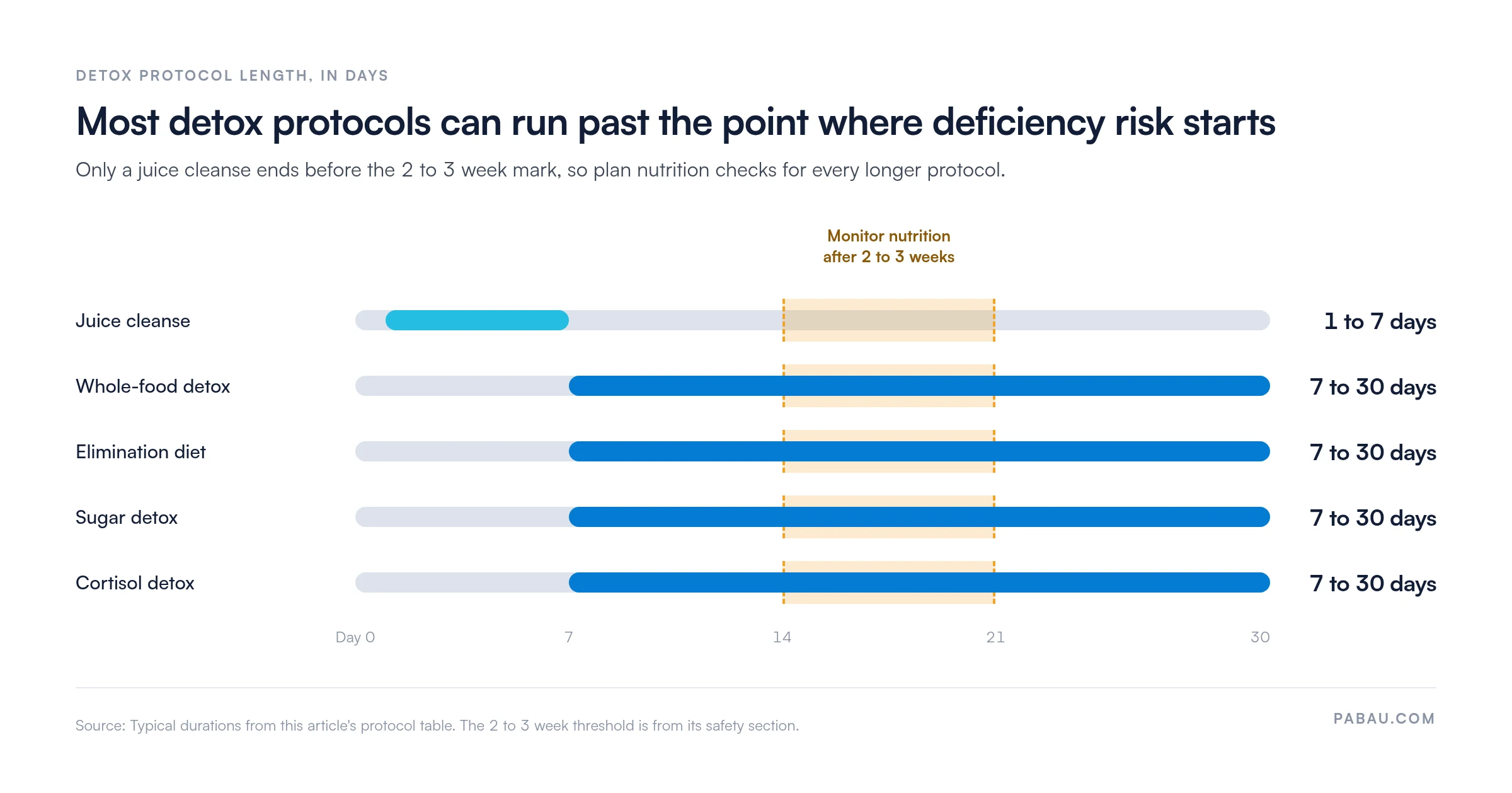
Monitor nutrition on any plan longer than 2-3 weeks, because deficiency risk rises the longer a restrictive diet runs.
A detox diet plan removes processed foods, added sugars, caffeine and, on some variants, red or processed meat and dairy for a set period. It replaces them with vegetables, fruits, legumes, healthy fats and filtered water. The idea is to ease the load on the liver and kidneys, which filter metabolic waste. The plan also supplies micronutrients that the liver’s detoxification enzymes depend on.
Practitioners should keep one distinction clear: The body detoxifies continuously, with or without a special diet. What a detox diet plan can do is reduce inflammation, improve hydration, add phytonutrients and give digestion a break from heavy or frequent meals. Each of these supports natural detox function. Promising a toxin flush erodes patient trust and invites regulatory scrutiny.
Short-term detox plans can improve energy, digestion and skin for some patients, though toxin removal isn’t the reason. The likelier causes are lower inflammation, better hydration and cutting out trigger foods. Long-term research on sustained detox diets remains limited.
The Academy of Nutrition and Dietetics notes a lack of research supporting detox programs and flags fasting as potentially risky. Evidence for commercial detox products is weak. For practitioners, the safest message to patients is short and plain. “This plan may help you feel better and identify trigger foods. It is not a cure and should not replace medical care.”
Detox plans vary by goal and by how much restriction a patient will tolerate. Offering two or three options helps each patient find a plan they can finish.
Every type except the juice cleanse can run past 2-3 weeks, which is when deficiency risk needs monitoring. The chart below shows where each protocol crosses that line.
Every detox plan starts by swapping processed foods for whole, nutrient-dense ingredients. Use this table to guide patient shopping and meal prep.
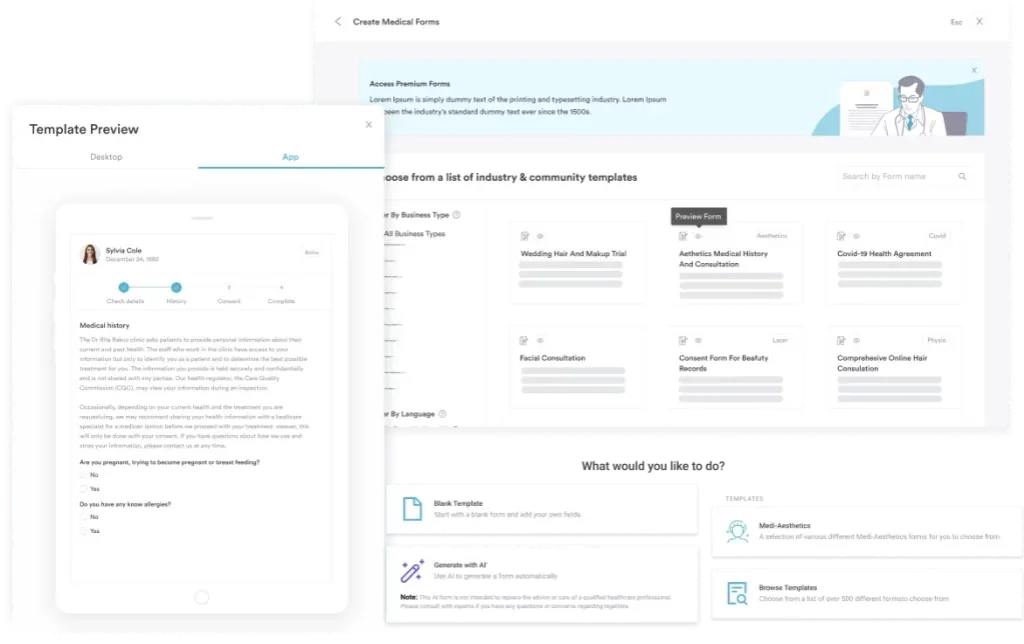
In Pabau, the practice management platform we build, digital intake forms capture dietary preferences, allergies and restrictions before you assign a plan. That way the protocol fits the patient’s lifestyle and medical history from day one.
A 7-day detox diet plan takes the guesswork out of meal prep. The pattern below repeats each day, with simple swaps for variety.
Keep hydration steady, with at least 8-10 glasses of water a day. Pabau’s software for weight-loss practices lets you share this 7-day framework and follow each patient’s progress through Client Portal check-ins.
For patients who want a quicker reset, a 3-day cleanse condenses the protocol into 72 hours of juices and whole foods. Day 1 removes processed foods, and days 2-3 shift to mostly plant-based meals with light proteins. The shorter run carries a lower deficiency risk and suits busy schedules or first-timers testing their tolerance.
Organize the grocery run by food category. It cuts decision fatigue and keeps nutrient intake balanced.
On day 1, wash and chop vegetables, cook grains and portion proteins. Store meals in glass containers to limit plastic exposure. Having food ready each day removes friction and makes patients likelier to stick with the plan.
High added-sugar intake is associated with inflammation and appetite dysregulation, though evidence for “sugar addiction” is limited. A sugar detox eliminates refined carbohydrates and added sugars for 7-30 days. It replaces them with complex carbohydrates, fiber and whole fruits.
This protocol suits patients with blood-sugar swings, frequent energy crashes or strong cravings. For a ready-made version, the 2-week no-sugar meal plan lays out each day. The core principles are short:
Tell patients this discomfort is expected and temporary, so they don’t read it as a warning sign.
Chronic stress raises cortisol, which is linked to inflammation, visceral fat storage and poor recovery. A cortisol detox prioritizes anti-inflammatory foods, cuts caffeine and other stimulants, and supports a regular sleep-wake rhythm.
Evidence that diet alone lowers cortisol is limited, but the anti-inflammatory approach is a sensible fit for stressed patients. Key foods include fatty fish for omega-3s, colorful vegetables, berries and legumes. The anti-inflammatory meal plan covers these foods in more depth.
The liver is the body’s main detox organ. It filters blood and processes waste for elimination. A detox diet plan supports it in two ways. Fewer processed foods means less to metabolize, and the right foods supply the Phase 1 and Phase 2 detoxification enzymes.
Those foods provide B vitamins, glutathione support from cruciferous vegetables, and polyphenol antioxidants from berries and tea. So “liver cleanse” describes nutritional support for the liver, and that’s how to explain it to patients. Patients with fatty liver disease need medical oversight, and a fatty liver diet plan is built for that group.
A full body detox at home needs preparation and regular check-ins with the practitioner. Walk patients through these six steps before they start.
A poorly designed detox plan, or one given to a vulnerable patient, can cause harm. Screen carefully and teach patients the warning signs.
The downloadable template walks patients through pre-detox prep, three phases over seven days and a gradual return to their usual diet. Adapt it by removing foods the patient is allergic to or dislikes. Add supplement recommendations only where they are clinically indicated and within your scope of practice.
Many practices still run detox programs from a PDF, a phone call and a paper food diary. Screening answers sit in one place and symptom reports in another, so a contraindication can slip through at the planning stage.
Pabau brings that work into one system. Intake forms flag pregnancy, Type 1 diabetes or liver disease before you hand over a plan. Automated reminders prompt patients on prep days and before check-ins. Through the Client Portal, patients log meals and symptoms straight into their patient record.
You get a detox program you can stand behind clinically, with every screening answer and check-in stored in one file. Consultations go on adjusting the plan instead of chasing paperwork.

Pabau’s digital forms, automated reminders and Client Portal let you screen patients, share detox plans and track check-ins in one place. Every screening answer stays in the patient record.

A detox diet plan earns its place in your practice when you frame it honestly. Present it as a short, structured reset that eases the load on the liver and kidneys, and patients will trust both the plan and you.
Start most patients on seven days, screen every one before day one, and book a check-in before any plan passes two weeks. The trade-off is worth remembering. A longer plan may surface more food triggers, but it also raises the deficiency risk you have to monitor.
Book a demo to see how Pabau screens detox patients, sends prep reminders and tracks check-ins in one patient record.

Want patients to record what they eat? Food log template sheet gives patients a simple daily record to bring to each check-in.
Running an elimination-style reset? Whole30 food list sets out approved and prohibited foods for a 30-day elimination plan.
Looking for a structured fasting alternative? Fasting mimicking diet meal plan lays out a short, calorie-controlled protocol day by day.
Have patients asking about alkaline eating? Alkaline diet eating plan shows which foods the approach favors and how to build meals around them.
Need a shopping list for life after the detox? Healthy grocery list helps patients keep whole foods in the cart once the plan ends.
A detox diet plan is a structured eating protocol that removes processed foods, added sugars and often caffeine for 3-30 days. It replaces them with vegetables, fruits, legumes and healthy fats to support the liver and kidneys.
Some patients report better energy, clearer skin and easier digestion. These changes usually come from less inflammation and better hydration rather than “toxin removal.” Long-term evidence is limited, and results vary widely between patients.
Eat vegetables, fruits, legumes, whole grains, lean proteins, healthy fats and filtered water. Avoid processed foods, refined grains, added sugars, caffeine, alcohol, fried foods and artificial additives.
Short plans of 3-7 days are safe for most healthy adults, but longer protocols carry nutritional deficiency risk. Contraindications include pregnancy, breastfeeding, eating disorder history, Type 1 diabetes, kidney or liver disease, and chronic illness. Patients should always consult a healthcare provider before starting.
Most practitioners recommend 3-7 days for first-timers, and some patients progress to 14-30 day protocols. Match the length to the patient’s tolerance, goals and medical clearance. Plans longer than 2-3 weeks need nutritional monitoring and possibly supplements.