Trauma response test: Free template for clinicians
A trauma response test is a structured screening questionnaire that helps clinic...

3
Last Updated: Oct 15, 2026

The 5-5-5-5-5 mindful eating exercise, created by clinical psychologist Dr. Susan Albers, gives patients five categories of five go-to options: five people to call, five ways to relax, five places to calm down, five things to say to themselves, and five activities to distract themselves.
It is a distraction and distress-tolerance tool. When an urge to eat is emotional rather than physical, the patient picks one option and does it for five minutes to let the urge pass.
Nutritionists, dietitians, therapists, and weight loss coaches use it for emotional and stress eating. It is often confused with the five-senses raisin mindful eating exercise, which is a separate technique.
With practice management software like Pabau, you can assign the worksheet, save each patient’s five-by-five plan to their record, and track which strategies actually curb their emotional eating.
A ready-to-use worksheet that walks patients through building their personal five-by-five plan: five people to call, five ways to relax, five calming places, five self-statements, and five distracting activities, plus practitioner notes for behavioral health follow-up.
Download templateWhen a patient reaches for food to soothe stress, boredom, or anxiety, telling them to “just eat mindfully” rarely helps in the moment. They need a concrete plan they can reach for before the urge wins. The 5-5-5-5-5 mindful eating exercise gives them exactly that: a short, personalized list of coping options they build in advance and use the moment emotional eating strikes.
The exercise was created by clinical psychologist Dr. Susan Albers, a New York Times bestselling author who specializes in emotional eating. According to Harvard Health Publishing, mindfulness-based strategies like this can help patients manage overeating by interrupting the automatic link between emotion and food. This guide covers what the exercise is, how to run it with patients, and how to assign and track it using practice management tools.
The 5-5-5-5-5 mindful eating exercise is a structured distraction technique for emotional eating. The patient writes down five options in each of five categories, then keeps the list somewhere visible. When they feel the pull to eat for emotional reasons, they choose one option and give it their full attention for five minutes, long enough for the urge to lose its grip.
The five categories are five people to call, five ways to relax, five places to calm down, five things to say to themselves, and five activities to distract themselves. The point is not willpower. It is having a ready-made response so the patient does not have to decide what to do in a vulnerable moment.
This sits within the broader practice of mindful eating, an approach grounded in American Psychological Association principles and used by the Academy of Nutrition and Dietetics in behavioral nutrition. It teaches patients to notice the difference between physical hunger and emotional hunger, then respond to emotional hunger with something other than food.
It is worth clearing up a common mix-up. The 5-5-5-5-5 exercise is not the same as the five-senses raisin mindful eating exercise, where a patient examines one food using sight, smell, touch, taste, and sound. That is a separate awareness technique. The 5-5-5-5-5 is about coping with the urge to eat, not slowing down a meal.
Build the list with the patient in session, then send them home with it. Working through each category together takes about 10 to 15 minutes and makes the plan specific to their life rather than generic advice.
Ask the patient to hang the finished list where they usually eat emotionally, on the refrigerator or a cupboard door. The next time an urge hits, they pick one option and do it for five minutes. Follow up at the next visit with reflection questions: “Which strategy did you reach for?” “Did the urge pass?” “What got in the way?” Their answers become clinical documentation you can build on.
If you want a repeatable opener, this short mindful eating exercise script keeps the framing consistent across patients: “Emotional eating usually starts with a feeling, not real hunger. Today we are going to build your own list of five things to try instead, so that next time the feeling hits, you already know your options. There are no wrong answers here, just things that work for you.” Then work through the five categories in order.
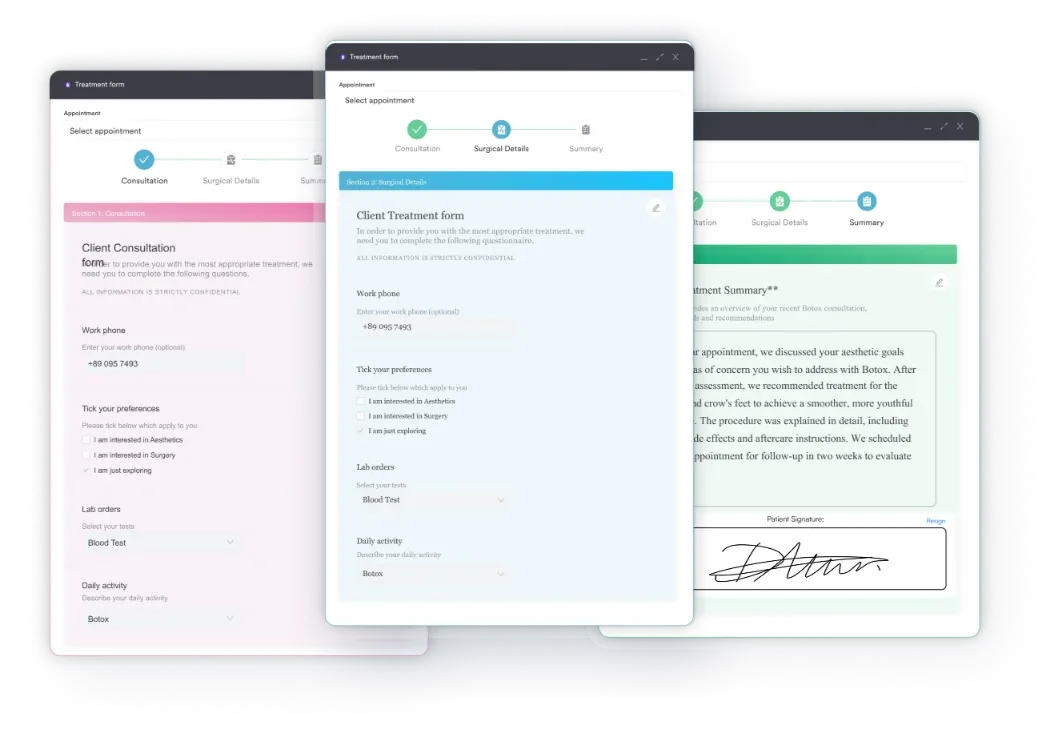
You can use digital intake forms to send the worksheet ahead of the appointment, and capture the patient’s completed plan in your clinical notes for follow-up.
The exercise works best for patients whose eating is driven by emotion rather than hunger. Nutritionists and registered dietitians assign it to patients dealing with emotional eating, binge eating patterns, or late-night snacking they want to change.
Mental health practitioners fold it into therapy for anxiety and low mood that show up as food cravings. Because it is a distraction and distress-tolerance skill, it fits naturally alongside a wise mind skills worksheet and other DBT-informed tools, helping patients pause between the craving and the response and choose from a calmer state rather than impulse. Weight loss clinics use it to break the habit loop that undermines a plan the patient otherwise sticks to.
The exercise suits both individual and group settings. Some practitioners run it as a group activity in wellness classes, where patients compare ideas and borrow strategies from each other. Others assign it as homework between sessions. It needs no special equipment or cost, making it accessible across every clinic type and patient background.
In a psychology practice platform, completed assessments file straight into the client record. Scoring a PHQ-9 or GAD-7 from a set of psychological screening questionnaires at intake gives you a baseline for later sessions.
Separates emotional from physical hunger: Building the list forces a pause in which patients ask whether they are actually hungry. Over time they get quicker at spotting an emotional trigger before they act on it.
Gives patients a plan, not just willpower: A ready-made list of five-by-five options removes the in-the-moment decision. Patients are far more likely to follow a step they chose in advance than to resist a craving on the spot.
Supports behavioral change: Each time a patient rides out an urge with a phone call or a walk instead of food, the emotion-to-eating habit weakens. Small wins build the confidence to tackle bigger changes.
Improves treatment compliance: A simple, personal exercise that produces a quick result engages patients more than abstract nutrition advice.
Creates clinical documentation: The completed plan and the patient’s reflections on which strategies worked become part of the record. That documents the intervention, the response, and readiness for the next step.
Track completion and patient feedback within your practice management system using digital forms. Set automated reminders for patients to try the exercise between sessions, and flag reflections that show real progress, such as a patient who called a friend instead of eating when stressed.
Emotional eating follows a predictable loop: a trigger creates discomfort, food relieves it briefly, and the pattern repeats. The 5-5-5-5-5 exercise works by inserting a different action into that gap. Instead of reaching for food, the patient reaches for a pre-planned coping option and rides out the urge until it fades on its own.
Dr. Albers frames distraction as a way to break free from stress and emotional eating, as long as the activity gets the patient’s full attention for a set time. That is why the five-minute rule matters. A five-minute puzzle or phone call gives the emotional wave time to pass, which is the same principle behind urge-surfing in distress-tolerance work.
Note how often patients report reaching for the list instead of food, and which of their five-by-five options they actually use. This data-driven view strengthens the case for continued use and helps you refine each patient’s plan.
The exercise fits several clinical workflows. In nutrition practice, assign it after the initial assessment once you have identified emotional eating as a pattern. In mental health therapy, introduce it early when treating anxiety or low mood tied to food, since a quick win builds the alliance and shows patients that change is possible.
Group programs benefit too. Running a mindful eating class? Have the group build their lists together and swap ideas. Weight loss program? Introduce it once trust is established, around week two or three. Because it maps onto DBT-style distress tolerance, it also slots into eating disorder treatment as a gentle skill that pairs well with cognitive behavioral therapy.
A restrictive protocol can raise the same urges. Patients partway through a five-day fasting mimicking diet plan can use their list on the low-calorie days instead of breaking the cycle.
Document the assignment and the patient’s completed plan in their record. Note which categories they found easy and which ran dry, since a patient who struggles to name five calming activities may need extra support building coping skills before you add more. Use that detail to personalize the next session.

Assign mindful eating worksheets, capture patient reflections, and track behavioral progress in one integrated platform designed for wellness and mental health clinics.

The 5-5-5-5-5 mindful eating exercise gives patients a practical answer to a hard moment: a personal, pre-built list of five things to try instead of eating when emotions run high. Because they choose the options themselves, the plan sticks better than generic advice, and each urge they ride out chips away at the emotional-eating habit. Download the free worksheet and build a list with a patient at your next session.
To make tracking and follow-up seamless, assign the worksheet through your practice management system and use patient portal features to send reminders and capture reflections. Book a demo with Pabau to see how digital forms and automated wellness workflows fit together, so you finish the day with clinical documentation that shows the intervention working.

Tracking a patient’s heart rate during exercise? Fat burn heart rate chart gives age-based BPM ranges for fat-burning zones, ready to print or share.
Monitoring a patient’s progress after bariatric surgery? Gastric sleeve weight loss chart tracks weight reduction and dietary milestones after vertical sleeve gastrectomy.
Running multiple wellness programs? Patient portal for practice management lets patients access worksheets, track their progress, and stay accountable between sessions.
It is a distraction technique for emotional eating in which the patient lists five options in each of five categories: five people to call, five ways to relax, five places to calm down, five things to say to themselves, and five distracting activities. When an emotional urge to eat hits, they pick one option and do it for five minutes until the urge passes.
It was developed by Dr. Susan Albers, a clinical psychologist and New York Times bestselling author who specializes in emotional eating. She designed it as a practical coping strategy patients can prepare in advance and use whenever a stress-driven craving strikes.
No. The raisin mindful eating exercise is a five-senses awareness technique where a patient slowly examines and eats one food to practice being present. The 5-5-5-5-5 is a coping plan for resisting emotional eating urges. They are often confused, but they serve different clinical goals.
Building the full five-by-five list with a patient takes about 10 to 15 minutes, usually once. After that, using it takes just five minutes in the moment: the patient picks one option from their list and gives it their full attention until the urge fades.
Nutritionists, dietitians, mental health therapists, wellness coaches, and weight loss clinics all use it. It is most effective for patients whose eating is triggered by stress, anxiety, boredom, or low mood rather than physical hunger.
Yes. Group wellness classes, eating behavior groups, and DBT-informed programs often build the lists together. Doing it as a group lets patients compare ideas and borrow coping strategies from one another.
Save the completed plan in the patient’s record and capture reflection responses to structured questions (“Which strategy did you use?” “Did the urge pass?”). Track how often patients reach for the list instead of food, and which options work best, across multiple sessions.