Meal Plan High Blood Pressure Template
A meal plan for high blood pressure is a structured eating plan that lowers bloo...

1
Last Updated: Oct 6, 2026
A blood type O food list sorts foods into what people with type O should eat, limit or avoid under Peter D’Adamo’s blood type diet. It favors red meat, fish, leafy greens and broccoli. It rules out wheat, corn, oats, dairy, most beans and lentils, and cabbage, cauliflower and brussels sprouts.
The evidence that blood type should shape what you eat is weak. Still, the list works as a high-protein framework with fewer processed foods. This guide sets out each list, a 7-day meal plan and a blank checklist for recording each patient’s choices.
A blank, printable two-page checklist with fields for the patient’s name, date of birth and record number. It has item rows for quantity, who is responsible and confirmation, plus a notes page. It comes empty, so you write in the patient’s own food choices from the lists below.
Download template
The blood type O diet prioritizes lean meats, seafood and vegetables and avoids grains, dairy and beans, giving it a high-protein, low-carb structure.
Meat, fish and leafy greens are beneficial for type O blood. Wheat, corn, oats, most legumes, and cabbage, cauliflower and brussels sprouts are on the avoid list.
The diet’s low-carb, high-protein structure may support weight loss, though scientific evidence for blood-type-specific benefits is limited.
Pabau, the practice management software we build, keeps intake forms and the agreed food plan on the patient record for each follow-up.
The downloadable PDF is a blank checklist, not a pre-filled food list, so you write in each patient’s chosen foods, quantities and notes.
The blood type O food list is a dietary reference for type O individuals, both O positive and O negative. The diet comes from Peter D’Adamo’s 1996 book “Eat Right 4 Your Type.” The book proposed that blood type influences which foods a person digests and metabolizes best. To compare all four types side by side, use our blood type diet chart.
The framework categorizes foods into three groups: beneficial (recommended for regular consumption), neutral (tolerated in moderation), and foods to avoid. For type O blood, the diet emphasizes animal proteins and eliminates most grains and legumes. The theory is that type O individuals tolerate lectins poorly, and lectins are compounds found in certain plant-based foods.
The chart below sorts the type O list into those three groups, so you can see where each food group falls before reading the detail.
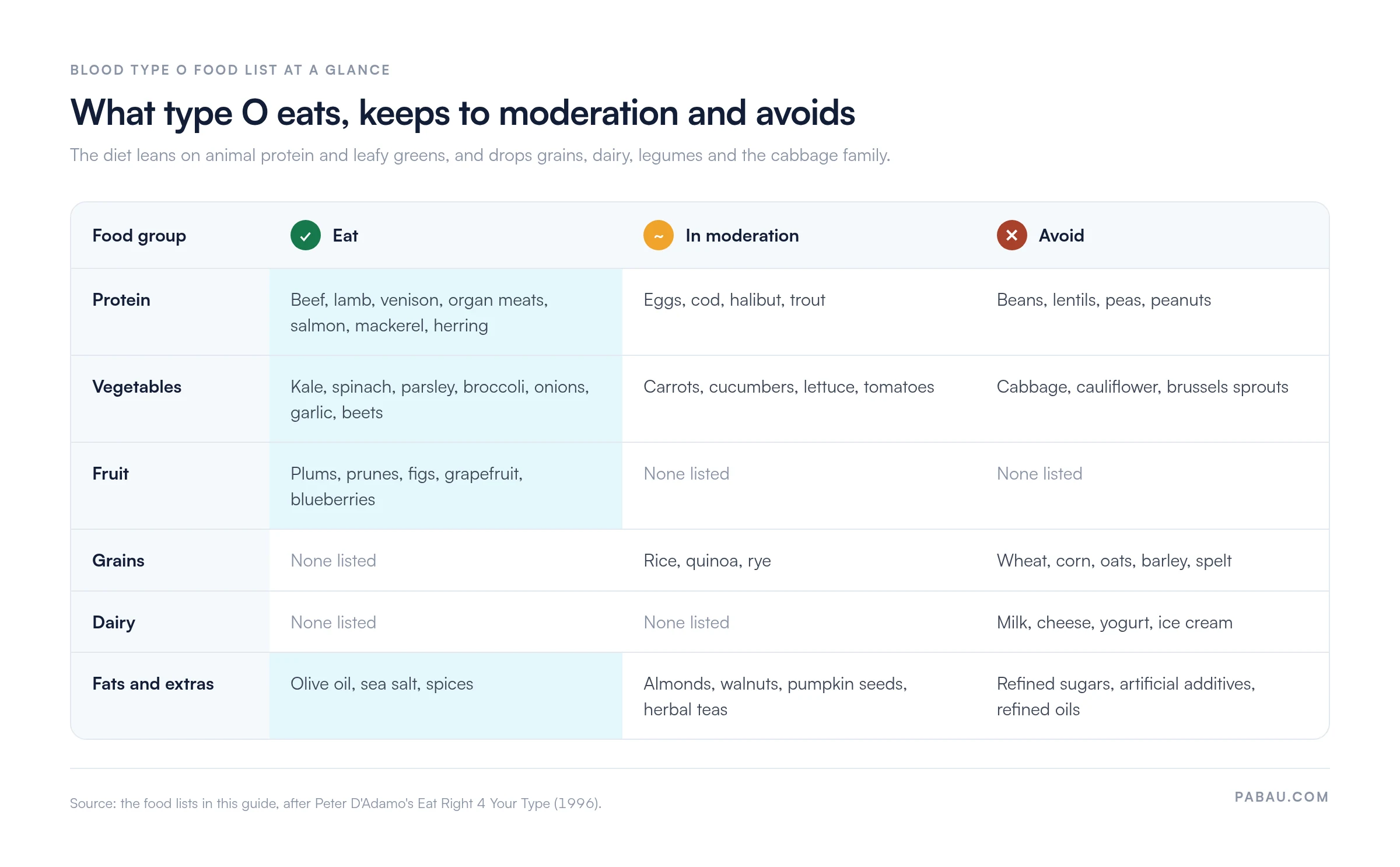
Type O individuals on this diet are encouraged to eat high-protein, nutrient-dense foods. The recommended foods fall into several core categories:
Lean meats form the foundation of the blood type O diet. Recommended animal proteins include beef, lamb, venison, turkey, and cold-water fish such as salmon and mackerel. These foods provide the high protein intake central to the type O framework.
Leafy greens and broccoli are the most beneficial vegetables for type O. Other cruciferous vegetables sit on the avoid list instead. Beneficial fruits tend toward lower-sugar options:
Olive oil is the preferred cooking oil. Sea salt, spices, and vinegar-based condiments are generally well-tolerated on the blood type O food list.
The blood type O diet excludes several food groups that D’Adamo considered incompatible with type O digestion. The table sets out each group and the reason the framework gives.
Neutral foods are tolerated in moderation by type O individuals. The framework treats them as neither harmful nor especially beneficial, so they can round out meals in sensible portions.
This week of meals shows how the type O lists turn into breakfast, lunch and dinner. Each dish draws on beneficial or neutral foods and leaves out the avoid list.
Patients who like the protein focus but not the blood-type rules can follow a general high-protein diet plan instead.
Scientific evidence for blood-type-specific diets remains limited. Peer-reviewed research does not show that blood type should change how a person eats for better health.
A 2014 study published in PLoS ONE compared blood-type diets against each person’s ABO genotype. Matching the diet to the genotype did not change its effect on cardiometabolic risk factors. Benefits some people experience may reflect general principles of eating more lean protein and fewer processed foods, not blood-type specificity.
Practitioners should frame the diet as an informational framework, not as a medical necessity. Encourage patients to consult a registered dietitian before making major dietary changes.
The high-protein, low-carbohydrate structure of the blood type O food list can support weight loss by reducing overall calorie intake and promoting satiety. Protein increases the thermic effect of food and helps preserve muscle mass during caloric restriction.
However, weight loss on the blood type O diet likely reflects the calorie deficit created by eliminating entire food groups rather than blood-type-specific metabolic advantages. Any sufficiently restrictive diet that reduces calorie consumption will produce weight loss. Practitioners should emphasize sustainable portion control, physical activity, and overall energy balance rather than attributing results to blood type matching.
Practices that run structured weight programs can keep weigh-ins, food plans and check-ins in one place with weight loss clinic software.
The blood type diet framework does not differentiate between O positive and O negative blood types. The Rh factor (positive or negative) is treated as separate from the ABO blood group system in the original D’Adamo model.
Type O positive and O negative individuals follow the same food list. Rh status reflects whether the RhD antigen is present on red blood cells. It plays no part in the lectin-binding theory behind the blood type diet.
The downloadable PDF is a blank, fillable checklist rather than a printed food list. It does not list any foods, categories or rules. You and the patient fill it in together, using the beneficial, neutral and avoid lists above as the source.
If you need a baseline first, a nutrition assessment form records the patient’s current diet before you agree any changes.
The first page has fields for the patient’s name, date of birth, record or MRN number and who prepared the sheet. Below that sit four sections: Essentials, Documents and paperwork, Useful but optional, and Anything else. Each section has rows for the item, quantity, who is bringing it and a confirmed box. The second page is a blank notes page.
The section names and the “who is bringing it” column were written for a general checklist, so adapt them as you go. One workable approach looks like this:
Tick the confirmed box once the patient has agreed to each item. Then file the completed sheet with their record so the next appointment starts from the agreed plan.
A paper checklist works in the room, but it rarely survives the drive home. The patient loses it, and the practice keeps no copy of what was agreed or when.
Pabau keeps that information on the patient’s file instead. Digital intake forms collect dietary history, restrictions and goals before the first consultation. The agreed food plan and your notes then sit in the same record as every later visit.
Automated follow-ups carry the plan forward between appointments. A check-in a couple of weeks later asks how the changes are going, and you can see what was sent and what changed since.

Pabau collects dietary history through digital intake forms and stores the agreed plan on the patient’s file. Automated follow-ups then check how the changes are going between visits.

The blood type O diet rests on weak evidence. Its emphasis on lean protein, vegetables and fewer processed foods is still sound advice for most patients. Present it as a framework the patient has chosen, not a prescription their blood type demands.
The trade-off worth watching is what the diet removes. Cutting grains, dairy and legumes at once can leave a patient short on fiber and calcium. Involve a registered dietitian and review the plan at a set date.
Fill in the checklist with the patient, agree the first changes, and book the follow-up before they leave. Book a demo to see how Pabau keeps dietary plans and follow-ups on the patient record.

Need to structure patient nutrition consultations? Metabolic health EMR gives you a framework for documenting nutrition assessments and dietary progress across patient visits.
Comparing the four blood types? Blood type diet chart sets out foods to eat and avoid for types O, A, B and AB.
Want a similar plan without the blood-type rules? Paleo diet plan keeps the meat, fish and vegetables and drops grains, legumes and dairy.
The blood type O food list is a dietary framework for people with type O blood. It favors high-protein, meat-based foods and restricts grains, dairy, and legumes. It originated from Peter D’Adamo’s “Eat Right 4 Your Type” theory, based on the concept that blood type influences food compatibility.
Type O individuals are advised to avoid wheat, corn, oats, most beans and lentils, dairy products, and refined foods containing high sugar and artificial additives. These foods are believed to contain lectins or compounds incompatible with type O digestion.
Type O individuals can eat small amounts of neutral grains, including white and brown rice, quinoa and rye. Wheat, corn, barley, oats and spelt are on the avoid list.
Peer-reviewed research gives little support to blood-type-specific diets. A 2014 PLoS ONE study found that matching the diet to blood type did not change its cardiometabolic effects. Observed benefits likely reflect general healthy eating principles rather than blood-type matching.
The download is a blank two-page checklist, not a pre-filled food list. It has patient details fields, item rows with quantity and confirmation columns, and a notes page. You write in the patient’s own food choices from the lists in this guide.