Blood type O food list
A blood type O food list sorts foods into what people with type O should eat, li...

1
Last Updated: Oct 6, 2026
A meal plan for high blood pressure is a structured eating plan that lowers blood pressure through food choices. Most follow the DASH (Dietary Approaches to Stop Hypertension) pattern from the National Heart, Lung, and Blood Institute (NHLBI). It limits sodium, often to 1,500 mg a day, and builds meals around vegetables, fruit, whole grains, lean protein and low-fat dairy.
The free download is a two-page care plan form, not a printed menu. You fill it in with the patient to record their background, up to five diet goals and seven agreed actions, then log each review. The 7-day DASH menu, food lists and nutrient targets below are on-page reference content to draw on when you set those goals.
A two-page care plan form for DASH diet counseling, with space for patient details, background, five goals with target dates and seven actions with owners. It also covers support in place, what to do if things change, a five-row review record and signature lines.
Download template
A meal plan for high blood pressure follows the DASH diet, built on potassium-rich fruits, vegetables and whole grains. Standard DASH caps sodium at 2,300 mg a day, and the lower-sodium version at 1,500 mg lowers pressure further.
In the DASH trial, the diet lowered systolic pressure by about 11 mmHg in adults with hypertension, making it a first-line lifestyle intervention. The 8-14 mmHg figure often quoted is the older JNC 7 range.
The downloadable PDF is a blank care plan form for agreeing goals, actions and review dates with each patient. The menu and food lists live on this page.
In Pabau, the practice software we build, you can rebuild the plan as a digital form and automate follow-up reminders.
A meal plan for high blood pressure gives clinicians and patients a structured eating framework based on proven dietary science. The DASH diet, developed by the NHLBI, is the evidence-backed standard for hypertension management.
DASH emphasizes five core food groups: fruits, vegetables, whole grains, lean proteins, and low-fat dairy, while restricting sodium, saturated fats, and added sugars. The menu and food lists on this page turn those guidelines into daily meals, and the downloadable form records what each patient agrees to change.
Generic diet advice stops at “eat less salt.” A clinical meal plan adds portion sizes, a daily sodium target and foods sorted by category. That structure helps patients shop and prep meals without guesswork.
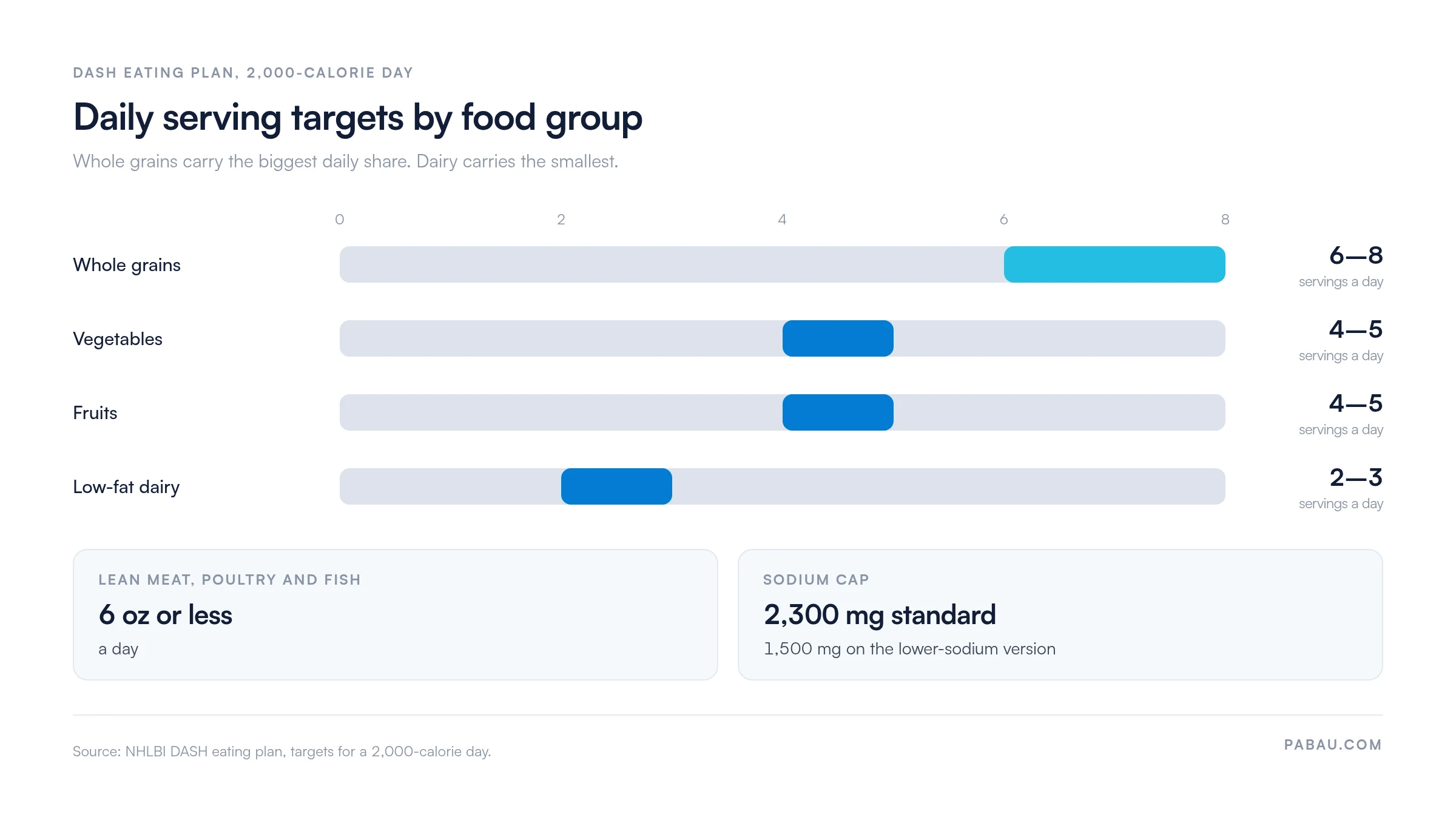
Standard DASH caps sodium at 2,300 mg a day. The lower-sodium version, at 1,500 mg, lowers blood pressure further and matches the AHA’s ideal limit for most adults.
In the original DASH trial, the diet lowered systolic pressure by about 11 mmHg in adults with hypertension. Across all participants, the drop was about 5-6 mmHg. The 8-14 mmHg range often quoted comes from the older JNC 7 guidelines. Combined with sodium restriction and weight loss, that drop is comparable to some first-line antihypertensive drugs.
Potassium, magnesium, and calcium, all abundant in DASH foods, promote vasodilation and reduce sodium-driven fluid retention. Fiber intake improves endothelial function. Limited saturated fat and sodium intake reduces arterial stiffness and sympathetic tone. These changes compound when patients follow a consistent meal plan over 4-6 weeks.
Four nutrients do most of the work in a DASH eating plan. The table gives each one’s daily target, how it affects blood pressure and where patients get it.
DASH sorts foods into groups, each with a daily serving target for a 2,000-calorie day. The chart after the list sets those targets side by side, and the DASH diet food list gives patients a printable version to shop from.
A typical DASH breakfast example: oatmeal with blueberries, sliced banana, and unsalted almonds, plus one glass of low-fat milk. This single meal delivers potassium, magnesium, calcium and fiber.
Certain food categories directly raise blood pressure or cancel out DASH benefits. These are the groups to cut back first, with typical examples of each.
Simple swaps that work:
This sample week is on-page reference content and is not part of the downloadable PDF. Each day includes breakfast, lunch, dinner and snacks, built from the food lists above.
Targets to plan the week around: 1,500 mg sodium, 2,000-2,200 calories and 25-30g fiber. Adjust portions for each patient’s needs, then write the targets you agree into the goals section of the form.
The downloadable form turns DASH advice into a written plan the patient agrees to. Work through it together at the first diet consultation, in this order.
The menu and food lists on this page supply the material for the goals and actions. The form records what the patient agreed, so each review starts from a written baseline.
A DASH breakfast combines a whole grain, fruit, and low-fat protein or dairy. Here are eight options clinicians can recommend:
A meal plan only lowers blood pressure while the patient keeps following it. These five habits make that easier to teach:
A paper care plan usually leaves with the patient and stays in a drawer until the next appointment. If home readings climb in week two, the practice often hears about it only at the review.
Pabau lets you rebuild this plan as a digital form. Each completed version is stored in the patient record, so goals, actions and review entries sit next to the treatment notes. Pabau also works as software for weight loss clinics, so practices running weight management programs use the same records and reminders.
Pabau’s automated workflows send review reminders by email or SMS before each follow-up. Through the Client Portal, patients can book their next review themselves, which keeps the week 2, 4 and 8 check-ins on schedule.

Pabau stores each care plan and review in the patient record and sends follow-up reminders automatically, so diet goals get checked on schedule.

Diet advice for hypertension rarely sticks when it arrives as a menu and a sodium number. It sticks when the patient has agreed a short list of goals, knows who owns each action and has a review date.
So use the menu and food lists here for the content, and the form for the commitment. Start with two or three goals the patient believes they can hit, then add more at each review. The trade-off is pace. Fewer goals at the start take longer, but patients are far more likely to keep them.
Leave medication decisions with the prescriber, and treat diet change as one part of the treatment plan. Book a demo to see how Pabau keeps care plans, reviews and reminders for blood pressure patients in one place.

Need a plan focused on sodium alone? Low-sodium diet meal plan sets daily sodium limits by condition, with a 7-day menu.
Recording a patient’s starting point? Nutrition assessment form captures diet history before you set blood pressure goals.
Treating raised cholesterol as well? High cholesterol diet plan covers the dietary side of a patient’s wider cardiovascular risk.
Planning care beyond the diet itself? Nutrition care plan sets out goals and interventions across a patient’s wider nutrition care.
Writing up diet follow-ups? Nutrition SOAP note structures the notes from each review visit.
A meal plan for high blood pressure is a DASH diet-based eating structure that limits sodium to 1,500 mg/day. It emphasizes potassium-rich fruits, vegetables, whole grains, lean proteins, and low-fat dairy to lower and maintain healthy blood pressure.
The American Heart Association recommends an ideal limit of 1,500 mg a day for most adults, including people with hypertension. Standard DASH caps sodium at 2,300 mg a day, and its lower-sodium version, at 1,500 mg, lowers blood pressure further. Excess sodium increases fluid retention and arterial stiffness, raising blood pressure acutely and chronically.
High-sodium processed foods (canned soups, deli meats, instant noodles) and alcohol can acutely raise blood pressure within hours. Refined carbohydrates and added sugars impair endothelial function over time. Limiting these categories is a core strategy in the DASH meal plan.
The PDF is a two-page care plan form. It has fields for patient details, background, five goals, seven actions, support in place, what to do if things change, a review record and signatures. The 7-day menu and food lists are on this page, not in the PDF.