Reflection questions: 14 examples and a free template
Reflection questions are open-ended prompts that guide a person through structur...

8
Last Updated: Oct 16, 2026

A goal planner is a structured worksheet that walks a patient through setting specific, measurable, achievable, relevant, and time-bound goals.
The strongest planners cover the objective, the milestones, the weekly actions, the likely obstacles, and the check-in dates.
This free template includes the SMART framework, weekly breakdowns, and variations for life goals, money goals, and habit tracking.
Practice management software like Pabau turns a paper planner into a tracked record, with automated check-in reminders between appointments.
Inside you get a SMART goal worksheet, a milestone map, a weekly action grid, an obstacles-and-solutions page, and a progress log. Print it for the consultation or send it through your patient portal.
Download templateA goal planner is a worksheet that turns a vague intention into a dated, measurable plan. Your patient writes down what they want, how it will be measured, and what they will do this week. Most goal-setting worksheets online are written for students and office workers. This one is written for the consultation room.
This guide walks through filling the planner in with a patient, choosing metrics you can verify, and keeping the plan alive between appointments. It also covers how the completed sheet earns its place in the patient record.
A goal planner is a structured worksheet that guides you and the patient through the goal-setting conversation. It gives every review the same starting point, so progress never depends on how well either of you remembers last time.
Without a structure, patients set intentions nobody can hold them to: get healthier, lose weight, feel better. A planner forces the follow-up questions. How much? By when? And what will you do this week?
Patients who can see measurable progress keep booking.
An effective worksheet covers eight components. Each one has a job in the goal-achievement workflow.
Progress against each milestone can then be carried straight into your SOAP progress notes. No printout sits in a drawer waiting to be transcribed at the next visit.
SMART stands for specific, measurable, achievable, relevant, and time-bound. Here is how to work through it with a patient, one letter at a time.
Here is the same goal before and after the framework, worded the way a patient would write it in the planner.
The second version tells you what to measure, when to measure it, and what to ask about at the next check-in. Pair it with a blood sugar chart so every reading lands in one place.
The same discipline shows up elsewhere in clinical work. A psychiatric evaluation template uses fixed fields and dated review intervals for exactly this reason.
Running this form inside a GP practice system keeps clinical documentation in one place.
One layout does not suit every goal. Three variations cover most of what patients bring in.
Life goal planners cover personal development, health milestones, and long-range direction. Think finishing a certification, repairing a relationship, relocating, or starting a family.
Patients who struggle to pick a direction often do better starting with an ikigai worksheet and working back to a single goal.
Financial planners focus on saving targets, debt reduction, investment milestones, or income growth. They need tighter tracking of deposits, withdrawals, interest, and budget adherence.
Weekly planners break a 12-month goal into tasks the patient can start on Monday. Behavior change happens here, in the small habits that compound over a year. A wellness planner template does the same job for health goals, pairing the week’s targets with a written record of how it went.
Practices running automated workflow reminders can send that weekly prompt for you, so momentum does not depend on the patient remembering. For a weight-loss goal.
Tracking is what separates a filled-in worksheet from a plan that changes behavior. Build these six habits into your follow-up.
A planner nobody looks at between visits is a planner the patient quietly stops filling in.
Add a short ‘why does this still matter to me?’ question to the mid-point review. If the answer has changed a lot, revise the goal itself rather than the action steps. That keeps the plan tied to motivation instead of obligation.
Most practices hand the planner over on paper. The patient takes it home, the practitioner keeps a photocopy, and the next conversation starts from whoever remembers more.
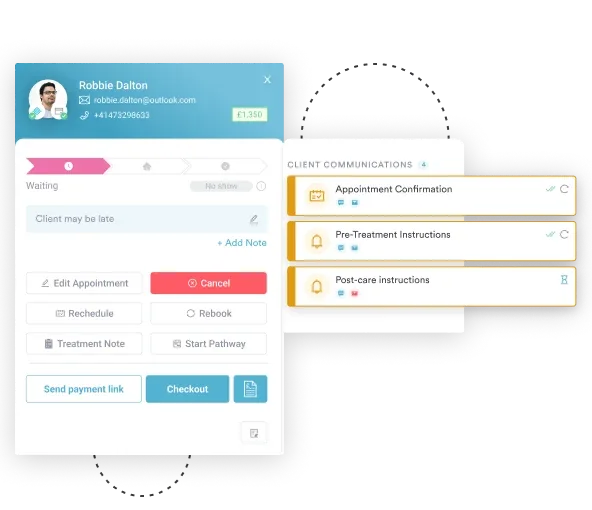
Practice management software like Pabau puts the planner where both of you can see it. You build it once as a digital form and send it before the appointment. The answers land straight in the patient record, on the same timeline as treatment notes and photos.
From there the follow-up runs itself. Automated messages send the weekly check-in. That means less note-taking after hours.
Every subscription includes every feature, so goal tracking is not something you pay extra to unlock.

Pabau’s digital forms and patient portal let you hand over goal planners, send automated progress reminders, and track outcomes in one place. Practices spend less time chasing follow-ups and more time with patients.

Filling in the planner is the easy part. What decides the outcome is the dated review you both agreed to, and whether anyone reads the sheet in between.
So download the template, complete one with your next patient, and set the check-in dates before they leave the room. Do that and the goal stops being a conversation and becomes a plan you can both point at.
Book a demo to see how Pabau delivers goal planners, automates the check-in reminders, and keeps every entry in the patient record.

Do your patients’ goals stall when stress spikes? Grounding techniques worksheet gives them something to reach for before the plan falls apart.
Not sure why a goal keeps slipping? Unmet emotional needs worksheet helps surface the motivation sitting underneath the stated target.
Working on small daily habits rather than one big target? Gratitude jar worksheet is an easy way to build a repeatable weekly ritual.
Setting relationship goals with a couple? Marriage boundaries worksheet turns vague relationship intentions into agreements both partners can name.
Want to read the room better during the goal conversation? Nonverbal communication worksheet covers the cues that tell you a patient is not really committed.
A goal planner worksheet is a structured form for defining, breaking down, and tracking a health or wellness goal. It usually covers the goal statement, why it matters, SMART criteria, milestones, action steps, obstacles, and progress. The completed sheet doubles as an accountability record in the patient file.
Eight sections cover it. Start with the goal statement, why it matters, and the SMART criteria. Then add milestones with target dates, weekly action steps, obstacles and solutions, progress checkpoints, and accountability partner details.
Review weekly or every two weeks for the first four to six weeks, then move to monthly once the routine holds. Weekly check-ins suit high-intensity goals like weight loss, fitness, and habit change. Monthly reviews are enough for longer horizons such as career changes or financial milestones.
Specific says what exactly. Measurable says how much and how often. Achievable keeps the scope realistic. Relevant ties the goal to what the patient cares about. Time-bound sets the deadline. The planner gives each criterion its own field to fill in.
Both work. A printed sheet lets patients write during the consultation, which tends to hold their attention better. A digital copy in the patient portal supports automated reminders and easy updates between visits. Plenty of practices offer both.
Break it into smaller milestones rather than turning it down. “Lose 50 pounds in three months” becomes “lose one to two pounds a week” with a six to 12 month horizon. Ambitious motivates and impossible demoralizes, so keep the timeline inside what the evidence supports.