Getting along with siblings worksheet
A getting along with siblings worksheet is a printable that helps children and t...

2
Last Updated: Oct 23, 2026

Nonverbal cues often carry more emotional weight than spoken words, which makes them central to clinical rapport and assessment.
The free worksheet has five sections: understanding cues, observing cues, matching verbal and nonverbal messages, practicing skills, and peer feedback.
Its first section asks the client for two written examples each of facial expressions, body language, tone of voice, and eye contact.
There are no fields for personal space or touch, so raise those in discussion if they matter to the client’s goals.
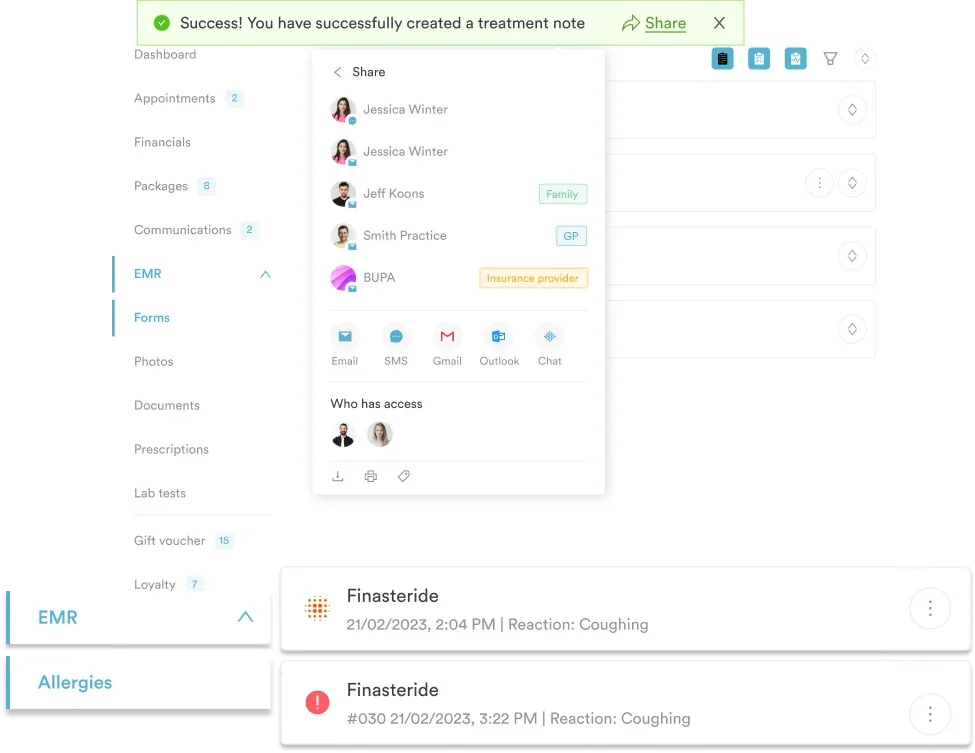
Practice management software like Pabau keeps completed worksheets in the client record, so progress on communication goals stays visible between sessions.
A five-section printable worksheet for therapists, counselors, and educators. Clients record examples of facial expressions, body language, tone of voice, and eye contact, then work through observation, matching, practice, and peer feedback prompts.
Download templateA nonverbal communication worksheet is a structured form that helps a client see how they read and use nonverbal cues. This free download gives you five sections of prompts. They move the client from naming cues, to observing them, to practicing one behavior and gathering feedback on it.
It fits therapists, counselors, coaches, and educators working with clients on communication skills. The form stays deliberately light. There is no rating scale, no scoring key, and no field for personal space or touch.
Nonverbal communication refers to the transmission of messages without spoken words. It includes facial expressions, tone of voice, body movement, spatial distance, and touch. Research from the American Psychological Association (APA) confirms that nonverbal cues often carry more emotional weight than verbal content in interpersonal settings.
For clinicians, the practical value is timing. Clients often communicate distress, trust, or resistance through body language before they can put it into words. In mental health practices.
Nonverbal communication operates across seven primary channels. Each one shows up in the treatment room, and the worksheet asks the client about four of them.
Those four are facial expressions, body language, tone of voice, and eye contact. Personal space and touch appear nowhere on the form, so bring them into the conversation yourself when they are relevant.
Verbal communication delivers the explicit content. Nonverbal communication carries the emotional context and the authenticity behind it. When the two conflict, clinicians usually treat the nonverbal message as the more reliable one.
Filing completed forms in patient management software keeps documentation consistent across your whole team.
The download is a single printable form with a name and date field, followed by five sections. Every section leaves blank space for the client to write in, so it works either as homework or as a guided in-session activity.
There is no rating scale and no scoring key anywhere on the form. That keeps it quick to complete, and it leaves the interpretation with you and the client.
Section two is the observation exercise, and it is three open questions rather than a channel-by-channel checklist. Here is how to run it with a client or a student.
Send it as a digital form instead of paper and the completed answers sit next to your session notes. Over several months that becomes a record of how the client’s communication skills changed.
The reflective work sits in sections four and five. Section four opens with a check-all-that-apply list of behaviors to focus on in the next interaction.
Two written prompts follow the checklist. The client answers which behavior they will practice, then names the strategy they will use to remind themselves to practice it. That pairing turns a noticing exercise into a commitment with a cue attached to it.
Section five brings in an outside view. The client asks a trusted friend or colleague to watch their nonverbal communication during a conversation. They then write down that person’s answers to two questions.
An additional notes area closes the form. It is the natural place for anything the client wants to raise at the next appointment, including reactions they found surprising or uncomfortable.
These prompts encourage self-examination and build metacognitive skills around communication.
You can work through the form in the room or send it home as homework. Both approaches fit a session focused on communication skills. The completed form also feeds case conceptualization later.
This structured approach keeps the worksheet a therapeutic tool rather than an assignment the client completes and forgets.
The worksheet says nothing about cultural context, so that part is on you. What signals openness in one culture may signal disrespect in another.
Western contexts often treat steady eye contact as a sign of honesty. In parts of Asia, Africa, and Latin America, the same behavior reads as disrespectful toward an authority figure.
When using the worksheet with clients from diverse backgrounds, keep four points in mind.
Adding that lens keeps the worksheet an exploration of the client’s own norms. Without it, section one can drift into a list of expressions the client believes they are supposed to produce.
Section four asks the client to pick one behavior and practice it. These are the four printed options, each with a concrete way to work on it.
The form also leaves an “Other” line, so a client working on personal space or touch can name their own target. Homework like this works best when progress is tracked. A client portal lets clients log what they tried, so you can review it together at the next session.
The form earns its place in several disciplines, for slightly different reasons.
The common thread is a client whose words and body language are sending different messages.
A consistent starting point. Rather than relying on clinical impression alone, you give every client the same four cue categories. The reflection prompts are identical too, which makes two sessions comparable.
Client education and awareness. Many clients are unaware of their nonverbal patterns until those patterns are explicitly named and explored. The worksheet speeds that learning up.
Documentation and compliance. Completing the worksheet creates a written record of the client’s baseline and progress over time. That record supports treatment planning and the outcome tracking expected by insurers and professional bodies such as the National Association of Social Workers (NASW).
Skill generalization. The practice behavior in section four and the peer feedback in section five both happen outside the room. That pushes the work into everyday conversations.
Paper is the default for homework like this. The completed form goes into a folder, or gets scanned weeks later. Those answers then sit outside the notes you read before the next appointment.
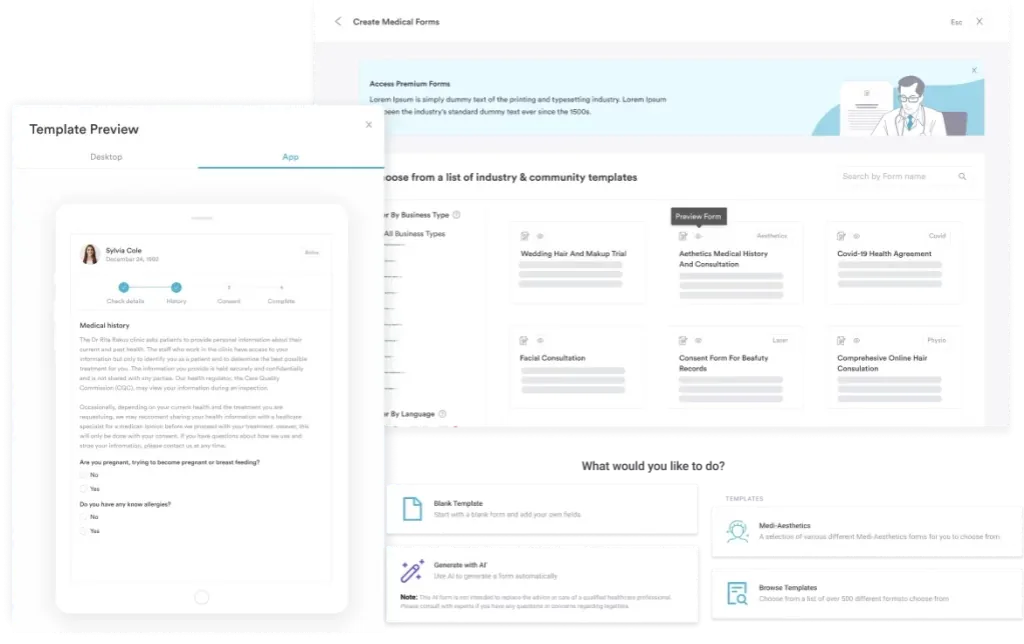
Practice management software like Pabau handles the same worksheet as a digital form. You send it to the client ahead of the session, and their answers save straight into the client record against the correct date. Nothing needs printing, chasing, or filing afterward.
That changes what you can do at the next appointment. Pull up the behavior the client chose in section four and set it beside the peer feedback from section five. Progress on a communication goal becomes something you can show the client.

Pabau’s digital forms send the worksheet out before the session and file the answers in the client record. Progress on communication goals stays visible to everyone on the care team.

A worksheet earns its session time when the client leaves with one thing to practice. This one narrows from four categories of cues down to a single behavior and a reminder strategy. That design suits homework better than a one-off exercise in the room.
The trade-off is measurement. With no rating scale, nothing on this form gives you a score to compare across sessions. Anything you want to track has to come from your own notes.
Download the form, use it with a couple of clients, and decide where it fits in your communication work. Book a demo to see how Pabau files completed worksheets in the client record and keeps progress visible between sessions.

Looking for a projective assessment instead? Thematic Apperception Test reveals personality traits and emotional functioning through client responses to ambiguous picture stimuli.
Working with a client whose anxiety shows in the body? Grounding techniques worksheet gives them printable exercises to steady themselves before a hard conversation.
Need to look past the behavior itself? Unmet emotional needs worksheet helps a client connect what they feel to what they are asking for.
Setting homework between sessions? Growth mindset worksheet is another printable the client can complete at home and bring back to discuss.
Teaching interpretation skills to a group? Fact or opinion worksheet runs the same exercise with written statements instead of nonverbal cues.
Nonverbal communication is the transmission of messages without words, including facial expressions, gestures, eye contact, posture, space, touch, and tone of voice. These cues often communicate emotional authenticity and relational intent more reliably than spoken words.
The worksheet has five sections: understanding nonverbal cues, observing nonverbal communication cues, matching nonverbal and verbal communication, practicing nonverbal skills, and feedback from others. Each one leaves blank space for the client to write in.
Yes. Modify the language for the client’s developmental level. Younger children benefit from simple observation prompts and drawing. Adolescents can engage with the full worksheet, including the peer feedback section.
Use the worksheet once or twice per treatment episode for communication-focused work, or as part of a broader social skills curriculum. Once clients grasp the concepts, shift the focus to real-world application and behavioral change.
Store the completed worksheet in a HIPAA-compliant practice management system and it is treated as protected health information (PHI). The same security and privacy rules apply as for any other clinical documentation.
Absolutely. Group observation exercises are effective for building awareness and normalizing diversity in nonverbal communication. Ensure informed consent and psychological safety when asking participants to observe or discuss each other’s nonverbal patterns.