Cervix length during pregnancy chart
A cervix length during pregnancy chart records cervical length in millimeters ag...

Last Updated: Oct 14, 2026
A food shopping checklist is a categorized list of the groceries you plan to buy on one trip. Grouping it by aisle lets you shop the store in a single pass. Work down it in store order and you stop doubling back for the item you missed two sections ago.
The breakdown further down covers produce, proteins, dairy, pantry staples, frozen foods, condiments, and snacks and beverages. The free PDF at the top of this page is the practice version of the same idea. It is a printable dietary review form a dietitian fills in with a patient.
Households use the categories to plan a weekly shop. Dietitians and weight management teams use the form to record what a patient eats day to day. Its fields stay comparable from one review to the next.
The printable form opens with identity, consent and allergy checks, then steps through intake patterns, portion detail, tolerances and exclusions. It closes with adherence barriers, practical substitutions, an outstanding-items table and a signature line.
Download template
A food shopping checklist groups planned purchases by aisle, so you walk the store once instead of doubling back.
Grouping foods by category helps you remember items and avoid a return trip, according to Nebraska Extension.
Meal planning before you shop is linked to less food waste, according to Love Food Hate Waste.
The downloadable PDF is the practice version, a dietary review form that records intake, tolerances and adherence barriers.
Pabau’s digital forms store a completed checklist against the patient record, so each review opens with the last one.
A food shopping checklist is a structured record of what a household or practice needs to buy. Items sit under a category heading rather than in the order they came to mind. Each category maps to a section of the store, so the list doubles as a route through it.
The clinical version works the same way. Dietitians use categorized fields to record intake patterns, portion detail and barriers to adherence. That keeps each review comparable with the one before it.
The template is designed to be completed in a fixed sequence. Following the same steps each time keeps your records consistent.
Whether you shop for yourself or support patients, keep one master copy and duplicate it for each review period.
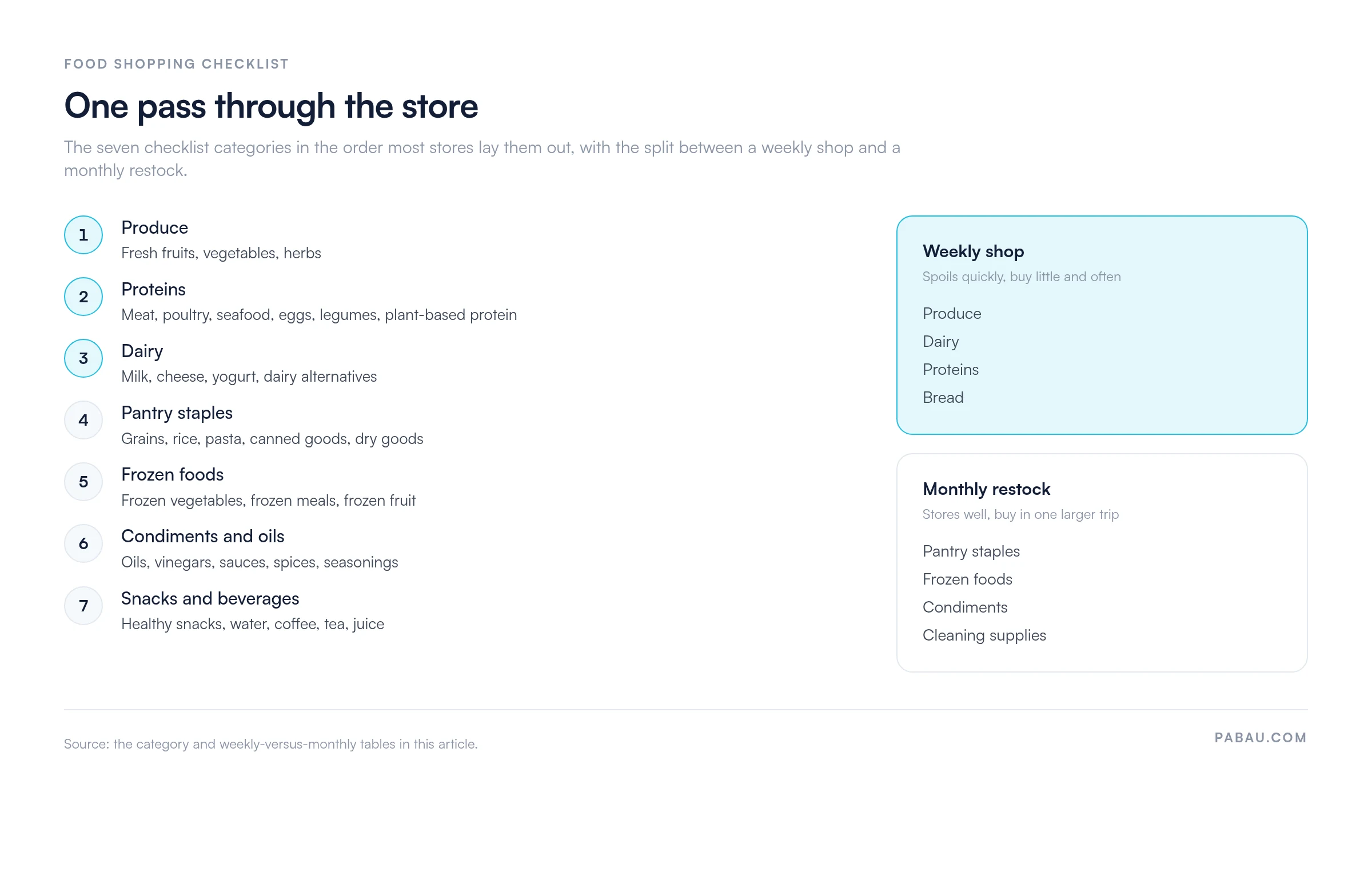
Grouping items this way matches how most stores are laid out, which is why the category approach is so popular. The breakdown below covers the sections a weekly shop usually needs.
Pantry staples and produce do most of the work in a basic plan. Start there, then add the rest. Walked in the order below, those seven categories make one loop of the store.
Households with a weekly budget benefit from a category list because it limits unplanned purchases. Families with several people to feed use it to spread the shop across the week.
Patients on a set plan usually need a narrower version. A diabetic food grocery list or a keto grocery list starts from the same seven categories, then fixes what is allowed inside each one.
Dietitians and nutrition practitioners use the form in nutritional support consultations. Primary care and weight management teams use the same structure to keep intake records comparable between visits.
The main benefit is a shorter, more predictable shop. Walking the aisles in order means fewer repeat trips to the same section.
Grouping foods by category helps you remember items and avoid a return trip for one you missed, according to Nebraska Extension. The same guidance suggests arranging those categories in the order your store lays them out.
Meal planning before shopping is linked to less food waste, according to Love Food Hate Waste. A checklist built from a weekly meal plan keeps you to what the week’s meals actually need.
Keep a single master checklist and print a fresh copy each week. Cross off items as you put them in the cart, then carry anything you skipped straight onto the next list.
A weekly list suits fresh produce and dairy, which spoil quickly. A monthly one suits pantry staples and frozen foods, which store well.
Splitting the template this way lets you run a light weekly shop alongside a larger monthly restock.
Clinical teams need records that can be compared across visits and read by a colleague. A paper checklist gets filed, so the next clinician has to find the folder before they can see what changed.
Pabau, the practice management platform we build, stores the same form electronically. Our digital intake forms let the patient complete the checklist before the appointment, and the answers land on their record rather than in a tray.
Pabau’s weight loss clinic software then keeps those forms on the same timeline as appointments, weights and photos. The dietitian opens the record, compares this review with the last one, and spends the appointment on the plan instead of the paperwork.
Between visits, pair the checklist with a food log so you can see what changed before the patient walks in.
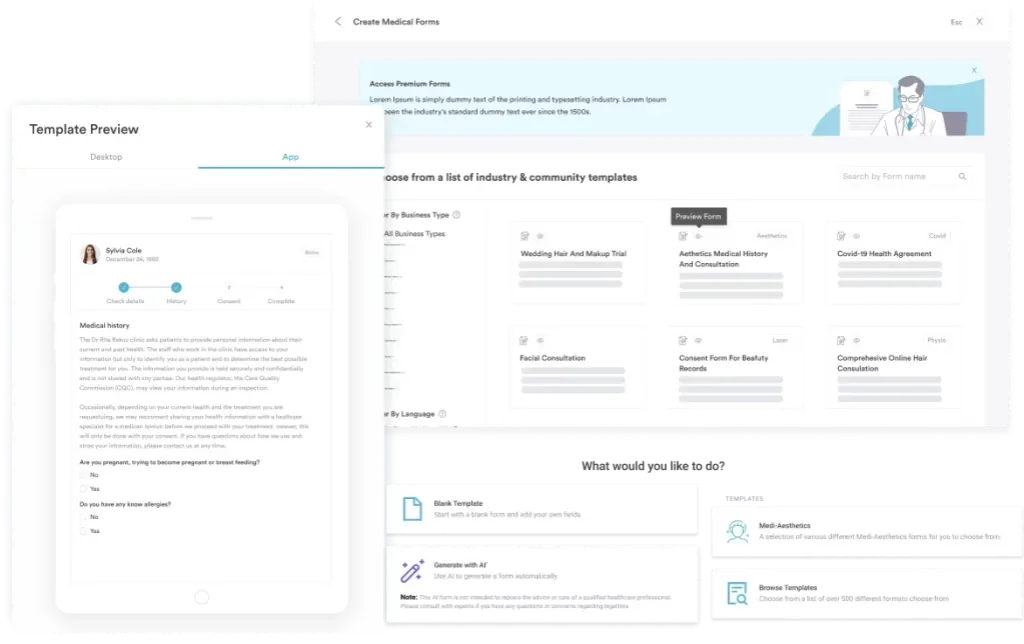

Pabau stores completed checklists and intake answers against the patient record, so each dietary review opens with the previous one in front of you.

A grocery list earns its place by being dull and repeatable. Set the category order to match your store, keep one master copy, and the weekly shop stops being a memory test.
In a practice the payoff is the record. The same fields, filled in the same order, let a second clinician read a patient’s intake and see what has changed since the last review.
The trade-off is discipline, because a checklist only pays off when it is completed every time. That is easier when the form lives where the rest of the record does. Book a demo to see how Pabau keeps dietary reviews and intake forms on one patient timeline.

Tracking what a patient eats between visits? My food diary gives you a day-by-day record to hand out after the review.
Starting with a new dietetic patient? Nutrition assessment form captures the baseline measurements and history before any plan is set.
Explaining proportions rather than portions? Food pyramid sets out the food groups in the balance a healthy plan needs.
Need intake detail over a longer period? Food frequency questionnaire records how often each food group shows up in a patient’s diet.
Shopping on a WIC budget? WIC food list shows which items the program covers before you write the week’s list.
A food shopping checklist is a categorized list of groceries to buy on one trip, grouped by store section. It reduces backtracking and forgotten items.
Yes. The PDF on this page is the practice version, a printable dietary review form you can complete, note substitutions on, and sign.
Plan the week’s meals first, then list only the items those meals need. Shop with the list and check prices on staples before adding extras.