Blood type O food list
A blood type O food list sorts foods into what people with type O should eat, li...

Last Updated: Oct 6, 2026

A keto grocery list is a shopping guide organized by food category, built to keep net carbohydrate intake low enough to hold ketosis.
The downloadable template is a blank printable checklist with tick rows, a client details block, and a notes area. You fill it in from the food categories on this page.
Net carbs are total carbohydrates minus fiber, and most keto practitioners target 20 to 50g a day, which makes label-reading a core skill.
Whole-food proteins, frozen vegetables, and bulk nuts keep a keto plan affordable, while branded keto snacks and bars carry a steep premium.
Pabau’s digital forms and client records let nutrition practitioners issue the same dietary guidance to every client without rebuilding it each time.
A blank printable checklist you fill in yourself, with tick rows under Essentials, Documents and paperwork, and Useful but optional. It also carries item and quantity rows, a client details block, and a notes area. Build your shopping list from the food categories on this page.
Download templateA keto grocery list narrows the whole supermarket down to the foods that keep you in ketosis. This page names those foods category by category, then hands you a blank checklist to write your own shopping trip onto.
The template is a printable form rather than a pre-filled food list. Every row arrives empty, which is what lets one form cover a client who avoids dairy and another who is shopping to a tight budget. You decide which foods go on it, using the category lists further down this page.
For nutrition practitioners, that split is the useful part. The category guidance stays the same for every client, while the blank form gets personalized during the consultation.
A keto grocery list is a structured shopping guide that organizes food purchases by category, keeping the focus on high-fat, moderate-protein, and very low-carbohydrate foods. The standard ketogenic diet runs at roughly 70-75% fat, 20-25% protein, and 5% carbohydrates. That balance shifts the body into ketosis, a metabolic state where fat becomes the primary fuel source.
For nutrition professionals, dietitians, and health coaches, a templated keto grocery list does two jobs. It keeps dietary guidance consistent from one consultation to the next, and it cuts the time spent explaining food choices in every appointment. For clients, it removes guesswork at the checkout by naming which proteins, vegetables, fats, and condiments fit the keto framework.
Unlike a meal plan, a grocery list does not prescribe portions or recipes. It sets the boundaries of what to buy and what to avoid. That leaves the client free to combine those foods however suits their week. Practitioners often issue a list before a client’s first shopping trip for that reason.
The download is a one-page checklist form with blank rows, not a printed list of keto foods. It gives you the structure and the tick boxes, and you supply the items.
Because the rows arrive empty, the same form works for whichever plan you adapt it to. The keto content lives on this page, so copy the categories you need from the lists below into the matching rows before you shop.
Nutrition practitioners and dietitians working with clients on ketogenic diets benefit most from a standardized list. Functional medicine practices, weight-loss specialists, and wellness coaches use keto protocols to support metabolic health, blood sugar stability, and weight management. Practices that run keto programs for many clients usually manage them inside weight loss clinic software, which keeps the plan and the client record together.
Practitioners managing clients with PCOS, type 2 diabetes, epilepsy, or metabolic syndrome often recommend ketogenic approaches. A structured list removes a common adoption barrier, which is plain confusion about what to eat. Primary care providers, integrative health practitioners, and mental health professionals supporting low-carb clients find the same structure useful.
Individual dieters new to keto benefit equally. A well-organized list turns an overwhelming dietary change into one straightforward shopping task.
Consistency across multiple clients. Instead of explaining keto-approved foods aloud in every consultation, a practitioner points every client at one resource. That standardizes the message and cuts the odds of a client misremembering the guidance.
Faster client onboarding. A downloadable list gets a new client shopping confidently within minutes of the consultation. That removes decision fatigue in the first two weeks, when a new plan is easiest to abandon.
Simpler documentation. When a client leaves with a printed or emailed list, the practitioner has a dated record of the guidance issued. The follow-up visit then has something concrete to compare against what the client bought.
Accountability. A list the client prints or saves to their phone creates a reference point beyond memory. Clients hold to a plan more reliably when they can check it at the shelf.
High-quality protein is the foundation of any keto plan. Aim for a mix of animal proteins that support lasting satiety and stable blood sugar. Allergies and ethical constraints belong on the client record, which a metabolic health EMR keeps next to macro and weight history.
Non-starchy vegetables bring fiber, micronutrients, and volume while staying well below carb limits. Frozen varieties are just as nutritious and usually cheaper than fresh.
Dairy and eggs are keto staples, but carb content varies widely between products. Full-fat options beat low-fat versions, which often carry added sugar. Check labels closely on flavored yogurts and processed cheese.
Fat is the macronutrient engine of ketosis. Good cooking fats support both ketone production and satiety, so pick oils whose smoke points match how you cook.
Nuts and seeds are nutrient-dense and calorie-dense at the same time. Measure portions rather than eating from the bag, since they can stall weight loss. Measurements tracking software lets clients log portion sizes and macros accurately.
These foundational items make keto cooking quick and sustainable. Many conventional condiments hide sugar, so read the label before it goes in the cart.
Convenient snacks stop hunger from derailing the plan. Packaged keto snacks are expensive, so whole-food options do the same job for less.
Plenty of drinks carry hidden carbohydrates and sugar. Stick to options that leave blood glucose and ketosis alone.
High-carbohydrate foods disrupt ketosis and belong off the list. The category covers most processed foods and many products marketed as diet friendly.
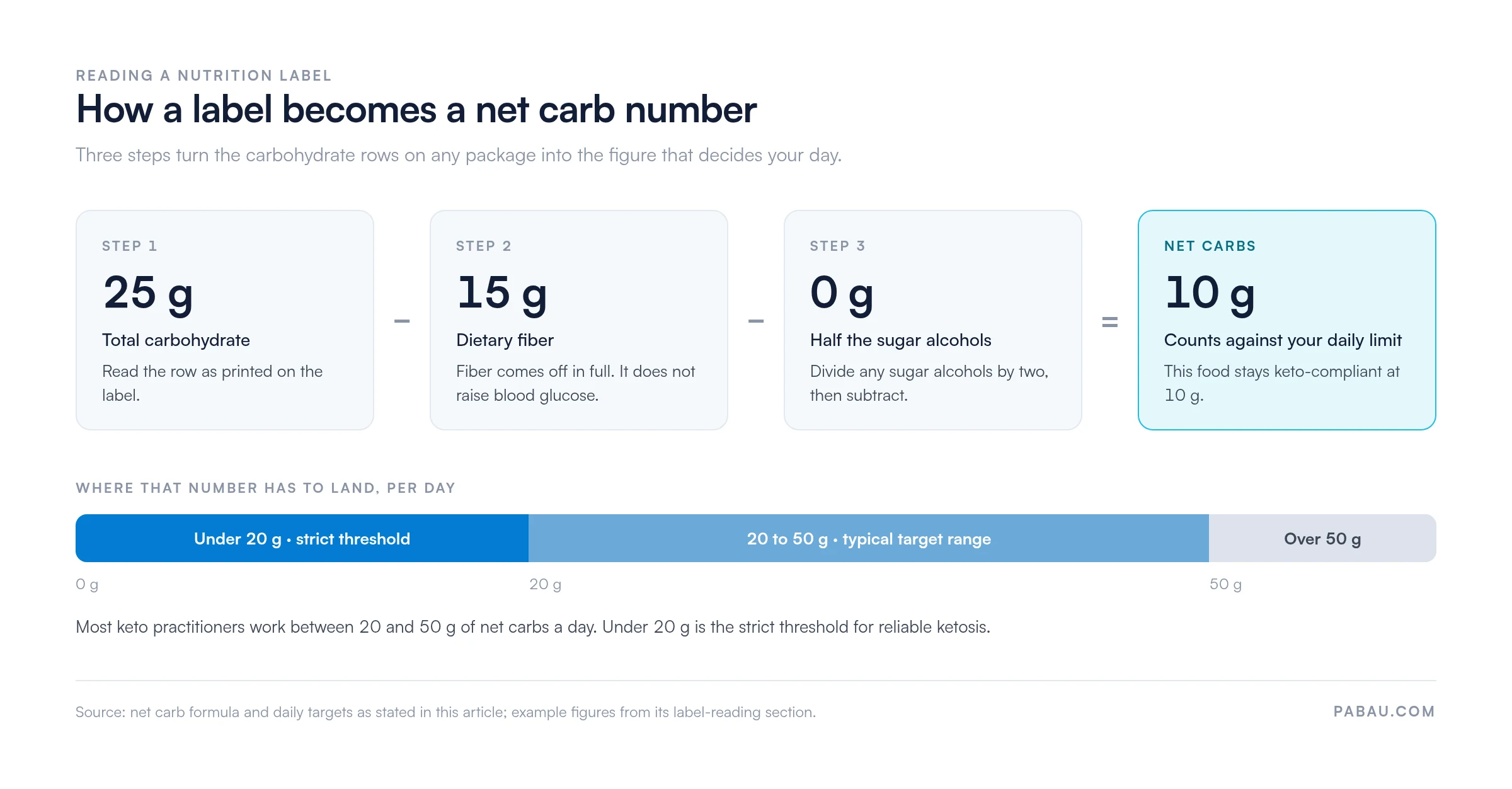
Net carbohydrates are total carbohydrates minus dietary fiber and part of any sugar alcohols. That number decides whether a food keeps you in ketosis. The calculation is net carbs = total carbs − fiber − (sugar alcohols ÷ 2).
Most keto practitioners recommend staying under 20 to 50g of net carbs a day, with 20g as the strict threshold for reliable ketosis. On a nutrition label, find the total carbohydrate row, subtract the fiber, then compare the result to your daily limit. FDA Nutrition Facts label rules require packaged foods to display those figures. The steps below run that math on a worked example.
Keto does not have to be expensive. Branded keto snacks and specialty products carry a premium, while whole-food proteins and frozen vegetables deliver the same nutrition for less.
Use this structure to plan a week of keto shopping, then write the specifics into the blank rows on the template. Adjust quantities to household size and how often you meal prep. Clients who want the meals mapped out as well can work from a 7-day keto meal plan alongside it.
Start with one week of the list and record energy, mood, and hunger in the notes area of the template. Keto adaptation takes two to four weeks, and hunger usually drops once ketosis is stable. Use that feedback to adjust portions and food choices the following week.
Most nutrition practices hand the grocery list over as a paper printout at the end of the consultation. The copy gets lost, the practitioner has no record of what was issued, and the next appointment starts from memory on both sides.
Practice management software like Pabau moves that step into the client record. You attach the completed checklist to the client file and send it from the client portal. The client can then open it on their phone in the store. The file stays on the record, which means you can see what guidance each client received and when.
Follow-up then has something to work from. Macro targets, weight, and measurements sit next to the plan you issued. The review starts with what changed, not with what the client remembers buying.

Pabau’s digital forms and client records let you send a completed grocery checklist from the client portal and store it against the file. Macro and measurement progress is waiting there at the next visit. Every client gets the same guidance without you rebuilding it each time.

The value of a keto grocery list sits in the decisions it removes at the shelf. Settle the categories once, and every trip after that becomes a tick-box exercise instead of a label-reading marathon.
Download the template, fill the rows from the category lists above, and take it with you. It arrives blank on purpose. That is what lets a practitioner adapt one form to a dairy-free client and another to someone shopping on a strict budget. Book a demo to see how Pabau helps you share dietary templates and track adherence across your client base.

Need the meals mapped out as well? 7-day keto meal plan turns the same food categories into seven days of meals with macro targets.
Want the macro targets on the form itself? Ketogenic diet plan template carries the macronutrient ratios and the contraindications to screen for.
Working with a client who is not doing keto? Grocery list for weight loss covers the same shopping structure with portion cues instead of carb limits.
Managing type 2 diabetes alongside the diet? Type 2 diabetes diet food list groups foods by their effect on blood glucose rather than by ketosis.
A keto grocery list should cover high-fat proteins (beef, fish, poultry), low-carb vegetables (leafy greens, broccoli, zucchini), and full-fat dairy. Add cooking fats such as olive oil and ghee, nuts and seeds, and pantry staples like broths and sugar-free sweeteners. Leave off grains, legumes, high-carb fruits, and starchy vegetables.
No. The download is a blank checklist form with tick rows, a client details block, and a notes area. You write the foods in yourself, using the category lists on this page. That is what lets one form serve a dairy-free client and a budget-conscious one.
Hard-boiled eggs, cheese, nuts, unsweetened beef jerky, olives, and pork rinds all work well. Branded keto bars and chips cost more and often contain sugar alcohols that trigger cravings. Whole-food snacks satisfy for longer and cost less.
Stock broths, almond and coconut flour, sugar-free sweeteners such as erythritol and monk fruit, full-fat condiments like mayo and mustard, vinegars, spices, and cooking oils. These staples let you cook keto meals quickly, which is what makes the diet sustainable beyond the first month.
Yes. Frozen vegetables are picked at peak ripeness and flash-frozen, so they hold their nutrients well. They cost less, keep longer, and often come pre-cut. Frozen broccoli, spinach, cauliflower, and zucchini all belong on a keto grocery list.