Antipsychotic medication list
An antipsychotic medication list is a structured reference that organizes psychi...

2
Last Updated: Oct 13, 2026

A family of origin worksheet walks a client through structured reflection on the household that raised them.
The worksheet covers family roles, rules, communication, emotional climate, parenting style, and the patterns repeating across generations.
The domains table below pairs a sample reflection question with the clinical pattern each answer tends to reveal.
Assign it as homework, then process the answers in session rather than reading them cold.
Keeping the completed worksheet on the client’s file in practice management software like Pabau lets you revisit the patterns later.
The family of origin worksheet PDF covers seven sections: family roles, rules and values, communication, emotional climate, parenting style, intergenerational cycles, and current influence. Each section uses open reflection prompts you can assign as homework.
Download templateA family of origin worksheet gives you a structured way to explore the household a client grew up in. It asks about roles, rules, communication, and emotional climate, then asks how each still shows up. Used well, it does more than collect history. It shows the client which reactions they inherited and which they chose.
Download the family of origin PDF above and hand it to a client at the end of a session. You may also see it written as family of origins, though the clinical term stays singular.
Below you’ll find the worksheet’s structure, examples of what each domain reveals, and how to run it with individuals and couples.
A family of origin worksheet is a clinical assessment tool that walks a client through their childhood family system, domain by domain.
Generic family history forms collect facts, dates, and who lived where. This one is built on family systems theory, so each prompt is chosen to surface a pattern. You read the answers for repetition rather than for detail.
A completed worksheet also hands you language the client supplied themselves. Quoting a client’s own words back lands harder than handing them a label. “We didn’t do sad in our house” does more work in session than “emotionally avoidant family”.
Family of origin is the family a person was raised in, including parents, siblings, and any extended relatives who shaped early development. Clinicians define family of origin narrowly and separate it from family of choice, meaning the relationships built in adulthood.
The family of origin meaning used in family systems therapy is more specific than everyday usage. Murray Bowen’s work treats the family as one emotional unit, with anxiety moving through it rather than sitting in one person.
Intergenerational transmission is the mechanism. Conflict styles, emotional habits, and unresolved losses pass down until someone notices and interrupts them. A client who swore they would never shout can hear their mother’s exact sentences coming out of their mouth.
That is why family history belongs in the clinical record and the treatment plan, not in a separate folder nobody opens again.
Family of origin work earns its session time because it turns a client’s self-blame into a pattern they can name. Family of origin issues usually arrive disguised as the presenting problem. A client books for anxiety at work and describes a boss who behaves exactly like their father.
The payoff is practical. A client who can name the pattern can be asked what they want to do about it. That is a different conversation from managing symptoms week to week.
The worksheet is organized into seven sections, each using open prompts rather than tick boxes.
Most family of origin therapy worksheets stop at a genogram and a list of relatives. The seven sections here ask the client to interpret their own diagram, which is where the clinical material comes from.
You can also use it as a family of origin workbook across several sessions. Assign one section a week, and each week’s answers give you the opening for the next conversation.
Seven domains do most of the work in a family of origin session. Each row below gives a question you can hand a client, plus the pattern their answer usually points to.
Read a completed worksheet across the rows, not down them. A client who names an off-limits topic, an identified patient, and a parent who controlled every decision has described one system, not three problems.
Introduce the family of origin exercise once the working relationship is steady, usually during assessment or formulation. It also earns a place later, whenever family patterns start showing up in the presenting concern.
With couples, each partner fills in the worksheet alone, and the session is spent on where their answers differ.
The same pattern comes up again and again. One partner grew up in a conflict-avoidant house and reads directness as aggression. The other grew up somewhere loud and reads silence as coldness. Both are running the script they were handed.
Family of origin awareness lets a couple stop treating a difference in style as a verdict on the relationship. Pair the worksheet with genogram work and a communication exercise, so the insight has somewhere to go.
To find an intergenerational pattern, have the client answer two prompts twice. The second pass covers what they know of their parents’ own childhoods.
Transmission tends to run through one of three routes.
Ask which of the three is happening before you agree that a client has broken the cycle. Reactive reversal feels like repair from the inside and looks like exhaustion from the outside.
Research on adverse childhood experiences (ACEs) ties early family conditions to adult health, and names safe, stable relationships as the main protective factor.
The worksheet downloads as a free PDF from the box at the top of this page. Add your practice name, logo, and session context before you print or send it.
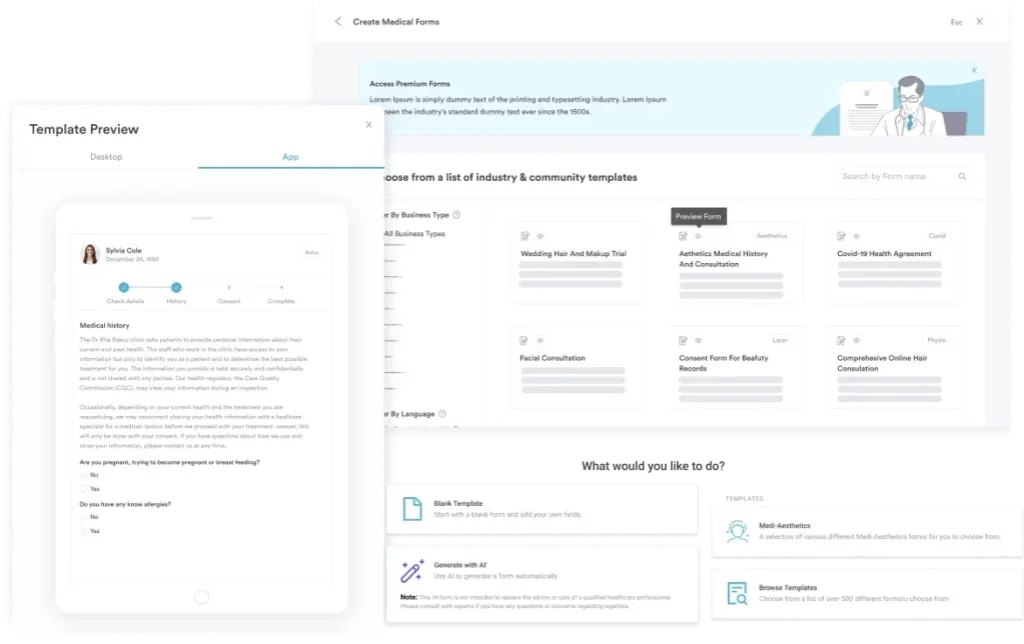
Inside Pabau, you can rebuild it as a digital form and assign it to a client record. The client completes it in the secure portal on a phone, tablet, or laptop. Answers land in the clinical record time-stamped and ready for an audit.
Digital delivery removes the photocopying and the sheet that never comes back. It also means you can search a client’s answers later instead of rereading the whole file.
Any clinician who works with relational patterns will get use out of it, from individual therapists to group facilitators.
Screen before you assign it, because family of origin material can open trauma the client is not ready to hold. Check for active trauma processing, dissociative symptoms, and safety concerns first. A client in acute crisis needs stabilization, not a reflection task.
Situations that need a slower approach include a recent bereavement or an ongoing estrangement. So does a client who still lives with the family they are describing.
Plenty of clients find the opposite. The worksheet names something they have felt for years without words. Hearing that the pattern is common takes the private shame out of it.
A worksheet that gets filed after one conversation loses most of its value. The pattern a client named in week three is exactly what you want in front of you in month six.
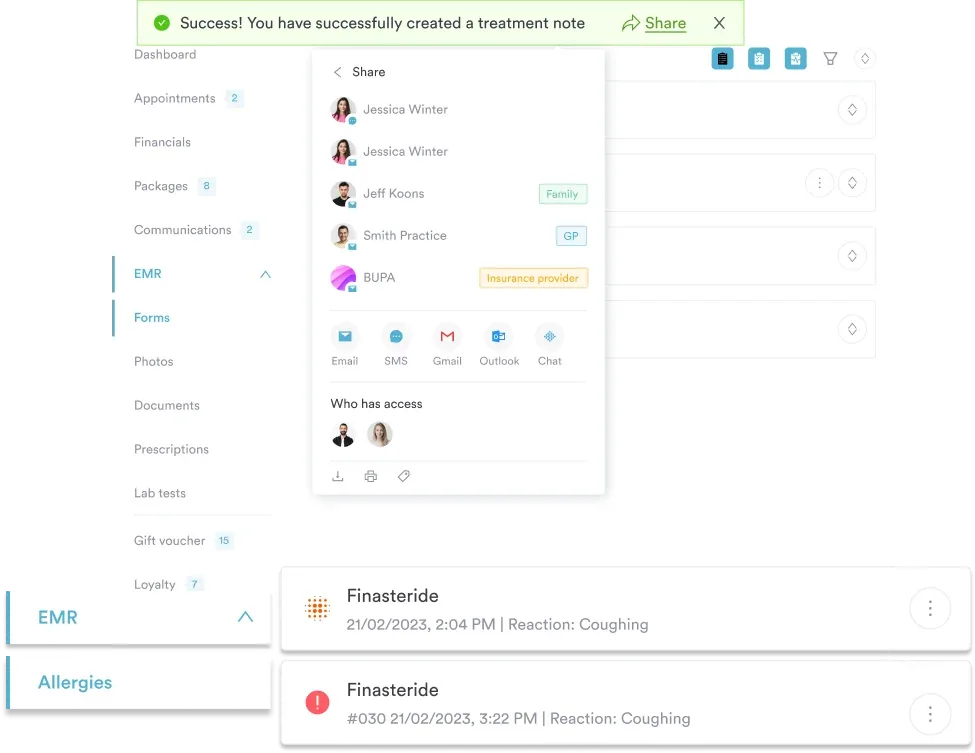
Practice management software like Pabau keeps the completed worksheet on the client’s file alongside notes, consent, and appointment history. You can reread the client’s own wording before the next session instead of working from memory. Assign the worksheet again a year later and the two sets of answers sit side by side.
For a psychology practice, that continuity is the difference between a handout and a thread you can follow. Homework, session notes, and the client’s own reflections stay in one place, so cover and handover do not start from scratch.
The worksheet, the note, and the next appointment all sit on the same record.

Pabau’s digital forms attach a completed family of origin worksheet to the client’s record, beside notes, consent, and appointment history. Nothing gets lost between sessions.

The worksheet is only as good as the conversation after it. Collect the answers, then spend a session asking which patterns the client actually wants to keep.
The trade-off worth remembering is timing. Assign it too early and you get polite answers, or a client in distress. Assign it at the right moment and a client hears their own history in their own words.
Then keep it somewhere you can find it again. Book a demo to see how Pabau keeps therapeutic worksheets, session notes, and homework on one client record.

Working with couples on inherited expectations? Marriage boundaries worksheet helps a couple agree where each partner’s limits sit today.
Is a client carrying shame from childhood messages? Self-esteem worksheet for adults turns those inherited messages into something the client can challenge.
Need to test which values are actually theirs? Life values inventory separates a client’s own priorities from the ones their family handed down.
Seeing caretaking and enmeshment in the roles section? 12-step codependency worksheet works well as the follow-up exercise.
Is anger showing up in the family patterns? Clinical anger scale gives you a score to track alongside the reflection work.
It is a structured clinical tool that guides a client through their childhood family system. The sections cover family roles, rules, communication, emotional climate, and intergenerational cycles. You use the answers to link early experience to current behavior.
Most clients need 45 to 90 minutes, depending on how deeply they reflect. Assign it as homework so they have time and emotional space away from session pressure.
Yes. Each partner completes it independently, then you facilitate a conversation about where their family patterns differ. It works well for surfacing conflict styles and building empathy early in couples work.
No. It is contraindicated for clients in acute crisis, active trauma processing, or dissociative states. Screen for safety and coping skills first. Used at the wrong moment, it can overwhelm a client who has no way to settle afterward.
Rebuild it as a digital form in Pabau and assign it to the client’s record. The client answers in the secure portal, and the responses save into the clinical record time-stamped and audit-ready.
It is the process by which emotional styles, conflict habits, values, and trauma responses pass from one generation to the next. Naming the process lets a client choose what to carry forward instead of inheriting it by default.
The identified patient is the family member who carries the symptom for everyone else. Naming the identified patient in a family shifts the question from what is wrong with them to what the household needed them to hold. The roles section is where this usually surfaces.
Clients learn what to do with anger by watching who was allowed to express it. Looking at anger and family of origin together shows whether a client swallows it, explodes, or leaves the room. That is more useful than labeling them angry.
The strongest ones ask about behavior rather than feelings. Try who was treated as the problem, what happened when two people disagreed, and which topics were off-limits. Concrete questions give a client something to describe instead of diagnose.